
TL;DR:
- A single odor can instantly ruin a luxury property’s first impression, leading to lost sales and negative reviews. Fast, professional odor removal prevents embedding of compounds, saving costs and protecting reputation. Masking odors with scents fails in luxury environments, as neutralizing methods are essential for lasting freshness and trust.
A single whiff of stale cigarette smoke, pet odor, or mildew can end a luxury property tour before the potential buyer or guest has even crossed the threshold. In upscale real estate and hospitality, the stakes attached to that invisible first impression are enormous: a lost sale, a canceled booking, or a scathing online review that lingers for months. Immediate odor removal prevents exactly these outcomes by protecting the emotional connection your property needs to make in those first few seconds. This article breaks down why speed is everything, what the data says about delayed responses, and which proven methods deliver lasting results.
Table of Contents
- How odors sabotage first impressions and property value
- Immediate vs. delayed action: The science and economics
- Masking vs. true odor removal: The luxury property difference
- Proven rapid solutions for persistent interior odors
- The hidden ROI of fast, professional odor control
- Take action—secure your property’s value and reputation
- Frequently asked questions
Key Takeaways
| Point | Details |
|---|---|
| First impressions matter | Odors can deter buyers or guests within seconds, impacting sales and satisfaction. |
| Act fast for results | Rapid odor removal boosts success rates and reduces costly repairs for high-value properties. |
| True removal beats masking | Masking scents only hide issues; luxury clients expect genuinely clean, neutral air. |
| Professional solutions pay off | Techniques like thermal fogging save money and time while protecting your reputation. |
| Luxury demands expertise | Top market properties require specialized, science-based odor elimination. |
How odors sabotage first impressions and property value
With the stakes set by first impressions, let’s explore exactly how odors can sabotage property value so quickly.
Smell triggers emotion faster than any other sense. Before a prospective buyer or hotel guest consciously registers the decor, the lighting, or the view, their brain has already filed an emotional verdict based on what they are breathing. That verdict is almost impossible to reverse. In luxury environments, where clients arrive with elevated expectations, any negative olfactory signal is immediately interpreted as a sign of neglect, poor maintenance, or hidden problems.
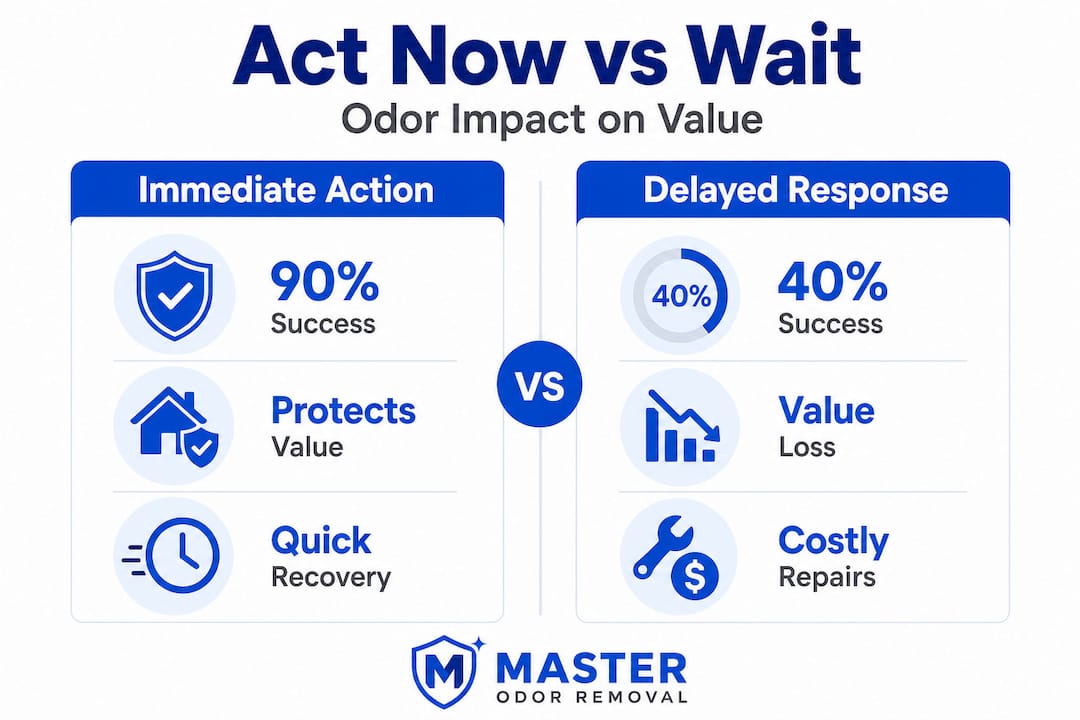
The data supports this decisively. Buyers turn away in less than 10 seconds upon smelling cigarette smoke in a property. Ten seconds. That is not enough time to showcase a kitchen renovation or describe the neighborhood’s walkability score. In hospitality, the window is even tighter. A guest checking in at a premium hotel or short-term rental expects an environment that signals care and cleanliness from the moment the door opens. When that expectation is violated, no amount of complimentary champagne or upgraded bedding recovers the experience.
High-cost consequences of delayed odor removal:
- Lost sales or collapsed negotiations on luxury residential listings
- Negative online reviews that suppress future booking rates
- Accelerated material degradation as odor-causing compounds penetrate furnishings, walls, and HVAC systems
- Increased tenant turnover due to compromised air quality perception
- Regulatory attention in commercial or hospitality settings where air quality standards apply
- Brand damage in portfolio properties, where one underperforming unit affects the entire reputation
Understanding which persistent odors are present in a space is the first step toward protecting it. Tobacco, pet dander, mold, and cooking grease each require a different remediation strategy, and misidentifying the source is one of the most common reasons standard cleaning efforts fail. The way smell impacts renter decisions is not abstract psychology—it directly affects occupancy rates, asking prices, and negotiating leverage.
| Odor type | Perception risk | Common locations |
|---|---|---|
| Cigarette/tobacco | Extremely high | Residential, short-term rentals |
| Pet odor | High | Residential, furnished rentals |
| Mildew/mold | High | Any property with moisture issues |
| Food/cooking grease | Moderate to high | Hospitality, commercial kitchens |
| Chemical/VOC | High | Newly renovated or industrial spaces |
Every day a property sits on the market or sits unoccupied because of an odor issue is a compounding financial loss. The solution is not to wait for the next cleaning cycle. Speed is the variable that separates protected property value from eroded property value.
Immediate vs. delayed action: The science and economics
Now that the downside of odors is clear, let’s examine the impact of acting fast versus delaying intervention.
There is a meaningful economic gap between responding to an odor complaint within hours and responding within days or weeks. When odor molecules are allowed to bond with porous surfaces like drywall, carpet padding, upholstered furniture, and HVAC ductwork, the remediation complexity multiplies. What could have been resolved with a single professional treatment becomes a multi-step project involving material replacement, duct cleaning, and extended property downtime.
Professional treatments like thermal fogging achieve a 90% success rate compared to just 40% for traditional cleaning, and immediate intervention saves an average of $1,200 per unit in cleaning and repair costs. That is not a marginal difference. It is the difference between a same-day turnaround and a week-long remediation project that leaves a rental unit off the market during peak season.
| Factor | Immediate professional removal | Delayed/traditional cleaning |
|---|---|---|
| Success rate | 90% | 40% |
| Average cost savings | Up to $1,200 per unit | Baseline cost |
| Property downtime | Hours | Days to weeks |
| Guest/buyer satisfaction | High | Low to moderate |
| Risk of odor recurrence | Minimal | High |
| Surface penetration | Treated before bonding | Odor fully embedded |
The table above is not theoretical. It reflects the real operational decisions that property managers make every day. A luxury short-term rental sitting offline for three days during peak summer season does not just lose nightly rates. It loses the reviews that would have driven future bookings. For real estate agents, every extra day a listing carries an unresolved odor problem reduces negotiating power and attracts lowball offers.
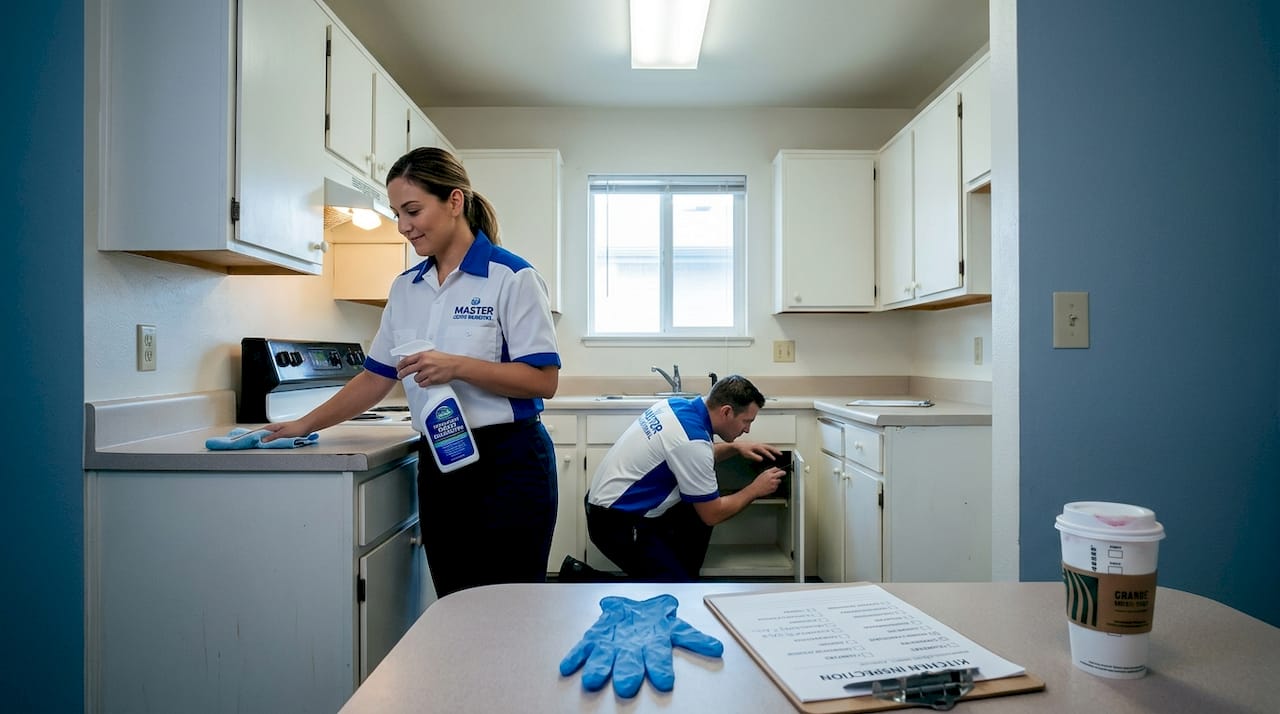
Pro Tip: Schedule professional odor assessments immediately between tenants and immediately after any odor-generating event, such as a smoking incident, water intrusion, or pet stay. Addressing the situation before the next occupant arrives eliminates compounding costs and maintains your property’s premium positioning.
Working with specialist odor removal professionals rather than general cleaning crews is essential at this level. Generalists lack the equipment, the chemistry knowledge, and the property-specific protocols needed to consistently hit a 90% success rate. The economics of eliminating tough odors at their source the first time are simply far better than chasing recurring issues with inadequate tools.
Masking vs. true odor removal: The luxury property difference
But acting fast is not enough if the strategy is wrong. Next, we examine why masking odors fails in high-end settings.
Walk into almost any budget rental and you will notice it immediately: the aggressive floral spray competing with something far less pleasant underneath. Masking is the instinctive response to an odor complaint. It is also the wrong one, particularly in the luxury sector. Scent-layering does not neutralize odor molecules. It simply adds another layer of volatile compounds to an already compromised air environment.
“Masking odors with candles or sprays creates a false sense of security, misses real hazard sources, and fails to deliver the zero-base neutral air that luxury clients expect.” — The Freshness Fallacy
High-end clients have refined sensory expectations. They do not interpret a lavender-scented room as “clean.” They interpret it as an attempt to hide something. That intuition is usually correct. Masking products are designed to overwhelm the olfactory system temporarily, but once those compounds dissipate, the original odor resurfaces, often stronger than before because the underlying source has had more time to embed itself.
Why masking fails in luxury environments:
- Sophisticated clients recognize artificial scent layering as a red flag
- Fragrance compounds can trigger allergic reactions or sensitivity issues in guests
- Hidden odor sources may indicate structural problems, mold growth, or pest activity that will worsen if unaddressed
- Layered scents create an unpredictable sensory environment that undermines a property’s designed ambiance
- Repeated masking erodes trust, particularly with returning guests or long-term tenants
The safety dimension is particularly important. A persistent musty smell might signal active mold growth inside a wall cavity. A chemical odor could point to off-gassing from improper renovation materials. Spraying air freshener over either of those situations does not just fail to solve the problem—it actively delays the discovery of a health risk.
Pro Tip: Before any treatment, always conduct a formal odor source audit. Identify whether the problem originates from surfaces, HVAC systems, subfloor materials, or hidden cavities. This prevents wasted spending on surface treatments that cannot reach the actual source.
The correct approach is eco-friendly neutralization, which works at the molecular level to eliminate odor-causing compounds rather than covering them. Neutral air—air with no added fragrance—is the gold standard for luxury interiors because it signals genuine cleanliness without ambiguity.
Proven rapid solutions for persistent interior odors
Understanding what does not work, let’s turn to proven methods that deliver real, rapid results for luxury spaces.
Effective rapid odor removal follows a structured protocol, not a reactive scramble. The difference between a property manager who consistently protects asset value and one who constantly battles recurring issues comes down to how systematically they approach remediation.
Step-by-step protocol for immediate and lasting odor elimination:
- Initial inspection. Identify the odor type and trace it to its source. Surface odors, embedded odors, and HVAC-distributed odors each require different treatments. Do not skip this step.
- Source removal. Remove or remediate the physical cause, whether that is contaminated carpet padding, a water-damaged section of drywall, or residual pet waste in subfloor materials. No treatment is permanent if the source remains.
- Professional treatment. Deploy the appropriate professional-grade method. Thermal fogging achieves 90% success by converting odor-neutralizing solutions into fine particles that penetrate the same porous surfaces odor molecules have reached. This is not a surface wipe-down. It is molecular-level elimination.
- Ventilation and air exchange. After treatment, flush the space with fresh air to clear residual compounds and confirm the environment has returned to neutral.
- Verification. Conduct a final assessment—ideally with someone who did not perform the treatment, to get an unbiased sensory evaluation before the space is returned to service.
Tailoring the protocol to property type:
Different environments carry different odor challenges. Hospitality properties cycle guests rapidly, meaning odor issues can compound quickly if not addressed between every stay. Move-in and move-out odor cleaning is a critical checkpoint for residential rentals, where the incoming tenant’s first impression establishes the entire tenancy relationship. Odor removal in the workplace requires attention to HVAC systems and shared spaces where odor concentration can affect productivity and professional perception. And for eco-friendly pet odor solutions, enzyme-based treatments that break down biological compounds are far more effective than any fragrance-based approach.
Pro Tip: For rental properties, schedule professional odor assessment as a standard line item in your turnover checklist, just like lock changes and carpet inspection. This eliminates the reactive scramble and keeps every unit performing at its premium potential.
The throughline across all property types is the same: speed combined with the right method produces results that protect value, protect reputation, and reduce long-term costs.
The hidden ROI of fast, professional odor control
Most property managers treat odor removal as a maintenance task. That framing significantly undervalues what fast, professional intervention actually delivers.
Consider what your luxury brand is really selling. It is not square footage. It is not imported stone countertops or curated art. It is certainty—the certainty that a guest or buyer can expect a premium experience without unpleasant surprises. Odor is the fastest way to shatter that certainty, and rapid odor control is one of the most cost-effective ways to preserve it.
Properties that maintain consistent, neutral air quality command measurable advantages. Occupancy rates stay higher because online reviews stay positive. Nightly rates hold firm because guests return and refer others. Luxury residential listings close faster and closer to asking price because buyers feel confident about the property’s condition from the moment they walk in.
There is also a compounding benefit that rarely gets quantified: trust. When guests or tenants experience a property that smells genuinely clean, without artificial fragrance, they interpret the entire management operation as competent and detail-oriented. That perception extends to how they handle maintenance requests, lease negotiations, and referrals. It is an invisible amenity with very visible financial consequences.
We have observed that seasonal real estate trends often accelerate odor-related property challenges, particularly in spring when closed-up properties reveal accumulated moisture, pet activity, or smoke odors that were masked by winter heating. The properties that move quickly in spring markets are the ones whose managers anticipated this and scheduled professional treatments proactively rather than reactively.
The uncomfortable truth is that most luxury property operators still treat odor control as a last resort rather than a first priority. The ones who reverse that thinking consistently outperform their peers on retention, rates, and reputation. Fast, professional odor removal is not a premium add-on. It is a competitive strategy.
Take action—secure your property’s value and reputation
Ready to implement rapid, professional odor removal? Here’s how you can take the next step with confidence.
Protecting a luxury property’s value starts with recognizing that odor is not a minor inconvenience—it is a high-stakes asset management issue. Every hour of delay compounds the cost, whether measured in lost bookings, reduced sale prices, or damaged brand reputation.
Master Odor Removal specializes in exactly this kind of high-stakes intervention. With same or next-day availability, eco-friendly treatments that avoid ozone and chlorine, and protocols designed specifically for luxury interiors, residential listings, hospitality environments, and commercial spaces, the team delivers verified, lasting results without disrupting your operations. Whether you are managing a luxury short-term rental portfolio, preparing a high-value listing for market, or maintaining the standards of an upscale hotel property, explore tailored solutions designed to restore genuinely neutral, fresh air to every interior you manage.
Frequently asked questions
How quickly should odors be removed in hospitality properties?
Odors should be addressed within hours to prevent negative guest impressions and costly complaints. Immediate removal is directly linked to protecting guest satisfaction and avoiding reputation-damaging reviews.
What are the financial benefits of addressing odors right away?
Immediate action saves up to $1,200 per unit in cleaning and repair costs. Professional treatments that are deployed quickly also prevent odor compounds from embedding into surfaces, which dramatically lowers the total remediation investment.
Are air fresheners a good replacement for odor removal?
No—masking odors with sprays or candles creates a false sense of cleanliness and can hide genuine hazards. Luxury clients recognize scent layering as a red flag rather than a quality signal.
What professional methods are most effective for immediate odor removal?
Thermal fogging delivers a 90% success rate, far above most traditional cleaning approaches, by penetrating porous surfaces at the molecular level rather than treating only visible areas.
Does rapid odor removal affect property reputation?
Yes—acting swiftly drives positive reviews and builds long-term trust with guests and buyers. Fast intervention signals competent management, which directly supports premium positioning and repeat business in the luxury market.
Recent Comments