
TL;DR:
- True odor neutralization eliminates odors at the molecular level, unlike masking or ozone treatment.
- Eco-friendly agents like zinc ricinoleate safely neutralize persistent odors without damaging luxury materials.
- Proper source removal and professional assessment are essential for lasting odor control in premium properties.
Most property managers assume a pleasant scent means a clean space. That assumption costs real money in luxury settings. When a high-end rental, boutique hotel room, or premium commercial suite smells like lavender but still carries an undertone of smoke or pet odor, guests and clients notice. True odor neutralization does not cover smells. It eliminates them at the molecular level, and the difference between these two approaches is exactly what separates a five-star experience from a complaint. This guide breaks down how eco-friendly neutralization works, which technologies are safest for premium interiors, and what practical steps protect your investment.
Table of Contents
- Understanding odor neutralization: More than just masking
- Key technologies: Eco-friendly agents for luxury spaces
- Comparing methods: What actually works for luxury interiors?
- Practical tips: Implementing safe odor control in premium properties
- Why most odor removal ‘fixes’ in luxury settings fall short
- Experience true odor neutralization for your property
- Frequently asked questions
Key Takeaways
| Point | Details |
|---|---|
| Only neutralization works | True odor neutralization eliminates malodors instead of masking them, especially in sensitive luxury environments. |
| Eco-friendly agents are best | Zinc ricinoleate and plant-based solutions are both effective and safe for premium interiors. |
| Ozone is risky | Ozone treatment can damage luxury materials and is not recommended for occupied or high-value spaces. |
| Professional help matters | Expert-guided odor control ensures safety, compliance, and optimal long-term air quality for property managers and owners. |
Understanding odor neutralization: More than just masking
Let’s start with a definition that actually matters in practice. Odor masking adds a pleasant scent on top of an unpleasant one. The bad smell is still there. Ozone treatment uses oxidation to break down odor molecules, but the process is aggressive and non-selective, meaning it can damage materials while creating its own health risks. True odor neutralization is different. It chemically alters, absorbs, or traps malodor molecules so they become undetectable, rather than simply covering them with a competing fragrance.
The three core mechanisms behind genuine neutralization are chelation, absorption, and chemical reaction. Chelation works by binding odor molecules to a carrier compound, making them inert. Absorption physically traps molecules in a porous material. Chemical reaction converts the odor compound into a neutral, odorless substance. Each approach has its place depending on the odor type and the surface involved.
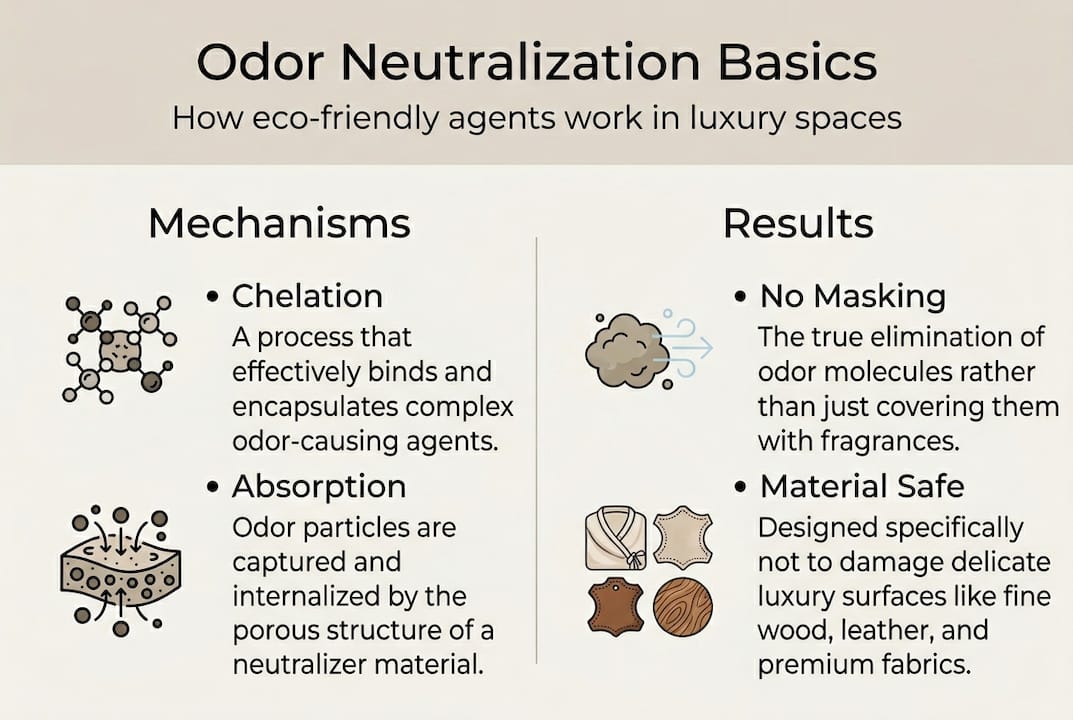
For luxury interiors, the stakes around method selection are high. Consider the materials at risk: Italian leather seating, hand-finished hardwood floors, silk wall coverings, and custom textiles. Ozone exposure can fade dyes, degrade rubber and leather, and irritate respiratory systems. Masking agents leave residue and often require repeated applications that add up in cost and inconvenience. Neither option is appropriate for environments where materials are irreplaceable and client expectations are non-negotiable.
Here is a quick comparison of the three main approaches:
| Method | How it works | Safe for luxury materials | Lasting result |
|---|---|---|---|
| Masking | Adds fragrance over odor | Yes, but residue risk | No |
| Ozone treatment | Oxidizes odor molecules | No, damages surfaces | Partial |
| True neutralization | Traps or converts molecules | Yes | Yes |
Key risks to avoid in premium spaces:
- Ozone machines left running in occupied spaces create respiratory hazards
- Fragrance-based sprays can stain delicate textiles or leave oily residue
- Repeated masking treatments signal to clients that a problem exists
- Oxidation methods can accelerate material aging in antique or custom furnishings
For a deeper look at how these standards apply in practice, the eco-friendly interiors guide walks through what responsible odor management looks like in real luxury environments. If you want a direct breakdown of why we avoid ozone in our own work, the ozone vs direct removal comparison explains our reasoning clearly.
“The difference between a deodorizer and a true neutralizer is not just chemistry. It is the difference between a temporary fix and a permanent result that protects your property and your reputation.”
Key technologies: Eco-friendly agents for luxury spaces
Once you understand what true neutralization means, the next question is which agents actually deliver it safely. The current gold standard in eco-friendly odor control is zinc ricinoleate. Derived from castor oil, it is biodegradable, non-toxic, and works through chelation to neutralize hydrogen sulfide, ammonia, and mercaptans, which are the compounds responsible for the most persistent and offensive odors in interior spaces. It is biodegradable, non-toxic, and safe for luxury surfaces including leather, wood, and fine textiles.
Beyond zinc ricinoleate, several other plant-based and molecular neutralizers are gaining traction in professional applications:
- Cyclodextrin compounds trap odor molecules inside ring-shaped structures, physically removing them from the air without any chemical reaction that could affect surrounding materials.
- Enzyme-based formulations break down organic odor sources at the source, particularly effective for pet and food odors embedded in upholstery or carpet.
- Plant-derived essential oil blends with neutralizing properties (not just fragrance) can complement primary treatments in low-odor maintenance scenarios.
- Bio-based room deodorant systems use fermentation-derived active ingredients that are safe for sensitive environments and leave no harmful byproducts.
Selecting the right agent for a luxury site requires matching the technology to both the odor type and the surface. Zinc ricinoleate performs best in atomized delivery systems that distribute fine particles evenly across a space without saturating any single surface. Enzyme formulas work better when applied directly to the contaminated material rather than dispersed into the air.
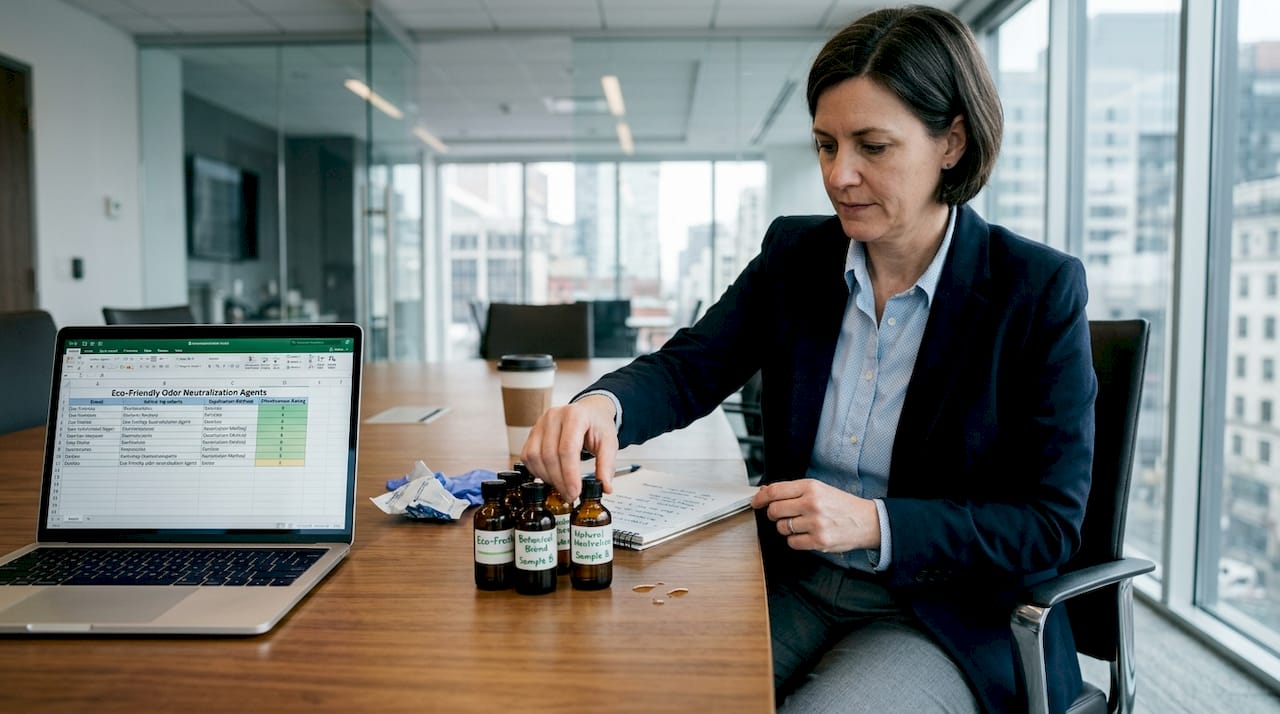
Pro Tip: Always test any neutralizing agent on a hidden area of the material before full application. Even non-toxic formulas can interact unexpectedly with specialty finishes or custom dyes in high-end interiors.
| Agent | Best for | Application method | Surface safety |
|---|---|---|---|
| Zinc ricinoleate | Ammonia, sulfur, mercaptans | Atomized spray | Excellent |
| Cyclodextrins | Airborne VOCs | Dry powder or spray | Excellent |
| Enzyme formulas | Organic odors (pet, food) | Direct surface application | Good with testing |
| Plant-based blends | Light maintenance | Diffusion | Good |
For properties that prioritize sustainability certifications, working with eco-friendly odor elimination specialists ensures the products used meet green standards without compromising results. Our odor removal specialists can assess which combination of agents fits your specific space and odor profile.
Comparing methods: What actually works for luxury interiors?
Property managers often ask us which method is best. The honest answer is that it depends on the odor source, the materials present, and the timeline. But when you compare the three main approaches side by side, the advantages of molecular neutralization become clear for any setting where materials and client experience matter.
| Criteria | Masking | Ozone treatment | Molecular neutralization |
|---|---|---|---|
| Effectiveness | Temporary | Moderate | Permanent |
| Safety for occupants | Moderate | Low (unoccupied only) | High |
| Material risk | Low to moderate | High | Low |
| Environmental impact | Moderate | Negative | Positive |
| Cost over time | High (repeat treatments) | Moderate | Low |
Ozone is risky for luxury interiors because it is non-selective. It oxidizes everything it contacts, including luxury interior materials like leather, rubber seals, and painted surfaces. Proprietary molecular systems are specifically engineered to target odor compounds without affecting surrounding materials. That distinction matters enormously when you are managing a property where a damaged finish or discolored textile is a liability.
Common pitfalls we see property managers fall into:
- Using ozone machines as a routine maintenance tool rather than a last resort
- Relying on fragrance diffusers between guest stays instead of addressing the source
- Choosing the cheapest available spray without checking for material compatibility
- Skipping professional assessment for persistent odors that return within days
Pro Tip: If an odor returns within 48 to 72 hours of treatment, the source has not been addressed. No neutralizing agent, however advanced, will produce lasting results if the contaminated material or surface is still present.
For a frank look at why ozone machines create more problems than they solve, the ozone machine risks breakdown is worth reading before making any equipment decisions. Our founder has also shared expert insights on safe methods that speak directly to why luxury settings require a different standard. If you want to understand what separates a generalist from a true luxury interior odor expert, the distinction comes down to product selection, application method, and accountability.
Practical tips: Implementing safe odor control in premium properties
Knowing which technologies exist is only half the equation. Implementing them correctly in a live property environment requires a disciplined process. The single most important rule: remove the odor source before treating the air. Neutralizing agents work on residual odor compounds, not active contamination. If a soiled carpet, smoke-saturated drapery, or mold-affected wall cavity is still present, no treatment will hold.
For move-in and move-out scenarios, this means a full inspection before any odor treatment begins. For ongoing workplace odor management, it means scheduled assessments rather than reactive treatments.
Best practices for property managers:
- Always identify and eliminate the odor source before applying any neutralizing agent
- Choose zinc ricinoleate or plant-based atomized neutralizers over ozone for material-sensitive environments
- Verify that any product used carries EPA registration or equivalent third-party safety certification
- Schedule routine air quality checks in high-traffic areas like lobbies, elevators, and shared amenity spaces
- Document treatment dates, products used, and results to build a maintenance record that supports property value
Research on beta-cyclodextrin fabric treatments confirms that embedding neutralizing agents directly into textiles can extend odor control between professional service visits, a useful strategy for high-use upholstery in hospitality settings.
Pro Tip: Build odor neutralization into your turnover checklist as a standard line item, not an emergency response. Properties that treat it proactively spend significantly less over time than those that react to complaints.
Avoid these costly mistakes:
- Using ozone in spaces with leather, artwork, or electronics
- Applying fragrance-heavy products before a client walkthrough to mask a persistent problem
- Skipping professional consultation for tobacco, mold, or sewage odors, which require source remediation before any surface treatment
Why most odor removal ‘fixes’ in luxury settings fall short
Here is something the industry rarely admits: most odor treatments sold to property managers are designed for average residential use, not for environments where a single negative impression can cost a lease renewal or a five-star review. The “sniff test” is not a quality standard. It is the lowest possible bar.
Quick fixes like ozone machines and fragrance bombs are fast and cheap. But ozone is non-selective by design. It does not distinguish between a mercaptan molecule and the finish on a custom cabinet. Chelation and absorption methods are targeted and eco-friendly by comparison, but they require proper application and, critically, source removal first.
The uncomfortable truth is that most “odor removal” services are really odor delay services. They buy time between complaints. Luxury environments cannot afford that margin of error. Setting a higher standard means specifying the chemistry, not just the outcome. It means requiring documentation of what was applied and why. And it means working with providers who understand that a damaged silk panel or a discolored leather seat is a liability, not an acceptable side effect. Review your odor neutralization standards and hold every vendor to them.
Experience true odor neutralization for your property
You now have the framework to evaluate any odor removal solution against real science and real risk. The next step is putting that knowledge to work with a team that applies it every day.
At Master Odor Removal, we work exclusively with green odor solutions that are safe for luxury materials and verified effective. No ozone. No chlorine. No masking. Our luxury interior specialists assess each space individually, identify the source, and apply the right molecular neutralization system for your specific odor profile. Same-day and next-day availability means you are never waiting on a solution. See what odor removal done right looks like for properties that cannot afford anything less.
Frequently asked questions
How does odor neutralization differ from masking?
Odor neutralization transforms or traps odor molecules so they become undetectable, while masking simply layers a pleasant scent over the problem without changing the underlying compounds.
Is odor neutralization safe for delicate interiors?
Yes, when the right agent is selected. Zinc ricinoleate is biodegradable, non-toxic, and specifically suited for luxury surfaces including leather, wood, and fine textiles when applied correctly.
Does ozone treatment work for all odor types?
Ozone can neutralize some odors but is risky for luxury interiors because it damages materials and is unsafe in occupied spaces, making it a poor choice for high-value environments.
What is the most eco-friendly solution for odor removal?
Zinc ricinoleate, derived from castor oil, is currently the leading bio-based neutralizer. It is biodegradable, non-toxic, and effective against the most persistent odor compounds found in interior spaces.
Recommended
- Eco-friendly odor removal for luxury hotels: 94% fewer complaints – Master Odor Removal
- Odor removal guarantees: How luxury properties stay fresh – Master Odor Removal
- Next-day odor removal: Fast, eco-friendly luxury solutions – Master Odor Removal
- Luxury auto dealership odor solutions: eco-friendly care – Master Odor Removal
- Eco-Friendly Cleaning Defined – Healthier Homes in LA
- Eco-friendly cleaning products: 9 safe options for Tampa Bay
Recent Comments