
TL;DR:
- Odors like smoke, mildew, and chemicals significantly impact guest satisfaction in hotels.
- Effective odor control requires layered approaches including source inspection, air filtration, and professional treatments.
- Regular third-party odor audits and staff rotation help maintain a neutral, fresh guest environment.
A single bad smell can undo everything your property does right. 80% of travelers report being disrupted by odors like smoke or chemicals during hotel stays, and that number should alarm any operator running an upscale property. Guests in premium environments hold higher expectations, and their tolerance for sensory disappointment is essentially zero. This article walks through the most common hotel odor sources, explains why standard cleaning routines often fall short, and gives you a practical framework for eliminating odors permanently rather than masking them temporarily.
Table of Contents
- Smoke odors: The most frequent guest complaint
- Musty and mildew odors: Signs of hidden moisture
- Chemical and cleaning product odors: The double-edged sword
- Other problematic hotel odors: Pets, food, and more
- Comparison table: Odor types, sources, and removal methods
- Why upscale hotels should rethink their odor management
- Eliminate stubborn hotel odors with professional solutions
- Frequently asked questions
Key Takeaways
| Point | Details |
|---|---|
| Smoke is guest’s top concern | Unwanted smoke odors, even in non-smoking rooms, drive the majority of complaints. |
| Moisture management prevents mustiness | Keeping humidity below 60% and promptly addressing leaks can ward off musty odors. |
| Over-cleaning can backfire | Chemical and artificial scents may disturb guests as much as the odors they conceal. |
| Layered strategies work best | Source removal, air filtration, and regular audits are needed to truly eliminate odors. |
Smoke odors: The most frequent guest complaint
Smoke is the number one odor complaint in hotels, and the problem runs deeper than guests lighting up in restricted areas. Cigarette and marijuana smoke particles are microscopic. They penetrate drywall, fabric, HVAC ductwork, and carpet fibers, then off-gas for weeks or months after the initial incident. That means a room that tested clean on Monday can smell like a smoking lounge by Thursday.
84% of travelers have encountered smoke odor in designated non-smoking rooms. That statistic reflects a structural problem, not just a housekeeping lapse. Air migrates. Smoke from an adjoining room, a balcony two floors up, or a shared HVAC return can deposit odor compounds into a room that has never seen a single cigarette.
Common smoke odor sources in hotel environments:
- Unauthorized guest smoking near windows, balconies, or bathrooms
- Air transfer through shared HVAC systems or gaps in doorframes
- Residual odor in soft furnishings from previous long-term guests
- Marijuana smoke, which binds more aggressively to porous surfaces than tobacco
Effective removing smoke odors in a hospitality setting requires a layered response. Start with a thorough source inspection to identify exactly where the contamination is concentrated. Then deploy HEPA and activated carbon air filtration to capture airborne particles. For deep contamination, professional hydroxyl treatment neutralizes odor compounds at the molecular level without requiring room evacuation, unlike ozone methods.
“A single smoke incident in a premium room, if not fully remediated, can generate a cascade of negative reviews that take months to recover from. The cost of proper removal is always less than the cost of reputation damage.”
For properties managing luxury interior smoke removal, a quarterly deep-clean protocol for soft furnishings, combined with daily room inspections, significantly reduces recurrence. Curtains, upholstered headboards, and area rugs are the most common reservoirs for lingering smoke compounds and deserve specific attention during each inspection cycle.
Pro Tip: Rotate which staff member performs the initial room sniff check each day. A housekeeper who cleans the same rooms repeatedly develops odor desensitization, meaning they stop noticing subtle smells that a guest will immediately detect.
Musty and mildew odors: Signs of hidden moisture
Musty odors are deceptive. Unlike smoke, which has an obvious source, mildew often hides inside walls, under flooring, behind bathroom tile grout, and in the coils of aging air conditioning units. By the time a guest notices a musty smell, the underlying moisture problem has usually been present for weeks.
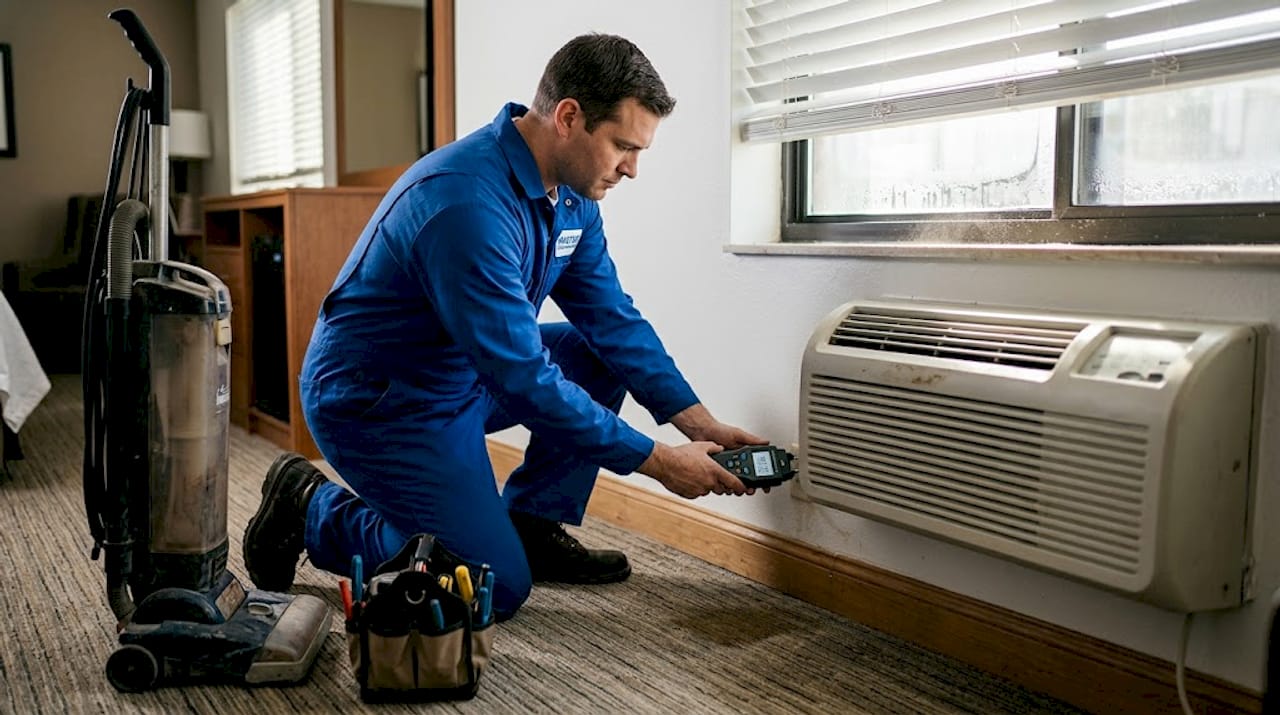
The core cause is humidity. When indoor relative humidity climbs above 60%, mold and mildew colonies can establish themselves on virtually any organic surface, including carpet backing, ceiling tiles, and wooden furniture frames. Coastal properties and older buildings are especially vulnerable, but no hotel is immune.
Key areas to inspect for moisture-related odors:
- Bathroom caulking, grout lines, and the underside of bath mats
- Air conditioning drain pans and evaporator coils
- Window seals and the wall cavities around them
- Under-bed carpet sections that rarely dry fully after wet mopping
Indoor air quality experts consistently emphasize that monitoring humidity below 60% is the single most effective preventive measure against mold-driven odors. Portable humidity monitors are inexpensive and can be placed in each room as part of a routine inspection checklist.
| Humidity level | Risk level | Recommended action |
|---|---|---|
| Below 50% | Low | Standard monitoring |
| 50% to 60% | Moderate | Increase ventilation, check AC drain |
| 60% to 70% | High | Deep inspection, dehumidify immediately |
| Above 70% | Critical | Professional assessment required |
Deep carpet extraction and fabric cleaning are essential in luxury settings because high-end materials like wool rugs and velvet upholstery trap moisture more readily than synthetic alternatives. Pairing physical cleaning with professional eco-friendly odor removal ensures that mildew compounds are neutralized rather than redistributed by cleaning equipment.
Pro Tip: Assign a rotating staff member specifically for “fresh nose” room checks. Someone who hasn’t been in the building for a few hours will detect subtle mustiness that the regular housekeeping team has stopped registering.
Chemical and cleaning product odors: The double-edged sword
Here is a reality most hotel operators don’t want to acknowledge: your cleaning products might be making the odor problem worse. Strong chemical scents, bleach, industrial disinfectants, and synthetic fragrance sprays signal to guests that something unpleasant was being covered up. It creates anxiety rather than comfort.
80% of travelers report disruption from odors including chemicals, placing artificial cleaning scents in the same category as smoke and mildew for guest dissatisfaction. That’s a significant operational insight. A room that smells aggressively of pine cleaner is not a clean room in the guest’s perception. It’s a room that smells like a problem was recently scrubbed away.
Steps to reduce chemical odor impact in hotel rooms:
- Audit your current cleaning product inventory and identify which items have the strongest synthetic fragrance profiles.
- Switch to scent-free or naturally derived alternatives for daily surface cleaning in guest rooms.
- Ensure adequate ventilation during and after cleaning, with windows open or HVAC running on exhaust mode for at least 30 minutes post-cleaning.
- Train housekeeping staff on proper product dilution ratios. Overuse of concentrated products is one of the most common causes of chemical odor buildup.
- Avoid layering multiple fragranced products in the same room, which creates an unpredictable chemical mix.
“Guests don’t want to smell your cleaning process. They want to smell nothing at all.”
| Cleaning agent type | Guest perception | Odor risk | Recommended use |
|---|---|---|---|
| Bleach-based disinfectant | Harsh, clinical | High | Bathrooms only, with ventilation |
| Synthetic fragrance spray | Masking, suspicious | High | Avoid in guest rooms |
| Enzyme-based cleaner | Neutral to positive | Low | All surfaces, especially fabrics |
| Plant-derived all-purpose | Fresh, natural | Low | General daily cleaning |
Switching to professional odor removal solutions that use enzyme-based or plant-derived formulas eliminates the source of odor rather than layering scent on top of it. This is especially important in upscale environments where guests are more likely to be sensitive to synthetic fragrances and more likely to leave a review when something smells off.
Other problematic hotel odors: Pets, food, and more
Beyond smoke, mildew, and cleaning products, several secondary odor sources accumulate quietly and collectively drag down the guest experience. Each one requires a targeted response rather than a generic air freshener approach.
Pet odors are increasingly relevant as more upscale hotels adopt pet-friendly policies. Animal dander and urine compounds bind deeply to carpet fibers and upholstery. A room that hosted a dog last Tuesday can still carry detectable odor the following weekend if only standard cleaning was applied. Enzyme-based treatments that break down organic compounds at the molecular level are the only reliable solution.
Food odors from room service, in-room dining setups, and minibar items can linger in soft furnishings and ventilation systems. Dishes left outside doors overnight create concentrated odor pockets in hallways that guests walk through on their way to and from their rooms.
Fitness and spa areas generate a unique combination of sweat, chlorine, and product odors that can migrate into adjacent corridors or elevator lobbies if ventilation is not actively managed. These spaces need dedicated air exchange systems, not just standard HVAC.
Aging plumbing produces hydrogen sulfide gas, the compound responsible for the classic “rotten egg” smell. This is common in older properties and often misdiagnosed as a cleaning issue when it’s actually a plumbing or drain maintenance issue.
| Odor source | Primary cause | Recommended response |
|---|---|---|
| Pet dander and urine | Organic compounds in fibers | Enzyme treatment, deep extraction |
| Food residue | Lingering oils and proteins | HEPA vacuuming, fabric treatment |
| Gym and spa | Sweat, chlorine, product buildup | Dedicated exhaust ventilation |
| Plumbing | Hydrogen sulfide from drains | Drain treatment, plumbing inspection |
Fast odor removal service is critical when a guest complaint is received. Resolving odor issues within 24 hours of a report prevents the situation from escalating to a negative review. A swift, professional response also demonstrates to guests that your property takes cleanliness seriously, which can actually convert a complaint into a positive impression.
Pro Tip: Keep a small supply of baking soda in your housekeeping carts for immediate absorption after pet or food incidents. Apply it dry to carpets or upholstery, let it sit for 20 minutes, then vacuum thoroughly before applying any professional treatment.
Comparison table: Odor types, sources, and removal methods
Use this reference to prioritize your odor management interventions across different areas of your property.
| Odor type | Common sources | Removal method | Priority level |
|---|---|---|---|
| Cigarette smoke | Guest smoking, HVAC transfer | HEPA filtration, hydroxyl treatment, fabric extraction | Critical |
| Marijuana smoke | Unauthorized use, balconies | Source inspection, hydroxyl treatment, surface sealing | Critical |
| Mildew and mold | Humidity, leaks, AC coils | Moisture control, enzyme cleaning, air filtration | High |
| Chemical cleaning | Product overuse, poor ventilation | Switch to enzyme-based products, ventilate post-clean | High |
| Pet odor | Dander, urine in fibers | Enzyme treatment, deep carpet extraction | Moderate to high |
| Food residue | Room service, minibar | HEPA vacuuming, fabric treatment, ventilation | Moderate |
| Plumbing | Drain gases, aging pipes | Drain treatment, plumbing inspection | Moderate |
| Gym and spa | Sweat, chlorine buildup | Dedicated exhaust, surface treatment | Moderate |
Why upscale hotels should rethink their odor management
Here’s the uncomfortable truth most hospitality consultants won’t say directly: premium finishes don’t neutralize odors. Marble countertops, designer lighting, and high-thread-count linens create a visual impression of luxury. But the moment a guest walks into a room and detects something off, every visual cue collapses. The brain processes smell faster than sight, and a single negative odor experience overrides an otherwise flawless room.
The misconception in upscale hospitality is that a well-maintained property with good HVAC and regular cleaning is inherently odor-free. It isn’t. High-end materials like natural fiber rugs, leather furniture, and hardwood flooring actually absorb and retain odor compounds more aggressively than the synthetic materials used in budget properties. Luxury settings require more vigilant odor management, not less.
Staff desensitization is a real operational risk. Fresh nose checks and rotated inspection assignments are not optional extras. They are essential quality controls. A housekeeper who has cleaned the same floor for two years will not reliably detect the subtle musty undertone that a first-time guest will notice within seconds of opening the door.
The other mistake is relying on a single-fix approach. One air freshener, one cleaning product, or one treatment cycle is not a system. Effective odor management requires layered protocols: source identification, physical removal, air filtration, humidity control, and periodic professional remediation. Any gap in that chain creates a vulnerability.
Partnering with luxury interior odor expertise gives your property access to diagnostic tools and treatment methods that go beyond what in-house teams can realistically maintain. Monthly third-party odor audits, in particular, provide an objective baseline that internal staff simply cannot replicate.
Pro Tip: Schedule a third-party odor audit every 30 days, rotating through different room categories, common areas, and back-of-house spaces. This gives you an objective, guest-perspective read on your property’s actual scent profile.
Eliminate stubborn hotel odors with professional solutions
Managing odor across a full-service hotel property is not a task that standard housekeeping protocols can fully address on their own. The sources are too varied, the materials too porous, and the guest expectations too high.

Master Odor Removal works directly with upscale hospitality operators to deliver permanent, science-backed odor elimination using eco-friendly, green-certified methods. No ozone, no chlorine, no masking agents. Our odor removal specialists are available same or next day, and every treatment is backed by a satisfaction guarantee. Whether you’re dealing with a persistent smoke issue in a premium suite, mildew in a coastal property, or chemical odor from aggressive cleaning routines, our green odor elimination approach addresses the source and restores a genuinely neutral, fresh environment. Contact us to schedule a consultation or rapid-response service for your property.
Frequently asked questions
Why do hotel rooms often smell musty even after cleaning?
Musty odors are usually caused by hidden moisture, persistent humidity above 60%, or mold growth in areas that regular cleaning doesn’t reach, such as AC coils or wall cavities.
What is the most effective way to remove smoke odor from a hotel room?
A layered approach using source inspection, HEPA/carbon air filtration, and professional hydroxyl treatment is most effective, as it neutralizes odor compounds rather than masking them.
How can staff avoid becoming “nose blind” to recurring hotel odors?
Rotate staff for room inspections and use fresh nose personnel who haven’t been in the building recently to detect subtle or recurring odors that regular housekeepers may no longer notice.
Which hotel odors are most likely to impact guest satisfaction?
Smoke, mildew, chemical cleaning products, pet, and food odors are the most common disruptors, with 80% of travelers reporting disruption from at least one of these categories during hotel stays.
Is scent masking with strong cleaning products recommended for luxury hotels?
No. Guests perceive strong artificial or chemical scents as a sign that something is being hidden. Source removal, ventilation, and enzyme-based cleaning are always preferable to fragrance masking.
Recommended
- Pet odor removal tips for hotels: keep rooms fresh – Master Odor Removal
- Eco-friendly odor removal for luxury hotels: 94% fewer complaints – Master Odor Removal
- Top 5 Odors That Impact Luxury Rentals: How to Eliminate Them – Master Odor Removal
- Indoor odors: identify, compare & control for luxury homes – Master Odor Removal
Recent Comments