
TL;DR:
- Odor management is critical for guest perception and reputation in luxury hospitality.
- Eco-friendly solutions like enzymatic cleaners and sensor technology effectively eliminate odors at the source.
- Preventive strategies and systems are essential for long-term freshness and avoiding costly reactive cleaning.
Upscale hotels and vacation rentals operate on razor-thin margins of guest perception. One lingering odor in a suite can trigger a scathing review that erases months of five-star ratings. Yet many luxury operators still treat odor management as an afterthought, relying on air fresheners and housekeeping sprays that mask problems rather than eliminate them. The reality is that even the most meticulously maintained properties face odor challenges from smoking, mold, food, and HVAC systems. This guide walks you through evidence-backed, eco-friendly strategies to permanently remove odors, protect your reputation, and deliver the consistently fresh experience your guests expect.
Table of Contents
- Understanding odor challenges in luxury hospitality
- Eco-friendly odor removal solutions and technologies
- Preventive strategies for sustaining freshness and guest satisfaction
- Handling smoke, mold, and persistent odors: Practical case studies
- The uncomfortable truth about odor management in luxury hospitality
- Explore premium odor removal solutions for luxury hospitality
- Frequently asked questions
Key Takeaways
| Point | Details |
|---|---|
| Odor impacts guest satisfaction | Persistent odors can damage upscale property reputation and reduce guest ratings. |
| Eco-friendly methods work best | Green odor removal strategies outperform conventional approaches for lasting, safe results. |
| Prevention is essential | Regular maintenance and sensor monitoring minimize odor risk and ensure freshness. |
| Case studies prove value | Data from luxury hospitality highlights measurable improvements in guest experience and operational efficiency. |
Understanding odor challenges in luxury hospitality
Let’s set the scene. A guest checks into a $600-per-night oceanfront suite. The linens are crisp, the minibar is stocked, and the view is stunning. Then they catch a faint whiff of stale cigarette smoke from the previous occupant. That single sensory moment can define their entire stay and their review.
Odors in luxury settings come from a surprisingly wide range of sources:
- Tobacco and marijuana smoke seeping into walls, carpets, and HVAC systems
- Mold and mildew growing behind walls, under flooring, or in bathroom grout
- Food and beverage residues from in-room dining and minibars
- Pet odors in pet-friendly suites
- Chemical residues from cleaning products that leave their own unpleasant scent
- Moisture buildup in coastal or humid climates that accelerates organic odor development
Guests at the luxury tier have heightened expectations. They are paying for a sensory experience, not just a bed. Research consistently shows that smell is one of the most powerful triggers of emotional memory, meaning a bad odor does not just annoy a guest. It becomes the story they tell.
“A single negative odor experience can override every other positive touchpoint in a guest’s stay, from the welcome drink to the turndown service.”
The financial stakes are real. Working with luxury odor removal specialists reveals a consistent pattern: properties that ignore odor management spend significantly more on reactive deep-cleaning, comp stays, and reputation repair than those that invest proactively.
The numbers reinforce this urgency. A luxury casino hotel reduced odor complaints by 94% after implementing predictive HVAC maintenance and molecular sensor technology. That is not a marginal improvement. It is a near-total elimination of one of the most damaging guest experience failures in hospitality.
The key takeaway here is that odor problems in upscale settings are not rare exceptions. They are structural risks baked into the nature of shared, high-traffic interiors. Recognizing that reality is the first step toward managing it effectively.
Eco-friendly odor removal solutions and technologies
Not all odor removal methods are created equal, and in upscale hospitality, the method matters as much as the result. Guests and staff are increasingly sensitive to harsh chemical treatments. Ozone machines, chlorine-based sprays, and heavy synthetic fragrances create their own problems, including respiratory irritation and residual chemical odors that can be just as off-putting as the original smell.
Here is a side-by-side look at conventional versus eco-friendly approaches:
| Approach | Effectiveness | Safety for guests | Environmental impact |
|---|---|---|---|
| Chemical masking sprays | Temporary | Moderate concern | High (VOC emissions) |
| Ozone treatment | Moderate | Requires evacuation | Moderate |
| Enzymatic bio-cleaners | High (targets source) | Safe | Low |
| Molecular sensor + HVAC | Very high | Fully safe | Very low |
| Bio-based botanical treatments | High | Safe | Very low |
Enzymatic cleaners work by breaking down the organic molecules that cause odors at the source. Rather than covering a smell, they eliminate the biological material producing it. This makes them especially effective for pet odors, food residues, and mold-related smells.
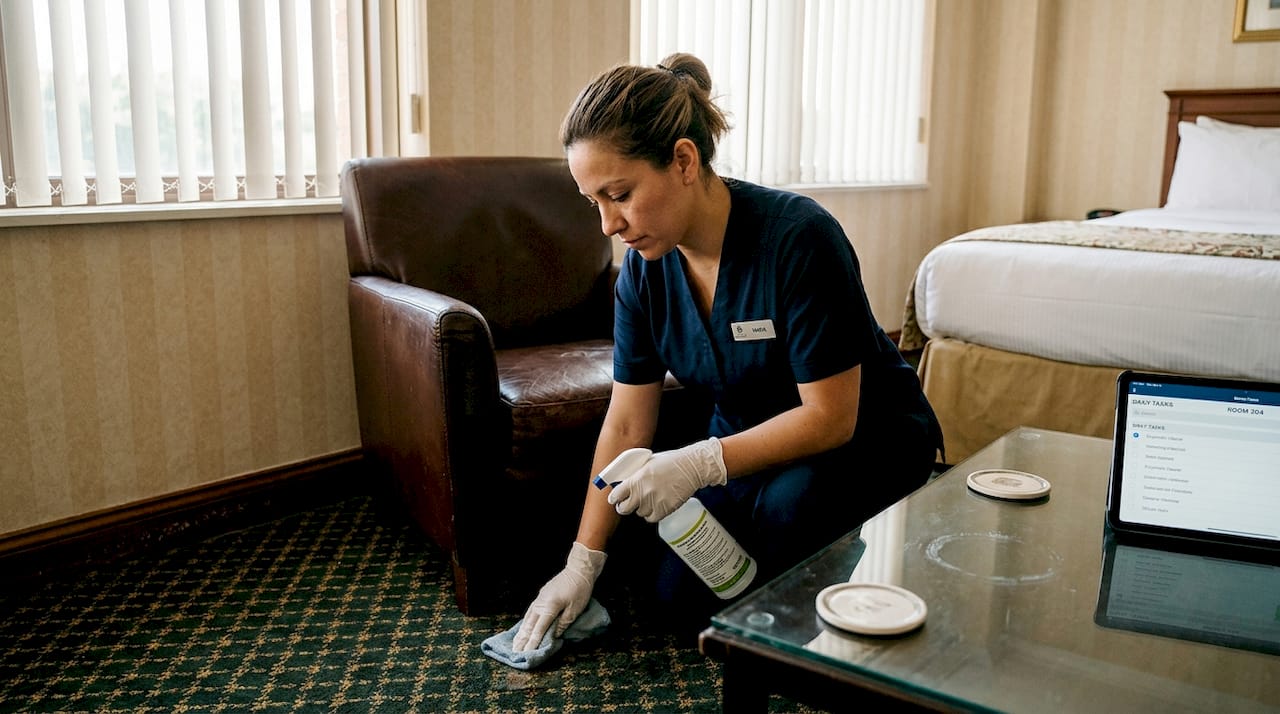
Sensor-driven interventions represent the frontier of eco-friendly odor management. Molecular sensors placed in high-risk areas detect odor compounds in real time, triggering targeted responses before smells spread through a property. HVAC predictive maintenance paired with these sensors contributed to sustained improvements in odor control and air quality across entire hotel floors.
Here is a practical sequence for implementing eco-friendly odor removal in your property:
- Audit your current products. Identify and phase out any ozone-based or chlorine treatments.
- Switch to enzymatic or bio-based cleaners for routine housekeeping.
- Install air quality sensors in smoking-adjacent zones, laundry areas, and HVAC intake points.
- Schedule HVAC deep cleaning quarterly, not just annually.
- Partner with certified specialists who use eco-friendly odor removal methods that meet green certification standards.
Pro Tip: Assess humidity and air quality in your property every 30 days. Elevated humidity above 60% accelerates mold growth and amplifies existing odors. A simple digital hygrometer in each zone costs under $20 and can flag problems before they become guest complaints.
Working with odor removal specialists who avoid ozone and chlorine is not just an ethical choice. It is a practical one that protects your guests, your staff, and your property’s long-term air quality.
Preventive strategies for sustaining freshness and guest satisfaction
Reactive odor removal is expensive and disruptive. Prevention is where smart operators gain their competitive edge. The goal is to build odor risk management into your daily and weekly workflows so that problems are caught early, not after a guest has already checked out and left a review.
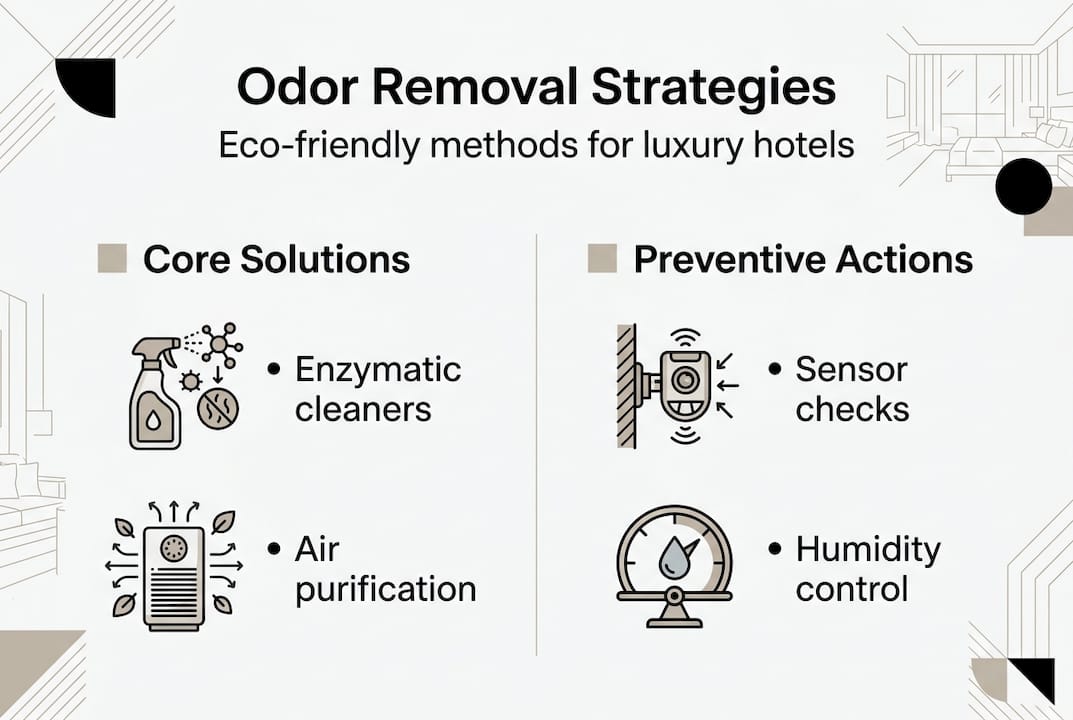
Here is a practical framework for ongoing prevention:
| Prevention activity | Frequency | Responsible team |
|---|---|---|
| Air quality sensor check | Daily (automated) | Facilities |
| HVAC filter inspection | Monthly | Maintenance |
| Deep HVAC cleaning | Quarterly | Contracted specialist |
| Humidity level audit | Weekly | Housekeeping lead |
| Mold inspection (high-risk zones) | Semi-annually | Licensed inspector |
| Full odor remediation service | Annually or post-incident | Odor removal specialist |
Consistent prevention also means addressing the root causes of moisture and mold before they become odor emergencies. Mold remediation, when done correctly, sustained 10+ years of no recurrence in properties that kept relative humidity below 60%. That is a decade of freshness from a single well-executed intervention.
Key prevention habits your team should build into every turnover:
- Open windows and run ventilation for a minimum of 20 minutes between guest stays
- Check under beds, behind furniture, and inside closets for moisture or biological residue
- Use bio-based cleaners on all soft surfaces, not just hard floors
- Flag any musty or unusual smell immediately rather than masking it with spray
To prevent odors sustainably, you need systems, not just products. Operators who treat odor prevention as a facilities management discipline rather than a housekeeping task see dramatically better long-term results.
Pro Tip: Implement sensor-based alerts in your highest-risk zones: smoking-adjacent corridors, laundry rooms, and ground-floor rooms in humid climates. Automated alerts let your team respond within minutes rather than hours, stopping odor spread before it reaches neighboring suites. This is especially valuable during high-occupancy periods when manual checks are harder to maintain consistently.
For properties undergoing turnover between tenants or seasonal closures, a professional move-in/out odor removal service provides a clean baseline that no amount of routine housekeeping can replicate.
Handling smoke, mold, and persistent odors: Practical case studies
Theory is useful. Results are more convincing. Here is what real-world implementation looks like in an upscale hospitality environment.
A luxury casino hotel facing chronic smoking complaints installed molecular detection sensors throughout its property. The outcome was striking. The property reduced smoking incidents by 32.4%, collected significant fees, and cut extra cleanings by pinpointing exactly where and when violations occurred. Instead of blanketing entire floors with reactive cleaning, staff could respond to precise locations within minutes.
What made this approach work in an upscale context:
- Precision over volume. Sensors eliminated guesswork, so resources were deployed where they were actually needed.
- Data-backed accountability. Timestamped sensor data gave management the evidence to enforce no-smoking policies and charge fees confidently.
- Eco-conscious remediation. Molecular treatments targeted specific compounds without exposing guests or staff to harsh chemicals.
- Sustained results. The combination of detection, remediation, and HVAC maintenance created a system rather than a one-time fix.
“The most effective odor management programs in luxury hospitality share one trait: they treat odor as an operational metric, not a housekeeping footnote.”
For permanent smoke odor removal in suites where violations have occurred, surface-level cleaning is never enough. Smoke molecules bond to porous materials including drywall, carpet backing, and upholstery foam. Effective remediation requires a structured smoke odor removal workflow that addresses every layer of the interior, not just the surfaces you can see.
The lesson from these case studies is clear. Operators who invest in detection technology and eco-friendly remediation protocols do not just solve odor problems. They build systems that prevent them from recurring, protect their revenue, and give guests the consistently fresh experience that earns repeat bookings.
The uncomfortable truth about odor management in luxury hospitality
Here is something most consultants will not tell you: luxury branding does not protect you from odor problems. It amplifies them. When guests pay premium rates, their tolerance for any sensory failure drops to near zero. A budget traveler might shrug off a faint musty smell. A luxury guest will photograph it, post it, and mention it in every review platform they can find.
The operators who struggle most are those who believe their premium finishes and high-end cleaning products are enough. They are not. Marble floors and Egyptian cotton sheets do not neutralize smoke molecules embedded in HVAC ductwork.
What actually works is consistent investment in detection, remediation, and prevention as a year-round operational priority, not a crisis response. The insights from luxury specialists we work with confirm this repeatedly: the properties with the best odor track records are the ones that treat it like a revenue-critical system, because it is.
Explore premium odor removal solutions for luxury hospitality
Your guests notice everything, and a fresh, neutral interior is one of the most powerful signals of quality you can deliver. If your current odor management strategy relies on masking products or reactive cleaning, there is a better path.

Master Odor Removal provides premium odor removal services built specifically for upscale hospitality environments. Our licensed professionals use green odor elimination techniques that are safe for guests, staff, and the environment, with no ozone or chlorine treatments. Same or next-day availability means you never have to delay a guest check-in waiting for remediation. Connect with our odor removal specialists today to build a customized plan that protects your property and your reputation year-round.
Frequently asked questions
What are the most common sources of odors in luxury hotels?
Smoking, mold, lingering food smells, and chemical residues are the primary odor sources in luxury hotels. A luxury casino hotel case study targeted molecular smoking detection and mold remediation as its two highest-priority odor categories.
How can eco-friendly odor removal methods outperform conventional approaches?
Eco-friendly methods eliminate odors at the source rather than masking them, making results more durable and safer for guests and staff. Properties using predictive HVAC maintenance and molecular sensors cut odor complaints by 94% without harsh chemical treatments.
What is the best way to prevent recurring mold and musty odors?
Maintaining relative humidity below 60%, using sensor-based monitoring, and scheduling professional mold remediation keeps properties fresh long-term. One luxury property sustained 10+ years of no mold recurrence using this exact combination.
How do sensor-driven technologies improve odor detection in upscale hospitality?
Sensors identify the precise location and timing of odor sources, enabling targeted cleaning rather than floor-wide reactive responses. This approach helped one luxury hotel reduce smoking incidents by 32.4% and significantly cut extra cleaning costs.
Are eco-friendly odor removal products suitable for all hospitality environments?
Yes, bio-based and enzymatic treatments are safe and effective across hotels, vacation rentals, private clubs, and upscale event venues. Luxury properties using eco-friendly technologies consistently report better guest satisfaction and lower long-term remediation costs than those relying on conventional chemical treatments.
Recommended
- Odor removal standards explained: guide for eco-friendly interiors – Master Odor Removal
- Pet odor removal tips for hotels: keep rooms fresh – Master Odor Removal
- Identify signs of persistent odors in luxury properties – Master Odor Removal
- Next-day odor removal: Fast, eco-friendly luxury solutions – Master Odor Removal
- Why choose smokeless fire solutions for eco-friendly ambiance
Recent Comments