
TL;DR:
- Eco-friendly odor removal targets sources and protects high-end finishes, unlike masking agents.
- Proper assessment of humidity and surfaces is essential for lasting odor elimination in luxury interiors.
- Persistent odors may require professional treatments like enzyme cleaning and hydroxyl generation.
Persistent odors in high-value interiors are more than a nuisance. They erode client confidence, delay transactions, and can quietly undermine a property’s market position in ways that no staging or renovation can fix. Many conventional deodorizing products rely on heavy masking agents or harsh chemicals that risk damaging premium finishes like marble, hardwood, silk wallcoverings, and hand-stitched leather. For property managers and agents who hold themselves to a higher standard, that’s an unacceptable trade-off. This guide walks through a proven, eco-friendly framework for eliminating interior odors at the source, protecting sensitive surfaces, and delivering the kind of neutral, fresh environment that luxury clients expect on day one.
Table of Contents
- Understanding the science behind luxury interior odors
- Preparing interiors: Assessment and eco-friendly prerequisites
- Step-by-step eco-friendly deodorizing methods for luxury interiors
- Troubleshooting and professional escalation for persistent odors
- The truth about eco deodorization in high-end properties
- Partnering with experts for flawless, eco-friendly results
- Frequently asked questions
Key Takeaways
| Point | Details |
|---|---|
| Source control is critical | Identifying and addressing the root cause of odors protects luxury interiors better than masking scents. |
| Eco-methods work for surface odors | Baking soda, vinegar, and activated charcoal are effective for mild to moderate odors if applied correctly. |
| Monitor humidity and airflow | Maintaining humidity between 30–50% and ensuring proper ventilation prevents odor recurrences and mold. |
| Call pros for persistent odors | Professional intervention with advanced equipment may be required for deep-seated or recurring smells. |
| Protect delicate finishes | Always tailor deodorizing strategies to safeguard hardwood, leather, and specialty materials common in upscale properties. |
Understanding the science behind luxury interior odors
Before any product touches a wall or floor, you need to understand why odors behave the way they do inside premium properties. Odor molecules are volatile organic compounds (VOCs) that bind to porous materials over time. Soft furnishings, natural fiber rugs, acoustic ceiling panels, and even hardwood floors act as reservoirs, trapping and slowly re-releasing odor-causing particles. The longer the source goes untreated, the deeper the penetration.
Humidity is a major amplifier. High humidity above 60% RH enables mold growth and significantly worsens the persistence and intensity of odors inside luxury interiors. Mold doesn’t just smell. It structurally compromises the organic materials it colonizes, including the kinds of premium substrates found in estate homes and high-end commercial spaces.
The most common odor culprits in luxury properties include:
- Pet odors: Urine and dander proteins bind aggressively to fabric and subfloor materials
- Tobacco and marijuana smoke: Volatile compounds penetrate walls, HVAC systems, and upholstery fibers at a molecular level
- Mold and mildew: Frequently hidden behind built-in cabinetry, wet bars, and wine cellars in high-end homes
- VOC buildup: Off-gassing from new materials, adhesives, paint, and furnishings creates a “new but chemical” smell
- Food and cooking residues: Especially in open-plan kitchens with porous natural stone
“Eco-friendly deodorization is not about applying the least aggressive product. It’s about finding the source, removing it, and then treating what remains. Masking an odor in a luxury property is the fastest way to lose a client’s trust.”
The distinction between masking and neutralizing is the foundation of every professional eco-friendly workflow. Here’s how the two approaches compare:
| Factor | Traditional masking | Eco-friendly neutralization |
|---|---|---|
| Mechanism | Overrides odor with fragrance | Eliminates odor molecules at the source |
| Duration | Hours to days | Permanent once source is removed |
| Surface safety | Often contains solvents | Formulated to protect sensitive finishes |
| Air quality impact | May add VOCs | Reduces total VOC load |
| Client perception | Fragrance-dependent | Neutral, clean, odor-free result |
Property managers who want lasting results for their luxury assets need workflows for luxury interiors that go far beyond spraying a room with fragrance and calling it done. The science demands a structured, source-first approach every time.
Preparing interiors: Assessment and eco-friendly prerequisites
Now that you understand the science, let’s explore what to assess and prepare before applying any deodorization technique. Skipping this phase is the most expensive mistake a property manager can make. Applying even the gentlest eco-friendly treatment to an unassessed space risks missing the real source, which means the odor returns and the client relationship suffers.
Site assessment checklist:
- Measure relative humidity (RH) in every room, closet, and utility space
- Map airflow patterns and note any areas with poor ventilation
- Identify previous treatments (odor bombs, carpet shampoos, paint-overs) that may have masked the issue
- Catalog surface types: hardwood, natural stone, silk, leather, wool, lacquered wood
- Locate HVAC intakes and returns; note filter age and condition
- Document odor intensity by zone using a simple 1 to 5 scale for the property record
Measuring RH is not optional in luxury property work. Maintaining RH between 30% and 50% is the standard recommended by both ASHRAE and the EPA to prevent mold growth and odor recurrence. Use a calibrated digital hygrometer, not a cheap hardware-store model. In humid climates or properties with limited ventilation, you may find RH readings above 65% in interior closets and bathrooms even when the main living areas seem dry.
Optimal interior environment data for luxury properties:
| Parameter | Optimal range | Action if out of range |
|---|---|---|
| Relative humidity | 30% to 50% RH | Deploy dehumidifier or humidifier |
| HVAC filter replacement | Every 90 days | Replace immediately; document date |
| Surface cleaning frequency | Monthly for high-traffic areas | Increase to biweekly if odors detected |
| Air exchange rate | 0.35 ACH minimum | Improve ventilation or add ERV/HRV |
You can see real-world odor elimination results from properties where proper assessment made the difference between a one-visit resolution and a months-long problem.
Pro Tip: Create a written site assessment report for every property, including RH readings, surface types, identified odor sources, and prior treatment history. This document protects you professionally, sets clear expectations with owners, and provides a benchmark for post-treatment verification. It’s also a powerful differentiator when competing for premium management contracts.
Proper preparation is what separates professional results from amateur attempts. Luxury clients aren’t paying for a product. They’re paying for a process that delivers certainty.
Step-by-step eco-friendly deodorizing methods for luxury interiors
With the space assessed and prepped, it’s time to implement odor removal with eco-friendly precision. The following methods apply to properties where odors are present but have not yet penetrated deeply into structural materials or HVAC systems.
Eco-friendly deodorization sequence:
Remove the source. No treatment works if the source remains. Remove contaminated materials, clean pet stains with an enzyme-based cleaner, and fix any moisture intrusion before proceeding.
Apply baking soda to soft surfaces. Baking soda neutralizes acidic odors through absorption. Sprinkle it onto carpets, area rugs, and upholstered furniture, let it sit for a minimum of 15 minutes (overnight is better for stronger odors), then vacuum thoroughly. This is safe for virtually all fabric types in luxury settings.
Use white vinegar for alkaline odors. White vinegar neutralizes smoke and cooking odors effectively. Place small bowls of undiluted white vinegar in the affected room overnight, or use a 1:4 vinegar-to-water spray on painted walls and hard, non-porous surfaces. Critical caution: never apply vinegar to hardwood floors, natural leather, or natural stone surfaces, as the acetic acid will etch and degrade premium finishes.
Deploy activated charcoal in enclosed spaces. Place activated charcoal bags or containers inside closets, cabinetry, and vehicles. Charcoal adsorbs (not just absorbs) odor molecules and excess moisture simultaneously, making it ideal for wine cellars, walk-in wardrobes, and storage rooms in high-end properties.
Ventilate aggressively and strategically. Open windows at opposing ends of the space to create cross-ventilation. Run ceiling fans on their highest setting for at least two hours after treatment. If the property is in a humid climate, use filtered air circulation rather than open windows.
Vacuum with a HEPA-filter vacuum. Standard vacuums recirculate fine particles and odor-carrying debris. HEPA-filter vacuums trap particles as small as 0.3 microns, preventing odor recirculation. This is mandatory when treating pet dander, smoke residue, or mold spores.
Pro Tip: For a move-in cleaning service scenario, run the activated charcoal stage for 48 to 72 hours before the new occupant arrives. It’s one of the most passive yet effective odor removal tools available and requires zero risk to any luxury surface.
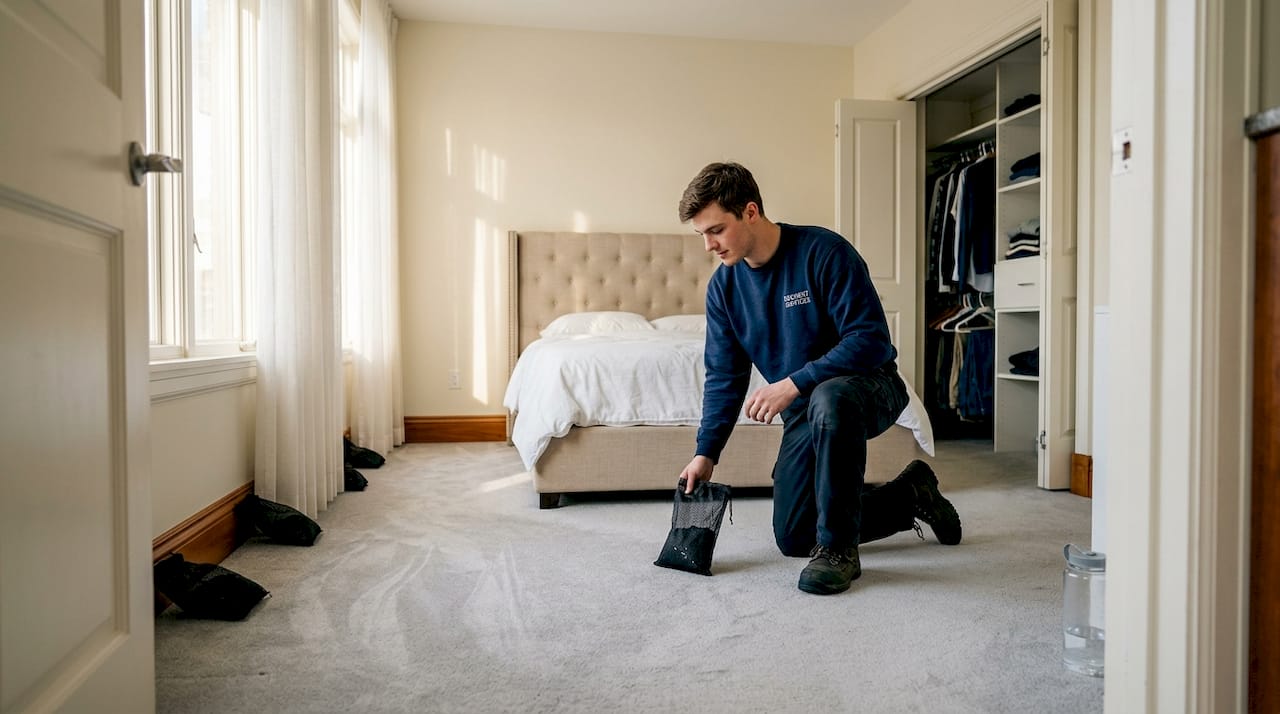
It’s also worth noting that these DIY methods work well for surface odors in properties that have been reasonably maintained. For workplace odor remedies and multi-tenant buildings, the thresholds for escalating to professional treatment are significantly lower because odors spread through shared HVAC systems and affect multiple units simultaneously.
Troubleshooting and professional escalation for persistent odors
Even with diligent effort, some odors won’t yield to household techniques. Here’s what to do next.
When DIY methods don’t resolve an odor after two full treatment cycles, the source is almost certainly embedded deeper than surface-level treatment can reach. This is common in properties where smokers lived for years, where pets had unrestricted access, or where water damage created mold colonies inside wall cavities.
Standard troubleshooting sequence for persistent odors:
- Re-inspect the HVAC system. Pull the air handler cabinet and look for visual contamination on coils and blower wheels. Odor-saturated ductwork can re-contaminate every room simultaneously.
- Check subfloor conditions beneath carpet or floating wood floors. Pet urine, in particular, wicks through carpet backing and padding to soak into the subfloor, where it crystallizes and becomes nearly impossible to remove without professional enzyme treatment.
- Inspect wall cavities near plumbing lines and exterior walls. Mold colonies in these areas generate persistent musty odors that no surface treatment will eliminate.
- Review the property’s ventilation record. Chronic under-ventilation creates compounding odor problems that accumulate over years, not months.
Signs that eco-safe professional intervention is required:
- Odor returns within 48 hours of treatment
- Odor is detectable only when the HVAC system runs
- Multiple rooms are affected despite isolated source removal
- The property has a history of flooding, water intrusion, or long-term occupancy without professional cleaning
- Luxury finishes show staining or discoloration associated with the odor source
For tobacco smoke residue removal in particular, the residue, called thirdhand smoke, embeds in drywall, ceiling texture, and porous stone at a molecular level. Standard cleaning products, even aggressive ones, rarely resolve this completely.
“For deeply embedded odors, the professional protocol is sequential: remove the physical source, apply enzyme-based deep cleaning, run hydroxyl generation combined with HEPA air scrubbing, seal surfaces where necessary, and then verify VOC levels with a meter before sign-off. Skipping any of these steps is how odors come back and how professionals lose their reputation.”
Professional-grade hydroxyl generation is one of the most effective tools available to tobacco odor professionals. Unlike ozone, hydroxyl treatment is safe to run in occupied environments and does not damage electronics, artwork, or sensitive textiles. This is a critical distinction for luxury properties where the contents are often as valuable as the structure.
Working with luxury odor specialists who understand the difference between a mass-market rental property and a curated, high-value interior is not optional when the stakes include multi-million dollar listings, sensitive artwork, or designer finishes that cannot be replaced.
The truth about eco deodorization in high-end properties
Here’s what most guides won’t tell you: the standard eco-friendly advice circulating online was written for homeowners dealing with everyday odors in average homes. It was not written for the environments you manage. Most of that advice stops at baking soda and vinegar, and for good reason. Those tools work. But they have a ceiling, and that ceiling is lower than many property managers realize.
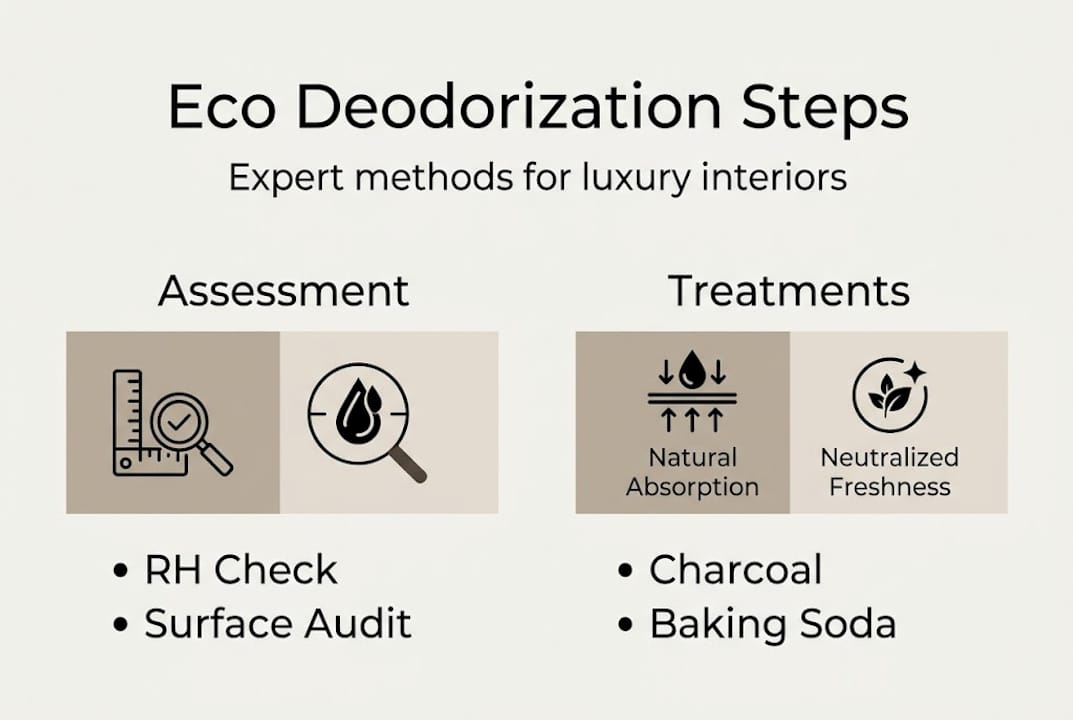
DIY eco-methods like baking soda, vinegar, and charcoal handle surface odors effectively. They cannot penetrate deeply embedded odor sources without risking surface damage from repeated application. In a luxury property, repeated over-treatment with even gentle products causes cumulative wear on natural fibers, lacquered surfaces, and stone sealants.
The real opportunity for property managers is to position eco-friendly odor management as a documented premium amenity, not just a cleaning task. When you can show owners and prospective tenants a written protocol that includes air quality verification, surface-safe methods, and professional escalation criteria, you are no longer selling a clean-smelling room. You are selling documented asset protection.
Luxury odor expertise is a differentiator in an industry where most competitors are still reaching for the air freshener can. Make it a line item in your property care documentation and you’ll find clients value it more than almost any other service detail.
Partnering with experts for flawless, eco-friendly results
When eco-friendly DIY methods aren’t enough, here’s how you can guarantee premium results for your clients and tenants.

Master Odor Removal specializes in green odor elimination for exactly the environments you manage. No ozone. No chlorine. No shortcuts that put your clients’ finishes or health at risk. Our licensed professionals follow a verified, sequential treatment protocol that addresses odors at the molecular level while protecting every surface in the room. Same-day and next-day availability means you’re never left waiting when a listing or turnover is on the line. When you need odor removal done right the first time, with full documentation and a satisfaction guarantee, our luxury deodorization specialists are the call to make.
Frequently asked questions
What is the safest eco-friendly deodorizer for sensitive luxury interiors?
Baking soda and activated charcoal are safe for most luxury surfaces, but always test in an inconspicuous area first. Avoid acids like vinegar on hardwood, natural leather, or polished stone, as they will etch and damage premium finishes.
How do I prevent odor recurrence in humid climates?
Maintain relative humidity at 30 to 50%, vent all exhaust fans outdoors, use dehumidifiers in high-moisture areas, and replace HVAC filters every 90 days to block mold growth and odor cycling.
When should I hire a professional odor removal specialist?
If odors return within 48 hours of treatment, originate from HVAC or subfloor materials, or involve smoke or pet contamination, bring in a professional. Sequential pro treatment covering source removal, enzyme cleaning, hydroxyl generation, and VOC verification is the only reliable solution for deeply embedded odors.
Do eco-friendly odor methods work as well as chemicals?
They work well for surface odors. For deeply embedded or chemical-based smells in luxury assets, professional molecular neutralizers outperform DIY methods without risking surface damage from harsh chemical alternatives.
Recommended
- Odor removal guarantees: How luxury properties stay fresh – Master Odor Removal
- Odor neutralization: eco-friendly solutions for luxury – Master Odor Removal
- Identify signs of persistent odors in luxury properties – Master Odor Removal
- Professional Odor Removal: Luxury Eco-Friendly Solutions – Master Odor Removal
Recent Comments