
That musty blast when you start the AC is almost always mold or bacteria growing on the evaporator core, where condensation collects every time the system runs. Fix it in three moves before you call anyone:
- Check the cabin air filter. Pull it out. If it’s gray, damp, or smells like a wet basement, replace it.
- Look for the condensate drip. Get under the passenger side of the dash, near the firewall, and check for a puddle or an active drip while the AC runs. No drip usually means a clogged drain.
- Treat the plenum or evaporator. A ventilated plenum spray handles light odor; a foaming evaporator cleaner handles the real biofilm buildup.
If the smell comes back within days, the carpet or padding is soaked, you see actual mold growth, or anyone in the car starts coughing or getting headaches, stop treating it yourself and get a professional to look at the housing directly.
Key Takeaways
Persistent musty car AC smell almost always traces back to biofilm on the evaporator core, and permanent removal requires clearing the drain and physically treating that core, not just masking the odor.
| Point | Details |
|---|---|
| Start with the filter | A moldy or overdue cabin air filter is the fastest fix and the first thing to check. |
| Confirm the drain works | Look for a steady drip under the passenger firewall; no drip means a clog. |
| Foam beats spray for buildup | Foaming evaporator cleaner dissolves biofilm on the fins; plenum spray only handles surface bacteria. |
| Dry the system after every drive | Running the blower on high with AC off for a couple minutes prevents standing moisture. |
| Call a pro for recurring or soaked cases | Masterodorremoval opens the evaporator housing directly and treats soaked padding with eco-friendly, non-ozone methods. |
Table of Contents
- Why Your Car AC Smells Like Mildew in the First Place
- Step-by-Step: How to Get Rid of the Musty AC Smell Yourself
- When Should You Call a Professional for AC Mildew Smell?
- Preventing Mildew Smell From Coming Back
- What Does Each Type of AC Smell Actually Mean?
- Frequently Asked Questions
- Sources
Why Your Car AC Smells Like Mildew in the First Place
Your evaporator core is a metal radiator, sitting behind the dash, that gets ice cold every time the AC compressor kicks on. Warm, humid cabin air passes over those cold fins, and water condenses out of it, the same way a cold glass of iced tea sweats on a summer porch. That water is supposed to drip down into a drain pan and out through a tube under the car. When it does, no problem.
The trouble starts because the evaporator never fully dries between drives. Consumer Reports notes that trapped moisture on the coils, combined with the dust, pollen, and skin cells your cabin air filter didn’t catch, forms a biofilm. That thin, slimy layer of mold and bacteria is what actually produces the musty odor, not the water itself.
A few conditions make this worse:
- A dirty or missing cabin air filter lets more organic debris reach the evaporator surface.
- A cracked or clogged cowl intake (where outside air enters at the base of the windshield) feeds in leaves, dirt, and standing water.
- A blocked condensate drain lets water pool in the housing for days instead of draining within hours.
The location of the smell also tells you something. A musty, locker room odor almost always points to the evaporator. A sweet, syrupy smell is a different animal entirely: that’s usually coolant leaking from the heater core, and it’s a reason to stop driving, not a reason to spray disinfectant.
Step-by-Step: How to Get Rid of the Musty AC Smell Yourself
Work through these in order. Each step either fixes the problem outright or rules something out before you spend money on the next one.
Pull and inspect the cabin air filter. It usually sits behind the glove box or under the hood, and most owner’s manuals show the exact panel. AutoZone recommends regularly replacing the cabin air filter according to your vehicle’s usage and conditions, and if it’s damp, moldy-looking, or has that same musty smell up close, swap it immediately regardless of mileage.
Check and clear the condensate drain. With the AC running on high for a few minutes, look for a steady drip under the passenger-side firewall, usually a small rubber or plastic tube hanging low near the transmission tunnel. No drip means a clog. Jalopnik’s repair guide recommends clearing it with gentle suction from a wet/dry vacuum at the drain outlet rather than shoving a wire up into the tube, which can puncture the thin plastic evaporator housing and turn a $10 fix into a $600 one.
Spray the plenum intake. Remove the cabin filter, run the blower on high with the AC off, and spray a ventilated plenum disinfectant into the cowl intake following the can’s instructions. This kills surface bacteria in the ductwork but rarely reaches deep into the evaporator fins, so treat it as maintenance, not a cure for an established mildew problem.
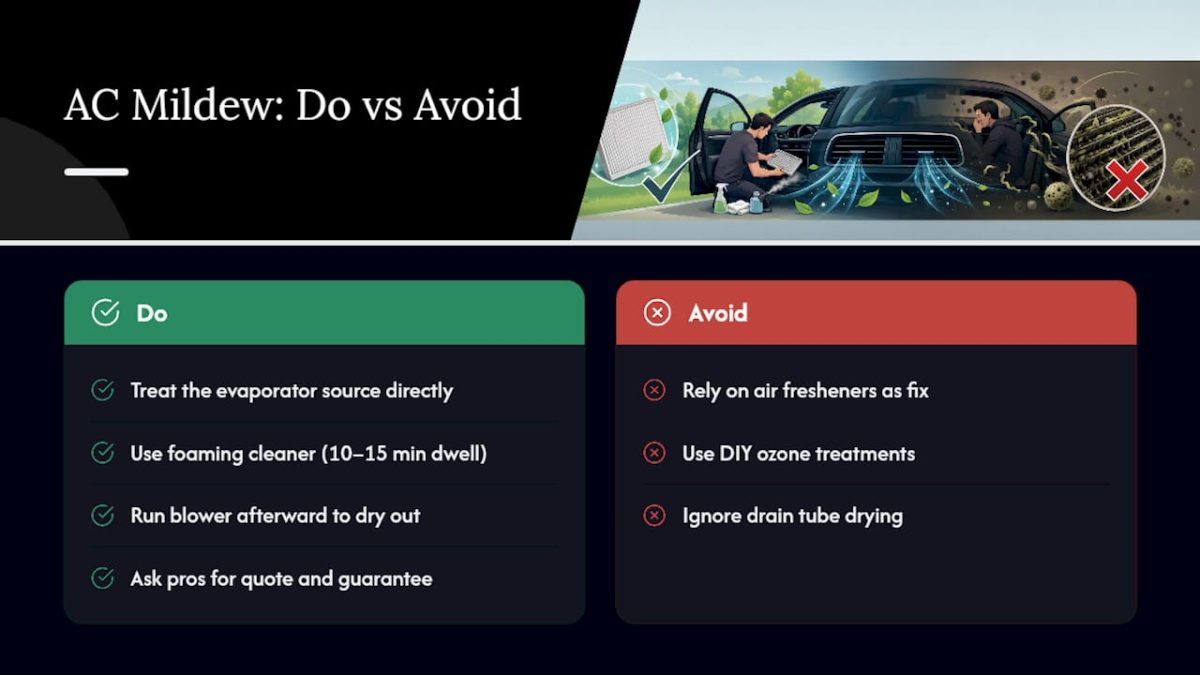
Apply a foaming evaporator cleaner for real buildup. These cans expand into foam once sprayed through the drain tube or an access port near the evaporator housing. Rick’s Free Auto Repair Advice explains that the foam coats the fins, breaks down the biofilm chemically, then liquefies and drains out through the same condensate tube you just cleared. Let it sit the full dwell time on the label, usually 10 to 15 minutes, before running the system again.
Dry everything out. Run the blower on high with the AC compressor off for two or three minutes before you shut the car off. Come back the next day and smell test it.
Pro Tip: Skip aerosol disinfectants that warn against use near electrical components, and never attempt a DIY ozone treatment inside the cabin. Ozone reacts with rubber, foam, and wiring insulation over time and won’t fully reach the evaporator core anyway.
When Should You Call a Professional for AC Mildew Smell?
Some situations are past the point where a can of foam solves anything. Call a professional if you’re dealing with:
- Odor that returns within a week or two of a proper filter, drain, and foam treatment
- Visibly wet carpet or padding, especially on the passenger floor
- Mold you can actually see, not just smell, on vents or upholstery
- Coughing, headaches, or other symptoms that show up specifically when the AC runs
- Two or more DIY attempts that haven’t held
A shop or specialist can open the full evaporator housing rather than working through a drain tube, which means direct mechanical removal of biofilm instead of hoping foam reaches every corner. Professionals working with odor damage also carry eco-friendly, non-ozone treatment protocols for fabric and padding, since surface cleaning alone rarely removes odor that’s soaked into seat foam or headliner material. When you call, ask about warranty terms, whether they use ozone or chlorine (both can damage interior materials over repeated use), and how long the vehicle needs to sit.
Preventing Mildew Smell From Coming Back
The habits that stop mildew from returning cost nothing and take seconds.
- Replace the cabin air filter on schedule, and open it up for a quick look any time you notice even a faint odor.
- Run the blower on high with the AC off for the last couple minutes of every long drive. Consumer Reports flags this as one of the simplest ways to dry the evaporator before moisture has a chance to sit overnight.
- Skip full-time recirculation mode. It feels efficient, but it also traps humid cabin air against the evaporator instead of cycling in drier outside air.
- Keep the cowl intake at the base of your windshield clear of leaves and debris, since a blocked intake pushes more organic material toward the evaporator.
- Run the AC for a few minutes even in winter. The compressor needs regular use to stay lubricated, and an evaporator that never gets cold never gets the chance to condense and flush moisture properly.
- If the car sits in storage, a silica gel pack or charcoal bag on the dashboard absorbs ambient humidity while nobody’s driving.
Pro Tip: Mark your filter replacement on the same schedule as your oil change. You’ll never forget it, and you’ll catch a moldy filter before it becomes a moldy evaporator.
What Does Each Type of AC Smell Actually Mean?
| Smell | Likely Cause | First Action |
|---|---|---|
| Musty, like a wet basement | Mold or mildew on the evaporator | Replace filter, apply foaming evaporator cleaner |
| Sour, like vinegar | Bacterial buildup in ductwork | Enzymatic cleaner or professional cleaning |
| Sweet, like maple syrup | Coolant leak from the heater core | Stop driving, have a mechanic inspect it |
| Burning or chemical | Electrical or mechanical fault | Stop driving, get it diagnosed immediately |
Motor1’s breakdown of AC odors backs this pattern up, and it’s worth remembering that a sweet or burning smell isn’t a mildew problem at all. Spraying foam into an evaporator when the real issue is a coolant leak just delays the repair you actually need.
Why we lean eco-friendly on remediation
Chlorine and ozone treatments can mask odor fast, but they degrade leather, foam, and wiring insulation with repeated use, especially in luxury interiors clients can’t afford to damage. Non-ozone, green-certified methods that physically remove biofilm from the evaporator housing and treat soaked padding directly tend to hold up longer without that tradeoff. Full housing access also means recurrence is far less likely than with a can of foam sprayed through a drain tube.
Get Rid of Car AC Mildew Smell for Good
If you’ve already replaced the filter, cleared the drain, and run a foaming cleaner through the evaporator and the musty smell keeps coming back, the biofilm has probably worked its way somewhere a DIY spray can’t reach.

Masterodorremoval opens the evaporator housing directly instead of working blind through a drain tube, and treats any odor that’s already soaked into carpet padding or foam using eco-friendly, non-ozone protocols safe for leather and luxury trim. For readers who work in HVAC-adjacent trades or want more on air duct disinfecting methods generally, the folks at Air and Dryer Vent Cleaning Avondale cover similar ground for home systems. If your car’s smell has survived two or more DIY rounds, or you’re dealing with a dealership trade-in that needs to smell showroom-fresh before it goes on the lot, book a commercial or personal odor removal appointment and get a same-day or next-day evaluation.
Frequently Asked Questions
Why does my car AC smell like mildew only when I first start it?
That first blast of musty air happens because moisture and biofilm sit undisturbed on the evaporator while the car is parked. Once airflow gets moving, the smell often fades within a minute or two, though it will keep coming back until you treat the source.
Can I just use an air freshener to cover the smell?
Air fresheners and aerosol sprays mask the odor temporarily but don’t reach the evaporator core or break down the biofilm causing it. The smell returns, often within a day, because the actual mold and bacteria colony is untouched.
How long does a foaming evaporator cleaner take to work?
Most products need 10 to 15 minutes of dwell time to break down biofilm before draining, and you should run the blower afterward to dry everything out. Full odor elimination sometimes takes a day or two as trapped moisture continues clearing the drain tube.
Is it safe to use an ozone generator in my car to kill AC mold?
DIY ozone treatment isn’t recommended. Ozone can degrade rubber, foam, and interior wiring insulation with repeated exposure, and it doesn’t reliably reach mold growing deep inside the evaporator housing the way a targeted foam or professional treatment does.
How much does professional car AC mildew removal typically cost?
Costs vary by vehicle and how deep the odor has penetrated fabric or padding, so it’s worth asking for a quote based on your specific symptoms. Ask directly about turnaround time and whether the service guarantees results.
Sources
- How to Get Rid of the Musty Smell From Your Car’s Air Conditioner – Consumer Reports
- How often should you change your vehicle’s air filters – AutoZone DIY
- Why your car smells like mildew — How to stop it – Rick’s Free Auto Repair Advice
- Your car’s AC stinks when you turn it on. Here’s why – Jalopnik
- Your car’s AC stinks when you turn it on. Here’s why – Motor1
Recent Comments