
TL;DR:
- Mildew odor indicates active fungal growth caused by moisture in the vehicle interior.
- The smell is earthy and sour, often originating from hidden sources like vents or padding.
- Effective removal requires eliminating moisture, deep cleaning, and professional treatment if persistent.
That musty smell in your car is not just unpleasant. It is a sign that something biological is growing inside your vehicle, and no amount of pine-scented air fresheners will fix it. Most car owners make the mistake of reaching for a spray or a hanging deodorizer, only to find the smell returns within days. Mildew odor is stubborn because its source, living fungal growth embedded in fabric, padding, and vents, is still active. This guide walks you through how to correctly identify mildew odor, understand what is driving it, and remove it using safe, eco-friendly methods that actually last.
Table of Contents
- Understanding mildew odor in cars: Causes and risks
- Detecting mildew odor: Signs, symptoms, and overlooked sources
- Practical steps to eliminate mildew odor from your car
- Preventing mildew odor: Maintenance and eco-friendly habits
- Our take: What most guides get wrong about car mildew odor
- Professional, eco-friendly mildew odor removal solutions
- Frequently asked questions
Key Takeaways
| Point | Details |
|---|---|
| Mildew odor signals deeper issues | A persistent musty smell in your car suggests hidden moisture and potential mold growth. |
| Targeted cleaning works best | Address affected areas with eco-friendly methods, focusing on drying and removing mildew at its source. |
| Prevention keeps interiors fresh | Regular maintenance and moisture control help prevent mildew odor from returning. |
| Professional solutions are often needed | For tough odors, professional eco-friendly services provide thorough removal and lasting results. |
Understanding mildew odor in cars: Causes and risks
Mildew is not just a smell. It is a living organism. Mildew is a type of fungus that thrives in damp, enclosed spaces like vehicle cabins, and it releases volatile organic compounds (VOCs) as it grows. Those VOCs are exactly what you are smelling. The odor is not cosmetic. It is biological evidence that fungal colonies are active somewhere inside your car.
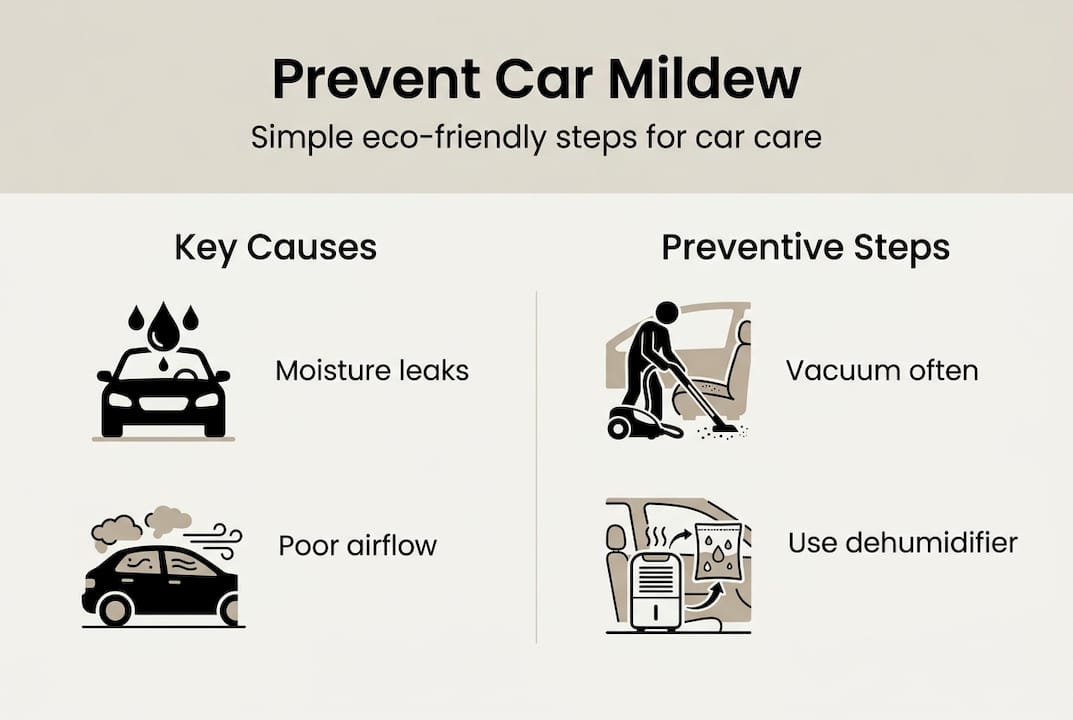
Vehicle interiors create near-perfect conditions for mildew. Think about it: a sealed cabin, fabric seats, carpet padding, and an HVAC system that recirculates air. When any moisture enters that environment, whether from a leaking window seal, a wet umbrella left on the floor, or condensation from an overworked air conditioner, the humidity spikes. Mildew does not need much. Relative humidity above 60% is enough to trigger growth.
Common sources of moisture that feed mildew in cars:
- Leaking door or sunroof seals
- Wet shoes, umbrellas, or gym bags left inside
- Spilled drinks that were not fully dried
- Air conditioning systems with dirty or damp evaporator coils
- Flooded carpets from heavy rain
The health risks are real. Mildew exposure in a confined space like a car cabin can trigger allergic reactions, worsen asthma, and cause eye and throat irritation. For children and elderly passengers, the risk is higher. Beyond health, mildew physically degrades your interior. It breaks down carpet fibers, discolors upholstery, and can eat into foam padding over time.
“Mildew odor can persist even after surface cleaning if the underlying moisture source is not eliminated. Cleaning the visible surface without addressing the root cause simply delays the problem.”
This is the part most car owners miss. You can scrub the seat fabric until it looks spotless, but if the padding underneath is still damp, the mildew will come back. Understanding the auto odor removal facts specific to vehicles helps you avoid wasting time on surface-only solutions that never fully work.
Detecting mildew odor: Signs, symptoms, and overlooked sources
After understanding what makes mildew so persistent and hazardous, let’s clarify how to spot and distinguish it in your own vehicle. Not every bad smell in a car is mildew. Knowing the difference matters because each odor type requires a different treatment approach.
Mildew odor is often confused with musty or stale scents, but each has distinct markers. Mildew smells earthy and slightly sour, almost like wet cardboard or a damp basement. Stale air smells flat and dusty. Chemical smells are sharp and synthetic. Smoke odor has a bitter, acrid quality.
Odor comparison: Mildew vs. other common car smells
| Odor type | Smell description | Likely source | Treatment approach |
|---|---|---|---|
| Mildew | Earthy, sour, musty | Damp fabric, vents, padding | Moisture removal, deep cleaning |
| Stale air | Flat, dusty | Poor ventilation | Ventilation improvement |
| Smoke | Bitter, acrid | Tobacco or fire | Specialized odor neutralization |
| Chemical | Sharp, synthetic | Cleaning products, plastics | Airing out, product review |
| Pet odor | Warm, animal-like | Fur, dander, accidents | Enzyme-based cleaning |
Here is a numbered checklist to help you confirm mildew is the culprit:
- Persistent musty smell that returns after airing out the car
- Allergy symptoms like sneezing, watery eyes, or throat irritation that appear only in the car
- Visible dark spots on fabric, rubber seals, or plastic trim
- Damp or cold feeling in carpet or seat cushions
- Musty air from vents when you run the air conditioning
The most overlooked sources are the ones you cannot see easily. Under the seats, mildew grows in carpet padding where spills pool. Air conditioning vents harbor mildew on evaporator coils that stay wet after the system shuts off. The trunk liner is another common spot, especially if a grocery bag ever leaked back there.
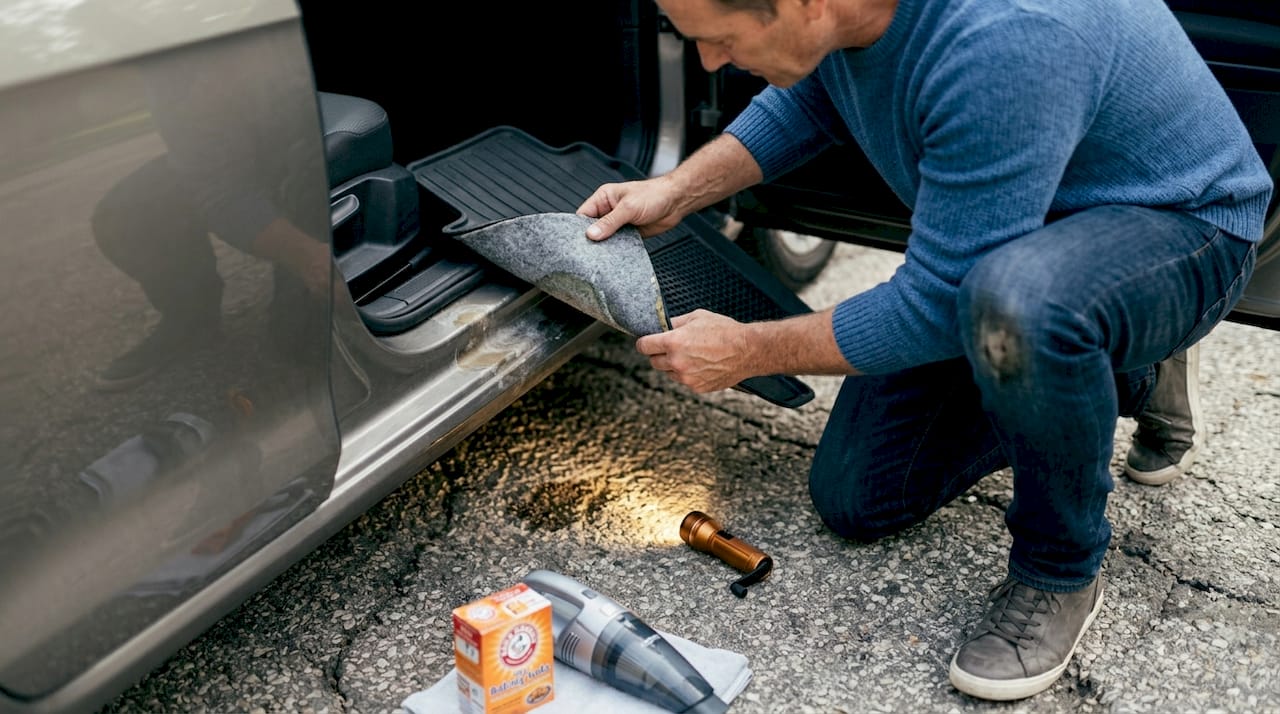
Pro Tip: Run your AC on full blast and put your nose close to each vent. If the air smells musty, your evaporator coil likely has mildew growth. This is one of the most common and most overlooked sources, and it requires more than a surface wipe to fix. Working with odor removal specialists is often the fastest path to resolving vent-based mildew, especially in vehicles with leather interiors where moisture can also affect removing odor from leather seats.
Practical steps to eliminate mildew odor from your car
Once you have spotted mildew odor and its sources, it is time to take decisive, eco-conscious action. The goal is not to cover the smell. The goal is to eliminate the moisture and the fungal growth causing it.
Step-by-step eco-friendly mildew removal process:
- Find and fix the moisture source first. Check window seals, sunroof drains, and floor drain plugs. If water is getting in, no cleaning will hold.
- Remove and dry wet items. Take out floor mats and seat covers. Let them dry fully in sunlight, which also naturally kills mildew spores.
- Apply a white vinegar solution to fabric surfaces. Mix equal parts white vinegar and water in a spray bottle. Lightly mist affected upholstery and carpet. Vinegar is a natural antifungal and does not leave toxic residue.
- Use baking soda on carpet and padding. Sprinkle generously, let it sit for several hours, then vacuum thoroughly. Baking soda absorbs both moisture and odor.
- Clean HVAC vents with a targeted spray. Use an eco-friendly evaporator coil cleaner to treat mildew inside the AC system.
- Allow thorough drying before closing the car. Thorough drying and targeted cleaning of affected areas are essential for mildew odor removal. Leave doors open in a dry, sunny environment for at least two to three hours.
When DIY is not enough:
- Mildew has spread to foam padding beneath seats
- Odor persists after two or more cleaning attempts
- Visible mold growth is widespread
- The vehicle has luxury or delicate interior materials
Pro Tip: Never use an air freshener as a step in this process. It does nothing to kill mildew and actually signals to your nose that the problem is solved when it is not. The only real solution is source removal. For persistent cases, eco-friendly car odor removal by a certified professional delivers results that DIY methods simply cannot match.
Preventing mildew odor: Maintenance and eco-friendly habits
After removing mildew odor, sustainable habits and preventative strategies help keep your vehicle fresh. Prevention is far easier than treatment, and most of it costs nothing.
Core habits that prevent mildew from returning:
- Never leave wet items in a closed car
- Crack a window slightly when parked in humid conditions
- Dry off wet shoes before getting in
- Address any spills immediately with a dry cloth
- Schedule regular deep cleaning of floor mats and seat covers
Regular cleaning, moisture control, and proactive maintenance significantly reduce mildew risk. Most car owners skip the HVAC filter, which is a major mistake. A clogged cabin air filter traps moisture and debris, creating a perfect mildew environment right inside the ventilation system.
Eco-friendly maintenance schedule:
| Task | Frequency | Eco-friendly product option |
|---|---|---|
| Vacuum interior | Every 2 weeks | N/A |
| Clean floor mats | Monthly | Diluted white vinegar |
| Replace cabin air filter | Every 15,000 miles | Activated carbon filter |
| Deep clean upholstery | Every 3 months | Plant-based fabric cleaner |
| Inspect door and window seals | Every 6 months | N/A |
| Treat AC evaporator coil | Annually | Eco-safe coil cleaner |
Common mistakes people make include ignoring a small leak for weeks, assuming the smell will go away on its own, and using heavy chemical sprays that damage interior materials while only masking the odor. The super car odor removal tips that actually work long-term are always rooted in moisture control, not fragrance. For a broader approach to keeping your living and driving spaces fresh, car and home odor removal strategies share a lot of the same principles.
Our take: What most guides get wrong about car mildew odor
Most DIY guides hand you a list of cleaning products and call it a day. Here is what they consistently miss: mildew odor is a structural problem, not a surface problem. You can follow every step in a standard cleaning guide and still have a musty car three weeks later because the foam padding under your seat is still holding moisture.
We have seen this pattern repeatedly. Clients come to us after trying three or four products from the store, frustrated that nothing worked. The issue was never the product. It was the depth of treatment. Standard cleaning reaches fabric surfaces. Mildew lives deeper.
Another thing most guides ignore is material sensitivity. Luxury interiors, think fine leather, Alcantara, and custom trim, require specific eco-friendly treatments that do not degrade the material while eliminating the odor. Harsh chemicals might kill the mildew but ruin the seat in the process. That is not a trade-off worth making. Working with luxury interior odor experts who understand both the chemistry and the material is the only way to get a truly clean result without collateral damage.
Professional, eco-friendly mildew odor removal solutions
If you have worked through the steps above and the smell keeps coming back, that is your signal that the mildew has gone deeper than surface cleaning can reach. Persistent mildew is not a failure on your part. It is simply a job that requires professional tools and expertise.

Master Odor Removal provides same or next-day odor removal service for vehicles of all types, using green-certified, ozone-free methods that are safe for your interior and your passengers. Our green odor elimination approach targets the biological source of mildew, not just the smell. We treat the padding, the vents, the seals, and every hidden corner where mildew hides. See what odor removal done right looks like and schedule your consultation today.
Frequently asked questions
How can I tell if mildew odor is present in my car?
If you notice a persistent musty smell, visible mold spots, or allergy symptoms that only appear inside your vehicle, mildew is likely the cause. These signs together are a reliable indicator that fungal growth is active somewhere in the interior.
What causes mildew to form in vehicles?
Moisture and poor ventilation create the exact conditions mildew needs to grow, and vehicles trap both easily. Leaking seals, spills, and a damp AC evaporator coil are the most common triggers.
Are air fresheners effective at eliminating mildew odor?
No. Air fresheners only mask the smell without addressing the fungal source, which means the odor returns quickly. Odor masking is not true removal, and relying on it delays the real treatment your car needs.
Should I try DIY methods or hire a professional for mildew odor removal?
DIY methods work well for minor, surface-level mildew caught early. For persistent odors or deep-set growth, professional solutions offer more thorough removal that reaches padding, vents, and structural areas that home cleaning cannot access.
Recommended
- How to remove mildew smell: eco-friendly guide for homes – Master Odor Removal
- Master Odor Removal Green Odor Elimination – Master Odor Removal
- Why remove mildew odor on boats for comfort and value – Master Odor Removal
- Green Business Certified Car Odor Removal – Master Odor Removal
- Mold in Your Ducts? Here’s How to Get Rid of It | PRO Tips
Recent Comments