
That musty smell in your cabin isn’t just unpleasant. It’s a warning sign of hidden mold colonies that threaten your health, damage expensive materials, and slash your boat’s resale value. Many yacht and boat owners ignore mildew odor until it becomes overwhelming, but early removal protects both your investment and wellbeing. This guide reveals why eliminating mildew odor is essential and shows you proven strategies to keep your vessel fresh, safe, and valuable.
Table of Contents
- Key takeaways
- Health risks of mildew odor on boats
- Structural and material damage caused by mildew
- How mildew odor affects onboard comfort and resale value
- Effective prevention and removal strategies for mildew odor
- Expert odor removal services for your boat
- Frequently asked questions about removing mildew odor on boats
Key Takeaways
| Point | Details |
|---|---|
| Health risks | Mildew releases mold spores into enclosed cabins, risking allergies, asthma, and respiratory infections for occupants. |
| Material damage | Mildew degrades wood, vinyl, fabric, and metal, potentially weakening structure and requiring costly repairs. |
| Hidden growth signals | The musty odor often indicates active mildew growing in hidden areas like bilges and storage spaces. |
| Preserve resale value | Reducing humidity through ventilation and regular cleaning helps prevent mildew and preserve resale value. |
Health risks of mildew odor on boats
When you smell that distinctive musty odor in your cabin, you’re actually breathing in mold spores released by active mildew colonies. These microscopic particles pose serious health threats, especially in the confined spaces typical of boat interiors. Unlike homes with constant air circulation, cabins trap moisture and concentrate airborne contaminants at dangerous levels.
Mildew odor must be removed from boats to prevent health risks including allergies, asthma, and respiratory infections from mold spores in enclosed cabins. Your respiratory system takes the hardest hit. Spore exposure triggers allergic reactions ranging from sneezing and watery eyes to severe breathing difficulties. People with existing asthma find their symptoms worsen dramatically, sometimes requiring emergency intervention.
Prolonged exposure creates even more serious problems. Respiratory infections develop when your immune system struggles to clear inhaled spores from lung tissue. Chronic coughing, chest tightness, and persistent fatigue become your new normal. Children and elderly passengers face elevated risks because their immune defenses aren’t as robust.
The enclosed environment of boat cabins intensifies these health dangers. Poor ventilation means spore concentrations build up quickly, especially when your vessel sits closed during off-season storage. Every time you open the hatch, you release a cloud of contaminated air that settles into fabrics, bedding, and cushions.
Recognizing mildew odor early protects you and your passengers from these wellbeing threats. That first whiff of mustiness should trigger immediate investigation. Check common problem areas like bilges, lockers, and under-berth storage where moisture accumulates. Professional yacht mystery odor removal services can identify hidden colonies before health impacts escalate.
“Mold exposure on boats creates a perfect storm for respiratory problems. The combination of high humidity, poor ventilation, and enclosed spaces concentrates spores at levels rarely seen in land-based structures.”
Common health symptoms from boat mildew exposure include:
- Persistent coughing and throat irritation that worsens below deck
- Skin rashes and eye irritation appearing after time onboard
- Headaches and dizziness that clear up once you leave the vessel
- Worsening asthma attacks requiring increased medication use
- Chronic fatigue and difficulty concentrating during trips
Structural and material damage caused by mildew
Beyond health threats, mildew odor signals active degradation of your boat’s materials and structural components. What starts as a cosmetic nuisance quickly becomes an expensive repair nightmare. Understanding how mildew causes structural damage such as rotting wood, vinyl degradation, fabric staining, and metal corrosion helps you appreciate why immediate removal matters.
Wooden components face the most severe threats. Mildew penetrates wood grain, breaking down cellular structure and creating soft, spongy areas that compromise strength. Bulkheads, stringers, and transoms lose load-bearing capacity. A seemingly solid surface can hide advanced rot just millimeters below. Tapping suspect areas produces a dull thud instead of a sharp sound, revealing hidden damage.
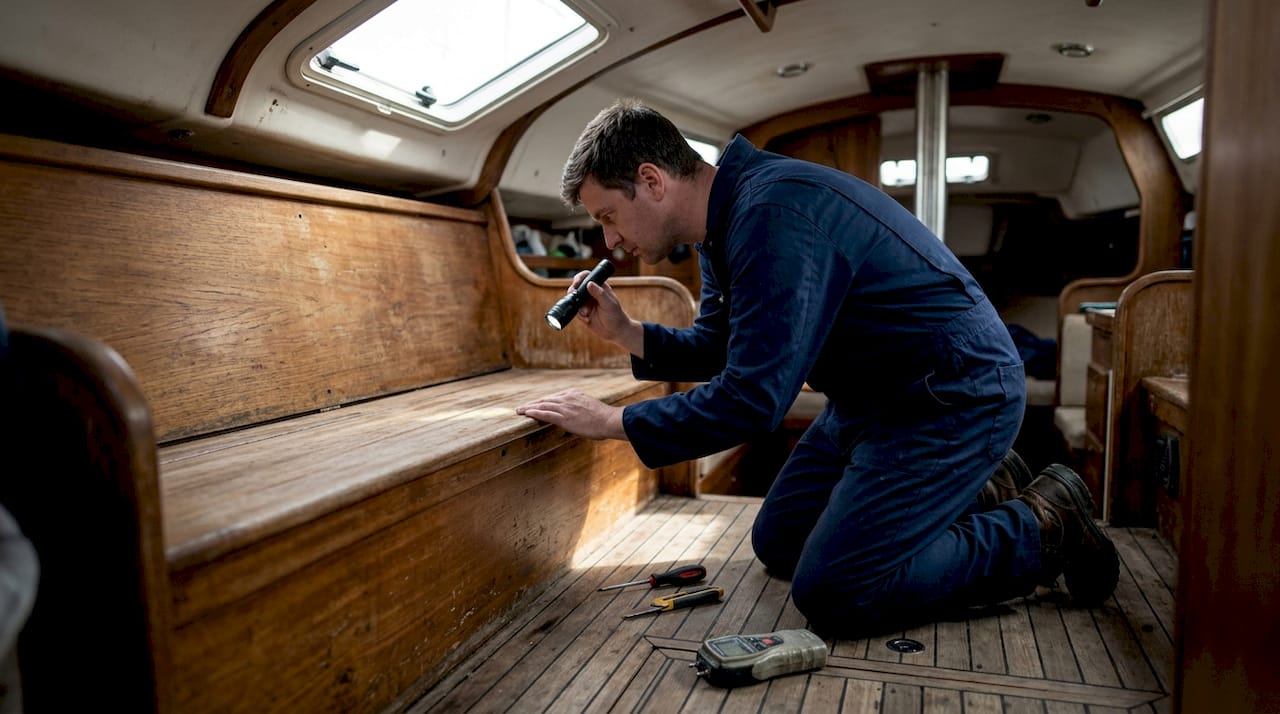
Vinyl surfaces throughout your cabin suffer progressive degradation from mildew exposure. The organisms secrete enzymes that attack plasticizers, causing vinyl to become brittle and crack. Seat cushions develop permanent creases and splits. Headliners sag as backing materials deteriorate. Once this damage starts, it accelerates rapidly because compromised vinyl absorbs more moisture.
Fabrics face permanent staining that no amount of cleaning fully removes. Mildew colonies embed themselves deep in fiber weave, creating dark spots and discoloration. Curtains, bedding, and upholstery develop that telltale speckled appearance. Even after killing the mildew, stains remain because fungal pigments have chemically bonded with fabric dyes.
Metal fittings and hardware corrode faster when exposed to mildew byproducts. The acidic compounds produced during mildew growth etch protective coatings on stainless steel, aluminum, and brass. Fasteners weaken, hinges seize, and electrical contacts fail. This accelerated corrosion compounds normal saltwater exposure, dramatically shortening component lifespan.
Pro Tip: Inspect hidden areas like behind wall panels and under flooring where mildew thrives undetected. Use a moisture meter to identify problem zones before visible damage appears. Readings above 20% indicate conditions ripe for mildew growth and material degradation.
Address odor early to prevent costly repairs down the line. A minor mildew problem caught early might cost a few hundred dollars in cleaning and prevention. Ignored structural damage can require tens of thousands in rebuilding. Professional yacht mildew cleaning techniques stop progression before irreversible harm occurs.
Material damage progression from mildew:
- Initial surface discoloration appearing within weeks of growth
- Fabric and vinyl weakening becoming noticeable after months
- Wood softening and structural compromise developing over seasons
- Metal corrosion and fastener failure requiring replacement
- Complete material failure necessitating expensive reconstruction
How mildew odor affects onboard comfort and resale value
Your boat should be a sanctuary where you escape stress and enjoy time on the water. Persistent musty odors destroy that experience, making every moment below deck unpleasant. Guests wrinkle their noses when they enter your cabin. You find yourself spending less time aboard because the smell triggers headaches and nausea. What should be relaxation becomes endurance.
Persistent musty odors reduce onboard comfort and indicate hidden growth, affecting enjoyment for yacht owners. The psychological impact runs deeper than simple discomfort. Constant exposure to unpleasant smells creates negative associations with your vessel. You start making excuses to avoid trips. Your investment sits unused at the dock while you lose precious boating season days.
Odor often reveals hidden mildew colonies unseen by owners during casual inspections. That smell wafting from air vents signals growth inside ductwork. Mustiness emanating from lockers indicates contaminated contents. The nose detects problems long before eyes spot visible growth, serving as your early warning system for developing infestations.
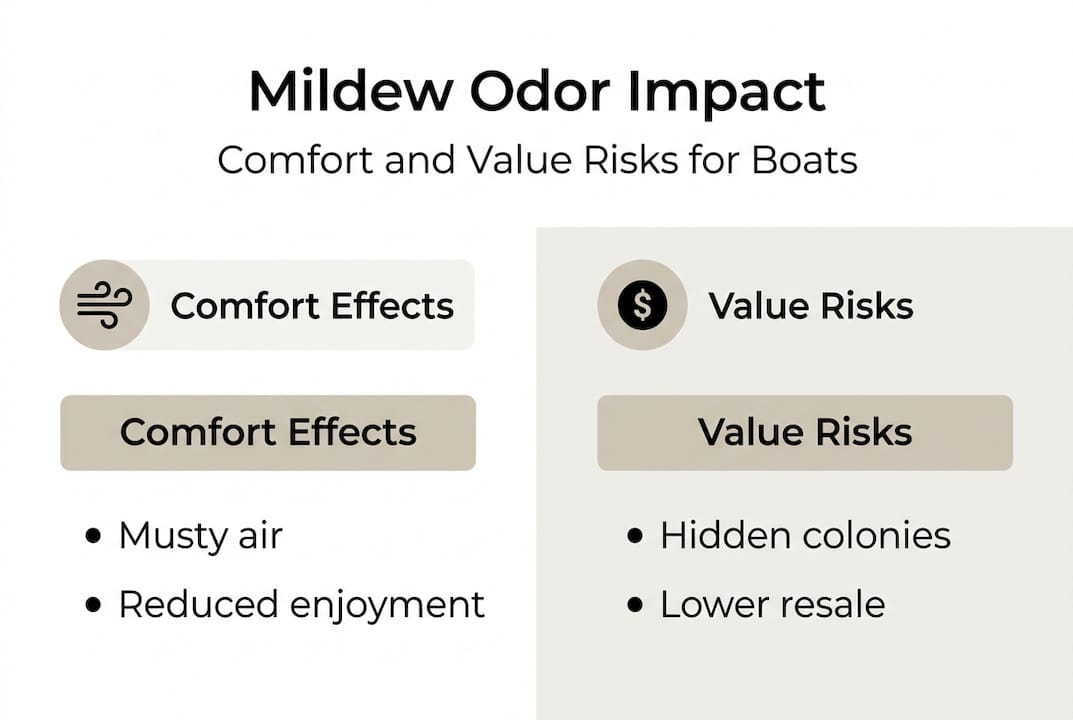
When selling time arrives, mildew odor becomes a deal killer. Mildew odor negatively impacts resale value by signaling poor maintenance and potential damage to buyers. Prospective purchasers associate musty smells with neglect, hidden problems, and future repair bills. They assume if you couldn’t control something as basic as odor, what other maintenance did you skip?
Buyers walk away from otherwise perfect boats because of smell alone. Marine surveyors note odor issues in inspection reports, giving buyers leverage to demand steep price reductions or cancel sales entirely. Even if you disclose and address the problem, stigma remains. Smart buyers wonder what damage already occurred before you took action.
A fresh smelling boat commands higher resale prices and sells faster. Neutral, clean scents signal proper care and maintenance. Buyers feel confident making offers when sensory inspection reveals no red flags. You recoup more of your investment and move inventory quickly. The difference between a musty boat and fresh one can mean tens of thousands in final sale price.
Pro Tip: Before listing your boat for sale, invest in professional odor elimination rather than masking products. Buyers recognize the difference between genuine freshness and artificial fragrances covering problems. Transparent odor removal demonstrates integrity and builds trust. Services like boat resale value and odor removal ensure your vessel presents at maximum value.
Comfort and value impacts of mildew odor:
- Reduced time spent enjoying your boat due to unpleasant environment
- Guest reluctance to join trips or stay overnight in cabins
- Lower resale offers averaging 15-25% below comparable fresh vessels
- Extended time on market as buyers pass on odorous boats
- Survey findings that kill deals or force major price concessions
Effective prevention and removal strategies for mildew odor
Preventing mildew odor starts with controlling the moisture that enables growth. Optimal humidity for prevention is 40-60%, while levels above 70% enable rapid mildew growth. Invest in a quality marine dehumidifier that runs continuously when your boat sits unused. Empty collection tanks regularly or route drainage overboard to maintain effectiveness.
Ventilate and dehumidify boat cabins regularly, even during off-season storage. Open hatches and ports whenever weather permits to exchange stale, humid air with fresh breezes. Install solar-powered vent fans that operate continuously without draining batteries. Position fans to create cross-ventilation that moves air through problem areas like hanging lockers and under-berth storage.
Research shows mildew thrives in 70-90% RH common on boats, while protectants reduce regrowth by 90%. Monitor humidity with digital meters placed in various cabin locations. Readings consistently above 60% require immediate intervention through increased ventilation or dehumidifier capacity upgrades.
When mildew odor appears, proper cleaning becomes essential. Avoid bleach on vinyl and stitching due to damage risk. Studies confirm marine cleaners kill spores and condition surfaces, while bleach damages vinyl topcoat and stitching, causing cracking. Use alkaline marine cleaners specifically formulated to kill mildew spores without harming boat materials.
Application technique matters as much as product choice. Follow these steps for effective mildew removal:
- Remove all loose items from affected areas and wash separately
- Vacuum surfaces thoroughly to remove loose spores and debris
- Apply marine mildew cleaner according to manufacturer directions
- Scrub gently with soft brushes to work cleaner into textured surfaces
- Rinse completely with clean water and dry thoroughly
- Apply mildew-resistant protectant to prevent immediate regrowth
- Run dehumidifier continuously for 48 hours to eliminate residual moisture
Repeated treatments may be needed for deep infestations that have penetrated porous materials. Evidence shows for embedded growth or persistent odor, multiple applications or professional remediation are needed, with checks of inaccessible areas. Don’t expect miracles from a single cleaning session when mildew has established itself over months or years.
| Method | Effectiveness | Material safety | Cost |
|---|---|---|---|
| Alkaline marine cleaner | High for surface mildew | Excellent, conditions vinyl | Moderate |
| Bleach solution | Moderate, damages materials | Poor, cracks vinyl and stitching | Low |
| Professional remediation | Highest for deep infestations | Excellent, targeted treatments | High |
| Prevention with dehumidifier | Highest for stopping growth | Excellent, no chemical contact | Moderate |
Professional remediation ensures thorough odor elimination when DIY efforts fall short. Specialists use advanced detection equipment to locate hidden colonies. They apply commercial-grade treatments that penetrate deeper than consumer products. Most importantly, they address root causes rather than just symptoms. Professional mildew odor removal services guarantee results and prevent recurring problems.
Pro Tip: After cleaning, maintain prevention by wiping down surfaces weekly with diluted marine cleaner. This simple habit interrupts the mildew lifecycle before colonies establish. Store moisture-absorbing products in lockers and enclosed spaces. Replace them monthly during humid seasons. These small efforts prevent major problems and keep mildew odor cleaning tips working long-term.
Expert odor removal services for your boat
When mildew odor persists despite your best efforts, professional intervention delivers results DIY methods can’t match. Specialist treatments safely remove mildew odors using eco-friendly processes that protect your boat’s materials while eliminating contaminants at the source. You avoid the trial and error of consumer products that mask rather than solve the underlying problem.

Experienced technicians use proven methods developed specifically for marine environments. They understand how boat construction creates unique challenges like hidden moisture pathways and inaccessible void spaces. Their equipment detects problems invisible to casual inspection and applies treatments that reach every affected surface. Protect your health and boat value with expert help that guarantees satisfaction. Discover comprehensive solutions at odor removal done right, where licensed odor removal specialists restore your vessel to pristine condition. Learn more about professional odor removal services designed for yacht and boat owners who demand permanent results.
Frequently asked questions about removing mildew odor on boats
How often should I check for mildew odor?
Inspect your boat weekly during active season and monthly during storage. Pay special attention after rainy periods or extended closure when humidity spikes. Early detection prevents minor issues from becoming expensive problems requiring professional remediation.
Can I use bleach safely on my boat to remove mildew?
No, bleach damages vinyl surfaces, weakens stitching, and causes cracking over time. Marine-specific alkaline cleaners kill mildew spores effectively without harming materials. They also condition surfaces to resist future growth, unlike bleach which leaves materials vulnerable.
What humidity level is best to prevent mildew growth?
Maintain interior humidity between 40-60% for optimal mildew prevention. Levels above 70% enable rapid colony formation, especially in warm conditions. Use a marine dehumidifier and ventilation to keep readings in the safe range year-round.
When should I call a professional for mildew odor removal?
Contact specialists when odor persists after thorough cleaning, when you discover extensive visible growth, or if health symptoms appear. Professionals have equipment to find hidden colonies and treatments that penetrate deeper than consumer products, ensuring complete elimination.
Are mildew odors harmful to my family’s health?
Yes, mildew releases mold spores that trigger allergies, asthma attacks, and respiratory infections. Enclosed boat cabins concentrate these spores at dangerous levels. Children, elderly passengers, and anyone with compromised immunity face elevated risks requiring immediate odor removal.
Recent Comments