
TL;DR:
- Your vehicle’s HVAC system plays a crucial role in managing interior odors by controlling air filtration, moisture, and airflow. Malfunctions or neglect in these functions lead to microbial growth, stale air, and persistent smells like musty or rotten odors. Regular maintenance, filter replacement, and proper ventilation mode usage are essential for long-lasting odor elimination and a fresh cabin environment.
Your car’s HVAC system is the single biggest factor controlling odor buildup and removal inside the cabin. Most vehicle owners treat persistent smells as an upholstery problem, but the role of HVAC in car odors is far more direct. The system manages air filtration, moisture levels, and airflow patterns continuously. When any of those three functions fail, odors develop fast and embed deep. Understanding how your HVAC system works gives you a real path to a permanently fresh interior.
How does the HVAC system cause or remove car odors?
The HVAC system in your car does two things simultaneously: it conditions the air and it moves it. Both functions directly shape whether odors build up or get cleared out.
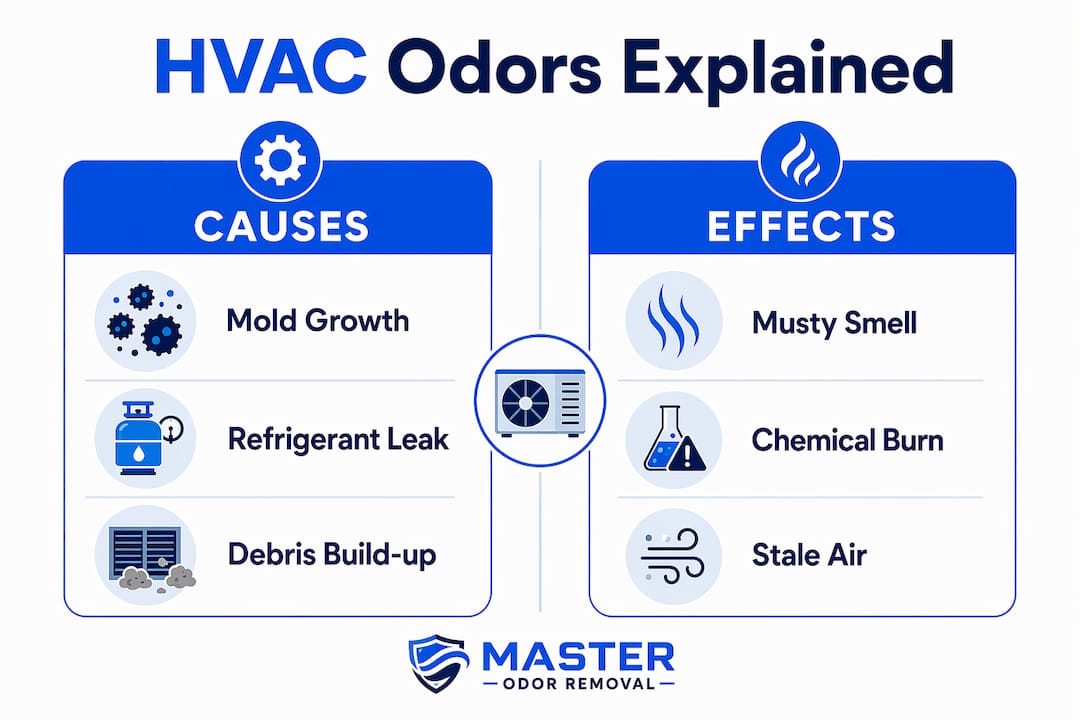
The evaporator core sits at the center of this process. It cools air by absorbing heat, and that process creates condensation. Moisture on the evaporator creates the ideal environment for mold and bacterial biofilm to form. That biofilm is the source of the musty smell most drivers notice when they first switch on the air conditioning.
Cabin air filters play a supporting role. They trap dust, pollen, and particulate matter before air enters the cabin. But dirty or damp filters accumulate organic debris and microbes over time, turning a protective component into an odor source.
Airflow patterns matter just as much as filtration. Without fresh air exchange, odor molecules stagnate and absorb into seat fabric, carpet, and headliner material. Once odors settle into porous surfaces, they become significantly harder to remove.
Key mechanisms to understand:
- Evaporator condensation feeds microbial growth and produces musty odors at the source
- Clogged filters reduce airflow, force stale air to recirculate, and activate microbial odor compounds
- Recirculation mode traps moisture and CO2 inside the cabin, accelerating odor concentration
- Fresh air mode exchanges cabin air but may pull in external pollutants depending on your environment
Pro Tip: Run your HVAC on fresh air mode for the last two minutes of every drive. This flushes residual moisture from the system before you park.
What odors signal a failing or neglected HVAC system?
Different smells point to different problems. Knowing what each odor means lets you fix the right thing instead of masking the wrong one.
Musty or mildew smell is the most common complaint. Condensation inside the evaporator housing fosters mold and bacteria growth directly on the coil surface. This smell intensifies when you first turn on the AC because the blower pushes air directly across the contaminated evaporator.
Chemical or burning smell signals a different category of problem. This can indicate a refrigerant leak, an overheating blower motor, or degraded plastic components inside the HVAC housing. These smells require mechanical inspection, not just cleaning.
Foul or rotten smell typically comes from organic debris trapped in the plenum area or filter housing. Leaves, insects, and moisture combine to decompose inside the system. The smell worsens in warm weather as decomposition accelerates.
Stale or stuffy smell points to poor airflow rather than contamination. Clogged cabin filters reduce airflow, causing air to stagnate and odors to concentrate inside the cabin. This is often the first sign that a filter replacement is overdue.
Each odor type is a diagnostic signal. Treating them all with an air freshener delays the real fix and allows the underlying problem to worsen.
How does proper HVAC maintenance eliminate car odors?
Maintenance is the most reliable method for eliminating odors with HVAC systems. The following steps address the root causes rather than the symptoms.
Replace the cabin air filter on schedule. Most manufacturers recommend replacement every 15,000–25,000 miles. Activated carbon filters outperform standard paper filters for odor control because they adsorb volatile organic compounds (VOCs) in addition to trapping particles. High airflow rates saturate carbon media faster, so drivers in high-traffic or polluted environments should replace filters more frequently.
Apply an evaporator disinfectant. Foaming HVAC coil cleaners reach inside the plenum and break down microbial biofilms on the evaporator surface. Surface air fresheners cannot reach this area. Products designed specifically for automotive HVAC systems deliver far better results than general-purpose sprays.
Perform the post-drive dry-out technique. Running the blower without the compressor for 2–3 minutes after parking evaporates residual moisture from the evaporator surface. This single habit prevents the majority of mold-related odors from forming in the first place.
Clear the condensate drain tube. The drain tube removes water that collects under the evaporator. A blocked drain causes water to pool inside the HVAC housing, creating a permanent moisture reservoir for microbial growth.
Alternate between fresh air and recirculation modes. Using recirculation exclusively allows moisture and CO2 to build up. Switching to fresh air mode periodically flushes the cabin and reduces odor concentration.
Pro Tip: Schedule an evaporator cleaning every spring before peak AC season. Addressing it before heavy use prevents the musty smell from developing rather than chasing it afterward.
How do ventilation settings affect odor buildup in your car?
The two primary ventilation modes in any car HVAC system produce very different results for odor management. Understanding the trade-offs helps you make smarter choices based on your driving environment.
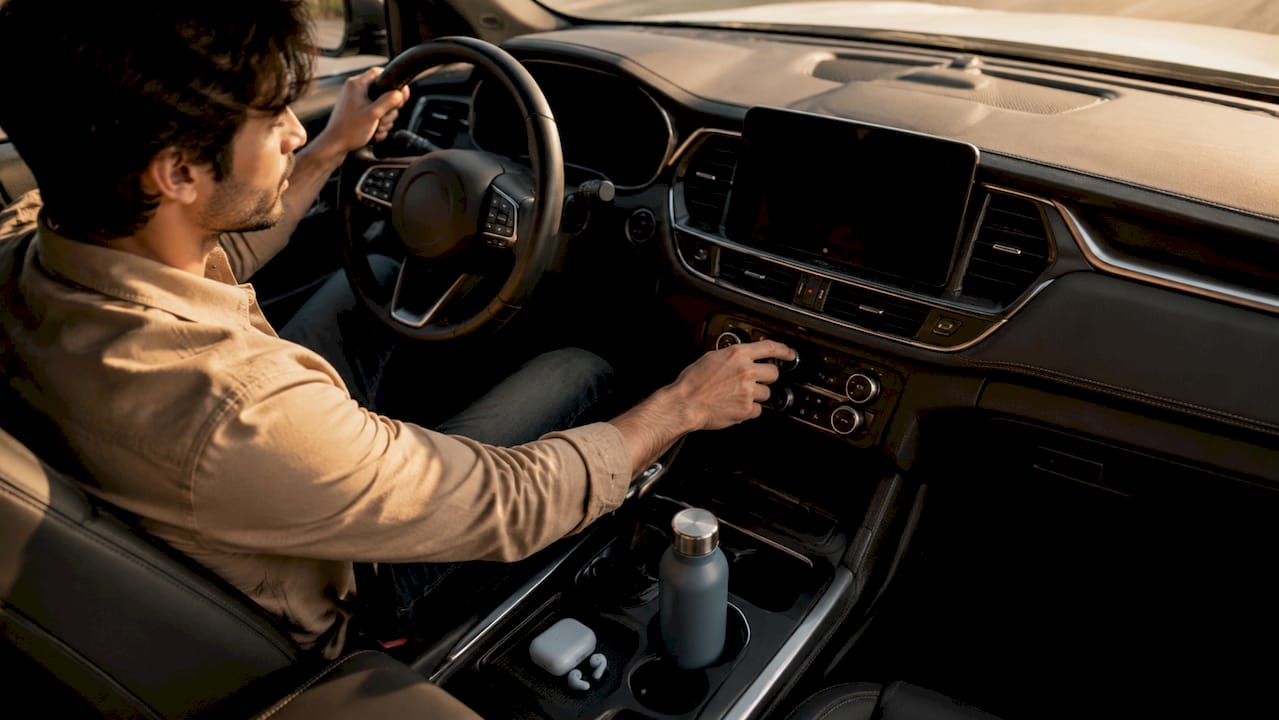
| Ventilation Mode | CO2 Level | PM2.5 Infiltration | Odor Effect |
|---|---|---|---|
| Recirculation | Spikes above 4,000 ppm | Very low (I/O ratio as low as 0.10) | Traps odors and moisture inside cabin |
| Fresh Air | Stays below 1,000 ppm | Higher, depends on environment | Flushes odors, introduces outdoor pollutants |
Recirculation mode limits fine particulate infiltration effectively, which is useful in heavy traffic or near industrial areas. The trade-off is significant. CO2 spikes above 4,000 ppm in recirculation, which signals that moisture and odor compounds are also concentrating inside the cabin.
Fresh air mode maintains air exchange rates of 55–66 changes per hour, which actively flushes odor molecules out of the cabin. The downside is that it pulls in whatever is outside, including exhaust, pollen, and road dust.
The practical approach is to use fresh air mode as your default in clean environments and switch to recirculation when driving through tunnels, heavy traffic, or areas with strong external odors. Vehicles lack the continuous mechanical ventilation that buildings have, so conscious management of HVAC modes is the only way to prevent odor accumulation over time.
What role do cabin air filters and HVAC design play in odor control?
Cabin air filters are the first line of defense in any car HVAC and smell management strategy. Their effectiveness depends on more than just the filter media.
Filter type determines what gets captured. Standard paper filters trap particulate matter but do nothing for gaseous odors or VOCs. Activated carbon filters add a chemical adsorption layer that captures odor molecules directly. Combination filters that use both media offer the broadest protection for vehicle owners dealing with persistent smells.
Filter performance degrades faster than most owners realize. Automotive filter efficiency depends heavily on operating conditions, not just media quality. Airflow between 3.33–10 cubic meters per minute accelerates carbon saturation and reduces the filter’s ability to capture VOCs. A filter that looks physically clean can be chemically exhausted and contributing to odor problems.
HVAC system design in vehicles creates unique challenges compared to building HVAC systems. Cars have limited space for ductwork, which means air often travels short distances at high velocity. This reduces the contact time between air and filter media, lowering overall filtration efficiency. The role of car ventilation in odors is therefore partly a design constraint, not just a maintenance issue.
Newer vehicles address some of these limitations with multi-layer filter designs and ionization systems built into the HVAC housing. These improvements help, but they do not eliminate the need for regular maintenance. A well-designed system with a neglected filter still produces odors.
Key takeaways
The HVAC system controls car odors through filtration, airflow, and moisture management, and neglecting any one of these three functions allows odors to develop and persist.
| Point | Details |
|---|---|
| Evaporator is the primary odor source | Microbial biofilm on the evaporator coil causes most musty AC smells in vehicles. |
| Filter type and condition both matter | Activated carbon filters outperform paper, but high airflow saturates them faster than expected. |
| Post-drive dry-out prevents mold | Running the blower without the compressor for 2–3 minutes after parking removes residual moisture. |
| Ventilation mode shapes odor buildup | Fresh air mode flushes odors; recirculation traps them. Alternate based on your environment. |
| Masking odors delays real fixes | Air fresheners cannot reach the evaporator or plenum where odors originate. |
What i’ve learned after years of treating HVAC odors in vehicles
The most common mistake I see vehicle owners make is treating a car odor as a cabin problem when it is actually a system problem. They shampoo the seats, replace the floor mats, and hang a new air freshener. The smell returns within two weeks because the evaporator was never addressed.
The second mistake is using recirculation mode exclusively. Drivers do it to stay comfortable, to keep pollen out, or to cool the car faster. But running recirculation all the time is the fastest way to turn a clean car into a stale one. Moisture builds up, CO2 rises, and odor molecules have nowhere to go.
The post-drive dry-out technique is the single most underused preventative habit I know of. It costs nothing and takes three minutes. Yet almost no one does it consistently. If you build that one habit, you eliminate the primary cause of musty AC odors before they start.
What I find most telling is that musty odor is a biological signal, not just an inconvenience. It means microbial growth is active inside your system. Masking it with fragrance does not stop the biology. It just makes the biology smell like pine trees.
For persistent or complex cases, the evaporator and plenum need direct treatment. That is not a DIY job in most vehicles. The housing is difficult to access, and incomplete treatment leaves active biofilm behind. Professional service is not a luxury in those situations. It is the only way to actually resolve the problem rather than delay it. You can read more about chemical vs. gas treatment approaches to understand why method selection matters as much as effort.
— Master
Persistent HVAC odors? Masterodorremoval can help
When maintenance steps are not enough, the odor source is usually deep inside the HVAC housing where consumer products cannot reach. Masterodorremoval specializes in permanent odor elimination for vehicle interiors, using eco-friendly, green-certified treatments that target microbial contamination at the source without ozone or chlorine.

The team at Masterodorremoval works with luxury auto dealerships, private vehicle owners, and fleet operators who need results that last. Same-day and next-day service is available for urgent situations. If you are dealing with a musty AC smell, tobacco odor, or any persistent cabin smell that keeps returning, the odor removal specialists at Masterodorremoval deliver a permanent fix backed by a satisfaction guarantee. Explore the full range of vehicle odor removal services to find the right solution for your situation.
FAQ
What causes a musty smell from car air conditioning?
Condensation on the evaporator coil creates a wet surface where mold and bacteria grow, producing the musty smell you notice when the AC first turns on. Disinfecting the evaporator and replacing the cabin filter resolves the source.
How often should i replace my cabin air filter?
Most manufacturers recommend replacement every 15,000–25,000 miles, but drivers in high-traffic or polluted areas should replace filters more frequently because high airflow accelerates carbon saturation.
Does recirculation mode make car odors worse?
Yes. Recirculation mode traps moisture and odor compounds inside the cabin, causing CO2 to spike above 4,000 ppm and concentrating smells over time. Alternating with fresh air mode prevents this buildup.
Can i remove HVAC odors myself or do i need a professional?
Filter replacement and the post-drive dry-out technique are effective DIY steps for prevention. For odors originating from the evaporator or plenum, professional treatment with foaming disinfectants is more reliable because those areas are difficult to access without specialized tools.
Why do car odors keep coming back after cleaning?
Odors return when the source inside the HVAC system, typically the evaporator or a saturated filter, is not treated. Surface cleaning and air fresheners do not reach the evaporator housing, so the microbial source remains active.
Recent Comments