
TL;DR:
- A persistent smoke smell in high-end apartments indicates mismanagement, affecting health, property value, and tenant retention. Effective odor control requires deep remediation of porous materials, proactive scheduling, and eco-friendly methods to maintain premium standards. Managing odors proactively enhances tenant satisfaction, reduces legal and reputation risks, and protects asset value long-term.
A lingering smoke smell in a $5,000-per-month apartment does not read as a minor annoyance to a prospective tenant. It reads as mismanagement. The role of odor-free environments in premium rentals goes far beyond “smelling nice.” Research now ties indoor odor exposure to measurable health consequences, lower property values, and direct hits to tenant retention. What most investors and property managers still treat as a finishing touch is actually a foundational standard in the luxury rental market. This article covers the health stakes, the market data, and the practical systems you need to protect your asset.
Key takeaways
| Point | Details |
|---|---|
| Odors are a health and liability issue | Indoor odor exposure is linked to headaches, respiratory irritation, and sick building syndrome, creating legal exposure for landlords. |
| Odor control directly affects property value | Studies connect ambient odors and air pollution to measurable reductions in residential property prices. |
| Masking scents fails in premium settings | Deep remediation of porous materials is required; surface sprays and plugins do not resolve entrenched odors. |
| Proactive management beats reactive cleanup | Scheduling regular odor removal services costs less and preserves tenant satisfaction better than emergency remediation. |
| Odor-free status signals property quality | For high-end tenants, a neutral, fresh interior communicates care and management credibility before a lease is signed. |
The role of odor-free environments in premium rentals: health and satisfaction
Most property managers think about odors in terms of first impressions. That framing undersells the real risk. Individuals spend roughly 90% of time indoors, and nearly 90% are exposed to indoor pollutants above recommended limits. Odors rank among the most common complaint drivers in residential settings, and the consequences extend well past cosmetic concerns.

The health case against tolerating indoor odors is grounded in physiology. Odor exposure is linked to headaches, nausea, difficulty breathing, and elevated stress. In the short term, tenants experience acute irritation. Over longer periods, consistent exposure to odor-producing compounds contributes to what occupational health professionals call sick building syndrome, a pattern of recurring symptoms tied to specific indoor environments.
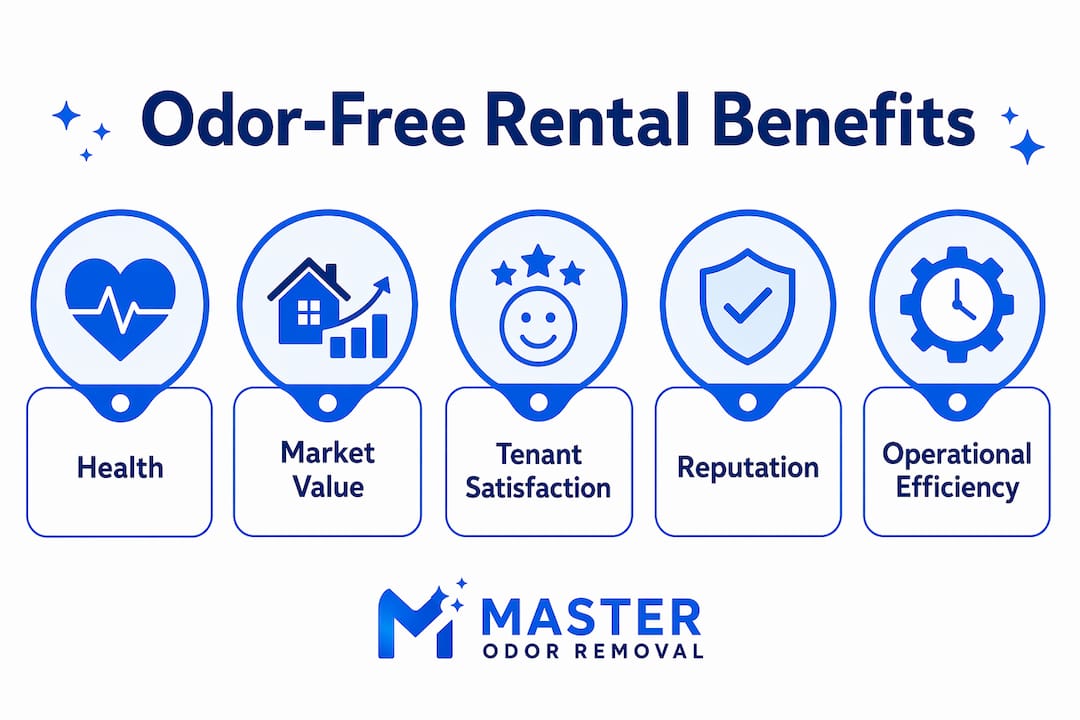
For premium rental properties, these health associations carry practical weight. Tenants who feel physically uncomfortable in a space do not renew leases. They leave reviews. And in the luxury segment, those reviews circulate among exactly the network of high-income renters you need to reach.
The satisfaction data reinforces this directly. Research on smoke exposure in residential buildings found that tenants exposed to secondhand smoke reported the lowest satisfaction scores for both their apartments and their buildings overall. Consider what that means operationally. A tenant dissatisfied with the smell of a unit is not just unlikely to renew. They are likely to mention it to property managers, write about it publicly, and associate the odor with the management team’s standards.
The health and satisfaction rationale for odor control comes down to a few concrete risks every property manager should track:
- Acute health complaints: Headaches, eye irritation, and nausea from exposure to smoke, mildew, or chemical odors in the first hours of occupancy.
- Chronic dissatisfaction: Tenants who tolerate a mild odor initially often report growing intolerance over weeks, escalating to formal complaints or early move-out.
- Sick building syndrome risk: Repeated odor exposure in poorly ventilated spaces builds a documented pattern of health complaints that can invite regulatory scrutiny.
- Retention loss: Premium tenants who pay top-tier rents hold management to a higher standard and leave when that standard is not met.
“Odor absence signals property care and management quality, serving as a trust marker for tenants.” The best lease renewal tool you have may not be granite countertops or smart home features. It may simply be a unit that smells clean every time a tenant walks in.
Market value and the reputation cost of odors
The financial argument for odor control in premium rentals is not theoretical. Ambient air pollution, including odor-generating compounds, is statistically linked to lower residential property values. Research examining families near industrial pollution sources found significant adverse effects on housing prices. That dynamic scales down to individual units. A unit with a persistent tobacco or mildew odor commands a lower asking price and slower absorption rate than a comparable unit without it.
The reputation side moves faster than the valuation side. Guest and tenant reviews on short-term rental platforms flag odor issues with striking specificity. When an Airbnb or furnished rental listing accumulates comments about “a faint smell” or “cigarette odor in the bedding,” the operational consequences are immediate: lower search rankings, reduced booking rates, and higher cleaning costs before the next guest arrives.
Here is how odor-related reputation risk breaks down across key dimensions in a premium rental context:
| Risk category | How odors create the problem | Operational consequence |
|---|---|---|
| Online reviews | Tenants name odors explicitly in written feedback | Star rating drops; search visibility decreases |
| Vacancy rate | Prospective tenants reject units after tours | Longer time on market; reduced effective rent |
| Property valuation | Persistent odors lower appraised condition ratings | Reduced asset value at sale or refinancing |
| Regulatory exposure | Over 10,000 odor complaints in five years in one region forced government response | Inspections, fines, and compliance costs |
| Competitive positioning | Odor-free certified units stand out in luxury tiers | Faster lease-up and justification for premium pricing |
The regulatory angle deserves specific attention. Persistent odor exposure has escalated from nuisance classification to health threat in multiple jurisdictions, with residents describing conditions that forced them to keep windows closed and avoid common areas. Property managers who treat odor complaints as low-priority tickets are accumulating reputational and legal exposure simultaneously.
Luxury guests evaluate the emotional and atmospheric quality of a rental as part of their satisfaction assessment. A calming, restorative environment, which is what premium tenants are paying for, depends on neutral air as a baseline condition. You cannot layer a high-end interior experience over a space that smells like the previous occupant.
Strategies for achieving genuinely odor-free rentals
Surface-level freshness is not the same as odor elimination. This distinction matters more in premium rentals than anywhere else, because high-end tenants are more attuned to the difference between a space that has been sprayed with a fragrance product and one that has been properly remediated. True odor-free conditions require deep remediation of porous materials. Upholstery, carpet padding, drywall, and subfloor materials absorb odor compounds at a molecular level. A plug-in air freshener does not reach them.
A practical, multi-layered odor management approach for premium rental properties looks like this:
- Source identification before treatment. Treat the origin of the odor, not just the ambient air. Smoke-embedded carpeting, mildew behind bathroom tile, or pet dander in HVAC filters all require targeted treatment before broader air quality improvement makes sense.
- Deep cleaning of porous materials. Fabrics, soft furnishings, and wall surfaces need professional-grade treatment cycles, not standard cleaning. Odors absorbed in fabrics require deep remediation cycles that go beyond what routine housekeeping delivers.
- Ventilation system assessment. A building’s HVAC system can recirculate odors throughout a unit or between units. Duct cleaning and filter replacement schedules should be tied to tenancy turnover, not just calendar dates.
- Material selection for new builds and renovations. Low-VOC paints, moisture-resistant flooring, and washable wall surfaces reduce long-term odor absorption. Premium rental properties built or renovated with material specifications in mind require less remediation over time.
- Ongoing air quality monitoring. Emerging intelligent building management systems use sensor networks to detect odor-generating compounds in real time, allowing managers to respond before a tenant complaint surfaces. This is now considered part of indoor odor management best practices for high-end properties.
Pro Tip: Before any premium unit listing goes live, conduct a “cold nose” inspection. Leave the unit sealed for 24 hours, then enter and take a full first-breath assessment before showing the property. What you detect in that first moment is exactly what a prospective tenant will experience.
Eco-friendly methods are increasingly preferred in luxury markets for a specific reason: high-income tenants are more likely to ask what products were used and whether those products introduce their own chemical odors. Avoiding ozone and chlorine treatments and using green-certified remediation approaches addresses both the odor problem and the chemical sensitivity concern simultaneously. For more on sustainable odor prevention methods, the research backs a layered approach over any single intervention.
Operational realities: costs, scheduling, and standards
Managing odor-free conditions across a premium rental portfolio is not just a cleaning question. It is a workflow question. The most common mistake is treating odor remediation as an emergency response rather than a scheduled service, which consistently costs more and creates avoidable vacancy time.
The operational challenges property managers face most often include:
- Third-hand smoke contamination. Smoke residue that has been absorbed into walls, ceilings, and textiles over months or years requires significantly more labor and specialized treatment than standard surface cleaning. Deep cleaning needed for cigarette odors transferred to bedding and upholstery frequently surprises managers who thought a tenant had complied with no-smoking policies.
- Pet odor buildup. Even with pet deposits in place, pet-related odors from dander, urine, and fur require dedicated eco-friendly pet odor treatment protocols, particularly for carpeted units or those with wood flooring that has absorbed moisture.
- Mildew from bathroom and HVAC systems. A clean-looking bathroom can still carry a mildew odor. High-humidity environments in premium rentals require active moisture management as a prerequisite to odor control.
The cost calculus shifts substantially when you move from reactive to proactive management. Emergency remediation of a third-hand smoke situation in a vacated unit can run three to five times the cost of scheduled professional treatment between tenancies. Vacancy days during emergency remediation represent lost revenue that is rarely recovered.
Pro Tip: Build odor assessment and treatment into your standard turnover checklist, not as an optional add-on but as a required step before any marketing or showings begin. Treat it with the same priority as paint touchup and appliance inspection.
Odor-free guarantees from certified service providers are becoming a differentiator in the premium rental segment. When you can show a prospective tenant a documented service record and a satisfaction guarantee, you are not just claiming freshness. You are providing verifiable evidence of your management standards. That evidence matters to the tenant profile you are targeting.
My take on why this is a strategic asset, not a housekeeping detail
I have worked with enough premium properties to say this clearly: the landlords and managers who treat odor control as a checkbox item are leaving money on the table, and some of them are accumulating liability they have not yet recognized.
What I have seen repeatedly is that proactive odor management produces returns that go beyond fresh-smelling units. It shortens time-on-market. It produces stronger reviews. And it keeps high-income tenants in place longer because they associate the experience of the unit with the quality of the management team. Those tenants do not distinguish between “the property manager handled maintenance quickly” and “the unit always smells clean.” Both read as evidence of a well-run operation.
The reactive approach, waiting for a complaint and then scrambling for an emergency service call, costs more per incident and signals to the tenant that the property is reactively rather than proactively managed. Residential satisfaction research consistently shows that tenants who feel their environment is being actively monitored and maintained report higher satisfaction scores than those in units that receive attention only after problems emerge.
My recommendation is to stop treating odor control as a finishing touch and start treating it as a baseline condition of premium occupancy, one that you verify, document, and maintain on a schedule.
— Master
Ready to set a new standard for your rental properties?
For property managers and investors managing premium rentals, the difference between a good unit and an exceptional one often comes down to what tenants cannot see but absolutely can smell.

Masterodorremoval specializes in permanent odor elimination for luxury interiors, using eco-friendly, green-certified methods that leave no chemical residue or masking fragrance behind. The team handles the full range of odor sources common in high-end rentals, including tobacco, marijuana, pet, mildew, and food odors, with same-day or next-day availability designed to fit your turnover schedule. For a property-by-property solution built around premium standards, start with professional odor removal services that carry a satisfaction guarantee. If you manage multiple units or need a recurring service relationship, the odor removal specialists at Masterodorremoval work directly with real estate agencies and property management firms to build scalable, documented odor control programs. Contact Masterodorremoval today to schedule an assessment and put odor-free certification to work for your portfolio.
FAQ
What exactly does “odor-free” mean for a premium rental?
Odor-free means the interior air is neutral, with no detectable compounds from previous occupants, pets, smoke, or mildew. It requires deep remediation of porous materials, not just surface cleaning or fragrance masking.
How much do odors affect rental property value?
Research shows that ambient odor and air pollution significantly reduce residential property values. At the unit level, persistent odors slow lease-up, reduce achievable rent, and negatively affect appraisal condition ratings.
Can I handle odor removal between tenancies myself?
Standard cleaning does not reach odor compounds embedded in carpet padding, drywall, or upholstery. Professional deep remediation is required for tobacco, pet, and mildew odors that have been absorbed into a unit over months or years.
How often should a premium rental receive professional odor treatment?
At minimum, treat the unit professionally at each tenancy turnover. For high-traffic short-term rentals or units that previously housed smokers or pets, consider quarterly assessments on top of turnover treatment.
Are eco-friendly odor removal methods as effective as chemical treatments?
Yes. Green-certified, non-ozone methods address odor compounds at the molecular level without introducing secondary chemical odors or health risks. For high-end tenants who ask about treatment methods, eco-friendly approaches are both safer and more marketable.
Recommended
- How vapor-based odor neutralization keeps luxury interiors fresh – Master Odor Removal
- Odor removal guarantees: How luxury properties stay fresh – Master Odor Removal
- Odor neutralization: eco-friendly solutions for luxury – Master Odor Removal
- How personalized odor services transform luxury properties – Master Odor Removal
Recent Comments