
TL;DR:
- Even high-end interiors are susceptible to stubborn odors from porous materials absorbing airborne compounds.
- Personalized, scientifically grounded odor assessments and eco-friendly treatments effectively neutralize persistent scents without damaging luxury finishes.
Even the most meticulously designed luxury interior can harbor an odor problem that no amount of premium décor can fix. A hand-stitched leather cabin, a custom-tiled mega-yacht, a penthouse with Italian marble floors — these spaces are stunning, but they are not immune to the invisible threat of persistent odors. The good news is that a new generation of personalized, eco-friendly odor removal services is reshaping how high-end property owners protect their investments, their reputations, and the comfort of everyone who walks through the door.
Table of Contents
- Why do even luxury properties suffer from persistent odors?
- The science of personalized odor assessment: Beyond masking
- Personalized odor solutions for various luxury environments
- Eco-friendly approaches: Sustainability meets sophistication
- What to expect: The client journey with a personalized odor service
- The underestimated impact: Why personalization is essential for luxury odor removal
- Experience the difference: Transform your luxury space now
- Frequently asked questions
Key Takeaways
| Point | Details |
|---|---|
| Luxury spaces need custom care | Luxury properties, vehicles, and yachts face unique odor challenges that generic solutions can’t resolve. |
| Science-backed assessments | Standardized odor profiling ensures objective and tailored interventions for each environment. |
| Green solutions upgrade luxury | Eco-friendly products now rival chemical methods without compromising sophistication or safety. |
| Personalized service is essential | Personal attention and bespoke plans deliver results and protect premium materials and reputation. |
| Full process transparency | From consultation to follow-up, top services guide clients step-by-step for peace of mind. |
Why do even luxury properties suffer from persistent odors?
Let’s begin by exploring why persistent odors are surprisingly common, even in the world’s most opulent spaces.
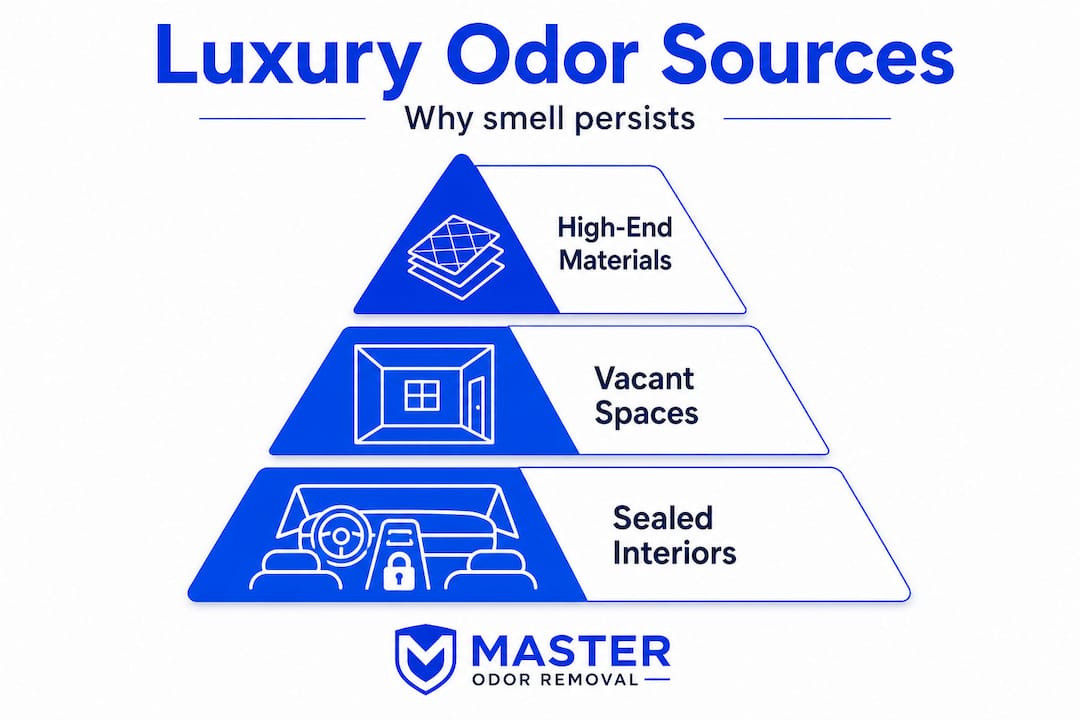
Luxury materials are often the biggest culprits. Fine leather, natural hardwood, silk upholstery, and wool carpeting are all porous at the microscopic level. They absorb airborne compounds from tobacco smoke, cooking, humidity, and pet accidents far more readily than synthetic materials. The very qualities that make these materials beautiful — texture, density, and warmth — also make them excellent odor traps.
The sources are just as varied as the environments themselves. Consider a high-end real estate property that sat vacant through a humid summer, developing deep mildew within its wood subfloor. Or a prestige vehicle returned from a long road trip with the lingering smell of takeout and cigarette smoke. Even a five-star hotel suite can develop stubborn culinary residue that drifts through air handling systems and settles into drapes and cushions. Air quality systems in luxury buildings can actually distribute odor molecules throughout a space if not properly maintained.
The reputational stakes are enormous. A prospective buyer walking into a multi-million-dollar listing and detecting even a faint mustiness will immediately recalibrate their perception of value. The same is true for a guest boarding a chartered yacht or checking into a private villa. Odor is processed in the limbic system, the part of the brain tied directly to emotion and memory, which means it bypasses rational thinking entirely.
Common luxury odor sources at a glance:
- Tobacco and marijuana smoke embedded in upholstery and wall treatments
- Pet accidents soaked into hardwood floors or subfloor materials
- Mildew from water intrusion behind walls or under decking
- Culinary residue from private kitchens and chef-led events
- Smoke damage from fireplaces or outdoor entertaining areas
Indoor air quality tips can help property owners manage ongoing exposure, but they rarely resolve entrenched odor problems on their own.
“Odor assessment in technical contexts relies on standardized odor profiling methods and anchored intensity scales.”
The takeaway here is clear: luxury does not equal odor immunity. If anything, high-end materials and tightly sealed interiors can intensify the problem.
The science of personalized odor assessment: Beyond masking
Knowing why odors stick is only part of the battle. Next, understand how personalized services scientifically target the problem.
The first thing that separates a professional, personalized odor service from a spray-and-pray approach is the diagnostic phase. Rather than walking in with a single product and applying it everywhere, a trained specialist conducts a structured odor audit of the space. This means systematically mapping each zone of the property, identifying the odor’s character — sour, musty, acrid, animal — and rating its intensity across different areas.
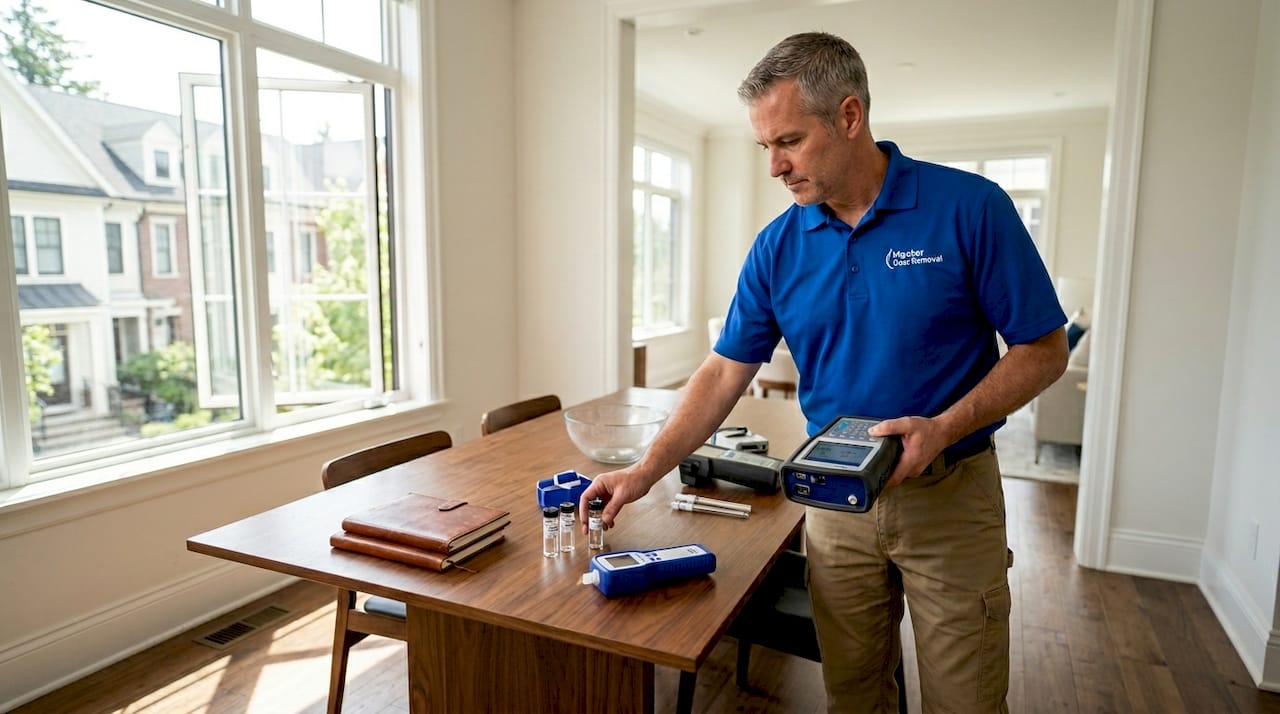
Standardized odor profiling uses trained panels, reference materials, and intensity scales for objective measurement. This is the same methodology used in industrial and environmental contexts, now applied at the residential and commercial luxury level. The result is an objective, repeatable record of what you are dealing with, which eliminates guesswork and enables precise intervention.
A typical personalized odor audit follows these steps:
- Pre-visit consultation: The client describes the space, materials, odor history, and any sensitivities to specific products.
- Systematic zone mapping: Each room or section is assessed individually, noting odor type and perceived intensity on a calibrated scale.
- Source identification: Specialists locate primary and secondary sources, which often differ. The visible source may not be the origin.
- Intervention matching: The odor profile is matched to the most appropriate eco-friendly treatment product or method.
- Baseline documentation: Pre-treatment readings are recorded so post-treatment results can be verified objectively.
Pro Tip: Ask your odor removal specialist to share the pre and post assessment data. Any credible professional service will provide this as part of their odor removal guarantees, and it gives you a concrete record of results rather than just a subjective impression.
| Assessment stage | What it measures | Why it matters |
|---|---|---|
| Odor character profiling | Type of odor compound | Determines the correct neutralizing agent |
| Intensity mapping | Strength by zone | Identifies source concentration |
| Material analysis | Surface porosity and composition | Prevents product-related damage |
| Air movement assessment | Ventilation flow patterns | Reveals how odor spreads through the space |
This level of scientific rigor ensures that the service delivered is genuinely tailored, not generic.
Personalized odor solutions for various luxury environments
A scientific evaluation is only effective when the solutions are equally sophisticated. See how personalization works across various luxury spaces.
Different environments have fundamentally different requirements, and that is where one-size-fits-all services consistently fail luxury clients. A classic estate home with aged oak paneling needs a completely different approach than a carbon-fiber sports car interior or a teak-decked sailing yacht.
Odor intensity and source identification benefit from customized assessment and solution strategies that account for the specific materials, ventilation, and usage patterns of each space.
| Environment | Primary odor challenges | Preferred eco-friendly approach |
|---|---|---|
| Luxury home | Mildew, smoke, pet, culinary | Bio-enzymatic treatments, targeted air scrubbing |
| Prestige vehicle | Tobacco, food, mildew, leather off-gassing | Fast-acting neutralizers, interior fogging without ozone |
| Yacht or marine vessel | Salt moisture, diesel, mildew, galley odors | Marine-safe biodegradable compounds, fogging below deck |
| Upscale commercial space | Food, body odor, product scents, HVAC recirculation | HVAC-compatible neutralizers, surface treatments |
| Hospitality venues | Guest tobacco, cleaning products, musty textiles | Full textile treatment, neutralization without masking agents |
For pet odor removal solutions, wood floors present a particular challenge because urine can penetrate multiple layers before neutralization is needed at the subfloor level. Specialized pet odor removal for wood floors often requires refinishing after treatment to seal the surface and prevent reactivation from humidity.
Vehicles and yachts share one critical need: speed. A luxury vehicle at a dealership or a yacht preparing for a charter departure cannot sit through a multi-day treatment cycle. Personalized services account for this by selecting fast-acting, residue-free methods that restore air quality without introducing new chemical smells or requiring lengthy ventilation windows.
What sets a personalized vehicle or marine odor treatment apart:
- No ozone or chlorine gas, which can damage electronics, rubber seals, and leather
- Residue-free formulas that do not leave film on glass, screens, or wood veneer
- Targeted application to source areas rather than blanket fogging of the entire cabin
- Fast turnaround, often completed within a single service window
Pro Tip: For yacht interiors, always confirm that the treatment product is safe for use around marine-grade electronics and navigation equipment. Residue from improper products can compromise sensitive instruments. A professional vehicle odor removal workflow demonstrates the level of detail that should apply to any motorized luxury asset.
Eco-friendly approaches: Sustainability meets sophistication
With personalization comes responsibility. See how the most exclusive services use sustainability as a filter for every intervention.
For today’s high-end property owners and managers, sustainability is not just a nice-to-have. It is a baseline expectation, particularly when treatments are applied in enclosed, lived-in spaces. Clients who invest in non-toxic building materials and organic textiles are not going to tolerate chemical-laden treatments that leave residue in their air and on their surfaces.
Panel training and standardized scales applied in eco-friendly solutions ensure effectiveness without environmental compromise. Modern bio-enzymatic and plant-derived compounds have reached a level of performance that matches or exceeds traditional chemical treatments, without the toxicity.
The most important thing to know is that eco-friendly does not mean weaker. The biodegradable formulas used by premium odor removal services work at the molecular level to break apart odor compounds rather than coat them in a masking fragrance. This distinction is critical because masking creates a temporary illusion of freshness that collapses as soon as the cover scent dissipates.
The core pillars of a truly eco-friendly odor removal service:
- No ozone generators, which produce reactive oxygen that irritates lungs and degrades rubber and leather
- No chlorine-based treatments, which leave chemical residue and can trigger respiratory reactions
- Plant-derived or bio-enzymatic active compounds that degrade safely after use
- Products certified to green or low-VOC (volatile organic compound) standards
- Minimal packaging and responsible disposal of any used materials
“Eco-friendly services are not a compromise on performance. They are a higher standard of performance.”
To help maintain results between professional visits, practical eco-friendly pet odor tips can guide owners on day-to-day habits that prevent odor buildup without introducing harmful chemicals. Pairing professional treatment with a clean-air strategy at home, including investing in quality residential air quality systems, creates lasting results rather than a temporary fix.
What to expect: The client journey with a personalized odor service
Curious about how this level of service unfolds? Here is what you can expect from the moment you connect to post-service assurance.
One of the most common hesitations among luxury property owners is uncertainty about the process. What will be applied? How long does it take? Who will be in the space? A reputable, personalized service removes every one of those uncertainties before a single product is opened.
Objective assessment and results tracking are core to professional odor service workflows, which means the client is informed and in control at every stage.
Here is the full client journey, step by step:
- Initial consultation: A specialist conducts a detailed intake call or visit to understand the property, the odor history, and any specific concerns about materials or occupants.
- Odor mapping visit: The property is assessed using calibrated methods to document the full scope of the problem.
- Custom treatment proposal: The client receives a clear, written plan outlining which products will be used, where they will be applied, and why each was selected for their specific environment.
- Same or next-day service: Treatment is scheduled immediately, with the full process completed in a single visit whenever possible.
- Transparent application: The specialist explains what they are doing at each stage, including any prep steps like ventilating the space or moving textiles.
- Post-treatment assessment: Results are measured against the pre-treatment baseline and documented for the client’s records.
- Follow-up assurance: The service provider checks in after a set period to confirm that results have held and addresses any residual concerns.
Pro Tip: If you are managing a move-in/move-out odor service for a rental property or estate transaction, request that the pre and post odor readings be included in the handover documentation. This protects all parties and adds a layer of professional credibility to the property transition.
Between professional visits, supporting your interior’s air quality with quality home air purification systems keeps the baseline clean and extends the life of each treatment.
The underestimated impact: Why personalization is essential for luxury odor removal
Stepping back, here is why the future of luxury odor management is deeply, and necessarily, personal.
The industry conversation around odor removal has long been dominated by products: foggers, sprays, diffusers, machines. But for luxury environments, the product is almost secondary. What truly determines success is the precision of the diagnosis and the judgment applied to treatment selection. A $50,000 piece of leather furniture cannot be subjected to the same cavalier approach as an economy rental car.
Standardized odor scales highlight both the objectivity and limitations of generic solutions. Objective measurement is valuable, but it is only the beginning of an intelligent response. The variables in luxury environments — materials, microclimate, usage patterns, client lifestyle, occupant sensitivities — are so specific that a generic protocol simply cannot account for them.
From our perspective, the most expensive mistake luxury property owners make is treating odor removal as a commodity service. It is not. When you hire a professional to work on a rare wood floor, a couture piece, or a precision-engineered vehicle, you expect someone with the knowledge to respect that asset. The same logic must apply to odor removal.
We have seen time and again that properties treated with generic, high-volume methods either experience rapid rebound — the odor returns within weeks — or suffer subtle surface damage that compounds the original problem. Personalization protects both the sensory experience and the physical integrity of the space. It is not a luxury add-on; it is the only approach that actually works at this level.
Connecting with the right top-rated odor services means working with specialists who understand that your property is not a standard job. It is a unique environment that deserves a response as refined as the space itself.
Experience the difference: Transform your luxury space now
You have seen how personalized, science-backed odor removal works, and why generic solutions consistently fall short for high-value interiors. Now it is time to put those insights into action with a service built specifically for clients who expect nothing less than exceptional results.

At Master Odor Removal, we specialize in precisely this kind of work. Our licensed professionals use green odor elimination techniques that are certified safe for luxury materials, occupants, and the environment. Every engagement begins with a detailed assessment and ends with documented results. We never use ozone or chlorine, and we work with same or next-day availability so your property, vehicle, or commercial space is never out of commission for long. Connect with our team to learn exactly what odor removal done right looks like, or explore why our clients consistently choose us as their luxury interior odor specialists.
Frequently asked questions
How do professionals assess the type and intensity of odors in luxury interiors?
Professionals use standardized odor profiling methods and anchored intensity scales with trained evaluators, ensuring that measurements are consistent, objective, and repeatable across visits.
Are personalized odor removal services safe for expensive materials and finishes?
Yes, personalized services carefully match eco-friendly methods to the specific needs of high-end fabrics, hardwood, leather, and other premium surfaces, preventing any damage that a generic chemical treatment might cause.
What sets eco-friendly odor removal apart in luxury settings?
Eco-friendly services use non-toxic, biodegradable compounds that neutralize odor at the molecular level, and panel training with green methods confirms that these approaches balance full efficacy with environmental and occupant safety.
Can persistent odors really be eliminated in a single visit?
With precise assessment and targeted treatment matched to the specific odor source and material, many persistent odors in luxury properties can be fully neutralized in one professionally managed service visit.
Recommended
- Identify signs of persistent odors in luxury properties – Master Odor Removal
- Eco-friendly deodorization: Expert steps for luxury properties – Master Odor Removal
- Odor control: protect your luxury brand and spaces – Master Odor Removal
- Professional Odor Removal: Luxury Eco-Friendly Solutions – Master Odor Removal
Recent Comments