
TL;DR:
- Food odors in luxury vehicles are deeply embedded, requiring a multi-step, professional approach for removal.
- Trained specialists use inspection, deep cleaning, enzymes, and ozone treatments to fully neutralize odors.
- Eco-friendly methods and moisture control are essential to prevent odor recurrence and protect high-end materials.
Food odors are one of the most stubborn and underestimated problems luxury vehicle owners face. A single spilled latte or forgotten takeout bag can embed itself into leather, padding, and ventilation systems so deeply that no amount of surface wiping will fix it. Many owners assume a quick interior detail will solve the problem, but that assumption is costly. The reality is that food odor elimination in high-end vehicles demands a science-backed, multi-step approach that protects premium materials while delivering a genuinely neutral interior. This guide walks you through exactly what works, what does not, and why eco-friendly professional methods are the right call.
Table of Contents
- Why food odors in vehicles are so persistent
- The professional multi-step process for food odor removal
- Common challenges and extreme cases: What to watch out for
- Eco-friendly practices and safety precautions for odor removal
- What most luxury car owners and dealerships overlook about odor removal
- Professional, eco-friendly solutions for luxury vehicles
- Frequently asked questions
Key Takeaways
| Point | Details |
|---|---|
| Odors penetrate deeply | Food odors often linger by soaking into padding and vents, defying surface cleaning. |
| Professional multi-step process | Thorough odor removal involves inspection, extraction, enzyme cleaners, and ozone or chlorine dioxide. |
| Handle extreme cases carefully | Hidden spills or mold may require component replacement and moisture control. |
| Choose eco-friendly experts | Eco-safe treatments and specialist skills are essential for luxury interiors. |
| Fix leaks before treating | Addressing moisture sources is crucial to prevent odor recurrence after cleaning. |
Why food odors in vehicles are so persistent
Luxury vehicles are engineered for comfort, which ironically makes them more vulnerable to persistent odors. Thick acoustic padding, perforated leather, suede headliners, and complex HVAC systems all create ideal conditions for odor molecules to settle and stay. When food or liquid hits a surface, it rarely stays there. It seeps downward into foam padding, migrates into carpet fibers, and gets pulled through ventilation ducts every time the climate system runs.
Here is what makes food odors particularly stubborn in these environments:
- Porous materials absorb quickly. Leather, carpet, and foam padding act like sponges. Even a small spill can penetrate several layers before you notice it.
- Bacteria and mold multiply fast. Spilled dairy foods can trigger bacterial and mold growth in hidden places like under seats and inside padding, intensifying the odor over days and weeks.
- Ventilation systems spread contamination. Once odor particles enter the cabin air system, they circulate and deposit on every interior surface.
- Luxury materials require gentle handling. Aggressive chemical cleaners that might work in a standard vehicle can permanently damage aniline leather, real wood trim, or Alcantara fabric.
Surface cleaning, even professional detailing, only addresses what is visible. The real problem is what sits beneath the surface. A steam clean or wipe-down may temporarily reduce odor intensity, but without reaching the source, the smell returns within days. This is especially true in warm climates, where heat accelerates bacterial activity and amplifies odor output.
“The longer a food spill sits untreated, the more deeply it penetrates and the harder it becomes to fully neutralize. In luxury vehicles, this timeline matters more because the materials are denser and more layered.”
For owners dealing with removing organic odors from leather seats, understanding this layered contamination is the first step toward choosing the right solution. Skipping straight to a masking spray or a single-step cleaner is not just ineffective. It can actually lock odors deeper into the material by adding moisture without extraction.
The professional multi-step process for food odor removal
Understanding the sources of these odors highlights why a specialized removal process is necessary. Trained odor removal specialists do not guess. They follow a structured, repeatable process designed to eliminate odor at every layer.
Professional multi-step methods typically include source identification, deep vacuuming, hot water extraction, enzyme cleaners for organic residue, and finishing treatments like ozone or chlorine dioxide for residual odors. Here is how that process breaks down in practice:
- Inspection and source identification. Specialists use moisture meters and odor mapping to locate exactly where contamination has settled, including under seats, inside vents, and beneath carpet layers.
- Dry extraction and deep vacuuming. All loose debris is removed before any liquid is introduced. This prevents pushing contaminants deeper.
- Hot water extraction. High-pressure extraction pulls embedded residue out of foam and carpet fibers without saturating the material.
- Enzyme cleaner application. Enzyme-based solutions break down organic molecules at a biological level. This is the critical step for food odors because it destroys the actual odor-causing compounds rather than masking them.
- Ozone or chlorine dioxide finishing treatment. This step reaches areas that physical cleaning cannot, achieving up to 95 to 100% elimination for food spill odors.
- Airing out and final inspection. The vehicle is ventilated thoroughly before a final odor assessment confirms success.
Pro Tip: Ask your odor removal specialist which enzyme formula they use for food-based odors. Protease enzymes target proteins found in dairy and meat, while lipase enzymes break down fats. The right enzyme match dramatically improves results.
For vehicles with especially complex interiors, super car odor removal strategies go even further, accounting for exotic materials and multi-zone climate systems. The table below shows how each step targets a different layer of contamination.
| Step | Target | Method |
|---|---|---|
| Inspection | Hidden source location | Moisture meters, sensory mapping |
| Vacuuming | Surface debris | HEPA dry extraction |
| Hot water extraction | Embedded residue | High-pressure extraction |
| Enzyme treatment | Organic compounds | Biological breakdown |
| Ozone or chlorine dioxide | Residual airborne odors | Chemical neutralization |
| Final airing | Treated air quality | Ventilation and assessment |
Using eco-friendly odor neutralization methods ensures that none of these steps introduce harmful residues into a premium interior.
Common challenges and extreme cases: What to watch out for
While most food odors can be handled with standard procedures, there are tougher cases that require extra measures. Some situations go beyond what even a thorough multi-step process can resolve in a single visit.
Food spills left under seats for weeks can lead to bacterial and mold growth that requires full extraction. HVAC contamination or sunroof leaks can complicate the removal process significantly. Here are the most common extreme cases:
- Dairy spills under seating. Milk and cream break down rapidly, producing sulfur compounds and mold. If left for more than 48 hours, the foam padding underneath often requires physical replacement.
- Food trapped in HVAC systems. Small particles pulled into the cabin air intake can coat evaporator coils and distribute odor throughout the entire interior every time the fan runs.
- Mold from sunroof or window leaks. Moisture from a faulty seal combined with food residue creates ideal mold conditions inside the headliner and A-pillar trim.
- Repeated spills with no treatment. Layered contamination from multiple incidents builds up in ways that resist standard enzyme treatments.
Pro Tip: Before any odor treatment, check your sunroof drainage channels and door seals. A slow leak can reintroduce moisture after treatment and restart mold growth within weeks.
The comparison below shows how standard cases differ from extreme ones in terms of required intervention.
| Scenario | Standard approach | Extreme case approach |
|---|---|---|
| Fresh food spill | Extraction plus enzyme treatment | Same plus ozone finishing |
| Dairy spill under seat | Deep extraction plus enzyme | Padding replacement plus treatment |
| HVAC contamination | Vent cleaning plus enzyme | Coil cleaning plus full system flush |
| Mold from leak | Mold treatment plus drying | Headliner removal plus replacement |
For dealerships managing inventory, reviewing auto odor removal facts helps set realistic expectations for trade-in vehicles with unknown histories. Choosing eco-certified odor removal also ensures that the products used on your inventory meet environmental and safety standards.
Eco-friendly practices and safety precautions for odor removal
With the toughest odor cases in mind, consider what sets eco-friendly, professional odor removal apart, especially when safety is a concern. Not all odor removal methods are created equal, and the chemistry used matters as much as the technique.
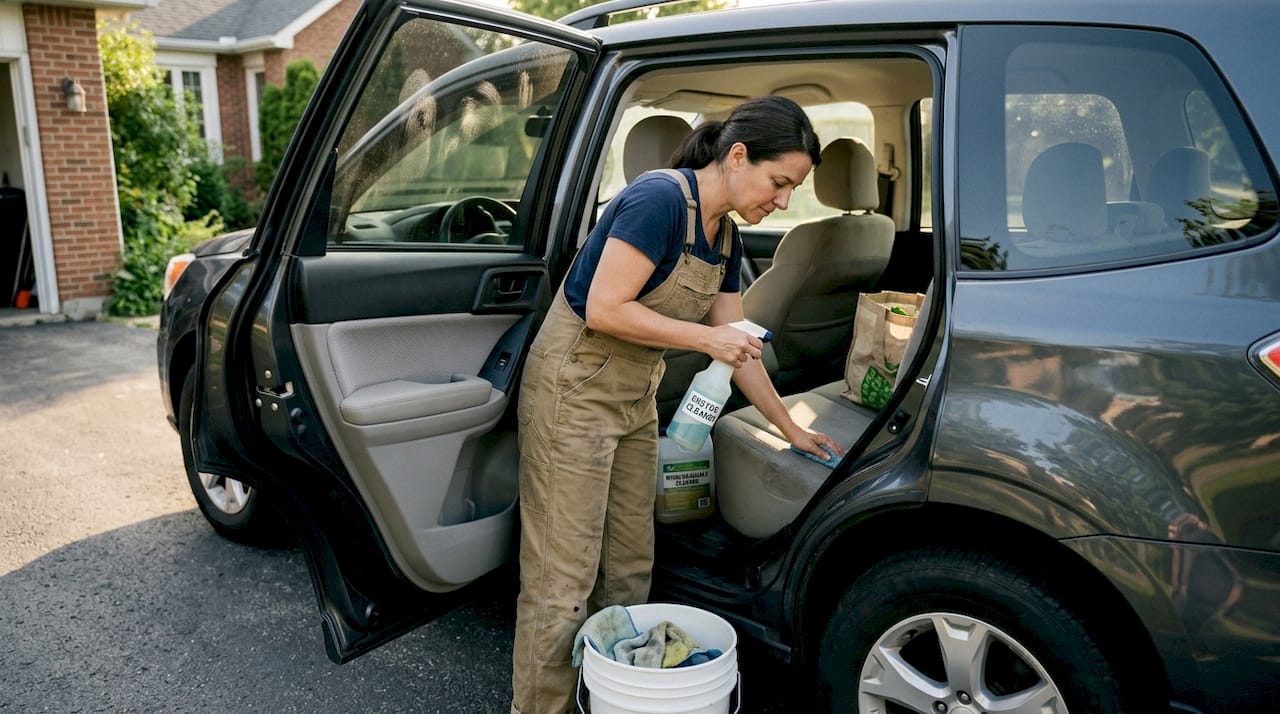
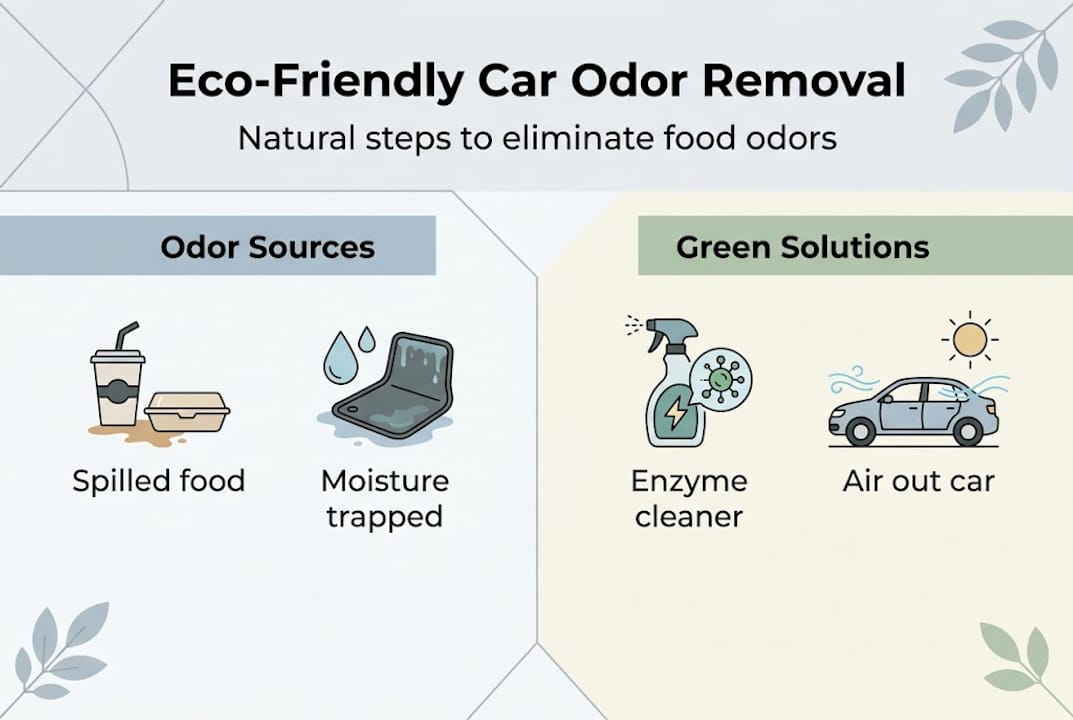
Green cleaning agents and enzyme-based solutions break down organic matter without releasing volatile compounds that could harm a vehicle’s interior or the people inside it. This is especially important for luxury vehicles where natural leather dyes, real wood lacquers, and specialty fabric treatments can react unpredictably to harsh chemicals.
Key eco-friendly practices that responsible specialists follow include:
- Using biodegradable enzyme formulas that break down food residue without leaving chemical residues.
- Applying pH-neutral cleaners that are safe for aniline leather, suede, and coated fabrics.
- Controlling moisture carefully to prevent introducing new mold risks during the cleaning process.
- Fixing leaks before treatment because no chemical solution will hold if moisture continues to enter the vehicle.
- Following proper ventilation protocols after any ozone or chlorine dioxide treatment to ensure the cabin is safe for occupants.
“Professionals warn against DIY ozone use due to safety risks. Physical removal of the odor source combined with chemical neutralization is required for lasting success.”
This warning matters. Ozone generators sold for home or vehicle use are often misused, leaving dangerously high concentrations inside enclosed spaces and damaging rubber seals, plastics, and dyed leather when used incorrectly. A trained specialist knows exactly how long to run a treatment, at what concentration, and how to verify the space is safe before handing the vehicle back.
For those who want to understand the full picture of eco-friendly odor elimination, it goes beyond just the products used. It includes responsible waste disposal, safe chemical handling, and choosing methods that do not compromise air quality inside the vehicle long-term. Working with luxury interior odor experts ensures every one of these considerations is built into the service.
What most luxury car owners and dealerships overlook about odor removal
After working with high-end vehicles and discerning clients, one pattern stands out clearly. The most overlooked step in any odor removal job is fixing the underlying moisture or leak problem before any treatment begins. Owners invest in premium cleaning services, then wonder why the smell returns two weeks later. It returns because the source was never addressed.
Masking sprays and single-step chemical treatments are shortcuts that feel satisfying in the moment. They are not solutions. A truly odor-free luxury interior requires patience, proper sequencing, and the kind of diagnostic thinking that only comes from real experience with high-value materials.
The equation is simple: source removal plus chemical neutralization plus moisture control equals a permanently fresh interior. Skip any one of those steps and you are setting yourself up for a repeat problem. Working with expert odor removal professionals who understand this equation is not a luxury. For vehicles worth six figures, it is a necessity.
Professional, eco-friendly solutions for luxury vehicles
For those ready to resolve food odors in their luxury vehicles, here is where you can turn for trusted help. Master Odor Removal specializes in exactly this kind of work, bringing green-certified methods and licensed professionals to every job.

Whether you manage a dealership inventory or own a single high-value vehicle, our odor removal specialists are equipped to handle every scenario described in this guide. We use only green odor elimination techniques that protect your interior and your health. For luxury vehicles specifically, our approach to eco-friendly odor neutralization is tailored to the materials and complexity that premium cars demand. Same-day and next-day availability means you are never waiting long for a fresh result.
Frequently asked questions
How long does it take to remove food odors from a luxury vehicle?
Professional removal usually takes a few hours to a full day, depending on odor severity. Complete professional treatment includes inspection, cleaning, and airing out after any finishing treatment.
Is ozone or chlorine dioxide treatment safe for my car’s interior?
When used by trained professionals, both methods are safe for interiors and highly effective. Ozone and chlorine dioxide are safe under professional supervision, but DIY use carries real hazards.
Can a lingering food odor indicate a moisture problem or hidden damage?
Yes, persistent odors often signal a moisture source or hidden bacterial and mold growth. Spilled food combined with moisture creates conditions that require deeper intervention than standard cleaning.
What are the risks of DIY odor removal in luxury cars?
DIY methods can damage sensitive materials or leave harmful chemical residues behind. Professionals warn against DIY ozone specifically because of both interior damage risk and occupant safety concerns.
Recent Comments