
A luxury vehicle can pass every visual inspection with flying colors and still lose a sale the moment a client opens the door. Persistent odors are silent profit killers in high-end dealerships, and untreated smells reduce trade-in value by $2,000 or more per vehicle. The good news is that eco-friendly, rapid odor removal solutions have advanced significantly, giving dealership managers real options that protect both premium interiors and their bottom line. This guide walks you through how to evaluate, compare, and apply the best odor removal methods available today.
Table of Contents
- How to evaluate odor solutions for luxury vehicles
- Top rapid and eco-friendly odor removal products
- Comparing odor removal options for dealership workflows
- Choosing the best odor solution for your dealership
- A fresh perspective: The real business cost and overlooked risks
- Fast, eco-friendly odor solutions for luxury dealerships
- Frequently asked questions
Key Takeaways
| Point | Details |
|---|---|
| Rapid odor removal | Treatments like ClO2 and Odor15 restore vehicles quickly, minimizing downtime and maximizing sales throughput. |
| Eco-friendly effectiveness | Natural products such as Gyeon Odor Remover neutralize odors without masking fragrances and are safe for luxury interiors. |
| Impact on value | Untreated odors can decrease a car’s trade-in value by thousands, making professional solutions a smart investment. |
| Smart selection | Choosing the right method requires matching the odor source to the solution type and pre-treating for deep contamination. |
How to evaluate odor solutions for luxury vehicles
Not every odor removal product belongs near a hand-stitched leather seat or a carbon fiber trim panel. When you are managing a luxury inventory, the criteria for selecting an odor solution go well beyond “does it work.” You need to weigh speed, effectiveness, material safety, and environmental credentials together.
Key evaluation criteria:
- Speed: How quickly does the treatment work, and how long before the vehicle is ready for the showroom floor?
- Effectiveness: Does it eliminate the odor at the source, or simply mask it temporarily?
- Material safety: Is it safe for leather, Alcantara, wood trim, and other premium surfaces?
- Eco credentials: Is the product green-certified, free from harsh chemicals, and safe for enclosed spaces?
Eco-friendly solutions have closed the gap with traditional chemical treatments. Many odor removal specialists now offer green-certified options that perform just as well, without the risk of discoloring delicate surfaces or leaving chemical residue in the cabin.
Speed matters enormously in a dealership workflow. Every hour a vehicle sits off the floor is revenue you are not earning. Rapid treatments that restore a car to showroom-ready condition within an hour or less are now the standard expectation for high-volume luxury operations.
Preparation is also critical. For deeply embedded odors, surface-level treatment alone will not cut it. Pre-treating soaked sources with a liquid treatment via steamer before any gas-phase treatment is essential because gas alone cannot reach saturated materials like foam padding or carpet backing. Skipping this step is one of the most common reasons odors return after treatment.
As a luxury interior specialist, understanding the difference between chemical vs gas odor removal approaches is foundational to protecting your inventory.
Pro Tip: Always identify the odor source before selecting a treatment. Tobacco, pet, mildew, and food odors each respond differently to various removal methods. Mismatching the solution to the source wastes time and money.
Top rapid and eco-friendly odor removal products
Now that you know what to look for, here are the most effective solutions currently available for luxury vehicle odor removal.
Gyeon Odor Remover is one of the standout eco-friendly options on the market. It works by neutralizing odor-causing enzymes without relying on fragrances or masking agents. That distinction matters in a luxury setting. Clients notice when a car smells artificially “fresh” just as much as when it smells bad. Gyeon targets pet, food, and musty odors effectively, though severe cases may require multiple applications.
ClO2-based treatments offer deep-action odor removal with a relatively fast turnaround. These are particularly effective for embedded odors that have soaked into porous materials. The treatment cycle typically runs about one hour, making it practical for dealership throughput.
Odor15 is a newer professional-grade solution designed specifically for speed. Odor15 completes treatment in 15 minutes, making it ideal for high-volume operations where minimizing downtime is a priority.
“The fastest odor removal solution is only as good as the preparation behind it. A 15-minute treatment on an unprepared surface is a 15-minute delay, not a solution.”
Key product highlights:
- Gyeon Odor Remover: enzyme-neutralizing, fragrance-free, safe for premium surfaces
- ClO2 treatments: deep penetration, approximately one-hour cycle, strong on embedded odors
- Odor15: ultra-fast 15-minute professional treatment, ideal for throughput-focused operations
For auto odor removal facts specific to dealership environments, it helps to understand that no single product handles every scenario perfectly. Severe cases, like a vehicle that has been smoked in daily for years, will almost always require a multi-step approach.
If your dealership prioritizes sustainability and client-facing reputation, green car odor removal certification is increasingly becoming a selling point with environmentally conscious buyers.
Comparing odor removal options for dealership workflows
To further simplify your decision, here is a side-by-side comparison of the leading options.
| Solution | Treatment time | Eco-friendly | Best for | Surface safety |
|---|---|---|---|---|
| Gyeon Odor Remover | 30 to 60 min | Yes | Pet, food, musty | Excellent |
| ClO2 treatment | ~60 min | Moderate | Embedded, mold | Good with prep |
| Odor15 | 15 min | Yes | Light to moderate | Excellent |
| Multi-step protocol | 90+ min | Varies | Severe, multi-source | Depends on products used |
The table above makes one thing clear: speed and eco-friendliness are no longer mutually exclusive. Rapid solutions like Odor15 and Gyeon deliver results without sacrificing environmental responsibility or surface safety.
From a financial standpoint, the math is straightforward. Untreated odors cut trade-in value by $2,000 or more per vehicle. A professional treatment that costs a fraction of that and restores full market value is not an expense. It is a margin-protection strategy.
What to prioritize when choosing:
- High-volume floor: prioritize speed, use Odor15 for light cases
- Trade-in with embedded odors: invest in a multi-step protocol with proper pre-treatment
- Eco-sensitive clientele: lead with green-certified solutions and document your process
- Severe contamination: combine liquid pre-treatment with a follow-up gas-phase treatment
For dealerships operating across multiple locations, nationwide odor removal services provide consistency in quality and process across your entire inventory.
Pro Tip: For heavily contaminated vehicles, combine a liquid pre-treatment step with a follow-up treatment cycle. Trying to save time by skipping pre-treatment on a badly soaked interior almost always results in odor rebound within days.
Choosing the best odor solution for your dealership
With the options clear, here is how to apply them for best results in your specific context.
Step-by-step selection process:
- Identify the odor source. Tobacco, pet, mildew, food, and smoke each require different approaches. Do not guess.
- Assess severity. Light odors may respond to a single eco-friendly treatment. Embedded odors need pre-treatment first.
- Check surface compatibility. Confirm the product is safe for the specific materials in the vehicle before applying.
- Select your treatment. Match the solution to the source and severity using the comparison table above.
- Pre-treat when necessary. For embedded odors in soaked materials, liquid steamer pre-treatment is non-negotiable before any follow-up step.
- Evaluate and repeat if needed. Some severe cases require two or three treatment cycles. Build this into your timeline.
| Odor type | Severity | Recommended approach | Estimated time |
|---|---|---|---|
| Tobacco | Light | Single eco-friendly treatment | 30 to 60 min |
| Tobacco | Heavy | Pre-treat plus follow-up cycle | 90 to 120 min |
| Pet urine | Embedded | Liquid pre-treatment plus gas phase | 90 min+ |
| Mildew | Moderate | Deep-action treatment with prep | 60 to 90 min |
| Food | Light to moderate | Enzyme-neutralizing product | 30 to 60 min |
Eco-friendly products have proven themselves safe on leather, Alcantara, wood veneer, and other luxury finishes when applied correctly. The key phrase is “applied correctly.” Always follow manufacturer guidelines and test on an inconspicuous area first.
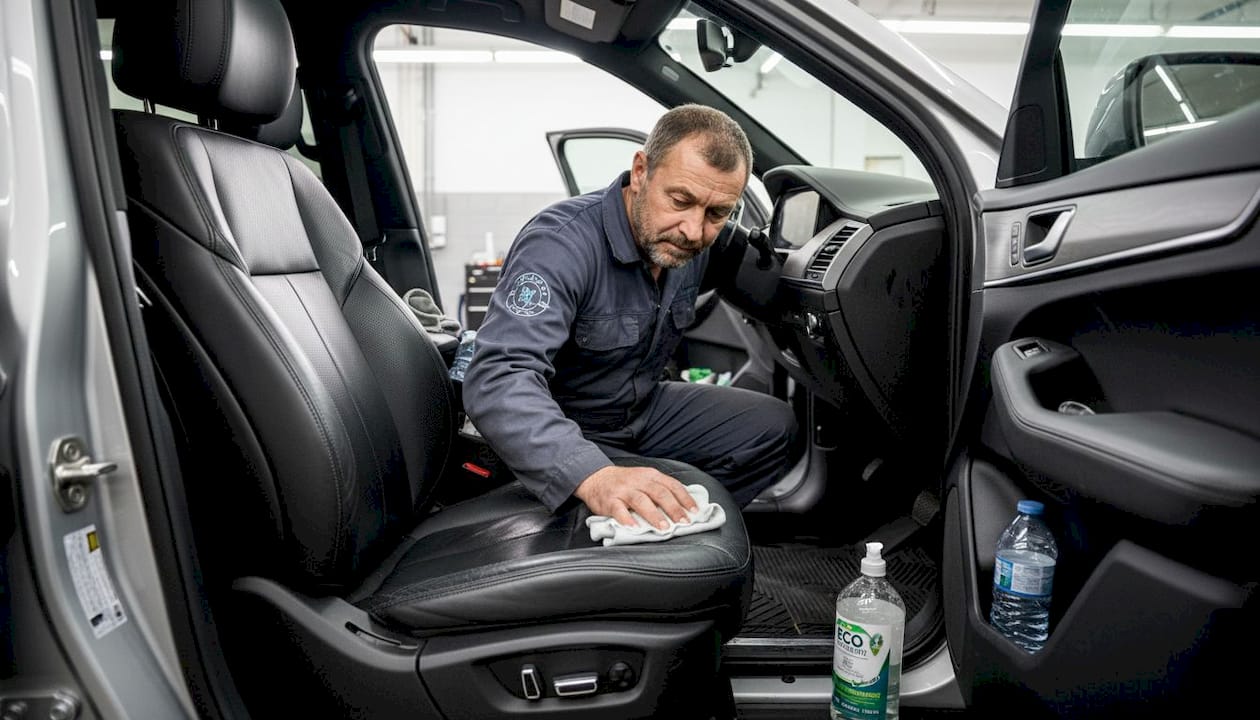
Understanding the difference between direct application vs gas methods helps you make smarter choices for each vehicle rather than defaulting to one approach for everything.
A fresh perspective: The real business cost and overlooked risks
Most dealerships treat odor removal as a detail item, something handled at the end of reconditioning, almost as an afterthought. That mindset is costing you more than you realize.
The visible risks are obvious: a client walks in, smells something off, and walks out. But the invisible risks are more damaging over time. Unsold inventory that sits because of a persistent odor ties up capital. Trade-in vehicles that get undervalued because of smell reduce your acquisition margin. Repeat clients who quietly stop returning because their last purchase had a lingering smell never tell you why they left.
Untreated odors cost $2,000+ per vehicle in trade-in value alone. Multiply that across a month of trade-ins and the number becomes significant fast.
Eco-friendly solutions are not a compromise. When applied correctly by experienced professionals, they are often more thorough than aggressive chemical treatments because they target the source rather than overwhelming it. We have seen supercar odor removal cases where a single well-executed eco treatment outperformed repeated chemical applications.
Our recommendation: audit your inventory monthly, not just pre-sale. Odors develop gradually and catching them early means faster, less expensive treatment.
Fast, eco-friendly odor solutions for luxury dealerships
Ready to elevate your dealership’s reputation and protect your inventory? The difference between a vehicle that sells and one that sits often comes down to what a client smells in the first three seconds.
At Master Odor Removal, we specialize in odor removal done right for luxury dealerships that cannot afford shortcuts. Our licensed professionals offer same or next-day service, with eco-friendly, green-certified methods that are safe for every premium surface in your inventory. Whether you need a single vehicle treated or a full fleet protocol, our odor removal specialists are ready to help. Explore our green odor elimination services and request a consultation today.
Frequently asked questions
What odor removal method works best for pet urine in luxury vehicles?
For deeply embedded pet urine, liquid pre-treatment via steamer before any follow-up gas-phase treatment is the recommended approach, because gas alone cannot reach saturated foam or carpet backing.
Can eco-friendly odor removers handle strong tobacco or mildew smells?
Yes. Products like Gyeon Odor Remover neutralize odor-causing compounds without masking them, and multiple applications handle even strong tobacco or musty cases effectively.
How quickly can rapid odor treatments restore vehicles for sale?
Some professional solutions complete treatment in as little as 15 minutes, making same-day turnaround realistic for light to moderate odor cases.
Is it safe to use odor removal products on leather and premium interiors?
Eco-friendly, fragrance-free solutions like Gyeon Odor Remover are formulated to be safe on leather and luxury surfaces without leaving residue or causing discoloration.
How does untreated odor affect dealership profits?
Untreated odors reduce trade-in value by $2,000 or more per vehicle, and the cumulative impact on unsold inventory and lost repeat clients compounds that cost significantly over time.
Recommended
- Super Car Buying and Odor Removal – Master Odor Removal
- Green Business Certified Car Odor Removal – Master Odor Removal
- Identify signs of persistent odors in luxury properties – Master Odor Removal
- Odor removal standards explained: guide for eco-friendly interiors – Master Odor Removal
- Plants to improve indoor air quality – Amazon Air Duct Cleaning
Recent Comments