
Most luxury property managers and dealership principals assume a premium air freshener or a single-pass cleaning service is enough to satisfy discerning clients. It is not. High-end interiors require more than masking agents for true odor elimination, and the gap between a fragrance cover-up and a permanent result is wider than most people realize. Industry-recognized, multi-phase standards exist precisely to close that gap, and understanding them is the first step toward protecting your assets, your reputation, and your clients’ experience.
Table of Contents
- Odor removal in luxury interiors: More than meets the nose
- What are odor removal standards? The role of IICRC S500 and S700/S770
- The science behind permanent, eco-friendly odor removal
- Addressing edge cases: Porous materials, HVAC, and moisture in premium spaces
- What to look for in a professional odor removal service
- Experience odor removal done right for luxury interiors
- Frequently asked questions
Key Takeaways
| Point | Details |
|---|---|
| Standards matter | Following IICRC and best practices ensures safe, lasting odor removal for luxury spaces. |
| Process must be multi-phase | Permanent results require source removal, surface cleaning, and safe neutralization steps. |
| Eco-friendly options exist | Enzymatic and gas-phase methods provide powerful odor removal without damaging luxury interiors. |
| Test for results | Always request post-treatment VOC/odor testing to guarantee safety and efficacy. |
Odor removal in luxury interiors: More than meets the nose
Luxury interiors are built from materials that perform beautifully under normal conditions but become liabilities the moment the wrong chemical touches them. Hand-stitched leather, silk wall coverings, exotic wood veneers, and precision-woven carpets all absorb odor molecules deeply. They also react poorly to aggressive treatments. That combination makes persistent luxury odors a genuinely complex problem, not a simple cleaning task.
“Porous luxury materials require specialized treatment to avoid damage and ensure long-term results.”
Single-method approaches, whether a spray deodorizer or a one-time steam pass, almost always fail in these environments. The odor source remains embedded in the substrate, and within days the smell returns. Worse, some aggressive chemicals leave behind their own VOC impact on indoor air, trading one air quality problem for another.
Here is what makes luxury odor removal genuinely different from standard cleaning:
- Material sensitivity: Delicate finishes require chemistry matched to the substrate, not a one-size-fits-all formula.
- Odor depth: Premium porous materials trap odor molecules at multiple layers, requiring staged treatment.
- Client expectations: A luxury buyer or high-end tenant will notice residual odor that a standard occupant might overlook.
- Sustainability requirements: Eco-friendly, low-VOC methods are no longer optional for properties and dealerships with green commitments.
Addressing cigarette odor challenges in a flagship vehicle or a penthouse suite demands a framework, not a guess. That framework comes from established industry standards.
What are odor removal standards? The role of IICRC S500 and S700/S770
The restoration industry operates under consensus standards developed by the Institute of Inspection, Cleaning and Restoration Certification, known as the IICRC. Two documents are most relevant to professional odor removal: S500 and S700/S770. IICRC S500 and S700/S770 emphasize source identification, proper cleaning, and safe neutralization methods, forming the backbone of any credible odor removal protocol.
S500 covers general restoration principles, including moisture management and structural drying, which matter enormously when mildew or water-related odors are involved. S700 and S770 go deeper into odor-specific classification and treatment sequencing. They distinguish between smoke types, for example wet smoke from slow-burning fires, dry smoke from fast-burning fires, and protein residue from cooking, because each requires a different chemical approach.
Here is a quick comparison of how these standards apply in practice:
| Standard | Primary focus | Luxury interior relevance |
|---|---|---|
| IICRC S500 | Water damage and moisture | Mildew, humidity-driven odors in yachts and properties |
| IICRC S700 | Odor classification and removal | Smoke, tobacco, pet, and food odors in vehicles and homes |
| IICRC S770 | Smoke and fire restoration | Post-fire or heavy smoke remediation in premium spaces |
Key principles these standards enforce:
- Source identification first: No treatment begins until the odor origin is confirmed and documented.
- Classification before chemistry: The type of odor determines the cleaning agents and neutralization method used.
- Safe material handling: Protocols specify which treatments are appropriate for which substrates.
- Staged verification: Each phase is checked before the next begins.
It is worth noting that no federal law sets enforceable indoor odor benchmarks for non-industrial spaces. However, IICRC guidelines represent the consensus best practice recognized by insurers, property managers, and courts alike. Following them is not just good practice; it is the professional standard. You can explore luxury odor removal best practices and the full odor removal framework to see how these standards translate into real-world service.
The science behind permanent, eco-friendly odor removal
Permanent odor removal is never a single step. True permanent removal takes prevention, deep cleaning, and tailored neutralization working together in sequence. Skipping any phase is the most common reason odors return within weeks.
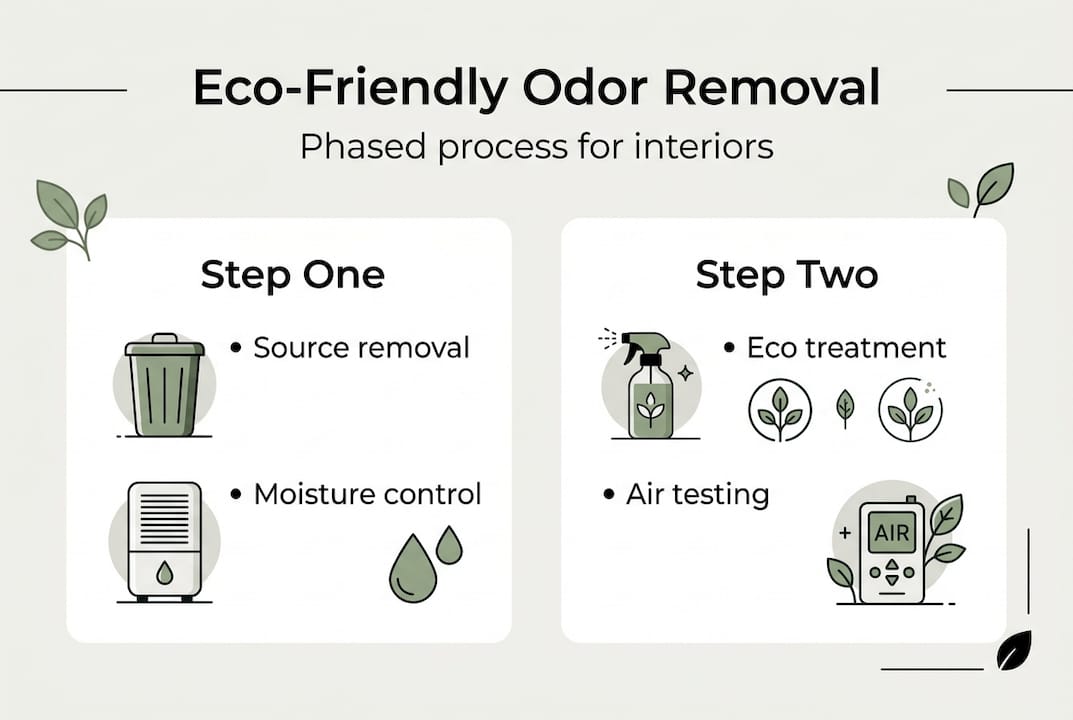
Here is the phased process that aligns with IICRC-guided, eco-friendly standards:
- Source removal: Contaminated materials, saturated foam padding, stained headliners, or compromised insulation, are physically removed or isolated. No chemistry compensates for leaving the source in place.
- Surface cleaning: Every affected surface is cleaned with chemistry matched to the material. Natural fibers respond differently than synthetic ones, and the wrong product can set the odor deeper or damage the finish.
- Gas-phase neutralization: After physical cleaning, gas-phase treatments address residual odor molecules in the air and within porous substrates. The specific method is always chosen based on occupancy safety and surface compatibility.
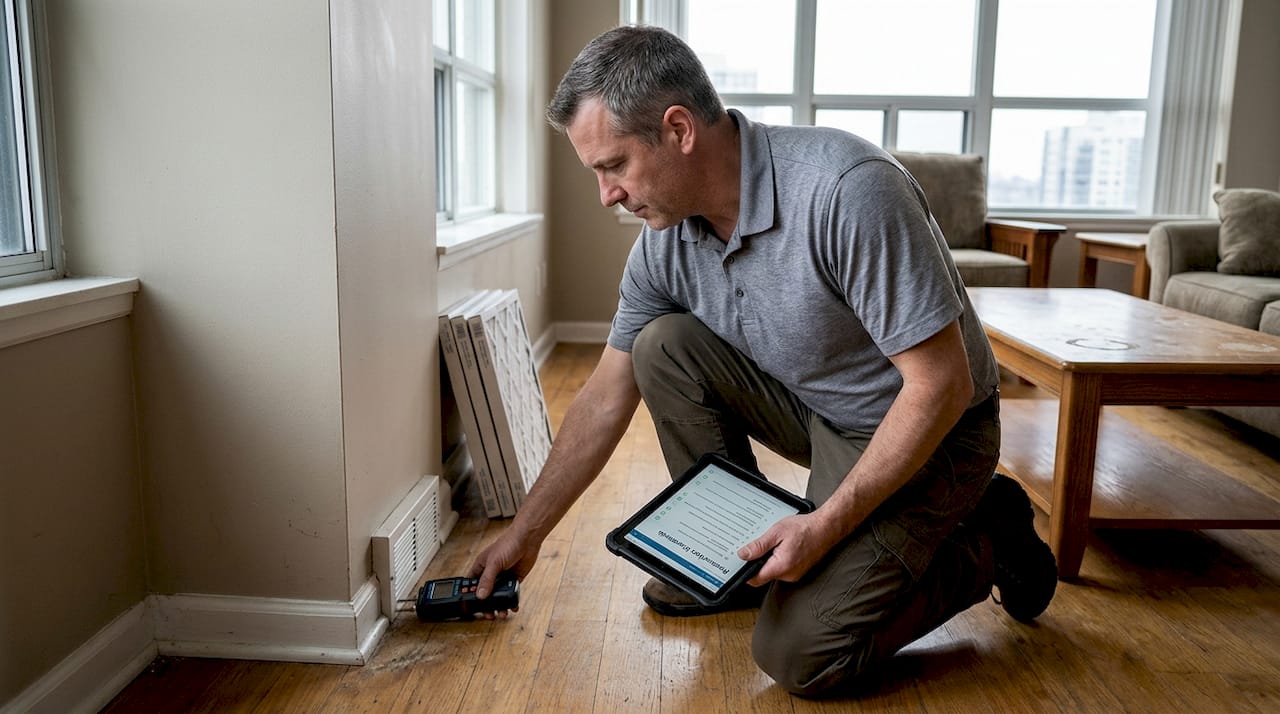
- Moisture and HVAC management: Humidity feeds odor recurrence. Climate-controlled luxury spaces, especially yachts and high-end vehicles, require HVAC filter replacement and humidity calibration as part of the protocol.
- Post-treatment verification: VOC levels and odor presence are tested before the space is returned to service.
| Phase | Purpose | Eco-friendly priority |
|---|---|---|
| Source removal | Eliminate the root cause | Reduces chemical load needed downstream |
| Surface cleaning | Remove embedded residue | Low-VOC, substrate-matched chemistry |
| Gas-phase treatment | Neutralize airborne molecules | Occupancy-safe, non-toxic options |
| HVAC management | Prevent recurrence | Filter upgrades, humidity control |
| Verification | Confirm results | VOC and odor testing |
Pro Tip: Always request a written post-treatment report that includes VOC readings and odor assessment results. This protects you legally and gives your clients documented proof of a clean interior.
For eco-friendly odor removal methods and strategies for odor prevention in properties, a phased approach is always more cost-effective than repeated single-step treatments.
Addressing edge cases: Porous materials, HVAC, and moisture in premium spaces
Not every luxury interior presents the same challenge. A superyacht with teak decking and wool carpeting requires a completely different protocol than a flagship sedan with perforated leather and carbon fiber trim. The common thread is that porous materials must be treated gently and sequentially.
Steam and enzyme treatments must come first for porous luxury materials, with HVAC and moisture controls essential for lasting results. Applying aggressive gas-phase treatments to untreated porous surfaces can drive odor molecules deeper into the substrate rather than neutralizing them. Sequence matters enormously.
Here is what a rigorous edge-case protocol looks like for premium spaces:
- Pre-treatment assessment: Identify every porous surface and map the odor migration path before selecting any chemistry.
- Gentle first-pass cleaning: Use low-pH, substrate-safe solutions on leather, natural fiber, and wood surfaces before any gas-phase step.
- HVAC isolation: Seal or bypass HVAC systems during treatment to prevent cross-contamination, then replace filters and recalibrate humidity settings afterward.
- Humidity monitoring: Maintain relative humidity below 50% post-treatment to prevent mold and odor recurrence, especially in enclosed yacht cabins or garage-kept vehicles.
“The most expensive mistake in luxury odor removal is rushing to gas-phase treatment before the substrate is clean. The second most expensive is ignoring the HVAC system entirely.”
Pro Tip: For leather and upholstery odor in high-value vehicles, always condition leather after treatment. Cleaning strips natural oils, and dry leather re-absorbs ambient odors faster than conditioned leather.
Ongoing property odor prevention is also a strategic investment. Quarterly HVAC filter checks and humidity audits cost far less than a full remediation after a problem compounds over months.
What to look for in a professional odor removal service
Choosing the wrong vendor for a luxury property or a flagship vehicle is a costly mistake. The market is full of companies offering quick fixes that satisfy no one beyond the first week. IICRC-compliant providers who offer post-treatment testing maximize safety and long-term value in luxury interiors. That is the baseline, not a premium feature.
Here is a practical checklist for evaluating any odor removal vendor:
- Verify IICRC or ANSI certification: Ask for documentation. Legitimate providers carry it and reference it in their protocols.
- Request a written scope of work: The proposal should specify source removal, cleaning chemistry, treatment method, and verification steps. Vague proposals produce vague results.
- Ask about eco-friendly chemistry options: A credible provider can explain which products they use, why they chose them for your specific materials, and what their VOC profile looks like.
- Insist on post-process verification: VOC testing and odor-free confirmation should be standard deliverables, not optional add-ons.
- Avoid single-step or fragrance-only solutions: If a vendor’s entire pitch is a spray or a single treatment pass, walk away. That is not odor removal; it is odor delay.
Pro Tip: Ask any prospective vendor how they handle recurrence. A confident, standards-compliant provider will have a clear re-treatment policy. A vendor who hedges on that question is telling you something important about their confidence in their own process.
For luxury interior odor specialists who meet every item on this checklist, the difference in outcome is measurable, both in client satisfaction scores and in the absence of callbacks.
Experience odor removal done right for luxury interiors
Understanding the standards is one thing. Having a partner who applies them flawlessly across every job is another. At Master Odor Removal, every service is built on IICRC-guided protocols, tailored specifically for luxury vehicles, premium properties, yachts, and hospitality environments. We never rely on fragrance cover-ups, and we never cut the process short.

Whether you manage a portfolio of high-end rental properties or run a luxury dealership with a pre-owned inventory that needs to perform at its best, our team delivers VOC-safe, odor-free results with same or next-day availability. Every treatment ends with documented verification, so you have proof to share with clients and stakeholders. Explore odor removal done right with our odor removal specialists, or learn about our dedicated super car odor removal service for your most valuable vehicles. Contact us today to schedule a consultation.
Frequently asked questions
Are there federal regulations for indoor odor removal standards?
No federal laws set enforceable indoor odor standards for non-industrial spaces, but IICRC and ANSI consensus guidelines are widely recognized and applied across the professional restoration industry.
Why is source removal more important than deodorizing sprays?
Permanent removal demands source removal before any deodorization step, because sprays only mask surface-level odor while the embedded source continues to off-gas.
What eco-friendly solutions are safe for luxury interiors?
Substrate-matched, low-VOC cleaning chemistry paired with occupancy-safe gas-phase treatments are the preferred approach, as they protect sensitive surfaces while delivering lasting results. Hydroxyl and enzymatic methods are specifically recommended for occupied luxury interiors.
How can I verify that an odor removal service meets top standards?
Ask for IICRC certification documentation and require post-treatment VOC testing results as a standard deliverable before signing off on any completed job.
Recent Comments