
Cigarette odor is one of the most stubborn problems a luxury property can face. Regular cleaning, fresh paint, and scented candles barely scratch the surface when years of smoke have worked their way into walls, drapes, flooring, and HVAC systems. The good news is that permanent removal is achievable without tearing out expensive finishes or replacing irreplaceable materials. Professional methods are 40-60% cheaper than full repainting and refinishing, making expert intervention the smarter path for high-end properties. This guide walks you through every stage of the process, from understanding why the odor persists to verifying that it is truly gone.
Table of Contents
- Understanding the science behind cigarette odor
- Pre-removal assessment: Preparation steps for luxury properties
- Tools and materials for effective cigarette odor removal
- Step-by-step luxury cigarette odor removal process
- Verification and ongoing prevention in luxury spaces
- Expert solutions for luxury property odor removal
- Frequently asked questions
Key Takeaways
| Point | Details |
|---|---|
| Non-destructive methods | Hydroxyl and thermal fogging clean deep odor without harming luxury surfaces. |
| Sealing is essential | Shellac primers and surface sealing prevent the odor from returning long-term. |
| Professional expertise | Experts guarantee permanent results and are more cost-effective for luxury properties. |
| Ongoing prevention | High-capacity HEPA and carbon air purifiers maintain pristine air quality. |
Understanding the science behind cigarette odor
Cigarette odor is not just a smell. It is a physical residue that bonds to nearly every surface it contacts. In luxury interiors, this means silk wallcoverings, hardwood paneling, stone countertops, and custom upholstery all absorb smoke particles over time. The longer the exposure, the deeper the penetration.
There are two distinct layers to the problem. Surface odor sits on top of materials and responds to cleaning. Embedded odor has migrated into porous substrates and requires targeted treatment to neutralize. Most conventional cleaning only addresses the surface layer, which is why the smell returns within days.
Thirdhand smoke is the hidden challenge that catches many property managers off guard. This is the toxic residue that clings to surfaces long after the smoke has cleared, reactivating with humidity and heat. It is not visible, but it is very much present in tobacco smoke residue that has built up over months or years.
HVAC systems make the problem significantly worse. Contaminated air gets pulled into ductwork, coats the interior surfaces, and then recirculates throughout the property every time the system runs. This is why a room that smells fine after cleaning can revert within 24 hours.
“Odor returns if smoke sources aren’t sealed; thirdhand smoke requires specific sealing for permanent results.”
Key factors that make cigarette odor so persistent in luxury spaces:
- Porous natural materials like stone, wood, and plaster absorb residue deeply
- Layered textiles such as drapes, rugs, and upholstered panels trap particles
- HVAC recirculation spreads contamination to unaffected areas
- High ceilings and large volumes of air slow natural dissipation
- Decorative finishes like lacquer and gilding can trap residue beneath their surface
Understanding these dynamics is what separates a temporary fix from a permanent solution. For a deeper look at how tobacco odor removal works at the molecular level, the science is both fascinating and actionable.
Pre-removal assessment: Preparation steps for luxury properties
A thorough assessment before any treatment begins is what protects your finishes and ensures the right approach is applied to the right surfaces. Skipping this step is how expensive mistakes happen.
The assessment starts with a full site walkthrough. Every room is evaluated for odor intensity, material type, and visible residue. Wall panels, ceiling moldings, drapes, and HVAC intakes are all tested individually. Professional specialists conduct tests to guarantee results before executing any process.
| Assessment area | What to check | Why it matters |
|---|---|---|
| Wall surfaces | Yellowing, sticky residue, odor intensity | Indicates depth of cigarette tar buildup |
| HVAC intakes | Residue on grilles, odor from vents | Determines if ductwork needs remediation |
| Soft furnishings | Drapes, upholstery, rugs | Guides cleaning method selection |
| Hard surfaces | Stone, wood, lacquered panels | Identifies sealing requirements |
Once the walkthrough is complete, the findings are used to map out a non-destructive treatment plan. The goal is always to preserve the integrity of luxury finishes while achieving complete odor elimination. Reviewing odor elimination case studies from comparable properties can help set realistic expectations for your specific situation.
Preparation steps before treatment begins:
- Remove or protect portable valuables and artwork
- Seal off unaffected areas to prevent cross-contamination
- Document the condition of all surfaces with photographs
- Confirm HVAC system access for duct treatment
- Identify any materials requiring special handling, such as antique textiles
Pro Tip: Always test any cleaning agent on a hidden section of each material type before full application. Luxury finishes react differently, and a small test patch prevents irreversible damage.
Tools and materials for effective cigarette odor removal
The right equipment makes the difference between a result that lasts and one that fades within weeks. Luxury properties require tools that are powerful enough to neutralize deep residue without damaging delicate surfaces.
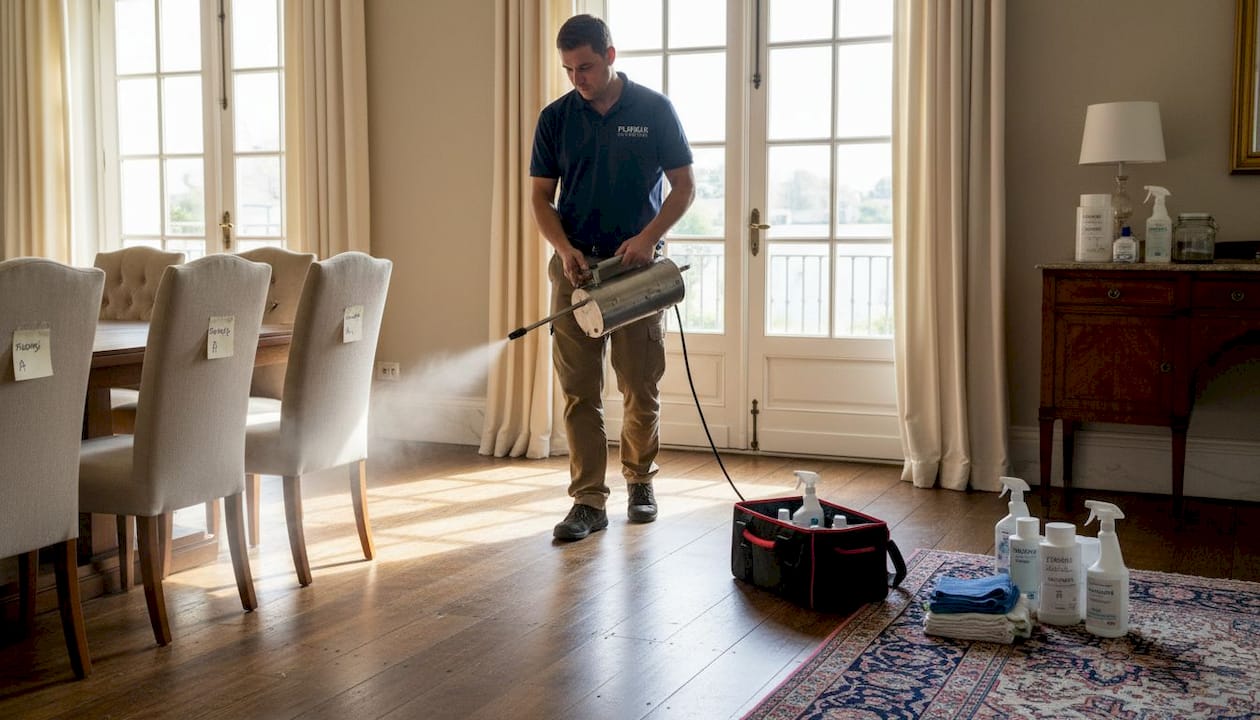
Non-destructive technologies are the standard for high-end interiors. These include thermal fogging machines, which disperse fine particles that penetrate porous materials and neutralize odor at the source. They reach areas that manual cleaning simply cannot access.
| Tool or material | Primary function | Safe for luxury finishes? |
|---|---|---|
| Thermal fogging machine | Penetrates porous surfaces | Yes, when used correctly |
| HEPA air purifiers | Captures airborne particles | Yes |
| High-capacity carbon filters | Absorbs gaseous odor compounds | Yes |
| Shellac-based sealers | Locks in residual odor after cleaning | Yes, on appropriate surfaces |
| Specialized surface cleaners | Breaks down surface-level residue | Depends on formulation |
HEPA air purifiers paired with carbon filters carrying 15 to 25 pounds of activated carbon are the gold standard for air treatment in large luxury spaces. Carbon at that weight capacity can absorb the volume of gaseous compounds present in heavily contaminated interiors. For a full breakdown of the smoke odor removal workflow used in premium settings, the process is both systematic and surface-safe.
Key materials to have on hand:
- Shellac-based primer for sealing treated surfaces
- Microfiber cloths rated for delicate surfaces
- pH-neutral surface cleaners compatible with stone and wood
- Protective coverings for hardware and fixtures
- Air quality monitoring equipment for post-treatment verification
For properties where environmental responsibility is a priority, eco-friendly smoke removal methods are available that deliver the same permanent results without harsh chemicals.
Step-by-step luxury cigarette odor removal process
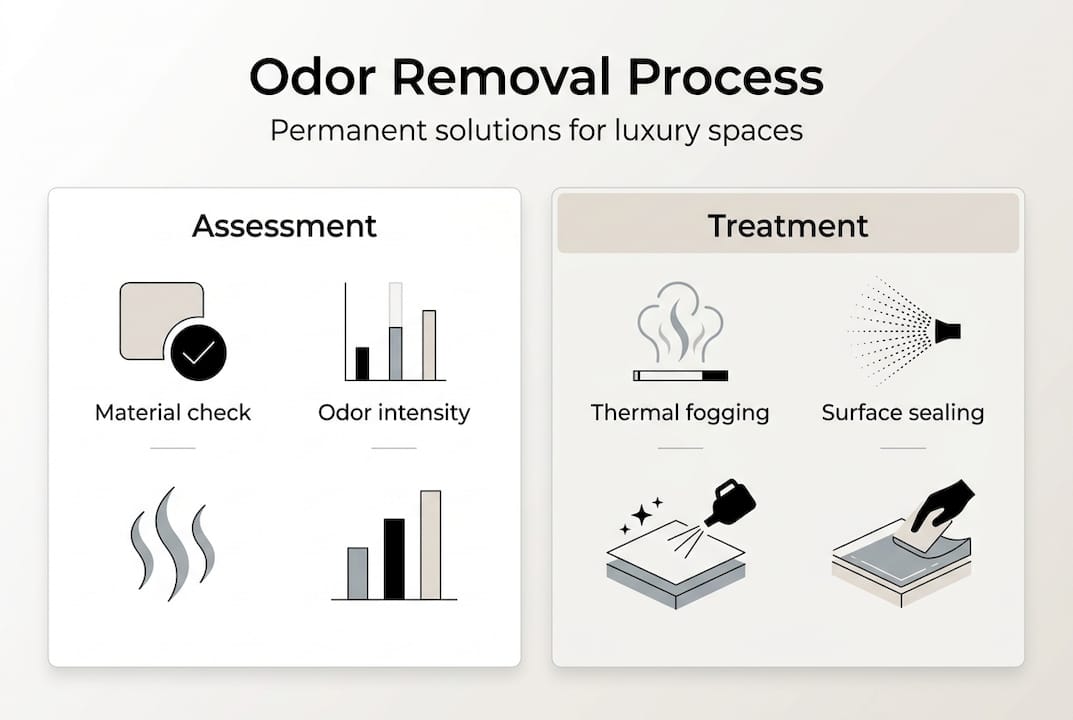
With the assessment complete and tools assembled, the removal process follows a precise sequence. Each step builds on the last, and skipping any stage risks incomplete results.
- Surface cleaning. Begin with all hard and soft surfaces using pH-neutral, material-appropriate cleaners. This removes the top layer of residue and prepares surfaces for deeper treatment. Pay close attention to cigarette tar deposits on walls and ceilings, which are often the primary odor source.
- Thermal fogging treatment. Apply thermal fogging to penetrate porous materials including wood, plaster, and upholstery. The fog reaches inside wall cavities and under flooring edges where residue hides. This step neutralizes embedded odor rather than masking it.
- HVAC remediation. Clean and treat all ductwork, coils, and air handlers. This step is non-negotiable. Untreated HVAC systems will reintroduce odor within days, undoing every other step in the process.
- Surface sealing. Apply shellac-based primer to all affected porous surfaces. Shellac is the only sealer proven to lock in residual odor compounds and prevent them from off-gassing back into the space. This is a critical step that DIY approaches almost always skip, which is why they fail on years of buildup.
- Final air filtration. Run high-capacity HEPA and carbon air purifiers continuously for 48 to 72 hours after sealing. This captures any remaining airborne particles and brings the air quality to a neutral baseline.
“Professionals are more cost-effective and guarantee results because they address every layer of contamination, not just the surface.”
Pro Tip: Do not rush the sealing step. Shellac needs adequate dry time before any topcoat or decorative finish is applied. Rushing this stage can trap moisture and compromise both the seal and the finish above it.
For properties that have hosted smoke odor in homes or rental spaces, the same sequence applies with adjustments for the specific materials and scale involved.
Verification and ongoing prevention in luxury spaces
Completing the removal process is not the finish line. Verification confirms the work is done, and prevention ensures it stays that way.
Post-removal odor testing uses calibrated air quality sensors to measure volatile organic compounds (VOCs), which are the gaseous chemicals released by smoke residue. A clean reading across all zones of the property confirms that the treatment was successful. Testing is standard among professionals and should be a non-negotiable part of any service agreement.
Key stat: Properties that install ongoing HEPA and carbon filtration after professional treatment report significantly lower rates of odor recurrence compared to those that rely on treatment alone.
Ongoing prevention checklist:
- Install HEPA purifiers with 15 to 25 pounds of activated carbon in primary living areas
- Schedule quarterly HVAC inspections to catch residue buildup early
- Conduct routine walkthroughs after any guest or tenant turnover
- Address new smoke sources immediately before residue has time to penetrate
- Monitor air quality with smart sensors that alert you to VOC spikes
For ongoing guidance, the odor removal blog covers emerging best practices for luxury property maintenance. If you notice any warning signs between inspections, reviewing persistent odor signs in luxury properties can help you act before the problem escalates.
Verification is also a valuable tool for documentation. If you are managing a property for sale or lease, a certified clean air report adds tangible value and reassures prospective buyers or tenants that the space has been professionally treated.
Expert solutions for luxury property odor removal
When the stakes are high and the finishes are irreplaceable, professional expertise is not optional. It is the only approach that guarantees permanent results without risking damage to the materials that define a luxury interior.

Our odor removal specialists work exclusively with high-end properties, bringing the tools, training, and track record to handle even the most severe cigarette odor cases. Every project is backed by a satisfaction guarantee, and we offer same or next-day availability so your property is not sitting idle. We are proud to be odor removal done right, using only green-certified, surface-safe methods that protect your investment. To understand exactly why our approach is built for premium spaces, explore what makes us a trusted luxury interior odor specialist for property owners and managers who demand the best.
Frequently asked questions
What makes cigarette odor so hard to remove in luxury properties?
Luxury materials like natural stone, hardwood, and layered textiles are highly porous, allowing thirdhand smoke residue to penetrate deeply. HVAC recirculation then spreads contamination to every corner of the property, making surface cleaning alone ineffective.
Can DIY methods work for long-term cigarette odor in luxury interiors?
DIY fails for years of buildup because consumer products cannot penetrate embedded residue or seal surfaces effectively. Professionals use specialized equipment and sealing techniques that deliver lasting results without damaging expensive finishes.
How do professionals guarantee odors won’t return?
They apply shellac primers to seal treated surfaces, preventing residual compounds from off-gassing back into the space. Post-treatment air quality testing then confirms the odor has been fully eliminated before the job is considered complete.
What ongoing maintenance prevents cigarette odor from returning?
Installing HEPA and carbon purifiers with 15 to 25 pounds of activated carbon, combined with quarterly HVAC inspections and prompt attention to any new smoke sources, keeps luxury interiors consistently fresh.
Recent Comments