
TL;DR:
- Marine interior odors mainly stem from moisture-induced mold, anaerobic decomposition in holding tanks, and stagnant bilge water harboring bacteria. Addressing these sources with proper cleaning, effective ventilation, and chemical treatments ensures permanent odor removal rather than temporary masking. When odors persist despite DIY efforts, professional treatment offers eco-friendly, long-lasting solutions targeting embedded contamination.
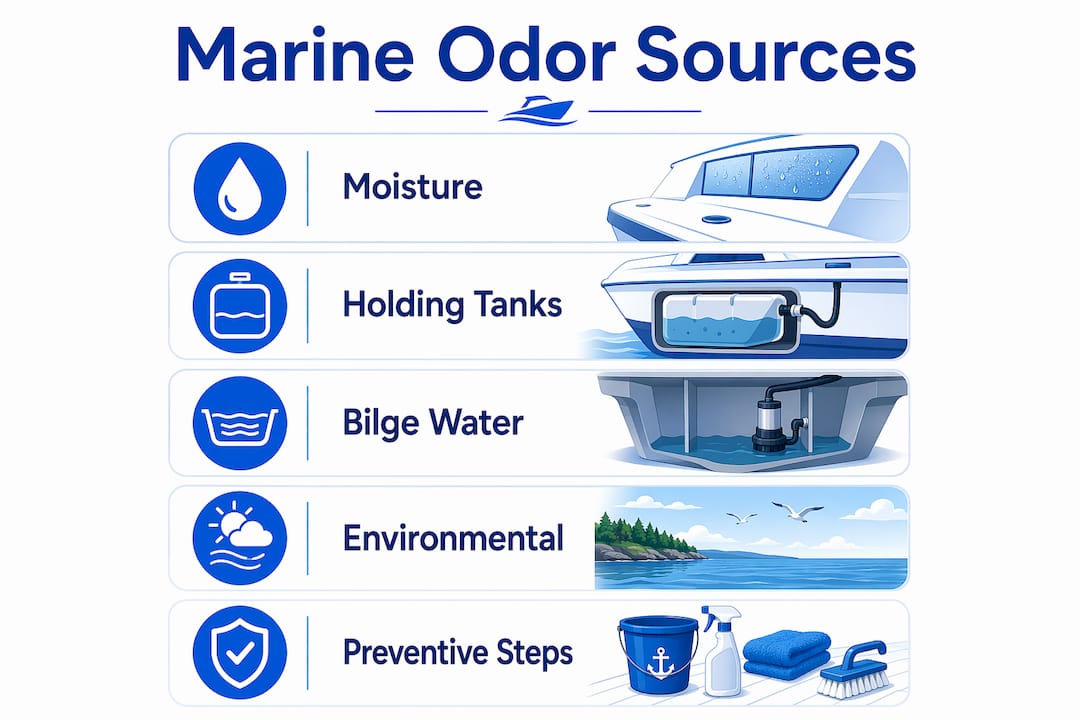
Marine interior odors are defined by three primary sources: moisture-driven mold and mildew growth, anaerobic decomposition inside holding tanks producing hydrogen sulfide gas, and stagnant bilge water harboring bacteria and organic debris. These are not random smells. They follow predictable biological and chemical patterns, which means you can target them precisely once you understand what you are dealing with. Whether your boat smells musty, sulfurous, or like rotting fish, the cause is almost always one of these three systems failing to stay clean and dry.
What causes marine interior odors in boats and yachts
Moisture is the root of most boat odor problems. Summer heat and moisture combine to accelerate microbial growth inside enclosed compartments, turning a weekend of wet gear and spilled bait into a persistent musty smell by the following Friday. Boats are uniquely vulnerable because they combine high humidity, limited airflow, and organic material in tight spaces.
The three main marine odor sources each require a different fix:
- Mold and mildew grow on upholstery, carpets, and inside lockers when condensation or wet gear is left without ventilation.
- Holding tank gases, specifically hydrogen sulfide, escape through permeable hoses or faulty vents and produce that unmistakable rotten egg smell.
- Bilge water stagnates with fuel residue, fish scraps, and organic debris, creating a sour, musty odor that rises into the cabin.
Understanding which source you are dealing with is the first step toward fixing it permanently rather than masking it with a spray.
How moisture and mold create musty odors inside boats
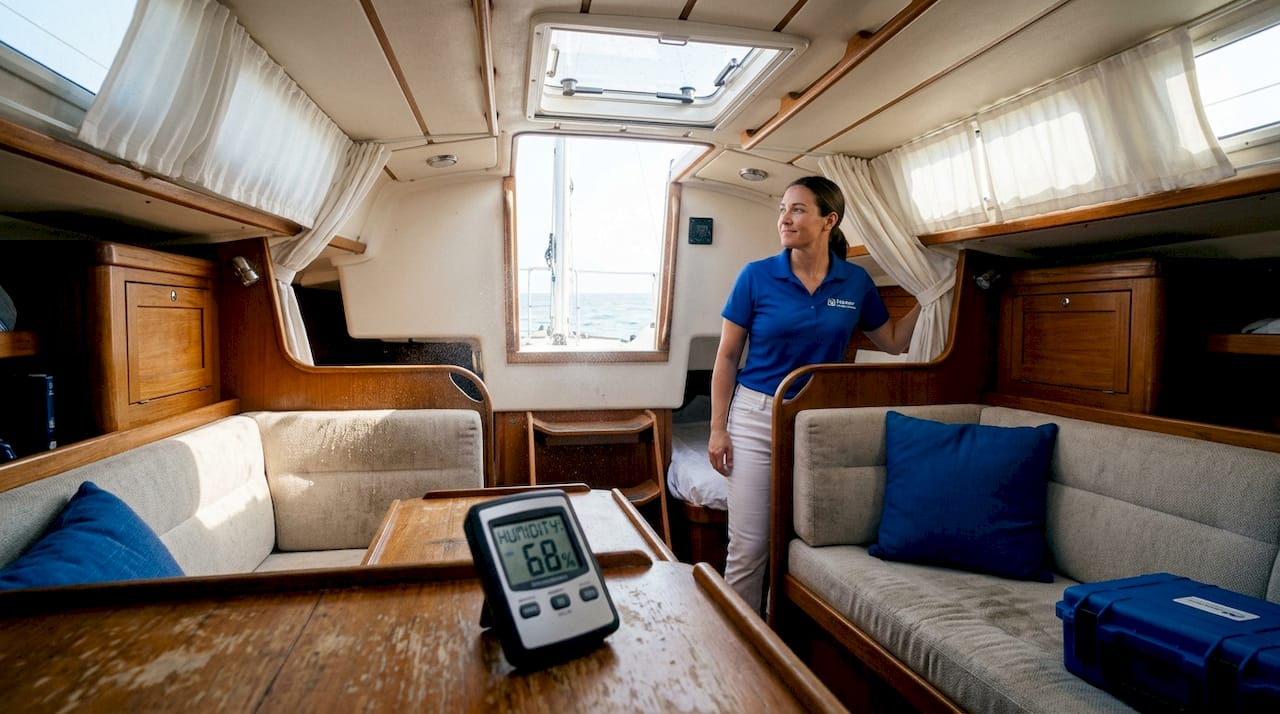
Mold and mildew are the most common causes of boat interior odors, and they thrive wherever moisture collects without drying out. Condensation forms on hull surfaces overnight, wet towels get stuffed into lockers, and bait residue soaks into upholstery fibers. Each of these creates a feeding ground for mold spores that are already present in marine air.
The areas most affected include:
- Upholstery and cushions, where moisture wicks deep into foam and fabric
- Carpets and floor mats, which trap water and rarely dry completely
- Lockers and storage compartments, where airflow is minimal
- The bilge area, which collects water from multiple sources
- Cabin ceilings and walls, where condensation pools in cooler months
Ventilation is the most critical lever in controlling musty odors, yet most boat owners underutilize it. Opening hatches and running a 12-volt fan for a few hours after every trip removes the moisture that mold needs to survive. Without this step, even thorough cleaning produces only temporary results.
Odors that have already embedded in fabrics require more than a surface wipe. Typical sprays do not remove the odor source, which persists within upholstery foam and fabric fibers. Deep cleaning with an enzyme-based marine cleaner, followed by complete drying, is the only approach that works. For persistent cases, the mildew odor on boats guide from Masterodorremoval covers specialized removal techniques in detail.
Pro Tip: Focus your mold cleaning on the back sides of cushions and the undersides of floor panels. These surfaces stay wet the longest and are the most overlooked spots in any boat cleaning routine.
Why holding tank gases cause strong sulfur or rotten egg odors
The holding tank is the single most common source of severe boat odors, and the chemistry behind it is straightforward. When waste sits in a low-oxygen environment, anaerobic bacteria break it down and release hydrogen sulfide gas. Sulfur-like odors from anaerobic bacteria are a direct result of this oxygen-starved decomposition process, not simply a sign that the tank needs pumping.
The odor problem compounds through two additional failure points:
- Vent placement and blockages. A clogged or poorly positioned vent allows gas pressure to build inside the tank. That pressure finds the path of least resistance, which is often back through the toilet or into the cabin.
- Hose permeability. Standard PVC sanitation hoses are gas-permeable. Poor vent placement and hose permeability allow methane and sulfur compounds to diffuse through hose walls into living spaces even when every fitting is tight.
- Inadequate flushing. Low flush water volume leaves concentrated waste residue coating the hose interior. That residue volatilizes continuously, sending odor into the cabin regardless of tank level.
Here is a comparison of the two main approaches to holding tank odor control:
| Approach | How it works | Effectiveness |
|---|---|---|
| Chemical maskers | Perfume-based additives cover the smell temporarily | Low. Odor returns within days as decomposition continues. |
| Aerobic/nitrate treatments | Supply oxygen to bacteria, shifting decomposition away from sulfide production | High. Addresses the biological cause rather than the symptom. |
Nitrate-based treatments supply oxygen to bacteria inside the tank, converting the environment from anaerobic to aerobic and dramatically reducing sulfide gas output. This is the standard recommended by marine sanitation specialists in 2026.
Pro Tip: Upgrade older PVC sanitation hoses to low-permeation hoses like those made from polyethylene or reinforced rubber. The upfront cost is modest, and the odor reduction is immediate and permanent.
Bilge water and plumbing: sources of persistent boat odors
Bilge odors are caused by bacteria breaking down organic matter in stagnant, low-oxygen water. The bilge collects everything: rainwater, engine drips, fish blood, food scraps, and fuel residue. Left to sit, this mixture becomes a concentrated bacterial culture that produces musty, sour smells powerful enough to fill the entire cabin.
The factors that make bilge odors so persistent include:
- Leaks from plumbing fittings that continuously reintroduce water after cleaning
- Poor drainage design that leaves pockets of water trapped under floorboards
- Organic debris accumulation from bait, food, and marine growth that feeds bacterial colonies
- Permeated sanitation hoses that have absorbed odor compounds over years of use and off-gas continuously
Cleaning the bilge removes the visible contamination, but residual moisture undermines all cleaning efforts if the bilge is not dried completely afterward. Running a bilge fan with hatches open for several hours after cleaning, or placing a portable dehumidifier in the cabin overnight, makes the difference between a fix that lasts and one that fades within a week.
Plumbing faults deserve equal attention. Odors can permeate throughout the entire head sanitation system, including hoses and valves, especially when inadequate flushing leaves waste residues that volatilize inside cabins. Inspecting every hose connection and valve for weeping joints is a step most boat owners skip entirely, yet it often reveals the actual odor source. The boat odor prevention guide from Masterodorremoval walks through a systematic inspection process for both bilge and plumbing systems.
Pro Tip: After cleaning the bilge, run your hand along every sanitation hose while the boat is at rest. A hose that smells even when dry has absorbed odor compounds into its walls and needs replacement, not just cleaning.
External and environmental factors influencing marine interior odors
Not every smell on your boat originates inside it. Marine bacteria and phytoplankton release gases like dimethyl sulfide into coastal air, producing the characteristic seafood smell associated with harbors and anchorages. This gas enters cabins through ventilation openings and can make an otherwise clean boat smell like a fish market.
Coastal algal blooms intensify this effect significantly. During warm months, phytoplankton populations spike and their decomposition releases concentrated dimethyl sulfide. Boats moored near these blooms absorb the smell through open ports and hatches, and the odor can settle into soft furnishings if ventilation is not managed carefully.
The practical implication for boat owners is this: if your boat smells strongly of seafood but your bilge is clean and your holding tank is treated, the source may be entirely external. Closing cabin vents when moored near a bloom, and running a carbon-filter air purifier inside the cabin, addresses environmental intrusion without any structural changes to the boat.
Fishy odors that originate inside the boat follow a different chemistry. Trimethylamine released from fish residues during microbial breakdown produces an intensely sharp fishy smell at very low concentrations. A single forgotten bait container or fish blood stain in a locker can produce enough TMA to make the entire cabin smell for days. The distinction matters because TMA requires enzymatic cleaning of the contaminated surface, while dimethyl sulfide from external sources requires ventilation management.
Effective strategies and preventive measures to fix and avoid marine odors
Fixing boat smells permanently requires addressing each source systematically rather than treating the cabin as a single odor problem. Here is the sequence that works:
- Identify the source first. Smell each compartment individually. A sulfur smell near the head points to the holding tank. A musty smell in the forward cabin points to mold in upholstery or the bilge below. Mixing up sources leads to wasted effort.
- Clean with the right chemistry. Use enzyme-based cleaners for organic odors in bilge and upholstery. Use nitrate-based treatments for holding tanks. Avoid bleach in the bilge, as it kills surface bacteria but does not remove the organic matter that feeds the next generation.
- Dry everything completely. Run fans, open hatches, and use a dehumidifier rated for marine environments. Brands like Ebac and Ecor Pro make compact marine dehumidifiers designed for this purpose.
- Upgrade vulnerable components. Replace standard PVC sanitation hoses with low-permeation alternatives. Add a Dorade vent or solar-powered ventilator to improve passive airflow in enclosed compartments.
- Maintain a regular schedule. Treat the holding tank after every pump-out. Clean the bilge monthly during active season. Air out cushions and upholstery after every trip.
Pro Tip: Spray upholstery with a marine-grade antimicrobial solution like Star Brite Mold and Mildew Stain Remover after every deep clean. It extends the time between cleanings by suppressing mold regrowth on fabric surfaces.
When DIY methods fail after two or three attempts, the odor source is almost always embedded deeper than surface cleaning can reach. At that point, professional treatment is the faster and more cost-effective path.
Key takeaways
Marine interior odors require source-specific treatment: mold needs drying and enzymatic cleaning, holding tanks need aerobic bacterial treatment, and bilges need complete drying after every clean.
| Point | Details |
|---|---|
| Moisture drives most odors | Trapped condensation and wet gear feed mold growth in upholstery, carpets, and lockers. |
| Holding tanks need chemistry, not masking | Nitrate-based aerobic treatments eliminate sulfide gas production at the source. |
| Bilge drying is non-negotiable | Residual moisture after cleaning restarts mildew growth within days. |
| Hose permeability is underestimated | Standard PVC sanitation hoses off-gas odor compounds through their walls regardless of seal tightness. |
| External odors require different solutions | Dimethyl sulfide from coastal blooms enters through vents and needs ventilation management, not internal cleaning. |
What most boat owners get wrong about odor control
I have worked with enough yacht interiors to say with confidence that the single most common mistake is treating boat odors as an air quality problem rather than a surface and system problem. Owners buy sprays, plug in air fresheners, and wonder why the smell returns within a week. It returns because the bacteria and mold are still there, embedded in foam cushions or coating the inside of a sanitation hose.
The second mistake is fixing only the most obvious source. A boat that smells like sulfur near the head often also has a mildew problem in the forward cabin. Owners fix the holding tank, declare victory, and then notice the musty smell two weeks later. A thorough odor audit covers every compartment, not just the one that smells worst.
Ventilation is the maintenance step I see skipped most often. Running a solar-powered vent fan while the boat sits at the dock costs nothing and prevents the moisture buildup that causes most odor problems in the first place. It is the cheapest and most effective preventive measure available, and most boats I inspect are not using it.
When the odor has embedded deeply into marine carpets or upholstery foam, DIY cleaning reaches its limit. The odors in marine carpets article explains exactly why fabrics hold smells so stubbornly and what it takes to fully neutralize them.
— Master
When to call a professional for marine odor removal

Some marine odors resist every DIY approach because the contamination has penetrated beyond what surface cleaning can reach. Masterodorremoval specializes in permanent odor elimination for yacht and boat interiors, using eco-friendly, green-certified processes that do not rely on ozone or chlorine treatments. The approach targets the biological source of the odor rather than masking it, which is why results last. If you have cleaned the bilge, treated the holding tank, and replaced the hoses but the smell persists, the problem is almost certainly embedded in soft furnishings or hidden in a cavity that needs professional-grade treatment. Explore the professional odor removal service to see how Masterodorremoval handles complex marine interior cases with same or next-day availability.
FAQ
What causes the rotten egg smell on a boat?
The rotten egg smell on a boat is caused by hydrogen sulfide gas produced by anaerobic bacteria decomposing waste inside the holding tank. Faulty venting or permeable sanitation hoses allow this gas to escape into the cabin.
Why does my boat smell musty even after cleaning?
A musty smell after cleaning means residual moisture remains in upholstery foam, carpets, or the bilge. Mold regrows within days on any damp surface, so complete drying with fans or a dehumidifier is required after every clean.
How do I fix a persistent fishy smell inside my boat?
A persistent fishy smell inside the cabin is caused by trimethylamine released from fish residue or bait stored in lockers. Clean the contaminated surface with an enzyme-based cleaner and ventilate the compartment thoroughly to eliminate the odor source.
Can outside air cause boat interior odors?
Yes. Coastal marine bacteria and phytoplankton release dimethyl sulfide, which enters cabins through vents and produces a seafood-like smell. This is an external source and requires ventilation management rather than internal cleaning.
When should I hire a professional for boat odor removal?
Hire a professional when odors persist after two or three rounds of thorough cleaning, bilge drying, and holding tank treatment. Embedded odors in foam cushions, marine carpets, or permeated hoses require professional-grade treatment to fully neutralize.
Recent Comments