
TL;DR:
- Proper yacht cleaning involves using marine-grade products and following a structured process to restore surfaces and prevent damage. Consistent rinsing, sectioned washing, polishing, and protective coatings help maintain the vessel’s appearance and longevity. Regular maintenance and professional odor removal are essential for preserving a yacht’s interior environment.
Restoring yacht cleanliness is defined as the systematic process of cleaning, polishing, and protecting all vessel surfaces using marine-grade products and techniques endorsed by professional marine maintenance standards. Salt, UV exposure, and moisture work against your yacht every day. Skipping proper care accelerates gelcoat oxidation, teak degradation, and interior mildew growth. The good news is that how to restore yacht cleanliness follows a repeatable, proven process. Use the right supplies, follow the correct sequence, and protect surfaces afterward. Your yacht will look and smell like new.
What must-have yacht cleaning supplies do you need?
The right supplies make or break a restoration job. Using household products on a yacht is the fastest way to strip protective coatings and invite long-term damage.
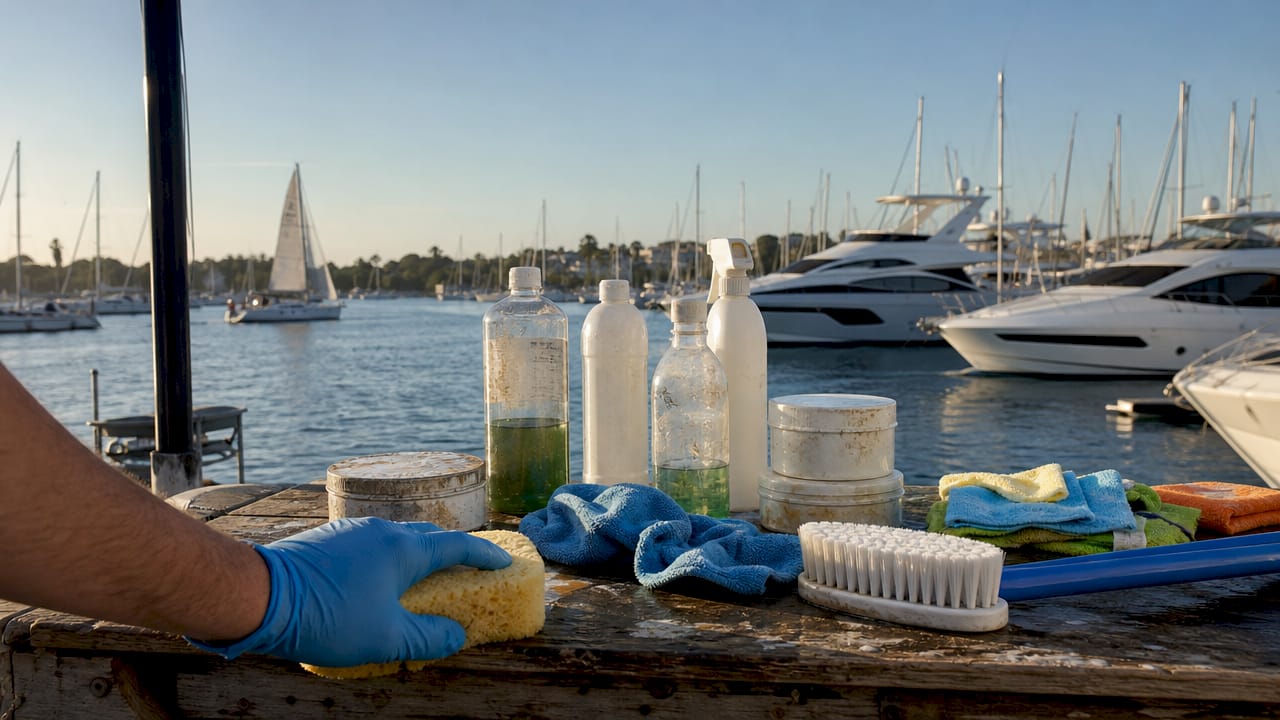
Marine-grade cleaners and soaps are the foundation. pH-neutral marine soaps preserve protective wax layers and prevent oxidation that harsh household detergents accelerate. You need separate cleaners for fiberglass, teak, canvas, and vinyl. Each surface has a different chemistry, and one-size-fits-all cleaners fail all of them.
Soft tools protect surfaces. Microfiber cloths, soft-bristle brushes, and non-abrasive sponges are non-negotiable. A soft-bristle brush protects non-skid deck surfaces and prevents distressing the textured grip that keeps crew safe. High-GSM microfiber cloths (400 GSM or above) lift grime without scratching gelcoat.
Polishing and protective products restore shine and seal surfaces. You need a detailing compound for oxidized fiberglass, polishing pads, marine wax, and optionally a ceramic coating for longer-lasting protection.
Odor and mildew treatments round out the kit. A dedicated marine mildew remover and an odor neutralizer handle the below-deck issues that surface cleaners cannot reach. For persistent interior odors, professional-grade solutions from specialists like Masterodorremoval go beyond what retail products can achieve.
Here is a quick reference for your supply list:
| Supply Category | Recommended Type | Purpose |
|---|---|---|
| Soap/cleaner | pH-neutral marine soap | Washes without stripping wax |
| Brushes | Soft-bristle marine brush | Cleans decks without surface damage |
| Cloths | High-GSM microfiber | Streak-free drying and polishing |
| Compound/wax | Marine polishing compound + wax | Removes oxidation, restores gloss |
| Mildew treatment | Marine-specific mildew remover | Prevents and eliminates mold growth |
| Odor neutralizer | Enzyme-based or professional-grade | Eliminates odors at the source |
Pro Tip: Buy two buckets. Use the two-bucket method: one with soapy water for washing, one with clean water for rinsing your mitt or cloth. This keeps grit out of your wash solution and off your gelcoat.
How to restore yacht cleanliness step by step
A structured sequence prevents cross-contamination and protects surfaces from accidental damage. Skipping steps or working out of order creates more work later.
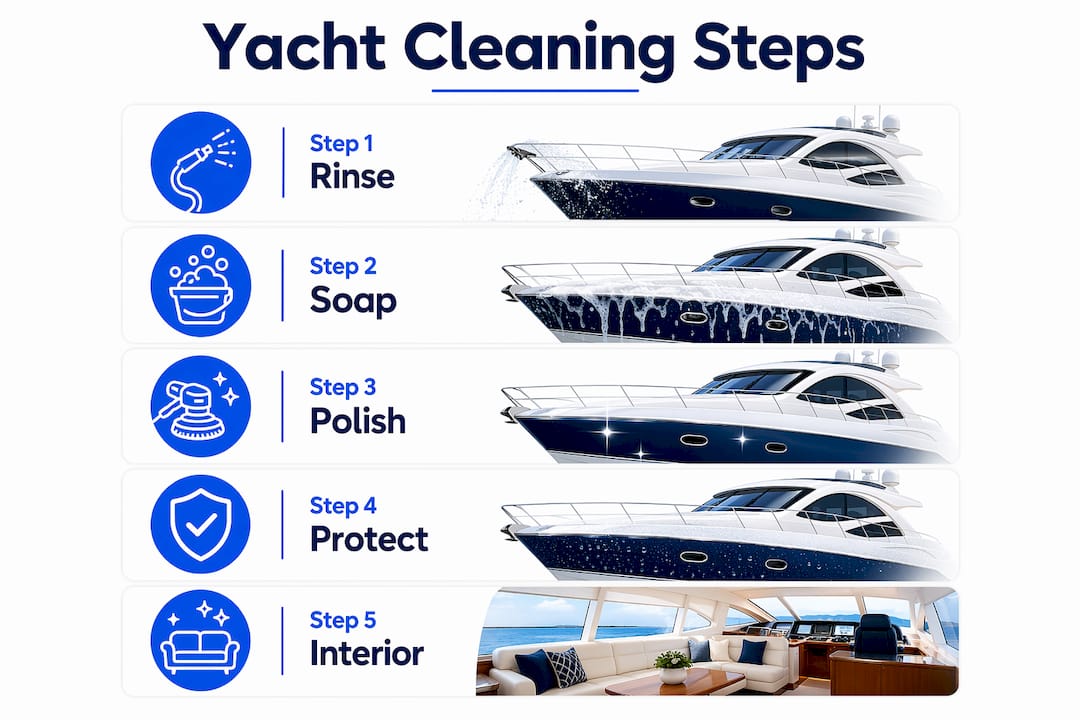
Step 1: Fresh water rinse from top to bottom
Start every wash with a thorough fresh water rinse from bow to stern. Rinse all crevices for at least 10 minutes after saltwater exposure to prevent hardware corrosion. Salt acts like sandpaper on surfaces and inside fittings. This single step is the highest-impact routine in any yacht maintenance program.
Step 2: Wash in sections with marine soap
Work in small sections, never the whole hull at once. The four-step workflow is wet, soap, agitate, and rinse, done in sections following marine industry standards. Rinse each section before the soap dries. Dried soap leaves streaks and can dull gelcoat permanently.
Step 3: Remove oxidation with compound and polish
Oxidized fiberglass looks chalky and dull. Use a polishing compound followed by wax to restore oxidized fiberglass surfaces. Work with successively finer compounds to smooth the surface before applying wax. This multi-step polishing process is what separates a true restoration from a basic wash.
Step 4: Apply protective coatings
Protection is what makes your cleaning last. Marine-grade UV-resistant wax or ceramic coatings applied twice yearly can maintain canvas for 7–10 years and provide interior mold protection for up to 90 days. Apply in spring and fall for year-round coverage. Ceramic coatings last longer than traditional wax and require less frequent reapplication.
Step 5: Clean the interior
Interior surfaces need dedicated products. Use vinyl cleaners on upholstery, teak-specific cleaners on wood surfaces, and marine fabric cleaners on canvas. Ventilation below deck combined with moisture absorbers prevents mildew development and odors better than heavy chemical use. Open hatches and run fans after cleaning to dry the interior completely.
Pro Tip: Tackle the interior from top to bottom, just like the exterior. Clean headliners first, then walls, then floors. Dirt falls down, and you only want to clean each surface once.
Here is a comparison of exterior versus interior cleaning priorities:
| Area | Primary Concern | Key Product Type |
|---|---|---|
| Hull/gelcoat | Oxidation and salt buildup | Compound, wax, pH-neutral soap |
| Teak deck | Graying and mildew staining | Teak-specific cleaner and sealer |
| Canvas/covers | UV degradation and mold | Canvas cleaner and UV protectant |
| Vinyl upholstery | Cracking and staining | Marine vinyl cleaner and conditioner |
| Interior fabrics | Mildew and odors | Fabric cleaner and odor neutralizer |
What yacht cleaning mistakes damage your vessel most?
Most yacht owners damage their boats with good intentions. Knowing what not to do protects your investment as much as knowing what to do.
- Using household dish soap or detergents. These strip wax and accelerate oxidation. Harsh household detergents accelerate surface wear and leave gelcoat unprotected against UV and salt.
- Scrubbing teak or gelcoat with stiff brushes. Stiff bristles scratch soft surfaces and remove the protective layer from non-skid decks. Always match brush stiffness to surface hardness.
- Letting cleaners dry on surfaces. Cleaning agents that dry on surfaces cause streaks, water spots, and dulling that are difficult to reverse. Work in small sections and rinse immediately.
- Using ammonia-based glass cleaners on clear vinyl. Ammonia-based cleaners cause irreversible damage to marine clear plastic enclosures, leading to yellowing and brittleness. Use dedicated marine plastic cleaners only.
- Skipping protective coatings. Washing without waxing leaves surfaces exposed. Wax and sealants are the barrier between your gelcoat and the elements.
- Using harsh black streak removers carelessly. Harsh streak removers can strip protective coatings, causing streaks to return worse than before. Use the mildest effective product first.
“The biggest enemy to yacht finishes is salt left on surfaces. A fresh water rinse after every outing is the single highest-impact habit any yacht owner can build.”
Pro Tip: Test any new cleaner on a small, hidden area first. Gelcoat and teak react differently to different formulas, and a small test saves you from a large repair bill.
How often should you clean and maintain your yacht?
Cleaning frequency depends on how often you use the vessel and where you sail. Saltwater environments demand more frequent attention than freshwater lakes.
The professional standard is clear: owners should dedicate 30–60 minutes weekly and 4–6 hours twice a year for full detailing including waxing and canvas treatment. Weekly sessions handle salt and surface grime. Twice-yearly sessions address oxidation, protective coatings, and deep interior cleaning.
| Task | Recommended Frequency | Purpose |
|---|---|---|
| Fresh water rinse | After every saltwater outing | Prevent corrosion and salt abrasion |
| Exterior washdown | Weekly (30–60 minutes) | Remove salt, dirt, and grime buildup |
| Mildew inspection | Monthly | Catch growth before it spreads |
| Full polish and wax | Twice yearly (spring and fall) | Restore gloss and protect surfaces |
| Canvas treatment | Twice yearly | Extend canvas life up to 7–10 years |
| Interior deep clean | Semiannually or as needed | Address odors, stains, and mold |
Climate matters significantly. Yachts in tropical or high-UV environments need waxing more often than those stored in cooler climates. Boats used in marinas with heavy boat traffic accumulate diesel exhaust residue faster and need more frequent hull washes.
Pro Tip: Keep a quick-finish spray on board. These sprays remove water spots and fingerprints between major cleanings and significantly reduce how hard your next full detail needs to be.
Key Takeaways
Restoring yacht cleanliness requires marine-grade products, a top-to-bottom sequence, protective coatings applied twice yearly, and consistent weekly rinsing to prevent salt and oxidation damage.
| Point | Details |
|---|---|
| Use marine-grade products | pH-neutral soaps and dedicated surface cleaners protect gelcoat and wax layers. |
| Follow the correct sequence | Work top to bottom, in sections, rinsing before soap dries to prevent streaks. |
| Polish before you protect | Remove oxidation with compound first, then apply wax or ceramic coating. |
| Rinse after every outing | A fresh water rinse after saltwater use is the single most effective maintenance habit. |
| Address odors separately | Interior mildew and persistent smells need dedicated treatments beyond surface cleaning. |
What I’ve learned after years of yacht interior restoration
Most yacht owners focus entirely on the exterior and neglect the interior until a smell becomes impossible to ignore. That is a costly mistake. By the time an odor is obvious, mildew has usually been growing for weeks inside upholstery, under flooring, or behind panels.
The insight that changed how I approach yacht restoration is this: starting with a smooth, glossy surface makes all subsequent cleanings easier. Owners who skip the compound and polish step are making every future wash harder. A rough, oxidized surface traps dirt and salt. A smooth, sealed surface sheds them.
I also see owners reach for the strongest product on the shelf when a surface looks bad. That instinct is wrong. Aggressive cleaners strip the very coatings that make a surface easy to maintain. Start mild, test first, and escalate only when necessary.
The other habit that separates well-maintained yachts from neglected ones is consistency over intensity. A 30-minute rinse and wipe-down every week beats a full-day detail once a year. Surfaces that never get heavily soiled never need heavy treatment. That means less compound, less wax, and less time on your knees scrubbing.
For interior odors specifically, no amount of surface cleaning replaces proper deodorization. Masking a mildew smell with a scented spray does not remove the mildew. Professional-grade mildew odor removal addresses the source, not the symptom. That distinction matters for both comfort and resale value.
— Master
When professional yacht interior restoration makes sense
Routine cleaning keeps a yacht looking good on the outside. Persistent interior odors, deep mildew contamination, and smoke or fuel smells require a different level of treatment.

Masterodorremoval specializes in permanent interior odor elimination for yachts and marine vessels. The approach is eco-friendly and avoids ozone or chlorine treatments, using science-backed deodorization methods that are safe for luxury surfaces and fabrics. Same-day and next-day service means your vessel is back in use fast. Whether the issue is mildew, tobacco, fuel, or a yacht mystery odor that surface cleaning cannot resolve, professional treatment resets the interior to a neutral, fresh baseline. For yacht owners who want odor removal done right, Masterodorremoval delivers results that retail products cannot match.
FAQ
What is the best way to remove oxidation from a yacht hull?
Use a polishing compound followed by wax to restore oxidized fiberglass. Work with successively finer compounds to smooth the surface, then seal it with marine wax or a ceramic coating.
How often should you wax a yacht?
Apply marine wax or ceramic coating twice yearly, in spring and fall. This schedule protects gelcoat and canvas surfaces and can extend canvas life to 7–10 years.
Can you use household cleaners on a yacht?
Household detergents and ammonia-based cleaners damage yacht surfaces. They strip wax, accelerate oxidation, and cause irreversible yellowing on clear vinyl enclosures. Use dedicated marine-grade products only.
How do you prevent mildew inside a yacht?
Ventilation below deck combined with moisture absorbers prevents mildew better than chemical treatments alone. Open hatches after cleaning, run fans, and inspect monthly for early signs of growth.
What causes persistent odors on a yacht that cleaning does not fix?
Persistent odors typically come from mildew embedded in upholstery, flooring, or behind panels. Surface cleaning does not reach these sources. Professional odor removal treatments eliminate the contamination at its origin rather than masking it.
Recent Comments