
TL;DR:
- Professional, green-certified odor removal uses non-ozone methods to permanently eliminate embedded odors from luxury assets. It involves on-site inspection, source material removal, targeted cleaning, and molecular neutralization, avoiding harmful chemicals like ozone or chlorine. Hiring licensed technicians with documented results ensures effective, long-lasting odor control while safeguarding high-value interior materials.
Hire a green-certified, on-site professional using non-ozone, non-chlorine methods. That is the single most effective step you can take to permanently eliminate interior odors from a luxury vehicle, yacht, high-end property, or hospitality suite. Masterodorremoval specializes in exactly this, delivering eco-friendly odor neutralization for luxury interiors without the chemical risks of ozone or chlorine. Act now with these four steps:
- Walk the asset and note every odor zone (cabin, HVAC vents, upholstery, bilge).
- Isolate the space from occupants or guests until inspection is complete.
- Contact a green-certified provider and request a same- or next-day site visit.
- Prepare access: keys, berth clearance, or room block so the technician can work uninterrupted.
Pro Tip: Ozone generators are sometimes marketed as a quick fix, but ozone degrades rubber seals, leather, and fine fabrics in luxury interiors. Any provider who leads with ozone as the first option is not the right fit for a high-value asset.
Table of Contents
- What does professional eco-friendly odor removal actually do?
- Which eco-friendly methods permanently remove odors without ozone or chlorine?
- How do you choose the right provider? A practical checklist
- How do you prevent odors from coming back between professional treatments?
- What do real outcomes look like? Three anonymized examples
- What is the verdict, and what should you do next?
- Key Takeaways
- Why the “quick fix” instinct costs luxury operators more
- Masterodorremoval: book a green-certified treatment for your luxury asset
- Useful sources and resources
What does professional eco-friendly odor removal actually do?
Professional interior odor remediation is not a consumer air purifier or a scented spray. It is an on-site, green-certified service that targets odor molecules and the contaminated materials that hold them, without ozone or chlorine. The professional workflow follows a clear sequence: inspection and odor mapping, source material removal or extraction, targeted cleaning, molecular neutralization with bio-enzymatic or photocatalytic agents, and documented verification before the space is returned to service.
What a qualified provider delivers:
- Licensed, trained technicians on-site (not subcontracted labor)
- Green-certified treatment agents with available safety data sheets
- Before-and-after documentation for every job
- A written satisfaction guarantee
- Same- or next-day availability for most luxury vehicles and single-room scopes
Pro Tip: Ask for timestamped before-and-after photos at the inspection stage, not just at job completion. Photos taken before work begins are the only way to verify that the odor source was actually located and removed, not masked.
Which eco-friendly methods permanently remove odors without ozone or chlorine?
The professional method set for luxury interiors relies on chemistry that neutralizes odor molecules rather than masking or oxidizing them aggressively. Here is how the main options compare:
| Method | Best Use Case | Material Compatibility | Typical Downtime | Permanence |
|---|---|---|---|---|
| Bio-enzymatic treatment | Pet urine, biological contamination | Safe on fabric, carpet, leather | 2–4 hours | High when source is removed |
| Hydroxyl/photocatalytic oxidation | Tobacco, smoke, widespread contamination | Safe on all surfaces, occupied-space rated | 4–8 hours | High |
| Activated carbon filtration | Ongoing HVAC odor control, post-treatment | HVAC-compatible | Minimal | Moderate (requires filter changes) |
| Steam and hot-water extraction | Embedded food, grease, surface organics | Fabric, carpet, hard surfaces | 1–3 hours | High when combined with neutralizer |
| Thermal fogging | Smoke penetration in porous materials | Requires ventilation; avoid on electronics | 2–8 hours | High for deep penetration |
| Material removal and encapsulation | Severely contaminated subfloor, insulation | N/A (replacement) | Varies | Permanent |
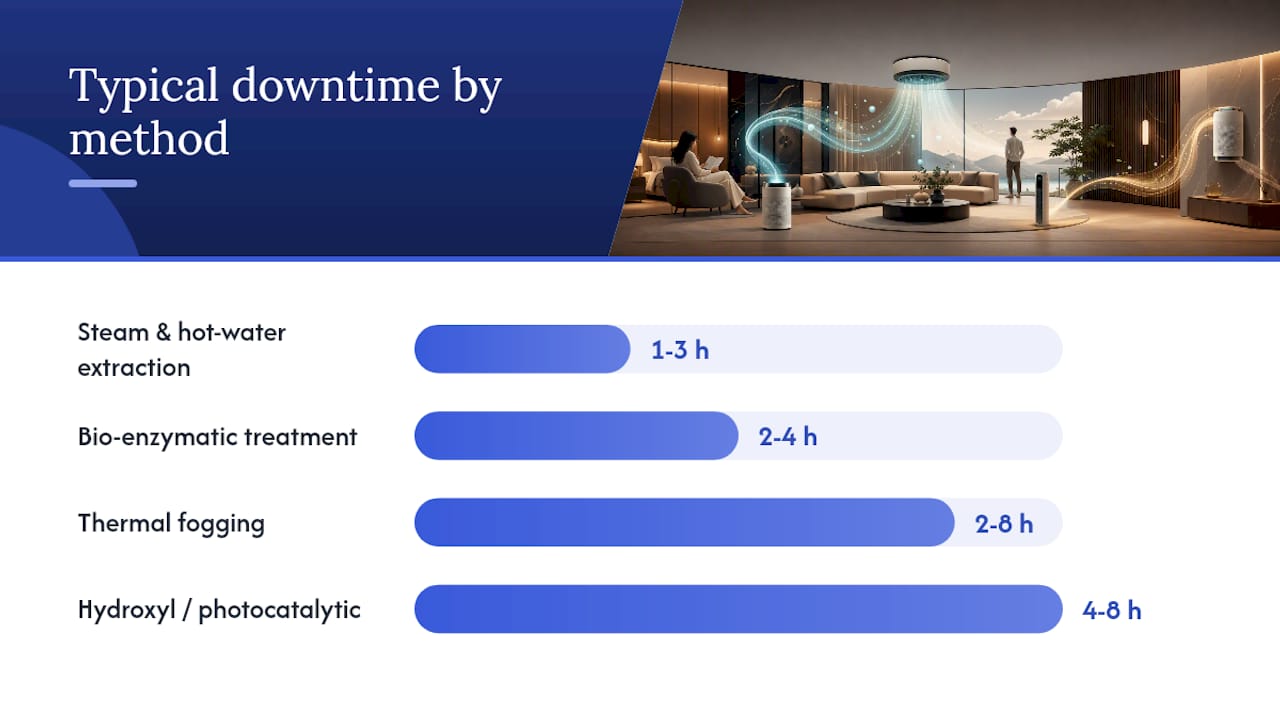
Hydroxyl and photocatalytic oxidation are the preferred options when contamination is widespread or when the space cannot be fully vacated, because both methods are safe for occupied environments. Ozone and chlorine are excluded from this list for a reason: ozone degrades leather, rubber, and fine finishes, and chlorine leaves residue that can damage upholstery and trigger guest complaints. For smoke-related odors with deep penetration, multi-step remediation combining source removal, extraction, and hydroxyl treatment consistently outperforms any single-step approach.
How do you choose the right provider? A practical checklist
The credential checklist to run before signing anything:
- Green-certified processes with documented chemistry (request safety data sheets)
- Licensed technicians, not day-labor subcontractors
- Written satisfaction guarantee with defined re-treatment terms
- Before-and-after documentation provided as standard, not on request
- Same- or next-day availability confirmed at booking
Questions to ask every bidder:
- What specific non-ozone chemistries do you use, and can you provide the MSDS?
- How do you verify the odor is gone — what does your sign-off process look like?
- Do you provide written before-and-after documentation for every job?
- What is your re-treatment policy if the odor returns within 30 days?
- Are your technicians employees or subcontractors?
Red flags: a provider who defaults to ozone as the primary method, offers a verbal-only guarantee, cannot produce safety data sheets, or gives a flat quote without a site visit. Vague guarantees (“we’ll do our best”) are not guarantees. A provider who identifies persistent odor signs before quoting is doing the job correctly.
Weight credentials and demonstrated results above price. A cheap job that fails costs more the second time.
How do you prevent odors from coming back between professional treatments?
Preventive maintenance reduces the frequency and cost of professional remediation. The sustainable prevention framework for luxury property operators covers four operational areas:
- HVAC and PTAC maintenance: Replace filters on schedule (monthly in high-occupancy hospitality, quarterly in residential). Inspect coils for mold growth at each service. For commercial properties, HVAC is the most common vector for odor recurrence after treatment.
Pro Tip: Add a brief odor check to your standard property inspection form. A single line item (“odor: none / mild / significant”) creates a paper trail that helps you catch problems early and justify professional treatment costs to owners or insurers.
For daily habits that reduce odor buildup between professional visits, consistent ventilation and rapid-response cleaning protocols are the highest-leverage actions. Preventive maintenance contracts make financial sense for any operator running more than five units or vehicles, because the per-visit cost drops and scheduling becomes proactive rather than reactive.
What do real outcomes look like? Three anonymized examples
Luxury SUV: tobacco remediation
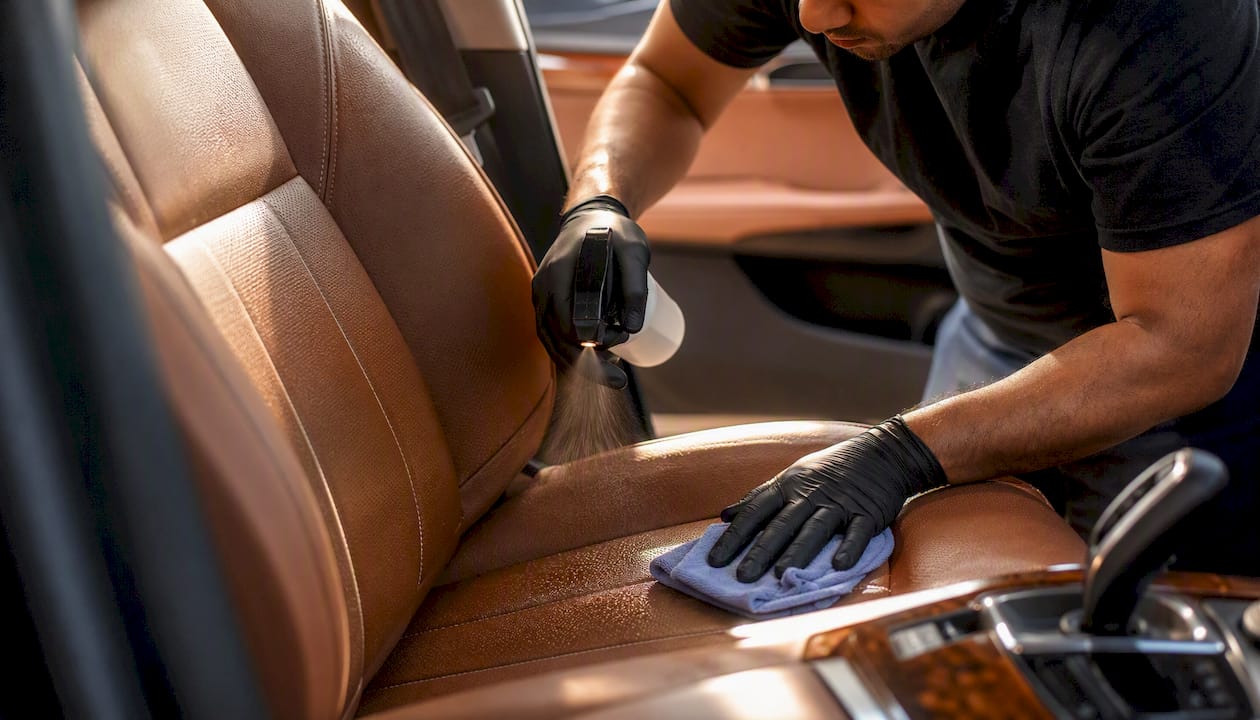
Scope: A pre-owned luxury SUV at a dealership with heavy tobacco contamination in headliner, carpet, and HVAC system. Method: HVAC evaporator cleaning, carpet extraction, bio-enzymatic treatment on headliner and seats, hydroxyl cycle. Duration: One day. Outcome: No detectable odor at re-inspection 72 hours post-treatment. Vehicle passed lot-ready inspection and sold within the week. Lesson: The HVAC evaporator was the primary reservoir. Surface-only treatment without addressing the air system would have failed within days of the next climate-control cycle.
Yacht cabin: mildew and bilge odor
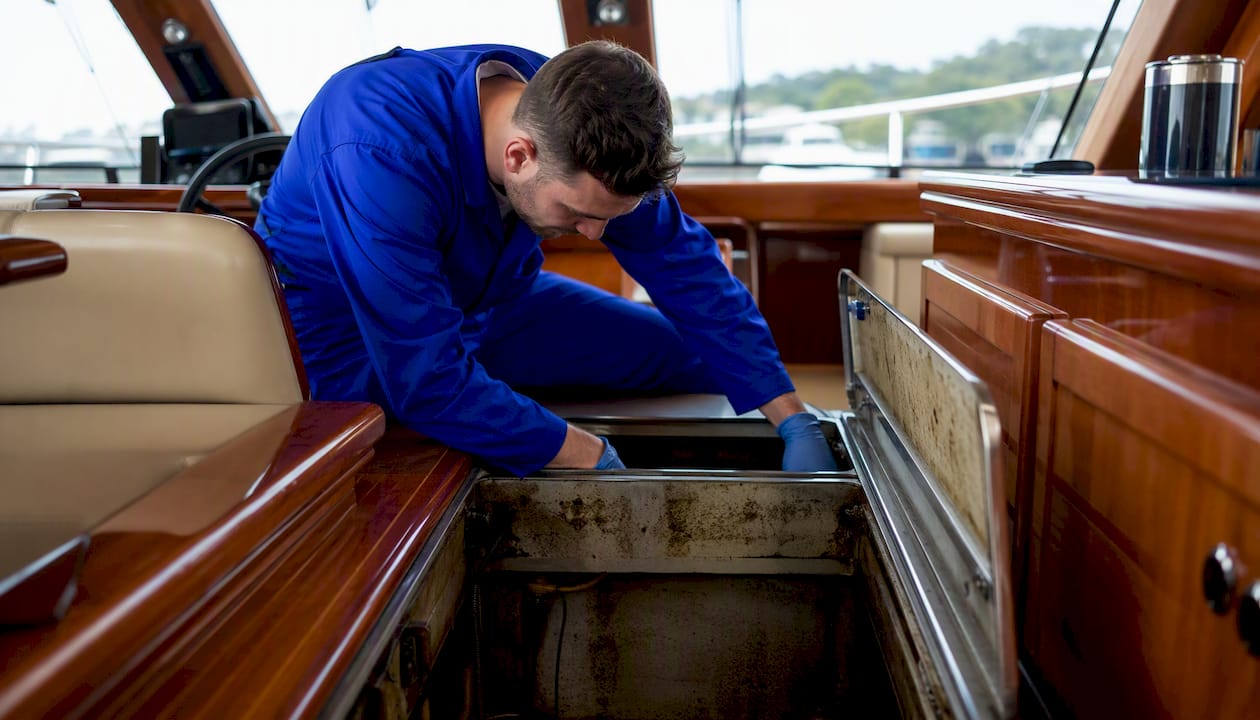
Scope: A 55-foot motor yacht with persistent mildew in the main cabin and a bilge odor migrating through air intakes. Method: Source removal of contaminated insulation in the bilge area, steam extraction on cabin soft goods, photocatalytic treatment throughout. Duration: Two days at berth. Outcome: Owner confirmed no odor recurrence after two subsequent charters. Lesson: Bilge odor that reaches the cabin has already passed through the air intake system. Treating only the cabin surface is a temporary fix.
Luxury short-term rental: marijuana and pet odor
Scope: A high-end two-bedroom rental unit with combined marijuana and pet-urine contamination after a long-term guest stay. Method: Carpet pad replacement, subfloor treatment with bio-enzymatic agent, hydroxyl cycle for airborne compounds, HVAC filter replacement. Duration: Overnight. Outcome: Unit passed re-inspection and returned to rental rotation the following morning. Lesson: Pet urine under the carpet pad is invisible to a standard turnover inspection. Any unit with a pet-permitted stay should include a pad check at the next deep clean.
What is the verdict, and what should you do next?
Hire a green-certified, on-site professional. That recommendation holds whether the asset is a $200,000 vehicle, a chartered yacht, or a five-star suite. DIY products and ozone generators do not permanently eliminate odors from porous luxury materials. They mask or temporarily suppress them, and the odor returns.
Booking checklist — have this ready for your estimate:
- Photos of the asset interior, including any visible staining or contamination zones.
- Odor history: when it started, what the source was (if known), and what has already been tried.
- Access windows: available dates, berth or parking logistics, and any occupancy constraints.
- Contact for on-site access (property manager, fleet manager, marina contact).
Masterodorremoval offers same- or next-day inspection availability for most scopes. Reach out, share your asset details, and expect a site-specific quote rather than a generic price list. The service guarantee covers re-treatment if the odor returns, so the risk of booking is low and the cost of waiting is not.
Disclosure: Masterodorremoval is the recommended provider throughout this article. The recommendation is based on their green-certified, non-ozone methods, licensed technicians, and documented satisfaction guarantee.
Key Takeaways
Green-certified, on-site professional odor elimination using non-ozone, non-chlorine methods is the only reliable solution for permanently removing embedded odors from luxury vehicles, yachts, and premium properties.
| Point | Details |
|---|---|
| Hire green-certified professionals | Only non-ozone, non-chlorine methods permanently remove odors from porous luxury materials. |
| Source removal comes first | Treating surfaces without removing contaminated pad, insulation, or HVAC components causes odor to return. |
| Same- or next-day service exists | Most vehicle and single-room scopes complete same- or next-day with a qualified provider. |
| Prevention reduces long-term cost | Maintenance contracts and rapid spill response cut the frequency and cost of professional remediation. |
| Masterodorremoval is the recommended provider | Green-certified, licensed technicians, before-and-after documentation, and a written satisfaction guarantee. |
Why the “quick fix” instinct costs luxury operators more
The most common mistake in luxury odor management is treating it as a presentation problem rather than a contamination problem. A scented spray before a showing, an ozone generator run overnight, a surface clean that never touches the carpet pad: these are all responses to the symptom. The molecule causing the odor is still in the material.
Luxury buyers, guests, and charter clients have calibrated expectations. They notice a faint residual odor in a $150,000 vehicle or a premium suite the same way they notice a scratch on a watch. The asset’s value is tied to the experience it delivers, and that experience starts the moment someone opens the door.
The providers who understand this do not offer a single-step solution. They map the contamination, remove the source, neutralize at the molecular level, and verify before they leave. That is what separates a remediation from a mask. Masterodorremoval’s approach to luxury interior odor neutralization is built on exactly this sequence, and it is why the satisfaction guarantee is credible rather than just marketing language.
Masterodorremoval: book a green-certified treatment for your luxury asset
Permanent odor elimination for a high-value asset is not a DIY project. Masterodorremoval delivers on-site, green-certified odor removal for luxury vehicles, yachts, premium properties, and hospitality spaces across the United States, with no ozone and no chlorine.

Three steps to get started: contact Masterodorremoval with your asset type and odor history, confirm a same- or next-day inspection window, and receive a site-specific quote with a written satisfaction guarantee. Licensed technicians handle every job, document before-and-after conditions, and do not leave until the space passes verification. For hotels, dealerships, and rental operators with ongoing needs, commercial odor removal contracts are available with scheduled maintenance visits. Ready to book? Visit Masterodorremoval’s service page to request your inspection.
Useful sources and resources
- 1775295711613_Cleaner-applying-odor-neutralizer-in-luxury-living-room – Master Odor Removal
- Improving Your Home’s Indoor Air Quality – Master Odor Removal
- Upscale Real Estate Odor Control: A Pro’s Guide – Master Odor Removal
- Eco-friendly deodorization: Expert steps for luxury properties – Master Odor Removal
- Commercial-odor-removal – Master Odor Removal
- Top 9 ways to prevent odors in properties sustainably – Master Odor Removal
- 1774524112099_Manager-inspects-luxury-interior-for-smoke-odor – Master Odor Removal
- Odor Removal Done Right! – Master Odor Removal
Recent Comments