
The most common mistakes in odor treatment are masking with fragrance, treating only surfaces while ignoring HVAC and PTAC reservoirs, and skipping source verification entirely. Stop any masking product immediately, log the complaint with occupancy and maintenance history, and order a targeted on-site diagnostic before selecting any treatment. Skipping that step leads to:
- Recurrence within days or weeks as reservoirs continue off-gassing
- Guest dissatisfaction and negative reviews that damage brand reputation
- Material damage from repeated chemical exposure or unmanaged oxidizers
Masterodorremoval provides eco-certified, same/next-day diagnostics for luxury vehicles, properties, yachts, and hospitality spaces using non-ozone, non-chlorine methods.
Table of Contents
- What are the most common odor treatment mistakes pro teams make?
- Why do masking and surface-only fixes always fail?
- How do you properly diagnose an interior odor problem?
- What does an eco-friendly permanent treatment workflow look like?
- What are realistic timelines and costs by setting?
- How do you fold odor control into scheduled maintenance?
- What vendor red flags should you watch for?
- Real examples of odor treatment mistakes and the right fix
- Key Takeaways
- What the industry gets wrong about permanent odor removal
- Masterodorremoval: eco-certified odor removal, ready when you need it
What are the most common odor treatment mistakes pro teams make?
A fast audit starts here. Walk any property or vehicle with this checklist and you will spot vendor failures before they cost you a guest or a sale.
- Masking with fragrance sprays. Aerosols suppress perception temporarily; the odor compounds remain bound to materials and return within hours. Watch for: heavy floral or citrus scent on arrival that fades by checkout.
- One-time surface sprays only. Spraying upholstery without extracting the pad or foam underneath leaves the primary reservoir untouched. Watch for: odor returning from seams and cushion edges within 48 hours.
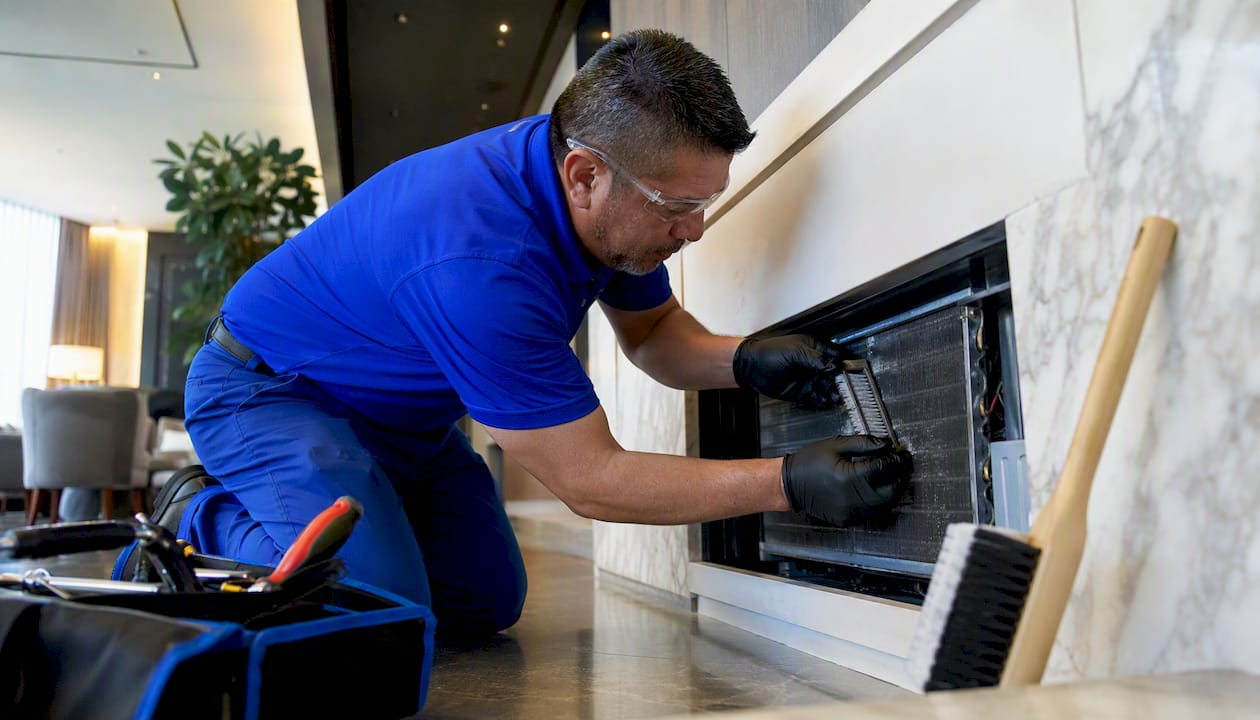
- Ignoring HVAC, PTAC, and duct reservoirs. PTAC coils, drain pans, and blower areas trap moisture and bio-loaded debris that redistribute odor every time the unit cycles. Watch for: smell strongest near vents or immediately after the unit kicks on.
- Skipping pad and subfloor inspection. Liquid contamination migrates down through carpet into foam and subfloor. Watch for: odor concentrated at floor level despite clean-looking carpet.
- Treating air before source removal. Fogging or oxidizing before physical removal just pushes odor molecules around. Watch for: vendors who fog first and ask questions later.
- Misuse of ozone or chlorine without controls. Unmanaged ozone damages rubber seals, electronics, and coatings, and poses respiratory risks in occupied or poorly ventilated spaces. Watch for: vendors who leave an ozone machine running and walk away.
- No verification after treatment. Without air and surface checks post-treatment, there is no proof the job worked. Watch for: no written documentation or follow-up window offered.
- No maintenance plan. A single treatment without scheduled follow-up guarantees recurrence in high-turnover settings. Watch for: vendors who do not mention preventive intervals.
Pro Tip: In luxury interiors, check under seat cushions and headboards, inside PTAC drain pans, and in galley bilge areas on yachts first. These are the reservoirs most vendors skip and the ones most likely to be re-offgassing.
Why do masking and surface-only fixes always fail?
Odors persist because contamination binds to reservoirs, including carpet pad, seat foam, coil film, and cabinet interiors, that continue off-gassing long after the surface looks clean. A forensic approach focused on source identification, not aerosol masking, is what separates lasting remediation from temporary fixes in luxury interiors.
Humidity and temperature accelerate that off-gassing. When a PTAC unit cycles warm air across a contaminated coil, it volatilizes bound odor compounds and pushes them into the room. Pressure differentials between units and building plenums can pull odor molecules through wall penetrations and ductwork, meaning a treated room can be re-contaminated from an adjacent untreated space.
Ozone is often proposed as a shortcut. It does destroy odor molecules, but ozone can corrode electronics, damage rubber seals, and pose documented respiratory hazards in occupied or inadequately ventilated spaces. Using it without proper controls trades one problem for several others.
How do you properly diagnose an interior odor problem?
Use a structured audit: complaint-log review, then visual inspection, then moisture and temperature checks, then HVAC/PTAC inspection, then targeted material probes. Never select a treatment before completing all five.
- Cross-check the complaint log. Note when odor was first reported, which rooms or units, and what occupancy preceded it. Patterns reveal whether the source is mechanical, biological, or behavioral.
- Review occupancy and maintenance history. Prior smoking, pet stays, water events, or deferred HVAC service narrow the source category fast.
- Inspect PTAC and HVAC run-time records. Linking complaint logs with PTAC service history and occupancy patterns identifies recurring mechanical sources that surface cleaning will never fix.
- Run moisture meter readings on carpet, pad, drywall, and subfloor. Elevated readings confirm active reservoir contamination.
- Access PTAC coils and drain pans directly. Visible biofilm, standing water, or debris in the drain pan is a confirmed odor source.
- Use smell-tracking and pressure checks. In multi-unit properties, simple smoke-puff or pressure testing at wall penetrations identifies migration pathways from adjacent spaces.
- Ask vendors these questions before signing anything: What will you physically remove versus treat? How will you access and clean the HVAC or PTAC? What are your dwell times and safety controls for any oxidizers?
Essential diagnostic equipment: moisture meter, PTAC coil access tools, HEPA vacuum, ATP or bioburden swabs for microbial confirmation, and thermal fogging or hydroxyl equipment reserved for the finishing stage only.
What does an eco-friendly permanent treatment workflow look like?
All effective odor removal follows four principles: remove the source, clean the source area, recreate the penetration conditions to drive treatment deep, and seal if needed. Here is how that translates to a field workflow.
Stage 1: Source removal. Pull contaminated pad, soft goods, or drain-pan debris. No chemistry fixes what you leave behind.
Stage 2: Targeted cleaning and extraction. Apply enzymatic cleaners to biological sources (pet, food, mildew) and EPA-registered disinfectants where microbial growth is confirmed. Hot-water extraction follows for fabric and carpet. Activated carbon handles residual airborne compounds.
Stage 3: Eco-certified deodorization delivery. Hydroxyl generators or professional thermal fogging are finishing tools, applied only after source removal and cleaning are complete. Avoid high-ozone consumer units and unregulated chlorine fogging entirely.
Stage 4: Verification and sealing. Air and surface checks confirm neutralization. Document results, apply sealant to subfloor or drywall if penetration was deep, and set a return-visit window of 5–10 days.
Pro Tip: When access is limited, such as during a hotel turnover or a yacht at berth, sequence source removal and extraction first, then schedule the finishing deodorization step for the next available window rather than compressing all four stages into one rushed visit.
For eco-friendly deodorization steps specific to luxury properties, the sequencing above is the baseline any credible vendor should follow.
What are realistic timelines and costs by setting?
Short answer: most single-space remediations take 2–6 hours on-site, with a verification return visit 5–10 days later. Cost depends on penetration depth, affected materials, HVAC involvement, and access constraints.
| Setting | Typical Duration | Key Cost Drivers |
|---|---|---|
| Luxury vehicle | 2–4 hours | Seat foam penetration, HVAC cabin filter and evaporator access |
| Single hotel room | 3–5 hours | PTAC condition, carpet pad saturation, wall penetration |
| High-end home suite | 4 hours | Subfloor involvement, ductwork access, room count |
| Yacht cabin | 4 hours | Galley bilge access, marine HVAC, soft-goods volume |
For reference, professional ozone-based car treatments are commonly listed at $150–$300 for a single vehicle. Eco-certified, non-ozone remediation for the same vehicle typically costs more because it involves physical extraction and verified source removal, not just a generator running in a closed car.
Factors that push jobs into higher-cost tiers:
- Pad or subfloor replacement required
- Inaccessible ductwork needing mechanical cleaning
- Active microbial growth confirmed by ATP swab
- Multi-room or multi-unit PTAC contamination
Urgent guest-ready scenario: Source spray-down, PTAC filter swap, and hydroxyl finishing in 3 hours. Temporary improvement, not permanent fix. Schedule full remediation within 72 hours.
Full permanent remediation: All four workflow stages plus verification visit. Plan 1–2 days depending on setting size.
How do you fold odor control into scheduled maintenance?
Prevention beats cure, and treating odor control as a scheduled maintenance line item reduces repeat calls and guest failures more reliably than reactive treatment. Here is a practical schedule by risk level.
- High-turnover hotel rooms and vacation rentals: PTAC coil and drain-pan inspection quarterly; HEPA vacuum of soft goods and under-furniture monthly; spot extraction after any flagged stay.
- Luxury vehicles in dealer inventory: Cabin filter and evaporator check at 60-day intervals; full interior extraction before any vehicle sits longer than 90 days.
- Yachts and boats: Pre-season galley and bilge inspection; post-season soft-goods extraction and HVAC cleaning; mid-season spot check after extended charters.
- Residential luxury properties: Quarterly HVAC filter replacement with coil inspection; annual full-interior preventive treatment before peak rental season.
Link every complaint log entry to the corresponding HVAC or PTAC service record. A simple spreadsheet with columns for room/unit, complaint date, occupancy type, and last mechanical service date will surface recurring stacks within two or three cycles. Pair that with HVAC preventative maintenance on a consistent schedule and most odor recurrence becomes predictable and preventable.
Call a certified provider when moisture readings stay elevated after two extraction cycles, when PTAC biofilm returns within 30 days of cleaning, or when odor complaints cluster in the same unit across different guest stays.
What vendor red flags should you watch for?
Avoid any vendor who opens with a fragrance spray or recommends unmanaged ozone as a first-line fix. That single behavior predicts the rest of their process.
- Vague or no diagnosis before quoting
- No plan to access or clean HVAC or PTAC
- No written verification protocol or post-treatment documentation
- No green-certification language or inability to name chemistries used
- No liability insurance or technician credentials
Ask these questions on the spot: What will you physically remove versus chemically treat? What certifications do your technicians hold? IICRC Odor Control Technician (OCT) training is the recognized standard for complex odor diagnosis. How will you verify neutralization, and what documentation will you provide?
Require these clauses in any contract: documented pre- and post-treatment verification, a return-visit guarantee window of at least 5 days, explicit limitations on oxidizer use, and clear scope language for HVAC and PTAC work.
“Eco-certified, non-ozone, non-chlorine methods are commercially available and align with luxury clients’ safety and branding expectations — managers should require green-certification language in statements of work.”
— Green-Certified Yacht Cleaning Guide
Pro Tip: Ask vendors to show you the Safety Data Sheet for every chemistry they plan to use. A vendor who cannot produce one on request is not operating at a professional standard.
Real examples of odor treatment mistakes and the right fix
Luxury vehicle: smoke odor masked with spray
Mistake: A dealer’s detailing crew sprayed a cherry-scented product on a trade-in with heavy tobacco contamination. The car smelled fine for 48 hours, then the odor returned stronger.
Diagnostic clue: Odor concentrated in the headliner and seat foam, not the cabin air. HVAC evaporator had visible residue.
Correct actions: Full seat extraction, enzymatic treatment of foam, evaporator cleaning, and hydroxyl finishing after source removal. Verification air check at 72 hours confirmed neutralization.
Manager quick action: Pull the car from the lot, log the complaint, and order a diagnostic before any further masking.
Hotel room: PTAC-sourced mustiness
Mistake: Housekeeping sprayed fabric refresher and changed the filter. Mustiness returned within two guest stays.
Diagnostic clue: Odor strongest within 10 minutes of PTAC startup. Drain pan had standing water and visible biofilm.
Correct actions: Full PTAC coil cleaning, drain-pan disinfection with an EPA-registered product, and HEPA vacuuming of surrounding cabinet interior. Scheduled quarterly coil inspection added to maintenance calendar.
Yacht cabin: galley grease smell
Mistake: Crew used a consumer deodorizer spray in the galley and bilge area. Smell returned after the first charter.
Diagnostic clue: Odor strongest at bilge access and under galley cabinetry. Grease film on cabinet interiors confirmed.
Correct actions: Physical removal of grease-saturated insulation, enzymatic degreasing of cabinet surfaces, and professional thermal fogging as a finishing step only after cleaning was complete. Post-treatment air check documented and filed.
Manager quick action: Schedule a pre-charter bilge and galley inspection as a standing line item, not a reactive call.
Key Takeaways
Permanent odor removal requires source removal first, not fragrance masking, and any vendor who skips HVAC and PTAC inspection is guaranteeing recurrence.
| Point | Details |
|---|---|
| Stop masking immediately | Fragrance sprays delay diagnosis and allow reservoir contamination to deepen. |
| Diagnose before treating | Audit complaint logs, moisture readings, and HVAC history before selecting any chemistry. |
| Require HVAC and PTAC scope | Any vendor who does not include coil and drain-pan inspection in their quote is leaving the primary source untreated. |
| Demand written verification | Post-treatment documentation and a return-visit guarantee window are non-negotiable for luxury settings. |
| Masterodorremoval | Offers eco-certified, non-ozone diagnostics and guaranteed follow-up for vehicles, properties, yachts, and hospitality spaces. |
What the industry gets wrong about permanent odor removal
Most vendors treat odor as an air problem. It is not. It is a materials problem, and the air is just the symptom.
The single most consistent failure pattern is treating the space while leaving the reservoir intact. Pad, foam, coil film, and cabinet interiors keep off-gassing for weeks or months after a surface treatment. Every fragrance spray, every fogging run applied before source removal, just buys time before the next complaint.
The other underestimated factor is pressure. Buildings breathe. Odor molecules migrate through wall penetrations and ductwork driven by pressure differentials between units. A hotel room treated in isolation can be re-contaminated from the adjacent untreated unit within days. Diagnostics that do not include pressure checks or migration pathway tracing will miss this every time.
Luxury clients are not paying for a temporary fix. They are paying for certainty: the odor is gone, the documentation proves it, and there is a return-visit guarantee if it comes back. That is the standard every vendor should be held to, and it is the standard Masterodorremoval is built around.
Masterodorremoval: eco-certified odor removal, ready when you need it
When a guest complaint, a stalled vehicle sale, or a pre-charter inspection puts you on a deadline, the last thing you need is a vendor who shows up with a spray bottle and a fogging machine and calls it done.

Masterodorremoval uses green-certified, non-ozone, non-chlorine methods with same/next-day availability across luxury vehicles, residential properties, yachts, hotels, and vacation rentals. Every job includes a documented verification step and a follow-up guarantee. Before you call, have your complaint log, HVAC or PTAC service history, and occupancy notes ready. That information cuts diagnostic time in half and gets your space back in service faster.
For commercial properties and hospitality operators managing multiple units, commercial odor removal contracts include scheduled preventive intervals so you are not calling reactively after every guest complaint. Book a diagnostic or get a same-day quote at masterodorremoval.com/odor-removal-done-right.
Recent Comments