
Pet-friendly rooms develop persistent odors because biological residues from urine, dander, and saliva penetrate far below the surface level, embedding into carpet padding, subfloors, drywall, and HVAC ducts. The real problem is chemistry: uric acid in urine crystallizes onto substrate fibers and sits dormant until moisture arrives. Once humidity climbs, those crystals dissolve back into solution and release ammonia and sulfur compounds into the room air. Standard surface cleaning never reaches these deposits, which is why the smell returns after every routine turnover.
Here is what you are actually dealing with:
- Uric acid crystals bind to carpet backing, grout, and subfloor wood at depths routine cleaning cannot reach
- Moisture above a moderate relative humidity level reactivates dormant odor compounds, triggering ammonia and sulfur release
- Microbial colonies feeding on organic residues generate their own volatile byproducts continuously
- HVAC systems spread airborne dander and odor molecules to every room in the unit
- Surface treatments address only the fraction of contamination visible at floor level
Why pet-friendly rooms develop odors at the chemical level
The odor profile in a pet-occupied room comes from several biological sources operating at once, not a single cause.
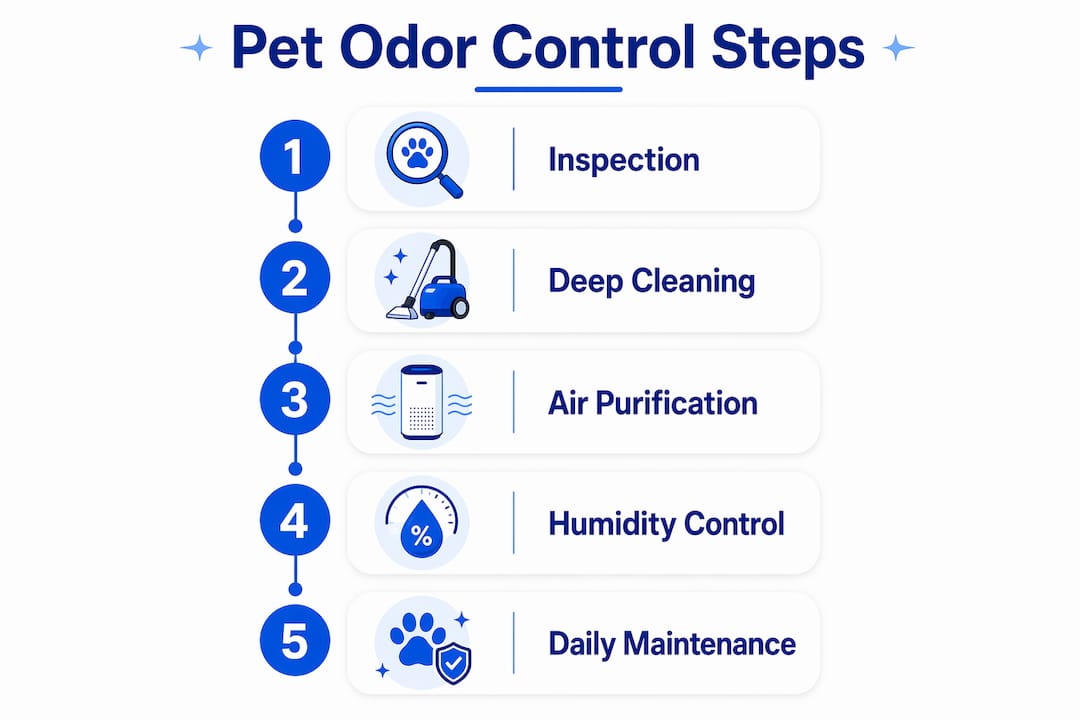
Urine is the most chemically persistent. As urine dries, uric acid precipitates out of solution and crystallizes onto surrounding fibers and pores. In that crystalline state, it resists water and most commercial cleaners entirely. Urea, the primary nitrogen carrier, undergoes bacterial hydrolysis and breaks down into ammonia and carbon dioxide. The bacterial communities feeding on proteinaceous urine compounds keep producing volatile byproducts long after the original accident, making an untreated contamination zone a continuously active odor source rather than a static stain.
Dander and skin oils deposit on every surface a pet contacts: carpets, upholstery, bedding, and the air itself. These organic compounds carry species-specific scent and grow more pronounced as they accumulate. Saliva compounds are similar. Dogs deposit saliva throughout a room as they pant and play; the proteins dry on surfaces and release a musky odor when re-wetted by humidity.
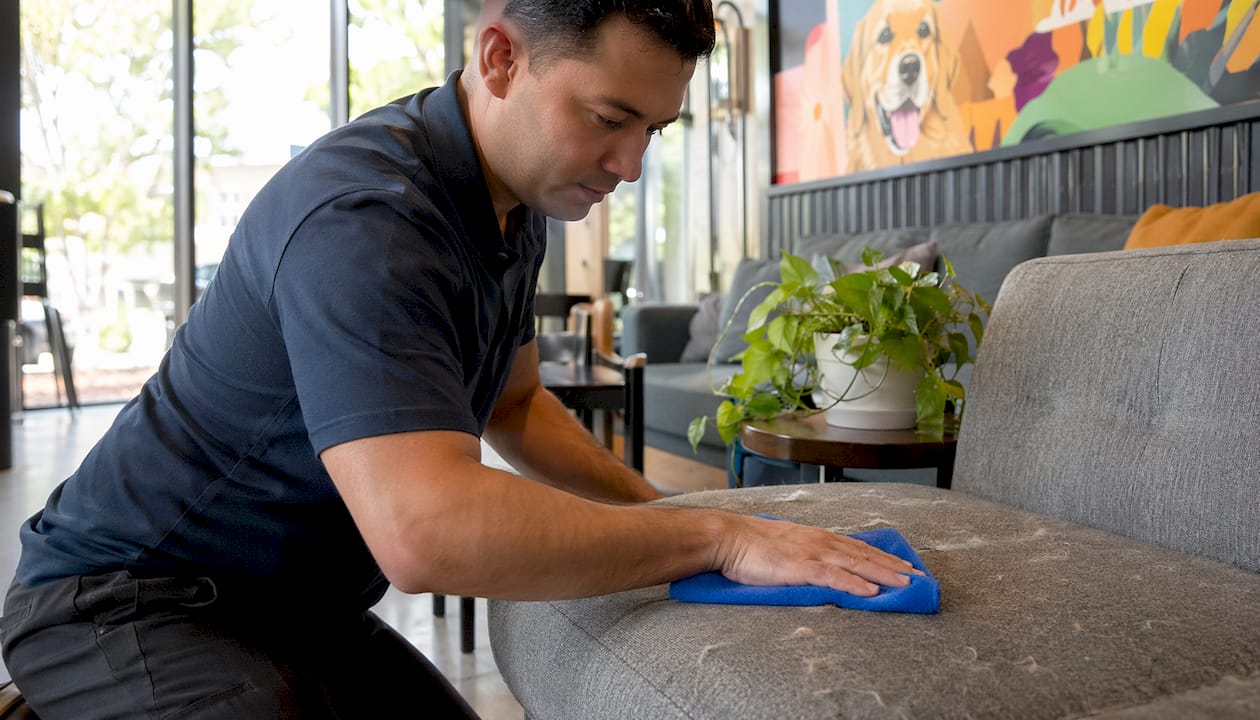
Moisture is the trigger for all of it. Humidity activates dormant odor molecules by interacting with volatile compounds and increasing their detectability. The same residues on the same carpet produce a noticeably stronger smell on a humid summer day than on a dry winter day, even though nothing about the carpet itself has changed. Bacterial metabolism also accelerates in moist conditions, meaning humid rooms generate fresh odor compounds from existing residues on an ongoing basis.
| Odor source | Key compounds | Why it persists |
|---|---|---|
| Urine | Uric acid, ammonia, urea | Crystallizes in substrate; reactivates with moisture |
| Dander and skin oils | Volatile organic compounds | Accumulates on all porous surfaces over time |
| Saliva | Proteins, volatile compounds | Dries on surfaces; re-releases when humidity rises |
| Fecal residue | Indoles, sulfur compounds, fatty acids | Absorbs into porous materials beyond the visible zone |
| Microbial activity | Ammonia, sulfur byproducts | Continuously generated in humid, organic-rich environments |
Pro Tip: Use a UV blacklight during room inspection to locate dried urine deposits invisible to the naked eye. Uric acid fluoresces under UV, revealing the full contamination footprint before you treat.
Effective cleaning solutions that actually eliminate pet smells
The single most important shift you can make is replacing general-purpose cleaners with enzyme-based cleaners for any pet-related mess. Enzymatic products contain biological agents that convert uric acid, proteins, and lipids into odorless byproducts at the molecular level. Standard floor cleaners move surface grime around; enzyme cleaners eliminate the source compounds that keep generating smell.
Two common cleaning mistakes make pet odors significantly worse:
- Heat application. Steam cleaning and hot water extraction can thermally bond uric acid and protein compounds deeper into substrate materials, fixing the odor in place rather than removing it. Heat denatures proteins without eliminating them.
- Ammonia-based cleaners. Because urine already contains ammonia as a breakdown product, ammonia-based cleaners reinforce the odor signal in the substrate. They can also attract animals to re-mark the same area, cycling the contamination.
Deep cleaning must go beyond the fiber surface. In carpet installations, the primary contamination load sits in the backing and the subfloor, not the face that receives product application. Enzyme cleaners prevent re-marking by eliminating the biological compounds that signal territory to animals, which matters in a hotel context where the next pet guest would otherwise be drawn to the same spots.
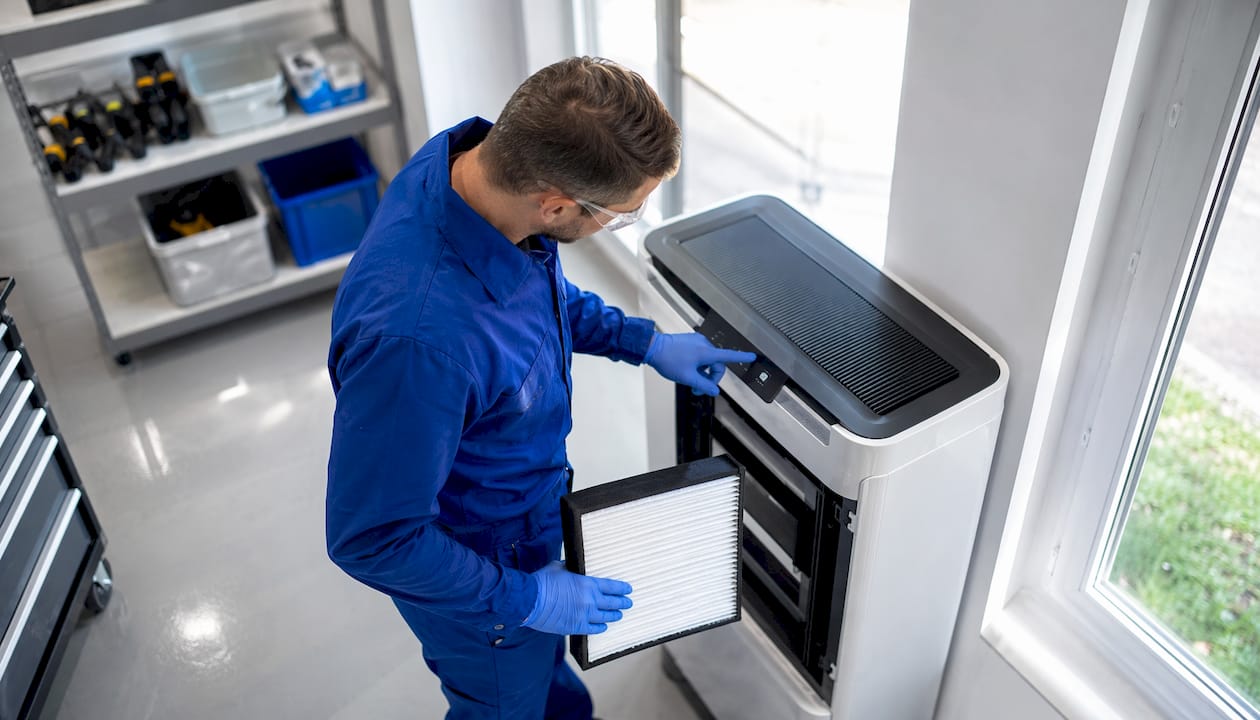
HVAC air purifiers and dehumidifiers are not optional accessories in a pet-friendly room program. HVAC systems harbor and recirculate dander and odor molecules when filters are not changed regularly, spreading the problem from one room to every vent in the unit. A dehumidifier keeps ambient humidity below the threshold where odor compounds become volatile, slowing bacterial metabolism and drying soft furnishings faster. Running both in tandem with enzymatic treatment addresses the airborne fraction of odor that surface cleaning cannot touch.
Pro Tip: Apply enzyme cleaner generously enough to reach the same depth as the original contamination. A light surface spray on a carpet with urine in the backing accomplishes nothing. Saturate the area, allow the full contact time listed on the label, then extract.
Daily maintenance practices that prevent odor build-up
Consistent daily routines outperform sporadic deep cleans for long-term odor control. A 10-minute daily maintenance routine prevents odor migration to deep substrates in a way that weekly heavy cleaning simply cannot replicate, because residues compound between sessions.
Build these habits into every pet-friendly room turnover:
- Vacuum high-traffic and pet areas daily, using slow passes along edges, under furniture, and near baseboards where dander and hair concentrate
- Wash pet bedding weekly in hot water and air foam cores in direct sunlight; regular laundering of pet bedding is the single most effective odor reduction step for soft furnishings
- Treat accidents immediately with an enzyme cleaner before residues migrate below the carpet fiber into the backing or subfloor
- Cross-ventilate for at least 10–15 minutes daily, opening windows on opposite sides of the room to flush stale air and reduce ambient humidity
- Replace HVAC filters every 30–60 days in pet-friendly rooms rather than the standard 90-day schedule for pet-free spaces
The ventilation point is worth emphasizing. Fresh airflow reduces both perceived odor intensity and the ambient humidity that reactivates dormant residues. In rooms where windows stay closed for climate control, the HVAC system becomes the only air exchange mechanism, and a loaded filter actively redistributes odor compounds through every vent.
What Masterodorremoval’s expertise shows about lasting odor control
The most durable results in hospitality settings come from combining enzymatic cleaning with active dehumidification. Indoor air quality specialists consistently emphasize dehumidification as a critical tool to suppress microbial activity and keep odor compounds inert. Keeping relative humidity consistently below 50% reduces bacterial metabolism in residue zones, slows the reactivation cycle of uric acid crystals, and dries soft furnishings faster between guests.
Cleaning professionals who work in vacation rental and hotel environments reinforce the same point: consistent daily maintenance routines outperform infrequent heavy cleaning for long-term odor management. The reason is straightforward. Sporadic deep cleans address accumulated contamination after it has already migrated to deep substrates. Daily routines interrupt that migration before it happens.
Masterodorremoval’s approach to pet odor removal for property managers is built around green-certified methods that avoid ozone and chlorine treatments entirely. Both ozone and chlorine carry risks for guests with respiratory sensitivities, and neither addresses the underlying biological source compounds. Enzymatic breakdown combined with eco-friendly neutralizers eliminates the odor at its origin rather than masking it with chemistry that fades within days.
Hidden sources are where most hotel odor programs fall short. HVAC ducts, subfloors, and baseboards at pet-nose height accumulate contamination that standard room cleaning never reaches. Addressing these areas is what separates a room that smells clean on arrival from one that develops a background odor within hours of a pet guest checking in. Masterodorremoval’s eco-friendly odor elimination services are specifically designed for hospitality environments where guest experience and environmental responsibility both matter.
Key Takeaways
Pet-friendly rooms develop persistent odors because biological residues penetrate deep substrates and reactivate with moisture, requiring enzymatic treatment, dehumidification, and daily maintenance to control permanently.
| Point | Details |
|---|---|
| Biological residues go deep | Uric acid, dander, and saliva embed in carpet backing, subfloors, and HVAC ducts beyond surface reach. |
| Moisture reactivates odors | Humidity above 50% dissolves uric acid crystals and accelerates microbial odor production. |
| Enzyme cleaners are non-negotiable | Only enzymatic products break down uric acid and proteins at the molecular level; standard cleaners do not. |
| Daily routines beat sporadic deep cleans | A consistent 10-minute daily routine prevents odor migration to deep substrates more effectively than weekly heavy cleaning. |
| Hidden sources drive recurrence | HVAC systems, subfloors, and baseboards must be addressed to prevent odors from returning between guest stays. |
The case for treating odor as an infrastructure problem, not a housekeeping one
Most hotel and rental managers treat pet odor as a cleaning issue. The chemistry says otherwise. Uric acid crystals do not respond to soap. Microbial colonies do not stop producing volatile compounds because a surface has been wiped. The compounds responsible for pet odors are biologically designed to persist, and any program that addresses only the visible surface will keep producing the same result: a room that smells fine at checkout and develops a noticeable odor within a day of the next pet guest arriving.
The more useful frame is infrastructure. HVAC filter schedules, humidity targets, flooring material choices, and upholstery treatments are all part of the odor control system in a pet-friendly room. A property that sets its HVAC filters on a 30-day cycle, maintains relative humidity below 50%, uses enzyme cleaners for every accident, and launders soft furnishings weekly is not doing more cleaning. It is running a different system, one where odor compounds never accumulate to the point of requiring remediation.
Eco-friendly methods are not a compromise in this context. They are the better technical choice. Ozone treatments mask odors temporarily and carry documented risks for guests with asthma or respiratory conditions. Green-certified enzymatic and neutralizing approaches eliminate source compounds without adding chemical load to the room environment. For a property marketing itself as pet-friendly, that distinction matters to the guests most likely to book.
Masterodorremoval’s commercial odor removal services are built for exactly this kind of environment: hospitality properties where the standard is permanent elimination, not temporary suppression. If your pet-friendly rooms are generating repeat complaints or odors that return within days of cleaning, the issue is almost certainly in the substrate or the HVAC system, not the housekeeping effort.

Recommended
- Pet odor removal for property managers: eco-friendly solutions – Master Odor Removal
- Pet odor removal tips for hotels: keep rooms fresh – Master Odor Removal
- Pet-Friendly Odor Maintenance Ideas That Really Work – Master Odor Removal
- Pet Odor Risks in Commercial Properties: Key Facts – Master Odor Removal
Recent Comments