
TL;DR:
- Preventive odor treatment proactively eliminates odor sources before unpleasant smells develop, improving air quality and health. It employs methods like source control, advanced filtration, and early intervention to prevent recurring issues. This approach is more cost-effective and sustainable than reactive solutions that simply mask odors after they arise.
Preventive odor treatment is the process of identifying and managing odor sources before unpleasant smells develop in indoor environments. Unlike reactive cleanup, this approach targets the root causes of odor formation in homes, vehicles, and commercial properties. Indoor odor pollution is a primary driver of environmental complaints and directly affects public health and quality of life. Masterodorremoval applies this preventive mindset through eco-friendly, science-backed methods that stop odors at the source rather than masking them after the fact.
What is preventive odor treatment and why does it matter?
Preventive odor treatment is defined in the industry as proactive odor source management. The goal is to interrupt odor formation before compounds accumulate and become detectable. This differs from the standard reactive model, where treatment only begins after a smell is reported or noticed.
The stakes are real. Proactive odor management controls risk with flexibility, avoiding the reactive pressures and reputation damage that follow odor complaints. Businesses that wait for complaints face a harder, more expensive recovery. Homes and vehicles treated preventively stay fresher longer and require fewer emergency interventions.
Effective indoor odor management must move beyond simple masking to integrated lifecycle strategies involving design, material choice, and continuous monitoring. That shift in thinking is what separates a short-term fix from a long-term solution.
What causes indoor odors and how does prevention address them?
Indoor odors come from a predictable set of sources. Knowing them is the first step in any preventive odor control program.
Common indoor odor sources include:
- Organic matter and bacteria: Food residue, pet dander, and body oils feed bacterial colonies that produce foul-smelling byproducts.
- Volatile organic compounds (VOCs): Paints, adhesives, cleaning products, and synthetic fabrics off-gas VOCs that accumulate in poorly ventilated spaces.
- Tobacco and marijuana smoke: Smoke particles embed in upholstery, carpets, and HVAC systems, releasing odor compounds for months.
- Cooking residue: Grease and food particles coat surfaces and oxidize over time, producing persistent smells.
- Mildew and mold: Moisture trapped in walls, vents, or vehicle interiors creates fungal growth with a distinctive, penetrating odor.
- Semi-volatile compounds: These low-volatility molecules adsorb onto surfaces and re-release odor slowly, making them especially hard to remove reactively.
Preventive treatment interrupts these sources through early intervention. Source elimination removes the odor-generating material before it accumulates. Behavior changes, such as smoking bans and fragrance-free products, reduce secondary pollutants at the point of entry. Surface treatments applied before odor compounds bond to materials prevent the adsorption cycle from starting. The result is a space that never reaches the threshold where odors become a problem.
What proven odor treatment techniques and technologies exist?
Preventive odor control draws from several well-established method categories. The best programs combine more than one approach.
Source control
Source control is the foundation of any prevention program. It includes selecting low-emission building materials, using fragrance-free cleaning products, managing waste before it decomposes, and applying surface coatings that resist odor absorption. In vehicles, this means treating upholstery and cabin air filters before odor compounds bond to fibers. In commercial kitchens, it means sealing grout lines and using enzyme-based cleaners that break down organic residue before bacteria can feed on it.
Ventilation strategies
Natural and mechanical ventilation both reduce pollutant concentrations, but each has limits. Natural ventilation depends on weather and building orientation. Mechanical systems offer consistent airflow but consume energy and require maintenance. Critically, some low-volatility odorants do not respond well to ventilation alone. Multi-barrier approaches that combine ventilation with filtration and source control outperform single-method strategies.
Advanced treatment technologies
| Method | How it works | Best for |
|---|---|---|
| Photocatalytic coatings | UV light activates a catalyst that breaks down VOCs on surfaces | Walls, ceilings, and HVAC ducts |
| HEPA and activated carbon filtration | Captures particles and adsorbs gaseous compounds | Residential and commercial air purifiers |
| Biofilters | Microorganisms metabolize odor compounds | Large commercial or industrial spaces |
| Enzyme-based surface treatments | Enzymes break down organic odor sources at the molecular level | Upholstery, carpets, and vehicle interiors |
| Real-time odor sensing | IoT sensors detect compound spikes before odors become perceptible | Smart buildings and managed facilities |
Activated carbon adsorption, wet scrubbers, and biofilters offer tailored solutions based on odor chemistry and site conditions. Matching the method to the specific compound is what makes the difference between a treatment that works and one that fades within weeks.
Pro Tip: Pair a photocatalytic surface coating with a HEPA and activated carbon air purifier in any enclosed space. The coating handles surface-bound VOCs while the purifier clears airborne compounds. Neither method alone achieves what both do together.
How does preventive treatment compare to reactive odor removal?
Reactive odor removal is defined as treatment that begins only after a smell is detected, reported, or complained about. Common reactive methods include masking sprays, spot cleaning, and single-session deodorization. These approaches address symptoms, not causes.
The limitations of reactive treatment are consistent and well-documented:
- Higher costs per incident, since emergency or repeat treatments cost more than scheduled prevention.
- Recurring problems, because the source remains active and odors return.
- Reputational risk, especially for hospitality venues, auto dealerships, and real estate properties where first impressions drive revenue.
- Reduced operational flexibility, since reactive teams respond to crises rather than managing conditions.
- Legal and community exposure for commercial facilities that generate odors affecting neighbors or tenants.
Facilities that wait for complaints often face increased legal and community challenges. That pattern holds across property types, from luxury condos to commercial kitchens to fleet vehicles.
Preventive odor management delivers cost savings, sustained odor control, and measurable health benefits. It also supports regulatory compliance in industries where indoor air quality standards apply. The role of preventive maintenance in property management mirrors this logic: addressing conditions before they deteriorate is always cheaper than repairing damage after the fact.
How can you implement preventive odor treatment effectively?
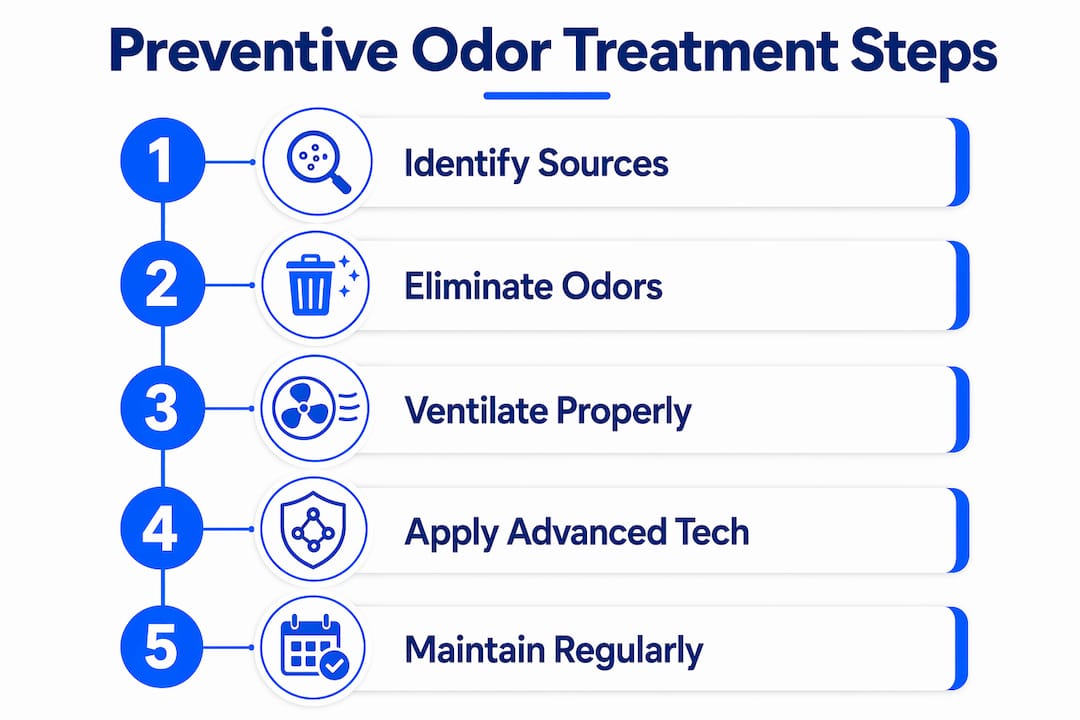
Applying preventive odor control in a real space follows a clear sequence. The steps work for a single vehicle, a private home, or a multi-unit commercial property.
Audit your odor sources. Walk through the space and identify every potential source: HVAC vents, upholstery, drains, waste storage areas, and any surface that traps moisture. In vehicles, check the cabin air filter, trunk liner, and seat seams. Use your nose and, where possible, a VOC meter to detect invisible compounds.
Eliminate sources before treating surfaces. Remove decaying organic matter, replace saturated filters, and fix any moisture intrusion. No surface treatment works long-term if the source remains active. This step is non-negotiable.
Apply preventive surface treatments. Use enzyme-based or photocatalytic treatments on porous surfaces before odor compounds bond. For eco-friendly household odors control, green-certified products avoid introducing new chemical pollutants while neutralizing existing ones.
Set up ventilation and air filtration. Install or service mechanical ventilation to maintain fresh air exchange. Add activated carbon filtration where VOC levels are elevated. In commercial spaces, consider real-time air quality sensors that trigger ventilation increases when compound levels rise.
Build daily maintenance habits. Consistent habits that reduce indoor odors matter more than any single treatment. These include wiping surfaces after cooking, removing trash before it decomposes, and keeping humidity below 50% to prevent mold growth.
Schedule professional assessments. Periodic professional inspections catch odor sources that daily habits miss. For commercial properties, office space odor removal programs managed by licensed professionals provide documented compliance and consistent results.
Pro Tip: Set a recurring calendar reminder every 90 days to replace cabin air filters in vehicles and HVAC filters in buildings. Most odor relapses trace back to a clogged filter that was never changed on schedule.
Key Takeaways
Preventive odor treatment is the most cost-effective and health-protective approach to managing indoor air quality, because it eliminates odor sources before smells form rather than reacting after complaints arise.
| Point | Details |
|---|---|
| Definition of prevention | Preventive odor treatment targets odor sources before compounds accumulate and become detectable. |
| Root cause first | Eliminating the source before applying any surface treatment is the non-negotiable first step. |
| Multi-barrier methods win | Combining source control, ventilation, and advanced filtration outperforms any single method. |
| Prevention beats reaction | Reactive treatment costs more, recurs more often, and carries greater reputational risk. |
| Professional monitoring matters | Scheduled professional assessments catch sources that daily habits and self-inspection miss. |
What I’ve learned after years of treating indoor odors
The most persistent misconception I encounter is that a strong-smelling product equals a strong treatment. Clients arrive having tried every spray, candle, and plug-in on the market. None of it worked, because none of it addressed the source.
The shift that changes everything is moving from “how do I cover this smell” to “why is this smell here.” Once you answer that second question, the treatment path becomes obvious. A musty vehicle cabin is not a fragrance problem. It is a moisture problem, usually a clogged drain or a saturated cabin filter. Spray something on top of it and you have a musty, floral-smelling vehicle in two weeks.
The other thing I see consistently underestimated is the speed at which odor problems escalate. Odor issues escalate quickly with social media and word of mouth. A hotel room that smells like smoke, a dealership vehicle that reeks of pet, a rental property with mildew in the walls. One review can cost more than a year of preventive treatment would have.
Building system integration via IoT and AI is where the field is heading, and I think it will change expectations permanently. When sensors detect a VOC spike before any human nose does, the intervention window is enormous. That is the future of preventive odor control, and it is already available to commercial clients who ask for it.
The bottom line is simple: prevention is not a luxury add-on. It is the baseline standard for any property that takes air quality seriously.
— Master
Masterodorremoval’s approach to preventive odor control
Masterodorremoval specializes in science-backed, eco-friendly odor management for homes, vehicles, yachts, and commercial properties. Every program starts with a source audit, not a spray bottle.

The team uses green-certified methods that avoid ozone and chlorine, applying enzyme-based and photocatalytic treatments that neutralize odor compounds at the molecular level. For commercial clients, Masterodorremoval offers commercial odor removal programs with same or next-day availability and documented results. For residential and vehicle clients, the focus is on long-lasting odor treatment that does not require repeat visits. If you want a space that stays fresh rather than one that gets treated repeatedly, professional odor removal done right is the place to start.
FAQ
What is preventive odor treatment?
Preventive odor treatment is the proactive identification and elimination of odor sources before unpleasant smells develop in indoor environments. It targets root causes rather than masking symptoms after odors form.
How does preventive odor control differ from reactive treatment?
Reactive treatment begins after a smell is detected and typically addresses symptoms. Preventive control interrupts odor formation at the source, reducing costs, recurring problems, and reputational risk.
What are the most effective odor prevention methods?
Source elimination, enzyme-based surface treatments, activated carbon filtration, and consistent ventilation form the most effective multi-barrier approach to preventing indoor odors.
How often should preventive odor treatments be applied?
Treatment frequency depends on the space and odor sources, but professional assessments every 90 days and filter replacements on the same schedule prevent most odor relapses in homes and vehicles.
Can preventive odor treatment improve indoor air quality?
Yes. By reducing VOCs, bacterial byproducts, and mold spores before they accumulate, preventive odor management directly improves indoor air quality and supports better health outcomes for occupants.
Recent Comments