
TL;DR:
- Safe interior odor removal starts with identifying and removing the odor source before surface treatment. Using enzyme cleaners, proper ventilation, and certified eco-friendly products ensure effective, non-toxic results that prevent odors from returning. Combining source control, thorough cleaning, and passive air purification provides the most sustainable approach for a fresh, healthy home.
You scrub every surface, light a candle, and spray half a bottle of air freshener. The smell comes back by morning. If that cycle sounds familiar, you are not alone, and you are not doing it wrong. You are likely skipping the steps that actually matter in a safe interior odor cleaning process. This guide walks you through how to eliminate odors safely without reaching for bleach, ozone machines, or anything that puts your family, pets, or surfaces at risk. Every step here is practical, grounded in real cleaning science, and designed for the home you live in.
Table of Contents
- Key Takeaways
- Understanding odor sources and preparing your space
- Step-by-step safe interior odor cleaning process
- Supplemental odor control: ventilation and air purification
- Common mistakes that keep odors coming back
- My honest take on safe odor cleaning
- When professional help makes the difference
- FAQ
Key Takeaways
| Point | Details |
|---|---|
| Source control comes first | Identify and remove the odor source before treating any surface or fabric. |
| Pre-cleaning is non-negotiable | Skipping pre-cleaning blocks odor treatments from reaching the compounds they need to neutralize. |
| Enzyme cleaners do the heavy lifting | Enzyme-based products break down organic odor compounds safely and work for pets, food, and smoke residues. |
| Choose certified safer products | Look for US EPA Safer Choice or DfE ecolabels, not vague “natural” marketing language. |
| Maintenance prevents recurrence | Regular vacuuming, filter changes, and ventilation keep odors from building back up. |
Understanding odor sources and preparing your space
Before you treat anything, you need to know what you are actually treating. Odors do not float in the air by accident. They come from a specific source, and that source is almost always still present. Pet urine soaks into carpet padding. Smoke embeds in drywall and upholstery fibers. Mold hides behind baseboards or under bathroom caulk. Cooking grease coats range hood filters and cabinet surfaces over time.
The most common indoor odor sources fall into a few clear categories:
- Pet accidents: Uric acid crystals from urine bond to fabric and re-activate when humid
- Tobacco and smoke: Thirdhand smoke residue coats walls, ceilings, and soft furnishings
- Mold and mildew: Moisture-triggered growth typically found in bathrooms, basements, and behind appliances
- Food residue: Grease and organic matter trapped in grout, fabrics, and air vents
- HVAC systems: Ducts that circulate contaminated air through every room
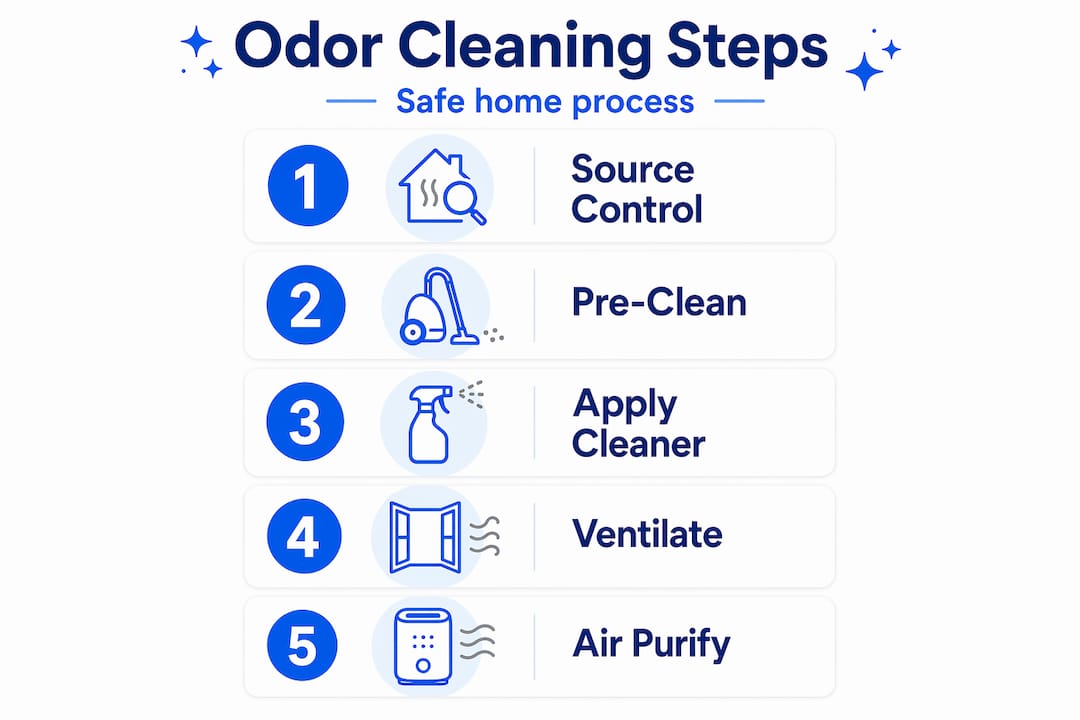
Source control is the step most homeowners skip. Treating a room with enzyme cleaners while a mold colony sits untouched behind the washing machine is a waste of time and product. Fix the moisture issue, clean up the pet accident completely, or remove the contaminated material before moving to treatment.
Once the source is addressed, prepare the space. Open windows to increase airflow. Remove loose items like throw pillows, pet bedding, and area rugs so you can treat them separately. Clear hard surfaces of clutter so you can wipe everything properly.
Product selection matters just as much as method. The EPA Safer Choice program certifies products with safer ingredients and screens out substances that harm health or the environment. When you see that label, you know the formula has been evaluated, not just marketed. Avoid products that claim to be “chemical-free” with no certification to back it up. Every cleaning product contains chemistry. The question is whether that chemistry has been screened for safety.
| Tool or Product | Purpose | What to Look For |
|---|---|---|
| Microfiber towels | Wiping and blotting surfaces | High GSM, lint-free |
| Enzyme-based cleaner | Neutralizing organic odor compounds | EPA Safer Choice label |
| HEPA vacuum | Removing embedded particles before treatment | True HEPA filter rating |
| Spray bottle | Applying solutions evenly | Adjustable nozzle |
| Activated carbon odor absorber | Passive odor capture between treatments | Natural carbon, no added fragrance |
Pro Tip: Before buying any cleaner marketed as “green” or “natural,” search its name in the EPA Safer Choice product database. It takes 30 seconds and confirms whether the safety claim is real.
Step-by-step safe interior odor cleaning process
This is where the actual work happens. Follow these steps in order. Jumping ahead or combining steps is where most DIY attempts fall apart.
Vacuum all fabric surfaces thoroughly. Use a HEPA vacuum on carpets, upholstery, and rugs before applying any liquid treatment. Pre-cleaning surfaces improves active agent contact with odor compounds embedded in fibers. Loose debris acts like a physical barrier.
Wipe all hard surfaces. Use a damp microfiber cloth to remove grease, dust, and residue from walls, baseboards, counters, and furniture frames. Dry them lightly before proceeding.
Apply your enzyme-based cleaner. Saturate the affected area, not just the surface. Pet urine, for example, soaks through carpet into the pad below. Enzymes digest uric acid crystals and odor-causing residues over several hours. They need moisture and time to work. Do not rush this step.
Allow full dwell time. Cover treated areas loosely with a damp cloth or plastic sheeting to slow evaporation. Most enzyme products need 10 to 30 minutes of contact time, and heavily soiled areas may need several hours. Check the label.
Blot, do not scrub. Use a clean microfiber towel and press firmly to lift the treated residue. Scrubbing pushes contaminants deeper into fibers and can damage fabric structure.
Dry the area completely. Use fans to circulate air and pull moisture out. Avoid heat guns or hair dryers on delicate fabrics. Surfaces must dry fully to prevent mold from forming in the treated area.
Assess and repeat if needed. Stubborn odors often require a second application, especially for smoke or long-standing pet accidents. This is normal and expected, not a product failure.
Pro Tip: For smoke-embedded walls or ceilings, apply your enzyme or odor-neutralizing solution with a sponge mop and let it dwell before wiping. This covers large surfaces evenly without over-saturating drywall.
Here is how the main product types compare for safe odor removal:
| Product Type | How It Works | Safety Profile | Best For |
|---|---|---|---|
| Enzyme cleaner | Breaks down organic compounds biologically | Non-toxic, safe for pets and children | Pet urine, food odors, biological residue |
| Activated carbon absorber | Adsorbs odor molecules passively | Non-toxic, no emissions | Residual odors, enclosed spaces |
| Baking soda paste | Mild alkaline neutralization | Non-toxic, food safe | Surface odors on hard materials |
| EPA Safer Choice spray | Certified formula-based neutralization | Screened for safety | General multi-surface use |
The natural scent cleaning solutions category has grown significantly in recent years, but not all of them neutralize odors. Some only mask them with fragrance. A product that makes a room smell like lavender has not removed the odor compound. It has simply added a competing scent. For a genuine fix, you need a product that chemically or biologically neutralizes the molecule causing the problem.
Supplemental odor control: ventilation and air purification
Ventilation helps, but it has real limits. Ventilation alone is often insufficient for odors with low volatility or strong adsorption to surfaces. Opening windows moves fresh air through the room, but it cannot pull uric acid crystals out of carpet fibers or remove smoke residue from drywall. Think of ventilation as one part of a larger plan, not the solution on its own.
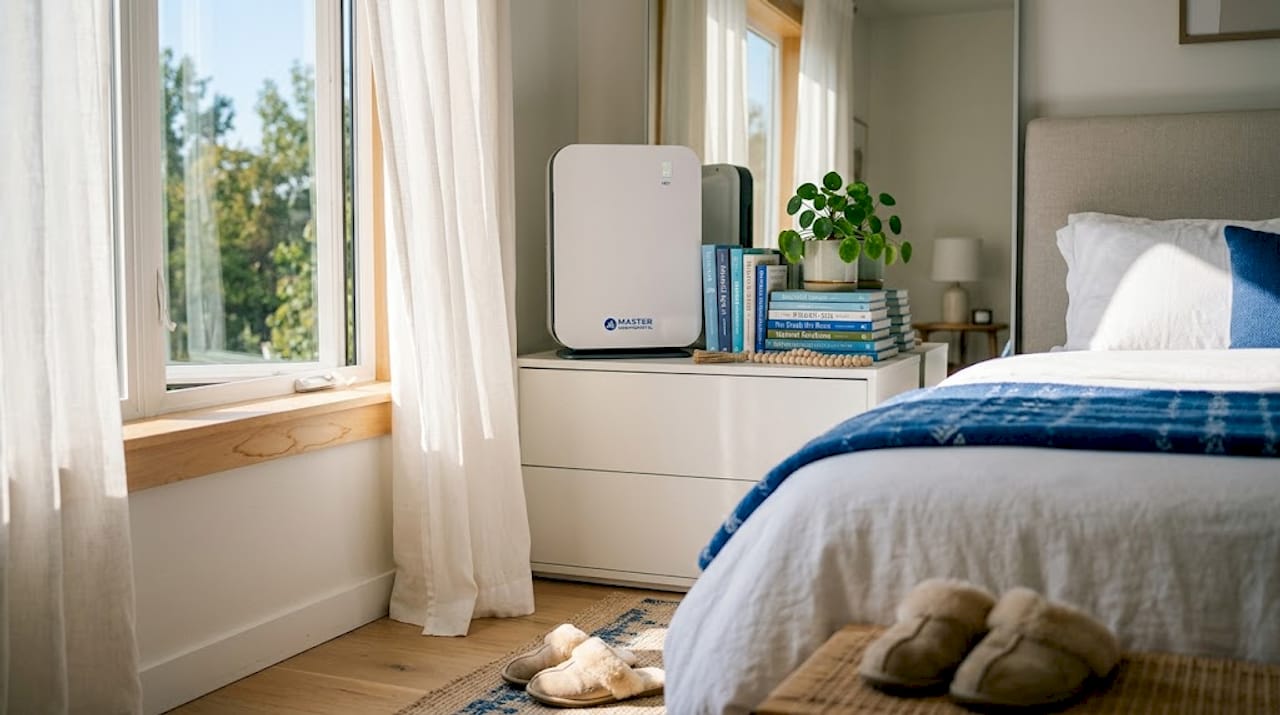
Air purifiers play a more targeted role. The type of filter inside determines what they actually remove. HEPA filters capture airborne particles like dust, pet dander, and mold spores. They do not address gases or chemical odors. Activated carbon adsorbs odor gases and VOCs effectively, making it the filter type you need for smoke, cooking smells, and pet odors. The best practice for odor control is a unit that combines both: a true HEPA layer for particles and an activated carbon layer for gases.
Ongoing maintenance habits matter as much as the initial cleaning. Here are the best practices for odor cleaning that keep your home from backsliding:
- Vacuum upholstered furniture and carpets weekly, not just when visible debris appears
- Replace HVAC filters every 60 to 90 days, or sooner if you have pets
- Run the exhaust fan during and for 20 minutes after cooking
- Wash pet bedding weekly in hot water with an enzyme-based laundry additive
- Check under sinks and around appliances monthly for moisture buildup
- Keep indoor humidity between 40 and 50 percent to discourage mold growth
Pro Tip: Place a small activated carbon odor absorber inside closets, under sinks, and in the car. These passive absorbers work continuously without electricity and significantly reduce baseline odor levels between active cleanings.
Common mistakes that keep odors coming back
Most people who struggle with persistent odors are making one of a small number of predictable mistakes. Recognizing them is faster than starting from scratch.
- Using bleach, ammonia, or hydrogen peroxide on porous materials. Consumer Reports advises using cleaners specific to material type because harsh oxidizers can damage upholstery, degrade coatings, and actually create new chemical odors.
- Skipping pre-cleaning. Applying enzyme cleaners to a surface coated in grime is like trying to glue something through a layer of dust. The active agents never reach the odor compounds below.
- Drying surfaces too fast. Enzyme activity requires moisture. Using a heat source to speed drying stops the enzymatic reaction before it finishes.
- Under-applying product. A light spritz on a urine-soaked carpet pad does nothing. Saturate the area deeply enough to reach the odor reservoir.
- Ignoring embedded odors in HVAC or padding. If your ducts or subfloor padding are contaminated, surface-level treatment will always fall short.
Ozone machines are sometimes marketed as a powerful DIY option, but ozone can degrade rubber and plastics and is hazardous to humans and pets if the space is not fully evacuated and ventilated afterward. For home use, certified safer products are a better choice.
Pro Tip: Always test any new product on an inconspicuous spot first, especially on leather, painted wood, or natural fiber rugs. Wait 10 minutes and check for discoloration before treating the full area.
My honest take on safe odor cleaning
In my experience, the biggest mistake people make is treating odor removal like a single event rather than a process. You clean once, it comes back, you feel like the product failed. Most of the time, the product was fine. The workflow was incomplete.
I have seen this consistently: source control and pre-cleaning are the two steps that determine whether everything else works. Skip either one and you are layering solutions on top of a problem that has not actually been addressed.
There is also a real misconception about “chemical-free” cleaning. I understand the appeal. People want to protect their families and avoid harsh substances. But physical cleaning alone does not reliably eliminate odors. Certified safer products, those with EPA Safer Choice or DfE certification, are often more effective and genuinely safer than DIY concoctions or unverified “natural” sprays. The label is not just marketing. It reflects real ingredient screening.
What I have learned after years in this field is that patience is underrated. Enzyme treatments need time, sometimes multiple applications over several days for deeply embedded odors. If you stay consistent and follow sustainable odor prevention habits after the initial treatment, the results hold.
— Master
When professional help makes the difference
Sometimes a thorough DIY process gets you most of the way there, but a deeply embedded odor in wall cavities, subflooring, or HVAC systems calls for a different level of treatment. That is where Masterodorremoval comes in.

Masterodorremoval uses green-certified odor elimination methods that are Safer Choice and DfE recognized, with no ozone and no chlorine treatments. Every service is performed by licensed professionals who follow the same source-control-first approach described in this guide, just with commercial-grade equipment and formulas that go deeper than retail products can reach. Whether you are dealing with pet odors, smoke contamination, or mildew in a property you are preparing to rent or sell, their team can handle it with same or next-day availability. See how professional odor removal works and what to expect from a certified, eco-responsible service.
FAQ
What is the first step in a safe interior odor cleaning process?
Source control comes before any treatment. Identify and eliminate the origin of the odor, whether that is pet waste, mold, or smoke residue, before applying any cleaning product to surfaces.
Are enzyme cleaners safe for homes with pets and children?
Yes. Enzyme cleaners are generally non-toxic and safe for use around pets and children. They work by biologically breaking down organic compounds rather than using harsh oxidizing chemicals.
Why does ventilation alone not remove odors?
Ventilation moves air but cannot remove odor compounds that have bonded to surfaces, fabrics, or building materials. Integrated approaches combining source control, surface treatment, and air purification are needed for lasting results.
How do I choose the safest odor cleaning products?
Look for products certified by the US EPA Safer Choice program. These have been screened for ingredient safety and environmental impact, unlike products that simply use vague “natural” or “green” language without certification.
What type of air purifier filter is best for odors?
Activated carbon filters target odor gases and VOCs, while HEPA filters capture particles. For odor control, combining activated carbon and HEPA filtration in one unit gives you the most complete protection.
Recent Comments