
TL;DR:
- Car odors worsen in heat because high temperatures cause odor molecules to evaporate faster and spread more easily. This intensifies odors from plastics, adhesives, and mold, which are trapped inside porous materials and reactivated by heat. Effective removal involves treating both surface and embedded sources with professional cleaning methods rather than relying on masking sprays.
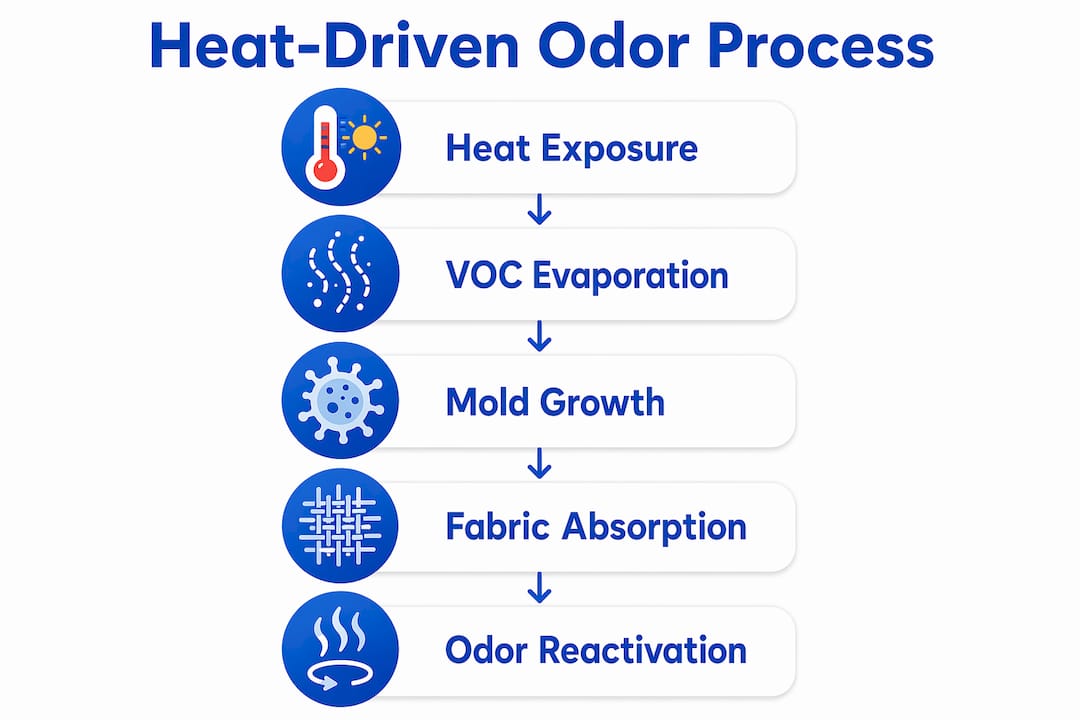
Car odors worsen in heat because high temperatures force odor molecules out of the materials where they hide and push them into the air you breathe. This process, known in chemistry as increased volatility, explains why a car that smells fine in january can become unbearable by july. Heat does not create new smells. It amplifies every odor source already present, from synthetic plastics to spilled coffee soaked into seat foam. Understanding why car odors worsen in heat is the first step toward fixing the problem permanently rather than masking it temporarily.
Why do car odors worsen in heat? The science explained
Heat increases the volatility of odor molecules, which means they evaporate faster and spread more easily through the air. The same odor source that barely registers at 60°F becomes overwhelming at 130°F because the molecules are moving faster and escaping their host materials at a much higher rate. This is the core reason heat intensifies odor volatility in ways that cooler seasons simply do not.
The primary culprits inside your car are Volatile Organic Compounds, or VOCs. VOCs are carbon-based chemicals that evaporate at room temperature and accelerate dramatically under heat. Your car’s interior is full of VOC sources: the plastic dashboard, the adhesive bonding your headliner, the foam padding under your seats, and the synthetic carpet fibers. VOCs release from synthetic materials like plastic and adhesives at rates that climb sharply as temperature rises.
The numbers make this concrete. Dashboard temperatures reach 120–160°F in direct sunlight, and direct sunlight can raise interior air temperature by as much as 86°F above ambient. That means a car parked on a summer afternoon in Phoenix or Miami is essentially a slow oven baking every odor source inside it. At those temperatures, materials that seem inert off-gas compounds at rates that are genuinely measurable in the cabin air.
| Interior surface | Approximate peak temp in sun | Primary VOC sources |
|---|---|---|
| Dashboard | 150–160°F | Plastics, vinyl coatings |
| Seat foam | 120–130°F | Adhesives, synthetic foam |
| Carpet padding | 110–120°F | Synthetic fibers, backing adhesives |
| Headliner | 130–140°F | Fabric adhesives, foam backing |
Pro Tip: Park in shade or use a windshield sunshade whenever possible. Keeping interior temps below 100°F meaningfully reduces VOC off-gassing and keeps car smells in summer far less intense.
How moisture, mold, and your HVAC system make heat odors worse
The air conditioning system is one of the most overlooked odor sources in any vehicle. The evaporator coil inside your dashboard gets cold, and that cold surface pulls moisture from the air as condensation. Condensation on the AC evaporator creates a wet, dark environment that is ideal for mold and bacteria growth. When heat arrives, those colonies release musty compounds at a faster rate, and your vents blow them directly into the cabin.
The HVAC system compounds the problem further. Contaminated air recirculates through the system every time you run the heat or AC, re-depositing odor particles on interior surfaces. This is why a car can smell worse after you turn on the air conditioning than it did before. The system is not just failing to clean the air. It is actively spreading the problem.
Preventing moisture buildup requires one simple habit change:
- Turn off the AC two to three minutes before you park, but leave the fan running on fresh air mode.
- Running the fan after AC use dries the evaporator coil and starves mold of the moisture it needs to grow.
- Replace your cabin air filter at least once a year. A clogged filter traps moisture and organic debris, feeding mold colonies.
- Have the evaporator coil professionally cleaned if musty smells persist after filter replacement.
- Avoid using the recirculation mode for extended periods in humid weather, as it concentrates moisture inside the cabin.
Pro Tip: After a rainy drive, crack your windows slightly when parked in a safe area. Even a small amount of airflow helps dry the carpet and upholstery before mold gets a foothold.
How embedded contaminants bake into fabrics and reactivate in hot weather
Porous materials in your car’s interior act as odor sinks. Seat foam, carpet padding, and headliner fabric do not just sit on the surface. They absorb spills, smoke particles, pet dander, and food residue deep into their fibers. Porous materials trap odor molecules at a depth that a vacuum or surface spray cannot reach.
Heat acts as a thermal trigger that pulls those embedded molecules back out. A spill that was cleaned from the surface months ago can still release a strong odor on a hot day because the deeper layers of foam were never treated. Heat bakes pollutants deeper into materials over time, which is why odors often get worse with each passing summer rather than fading naturally.
This explains a frustrating pattern many car owners experience:
- Surface clean: You shampoo the seats and vacuum the carpet. The smell fades for a few days.
- Heat returns: Temperatures climb, and the odor comes back stronger than before.
- Repeat cycle: Each cleaning pushes some contaminants deeper while heat pulls the rest back out.
- Permanent solution required: Only treatments that reach the molecular level inside the material break this cycle for good.
The takeaway is direct. Surface cleaning addresses what you can see and smell immediately. It does not address what is locked inside the material. Professional vehicle odor neutralization targets the embedded source, not just the surface.
Which car smells in hot weather signal a mechanical problem?
Heat amplifies existing odors and also makes mechanical problems far more noticeable. Some smells that emerge in hot weather are harmless off-gassing from interior materials. Others are warning signs that require immediate attention.
| Smell | Likely cause | Action required |
|---|---|---|
| Sweet maple syrup | Coolant leak from radiator or hose | Stop driving, seek inspection |
| Burning rubber | Slipping belt or overheating electrical insulation | Inspect immediately |
| Fuel vapor | Fuel line or injector leak | Do not drive, seek inspection |
| Musty or mildew | Mold in HVAC or wet carpet | HVAC cleaning, dry interior |
| Plastic or chemical | VOC off-gassing from interior materials | Ventilate, park in shade |
Vehicles in environments over 80°F show a marked increase in heat-related odors, with coolant leaks being among the most dangerous because the sweet smell is easy to dismiss as pleasant. A burning rubber or sweet syrup smell should never be masked with an air freshener. Both indicate mechanical failures that worsen under heat and can lead to engine damage or fire risk.
- Never use a spray freshener to cover a mechanical smell. It delays diagnosis and can create a confusing odor mix.
- If a new smell appears suddenly after a hot drive, check coolant levels and look under the hood before driving again.
- Fuel vapors are particularly dangerous in hot weather because heat lowers the flash point of gasoline vapors.
How to effectively eliminate car odors worsened by heat
Eliminating car odors in hot weather requires treating the source, not the symptom. Masking sprays create worse odor cocktails when heated, because synthetic fragrance compounds mix with reactivated odor molecules and produce a result that is often more unpleasant than the original smell. Car air fresheners in heat are a short-term fix that frequently backfires.
Effective odor control follows a clear sequence:
- Dry everything first. Wet carpet and upholstery feed mold. Extract moisture with a wet-dry vacuum and allow full drying before any treatment.
- Deep clean porous surfaces. Use enzyme-based cleaners on fabric seats and carpet. Enzymes break down organic compounds at the molecular level, not just at the surface.
- Sanitize the HVAC system. A professional HVAC treatment reaches the evaporator coil and duct work where mold colonies live.
- Consider professional treatment for persistent odors. Ozone treatment combined with enzyme cleaning offers lasting elimination by breaking down odor-causing particles that survive surface cleaning.
Pro Tip: After any deep cleaning, leave the windows cracked and the car parked in shade for several hours. Fresh airflow accelerates drying and prevents the moisture conditions that restart mold growth.
Masterodorremoval uses green-certified car odor removal methods that avoid ozone and chlorine, focusing instead on safe, molecular-level treatments that work in hot climates without introducing new chemical compounds into the cabin.
Key takeaways
Heat does not create car odors. It forces every existing odor source, from VOC-rich plastics to mold-covered evaporator coils, to release compounds faster and at higher concentrations.
| Point | Details |
|---|---|
| Heat drives VOC release | Dashboard temps reaching 120–160°F accelerate off-gassing from plastics, adhesives, and foam. |
| HVAC systems spread mold | Condensation on the evaporator coil breeds bacteria that circulate through vents in hot weather. |
| Embedded odors resurface | Heat pulls contaminants out of seat foam and carpet that surface cleaning never reached. |
| Mechanical smells need action | Sweet or burning smells in heat signal coolant leaks or belt failures requiring immediate inspection. |
| Masking sprays backfire | Synthetic fragrances mix with reactivated odors in heat, producing a worse result than the original smell. |
What years of treating heat-baked interiors taught me
The most common mistake I see is treating a car odor like a housekeeping problem when it is actually a chemistry problem. Car owners shampoo the seats, buy a new air freshener, and feel good for a week. Then the first hot day arrives, and the smell comes back stronger. That cycle is not bad luck. It is physics.
What I have learned from working on vehicles in hot climates is that the HVAC system is almost always part of the problem, and almost always overlooked. Owners focus on what they can see and smell directly. The evaporator coil is invisible, wet, and sitting in the dark behind your dashboard. It is the perfect environment for mold, and heat turns it into an odor delivery system that runs every time you touch the climate controls.
The other overlooked factor is timing. Most car owners call for help in july when the smell is unbearable. The better move is treating the interior in april or may, before heat has a chance to bake contaminants deeper into the materials. Prevention costs less and works better than remediation after the damage is done. A seasonal approach to interior odor care, especially for vehicles used in warm climates, is the standard I recommend to every client.
— Master
When professional odor removal makes the difference
Persistent car odors in hot weather are a sign that the odor source is embedded deeper than any surface product can reach.

Masterodorremoval specializes in permanent, eco-friendly odor elimination for vehicles, using green-certified methods that target odor at the molecular level without ozone or chlorine. The team handles heat-worsened odors from tobacco, mold, pets, food, and chemical off-gassing, with same or next-day service availability. If your car smells worse every summer despite regular cleaning, the problem is not your cleaning routine. It is the depth of the contamination. Masterodorremoval’s odor removal specialists are trained to identify and eliminate the source, not just the symptom, so the smell does not return when temperatures climb again.
FAQ
Why does my car smell worse when it’s hot outside?
Heat increases the volatility of odor molecules, causing them to evaporate faster from materials like seat foam, carpet, and plastics. The same contaminants that are barely noticeable in cool weather release at a much higher rate once interior temperatures climb above 100°F.
What causes the musty smell from car AC in summer?
Condensation on the AC evaporator coil creates a wet environment where mold and bacteria grow. Heat accelerates the release of musty compounds from those colonies, and the HVAC system blows them directly into the cabin every time you run the air conditioning.
Can car air fresheners make heat odors worse?
Yes. Masking sprays mix synthetic fragrance with reactivated odor molecules in hot conditions, often producing a more unpleasant smell than the original. Permanent odor removal requires treating the chemical source, not covering it.
What does a sweet smell from my car in hot weather mean?
A sweet maple syrup scent in hot weather typically indicates a coolant leak that becomes more noticeable at operating temperatures. Stop driving and have the vehicle inspected, as coolant leaks can cause serious engine damage if ignored.
How do I permanently eliminate car odors that return every summer?
Permanent elimination requires treating odor sources at the molecular level inside porous materials like seat foam and carpet padding. Enzyme-based cleaners and professional HVAC sanitization address the embedded contaminants that surface cleaning misses and heat reactivates each season.
Recent Comments