
TL;DR:
- Upscale odor control involves a multi-layered system targeting sources, surfaces, and air quality to permanently eliminate odors. Ventilation and masking agents are ineffective due to odor compounds’ ability to adsorb onto surfaces and re-emission over time. Effective strategies include source removal, humidity control, HVAC maintenance, and validated air purification, supported by continuous monitoring.
Upscale real estate odor control is a sophisticated, multi-barrier process that combines source treatment, humidity management, HVAC maintenance, and advanced air purification to keep luxury properties pristine. The industry term for this approach is integrated indoor odor management, and it goes far beyond spraying a room with fragrance. Properties with persistent odors lose buyer confidence fast, and no amount of staging recovers that first impression. Technologies like Polygee electrostatic precipitation systems, ASHRAE 145.2 tested adsorbents, and CO₂ monitors are now standard tools for professionals who take affluent property air quality seriously.
Why simple masking and ventilation fail in upscale real estate odor control
Ventilation alone cannot solve odor problems in luxury interiors. Ventilation is bounded by physicochemical constraints and regularly fails for semi-volatile organic compounds (SVOCs) that adsorb onto fabrics, wall finishes, and HVAC components. Once a compound is bound to a material surface, moving air past it does little more than slow the rate of re-emission.
Masking agents create a second, equally serious problem. Layering a synthetic fragrance over a tobacco or pet odor does not neutralize the source. It creates a competing scent profile that trained buyers and their agents recognize immediately. In high-end real estate, that recognition signals neglect rather than care.
The core challenge is adsorption and re-emission. Odor molecules from cooking grease, tobacco smoke, or mold settle into porous surfaces like carpet, drywall, and upholstery. They release slowly over weeks or months. A single ventilation session or a can of air freshener addresses only the airborne fraction, which is the smallest part of the problem.
A coordinated, multi-barrier approach is the only method that works at this level:
- Source identification: Locate the origin of the odor before choosing any treatment.
- Material assessment: Determine whether odorants are airborne or bound to surfaces, since different failure modes require tailored approaches.
- Purification technology: Select validated devices, not consumer sprays.
- Ongoing monitoring: Verify results with air quality data, not just a nose check.
Pro Tip: Before any treatment, walk the property with a licensed professional and identify every porous surface that could be holding adsorbed compounds. Skipping this step is the single most common reason odor returns within 30 days.
What does an integrated odor control system include?
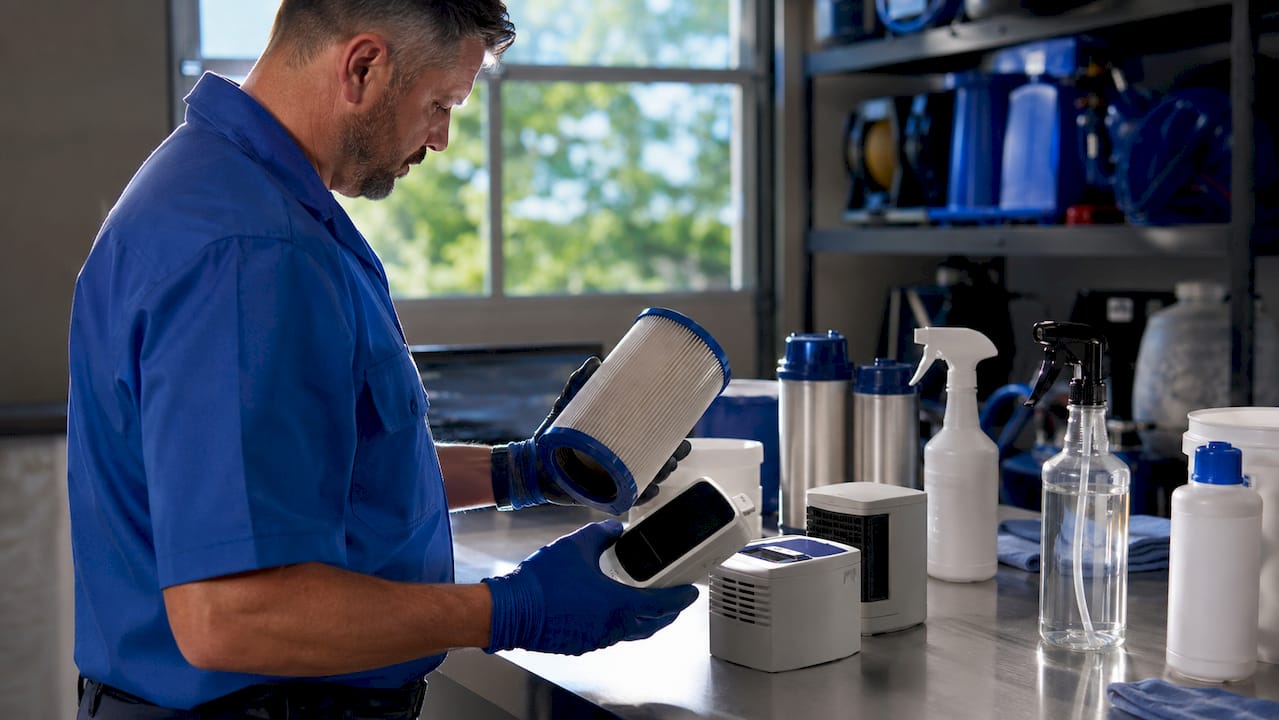
An effective system for elite residential scent control has four coordinated components. Each one addresses a different failure point, and removing any one of them reduces the overall result.
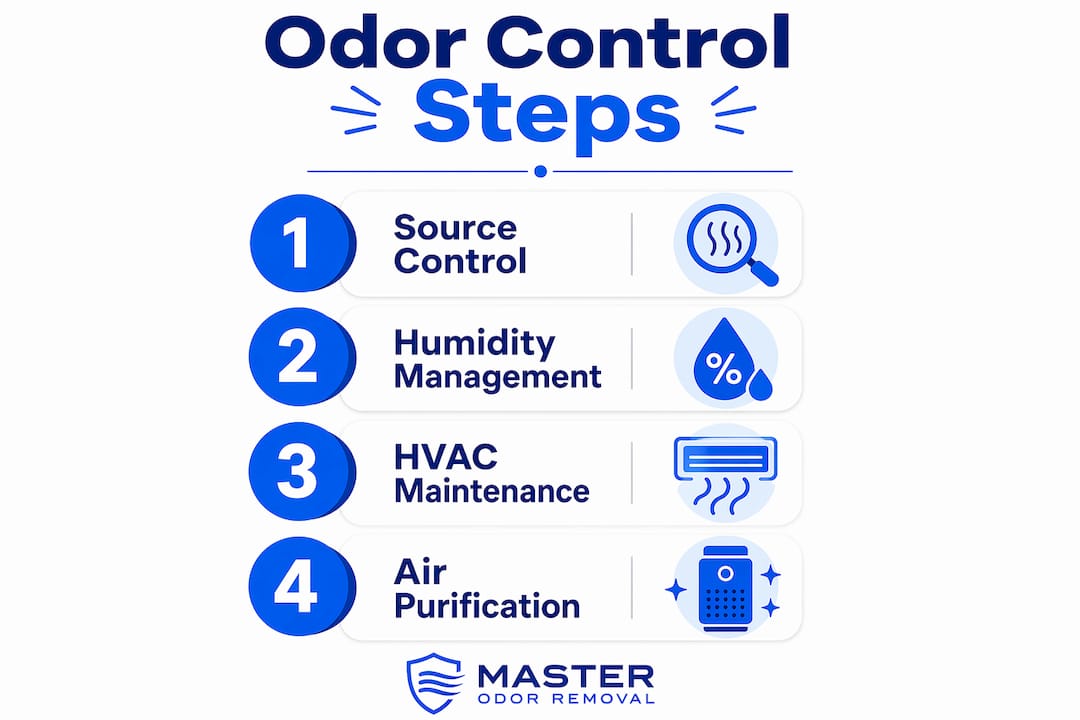
Source control
Source control means identifying and treating the origin of the odor, not the air around it. Common sources in luxury properties include tobacco residue in wall cavities, pet dander in subfloor materials, and mold colonies behind tile or drywall. Removing or chemically neutralizing the source is the required first step. Without it, every downstream treatment is temporary.
Moisture and humidity management
Maintaining indoor relative humidity through HVAC or dehumidifiers prevents mold growth and stops microbial VOC release. Mold is one of the most persistent odor sources in luxury properties because it grows inside wall assemblies where it is invisible. Keeping relative humidity below 60% removes the conditions mold needs to survive. In coastal or humid climates, this requires dedicated dehumidification, not just air conditioning.
HVAC cleaning and maintenance
Damp HVAC components are a primary re-emission source. Odor from damp HVAC components and adsorbed materials requires combined HVAC maintenance plus terminal purification, because air-only steps only temporarily clear the odor. Coils, drain pans, and ductwork must be inspected and cleaned on a scheduled basis. Spray foam insulation around duct penetrations also reduces air leakage that can carry odors from unconditioned spaces into living areas, which is why spray foam air quality practices matter in high-end construction.
Terminal purification technologies
In-duct gas-phase adsorbers and standalone air cleaning units (ACUs) form the last line of defense. The performance of in-duct gas-phase devices depends on ASHRAE 145.2 evaluation standards, which test adsorbent capacity under steady-state conditions. Adsorbent capacity varies by molecule and environmental conditions, so choosing a device tested under the right standard matters. ACUs reduce airborne contaminants effectively, but ACUs should be used alongside ventilation and cannot replace it or reduce CO₂ levels on their own.
| Component | Function | Key tool or standard |
|---|---|---|
| Source control | Eliminate odor origin | Professional assessment protocol |
| Humidity management | Prevent mold and microbial VOCs | Dehumidifiers, HVAC setpoints |
| HVAC maintenance | Stop re-emission from duct systems | Scheduled coil and drain pan cleaning |
| Terminal purification | Remove residual airborne compounds | ASHRAE 145.2 tested in-duct adsorbents |
| Air quality monitoring | Verify ventilation adequacy | CO₂ monitors, VOC sensors |
Pro Tip: CO₂ levels below 800 ppm indicate good ventilation. Levels above 1,500 ppm signal poor airflow and mean your purification system is working harder than it should. Install a fixed CO₂ monitor in every occupied zone.
How do upscale kitchens and hospitality spaces require specialized odor solutions?
Luxury kitchens and hotel-grade residential spaces present odor challenges that standard residential systems cannot handle. Grease, smoke, and high-temperature cooking VOCs penetrate surfaces faster and at higher concentrations than everyday household odors. In multi-unit luxury buildings or hospitality properties, a single poorly managed kitchen can affect neighboring units and common areas, directly damaging property reputation.
Multi-stage exhaust purification is the standard solution for this environment. Polygee hotel kitchen ESP systems use pre-filtration, UV-C sterilization, and activated carbon filters to achieve 90–99% grease and smoke removal. UV-C breaks down VOCs at the molecular level, while activated carbon captures residual odor compounds before they reach the exhaust stack. This combination protects both the building envelope and the brand reputation of the property.
| System type | Grease removal | VOC treatment | Best application |
|---|---|---|---|
| Standard range hood | Low | None | Basic residential |
| ESP with carbon filter | High | Partial | Mid-range commercial |
| Multi-stage ESP with UV-C | 90–99% | Full decomposition | Luxury and hospitality |
Source capture design matters as much as the purification unit itself. Exhaust hoods must be sized and positioned to capture cooking plumes before they spread into the kitchen space. Undersized hoods are the most common reason multi-stage systems underperform in luxury kitchen retrofits.
How to implement upscale odor control: practical steps
A structured implementation process prevents the most common failure modes in premium home odor solutions. Follow these steps in order.
- Assess odor sources. Walk the property with a licensed professional. Identify every material that could hold adsorbed compounds, including carpets, drywall, HVAC insulation, and cabinetry.
- Test air quality. Use CO₂ monitors and VOC sensors to establish a baseline. This data guides technology selection and documents results after treatment.
- Address moisture first. Set HVAC humidity controls and install dehumidifiers where needed. No purification system performs well in a damp environment.
- Clean and inspect HVAC. Check coils, drain pans, filters, and ductwork. A furnace nearing end of life can harbor mold and distribute odors throughout the property.
- Install validated purification. Select in-duct adsorbents or ACUs tested to ASHRAE 145.2. Match the device to the specific odorant class identified in step one.
- Schedule professional odor removal. For properties with tobacco, pet, or mold odors, schedule professional odor removal before listing or tenant turnover.
- Verify and monitor. Re-test CO₂ and VOC levels after treatment. Document results for property records.
Common pitfalls to avoid:
- Treating only the air while ignoring surface-adsorbed compounds
- Using masking fragrances as a substitute for source treatment
- Skipping HVAC inspection before installing purification devices
- Relying on a single technology when the odor has multiple sources
Pro Tip: For properties with persistent odors in luxury settings, the most reliable indicator of success is a post-treatment VOC reading, not a sensory check. Human noses adapt to ambient odors within minutes and are unreliable as the sole verification method.
Key Takeaways
Effective odor control in luxury real estate requires a coordinated system of source elimination, humidity management, HVAC maintenance, and validated purification technology, not masking agents or ventilation alone.
| Point | Details |
|---|---|
| Ventilation has hard limits | SVOCs adsorb to surfaces and re-emit slowly; ventilation alone cannot remove them. |
| Source control comes first | Identify and treat the odor origin before applying any purification technology. |
| Moisture drives mold odors | Keep indoor humidity below 60% to stop microbial VOC production at the source. |
| Match technology to odorant | Use ASHRAE 145.2 tested devices and select the right adsorbent for the specific compound. |
| Verify with data, not senses | CO₂ and VOC monitoring confirm results; sensory checks alone are not reliable. |
What I have learned from years of luxury odor work
The most persistent misconception I encounter is that a luxury property smells fine because it looks fine. Buyers and their agents are not fooled. A high-end buyer who walks into a property and detects even a faint trace of tobacco or mold will discount their offer or walk away entirely, regardless of the finishes or the view.
The second misconception is that professional odor removal is a one-time event. Integrated odor management is an ongoing protocol, not a single service call. Properties that maintain scheduled HVAC inspections, humidity controls, and periodic professional treatments hold their air quality between transactions. Properties that treat odor only at listing time are always playing catch-up.
The future of this field is moving toward real-time building management. CO₂ sensors, VOC monitors, and smart HVAC controls are becoming standard in new luxury construction. That shift will make it easier to catch odor problems before they become visible to buyers or tenants. For now, the professionals who win in this market are the ones who treat air quality as a permanent asset, not a pre-sale checklist item.
— Master
Masterodorremoval’s approach to luxury property freshness
Masterodorremoval specializes in permanent odor elimination for high-end residential properties, luxury hospitality venues, and upscale real estate listings. The process avoids ozone and chlorine treatments entirely, relying instead on eco-friendly odor removal methods that are safe for residents, pets, and building materials.

Every service begins with a professional assessment to identify whether odors are airborne or surface-adsorbed, then applies a coordinated multi-barrier protocol matched to the specific property. Same-day and next-day scheduling is available, and every treatment comes with a satisfaction guarantee. For properties that need results before a showing, an appraisal, or a lease signing, professional odor removal done right is the standard Masterodorremoval delivers.
FAQ
What is upscale real estate odor control?
Upscale real estate odor control is an integrated system that combines source treatment, humidity management, HVAC maintenance, and validated air purification to permanently eliminate odors from luxury properties. It differs from basic odor removal by addressing adsorbed compounds in surfaces, not just airborne molecules.
Why does ventilation fail to remove odors in luxury homes?
Ventilation is limited by the physicochemical properties of low-volatility odorants that bind to indoor materials like carpet, drywall, and HVAC insulation. Moving air past these surfaces slows re-emission but does not neutralize the source compound.
How do I know if my HVAC system is spreading odors?
Damp coils, contaminated drain pans, and mold in ductwork are the most common HVAC odor sources. A licensed HVAC technician can inspect these components, and a CO₂ reading above 1,500 ppm in occupied spaces signals that the ventilation system is underperforming.
What makes kitchen odor control different in luxury properties?
High-temperature cooking produces grease aerosols and VOCs at concentrations that standard range hoods cannot capture. Multi-stage systems combining electrostatic precipitation, UV-C treatment, and activated carbon filtration are required to achieve the 90–99% removal rates that protect luxury property air quality.
Can air fresheners or sprays solve odor problems in upscale homes?
No. Masking agents cover airborne odors temporarily but do not neutralize surface-adsorbed compounds. In luxury real estate, trained buyers and agents recognize masking scents, which signals that an underlying problem has not been resolved.
Recent Comments