
TL;DR:
- Effective pet odor control requires neutralizing sources rather than masking scents.
- Combining enzyme cleaners, charcoal bags, regular laundering, vacuuming, and air purifiers yields best results.
- Professional, eco-friendly odor removal services can tackle deeply embedded or persistent pet smells.
You’ve cleaned the floors, washed the dog bed, and lit every candle in the house, yet that familiar pet smell is still there. Pet odors are stubborn because they don’t just sit on the surface. They sink into carpet fibers, upholstery foam, and even the air itself. The good news is that a growing body of testing and real-world experience points to specific methods that actually neutralize odors, not just disguise them. This article breaks down exactly which strategies work, where to use them, and how to build a routine that keeps your home and car genuinely fresh.
Table of Contents
- How to choose effective pet odor solutions
- Top pet-friendly odor maintenance ideas for your home
- Effective odor control for your car
- Comparison: Pet-friendly odor strategies head-to-head
- Why mixing and matching is the secret to true pet odor control
- Get help from the pet odor specialists
- Frequently asked questions
Key Takeaways
| Point | Details |
|---|---|
| Enzyme cleaners excel | Enzyme-based formulas remove 90% of pet odors when used properly and are safe for pets. |
| Charcoal bags need replacing | Replace charcoal odor absorbers every 6 weeks for peak performance, especially in small spaces. |
| Layer your strategies | Combine regular cleaning, air purification, and safe deodorizers for the best ongoing results. |
| Use pet-safe methods | Choose products and routines designed for pet households to avoid health risks. |
How to choose effective pet odor solutions
Not every product on the shelf deserves a spot in your cleaning routine. The market is full of sprays, plugins, and powders that promise miracle results but only layer new scents on top of old ones. Before you spend another dollar, here’s how to tell a real solution from a temporary cover-up.
The most important distinction is neutralization versus masking. Masking products, like most commercial air fresheners, release fragrance molecules that compete with odor molecules in the air. You get a brief reprieve, but the source is untouched. Neutralizing products actually break down or absorb the chemical compounds causing the smell. That’s the standard you want to hold every product to.
When evaluating your options, look for these qualities:
- Proven odor reduction: 90%+ odor reduction on pet urine is achievable with enzyme cleaners after a 24 to 48 hour dwell time, based on controlled testing.
- Pet-safe, non-toxic formulas: Avoid ammonia, bleach, and strong essential oils. Many are irritating or even toxic to dogs and cats at concentrated levels.
- Sustainability: Products that require replacement every few days add up fast. Look for solutions with a meaningful lifespan or ones that work with your existing cleaning routine.
- Space compatibility: A product that works well in a small closet may be useless in an open-plan living room. Match the solution to the space.
- Surface compatibility: Some solutions are safe for upholstery but can damage hardwood or leather. Always read the label.
Statistic callout: Enzyme cleaners, when applied correctly with adequate dwell time, can eliminate over 90% of pet urine odors at the molecular level, making them one of the most effective options available for soft surfaces.
For pet owners who want to go deeper, exploring eco-friendly pet odor solutions gives you a strong foundation for building a routine that’s both effective and safe for everyone in the household, including four-legged family members.
Top pet-friendly odor maintenance ideas for your home
With clear criteria in mind, here’s a breakdown of the best research-supported solutions you can use throughout your home. These aren’t ranked by popularity but by how well they perform under real conditions.
1. Enzyme cleaners for accidents and soft surfaces
Enzyme cleaners contain biological enzymes that literally eat the organic compounds in pet urine, feces, and dander. When you apply them correctly, the enzymes break down the proteins and fatty acids causing the smell at a molecular level. The key is dwell time. Most people spray, wait 30 seconds, and wipe. That’s not enough. Enzyme cleaner effectiveness peaks after 24 to 48 hours of contact time, especially on carpet and foam. Saturate the stain, cover it with a damp cloth to slow evaporation, and wait.
2. Activated charcoal bags for enclosed spaces
Activated charcoal (the kind in small fabric pouches) works by adsorption, meaning odor molecules stick to its porous surface. Place bags in closets, laundry rooms, pet crates, and under furniture. They work quietly and don’t release anything into the air. The catch is that charcoal bags saturate after about six weeks of constant exposure and become ineffective in open spaces larger than 300 square feet. Set a calendar reminder to replace or recharge them in sunlight every six weeks.
3. Frequent laundering of pet-related fabrics
Pet beds, throw blankets, and sofa covers hold onto odor-causing dander and oils. Wash these items at least weekly using a fragrance-free detergent, and add a half cup of white vinegar to the rinse cycle. Vinegar helps break down odor compounds without leaving residue. Air drying in sunlight adds a natural deodorizing boost.
4. Vacuuming high-traffic pet areas consistently
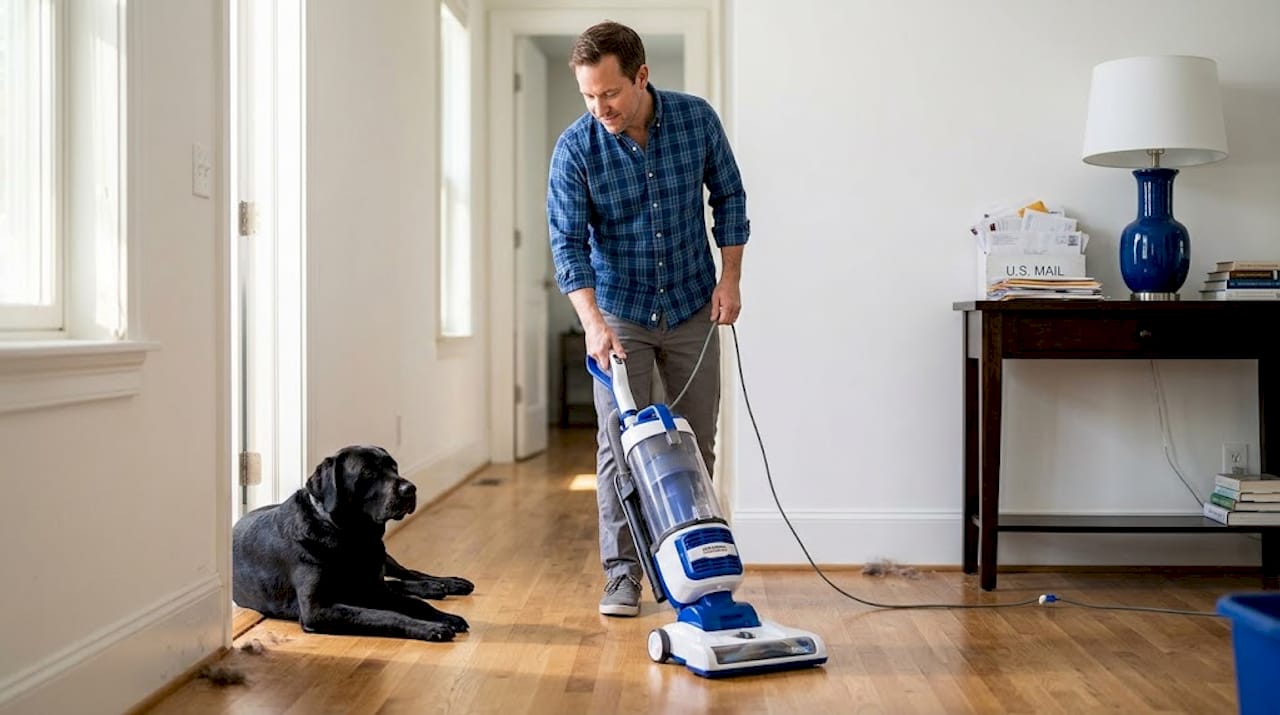
Pet hair and dander aren’t just allergens, they’re odor carriers. Vacuuming three to four times per week in areas where your pet sleeps, eats, or plays removes the physical source of odor before it has a chance to settle deeper into carpet fibers. Use a vacuum with a HEPA filter to capture fine particles rather than blowing them back into the air.
5. Ventilation and HEPA air purifiers
Fresh air exchange is underrated. Open windows when weather allows and run ceiling fans to push stale air out. For more controlled environments, a HEPA air purifier with an activated carbon filter can trap both particulates and odor molecules. Place units near pet resting areas for maximum impact. You can find more practical indoor air quality tips that complement these strategies well.
Pro Tip: Layering two or three of these methods produces results that none of them can achieve alone. Try applying an enzyme cleaner to the source area, running a HEPA purifier nearby, and placing a charcoal bag in the same room for a combined approach that addresses odor at every stage.
“No single odor control method handles every situation. The most consistent results come from layering treatments that target the source, the air, and the surface simultaneously.” This is the foundation of truly effective pet odor elimination for homes.
Effective odor control for your car
Odor issues aren’t confined to your home. Pet adventures in the car call for their own maintenance plan. A single muddy dog ride can embed odor into seat foam that a pine tree air freshener simply won’t touch. Here’s a step-by-step routine built around what actually works.
Step 1: Vacuum everything thoroughly
Start by removing all floor mats and vacuuming them separately. Then vacuum every inch of the interior, including under and between seats where hair and dander collect unnoticed. Use a crevice tool to get into seat seams. This step alone removes a significant portion of the odor source.
Step 2: Apply enzyme cleaner to upholstery and carpets
Spray enzyme cleaner onto fabric seats, carpet areas, and floor mats. Follow the label’s recommended dwell time. Don’t rush this step. For cars, enzyme cleaning upholstery and carpets is one of the most effective ways to break down embedded pet odors at the source.
Step 3: Deodorize the vents
Pet hair and odor particles get pulled into your ventilation system every time you run the AC or heat. After cleaning the interior, run the AC with all windows open for five to ten minutes. This flushes stale air from the ducts and helps distribute any remaining cleaner scent out of the cabin.
Step 4: Place a safe odor absorber inside
A small activated charcoal bag or an open container of baking soda placed under the seat or in a cupholder works well in a car’s compact space. A car is well under 300 square feet, so charcoal bags are genuinely effective here.
Step 5: Dry everything completely
Moisture left in upholstery or mats after cleaning creates the perfect environment for mildew, which is a whole new odor problem. Use clean dry towels to absorb moisture, then leave windows cracked (in a safe location) or use a portable fan to speed drying. You can find additional odor removal tips that apply equally well to vehicles and small enclosed spaces.
| Cleaning step | Recommended frequency | Targeted odor type |
|---|---|---|
| Full vacuum (seats, mats, under seats) | After every pet ride | Dander, hair, general pet smell |
| Enzyme cleaner on upholstery and carpet | Monthly or after accidents | Urine, feces, vomit |
| Vent deodorizing (AC flush) | Monthly | General trapped odors |
| Odor absorber placement | Ongoing, replace every 6 weeks | Ambient pet odor |
| Full dry-out after wet cleaning | Every time you clean | Mildew prevention |
Comparison: Pet-friendly odor strategies head-to-head
Having covered home and car solutions, let’s see how these approaches stack up so you can pick the right mix for your situation.
| Method | Effectiveness | Cost | Pet safety | Maintenance needed |
|---|---|---|---|---|
| Enzyme cleaners | High (90%+ on urine) | Moderate | High (when used correctly) | Reapply as needed |
| Activated charcoal bags | Moderate (small spaces only) | Low | High | Replace every 6 weeks |
| Vacuuming | Preventive (removes source) | Low (equipment cost) | High | 3 to 4x per week |
| HEPA air purifiers | High (air quality) | High (upfront) | High | Filter replacement |
| Routine fabric laundering | High (soft items) | Low | High | Weekly |
| Professional treatment | Very high (deep penetration) | Higher | Very high | As needed |
A few things stand out from this comparison. Charcoal bags are budget-friendly and truly safe, but their limitation in larger spaces means you can’t rely on them as your primary strategy for open living areas. They shine in cars, crates, and closets. Enzyme cleaners do the heavy lifting for accident-related odors but require patience and correct application. Routine cleaning is non-negotiable. It’s not glamorous, but consistent vacuuming and laundering prevent odors from building up to the point where stronger interventions are needed.
The smartest approach combines methods based on your pet’s behavior and your specific spaces. A dog that sleeps on the couch and rides in the car needs a different routine than an indoor cat with a single litter box location. When DIY methods fall short for deeply embedded issues, a professional odor removal service can address what surface cleaning can’t reach.
Why mixing and matching is the secret to true pet odor control
Here’s the honest take after seeing countless odor situations up close: no single product eliminates pet odors permanently. That’s not a knock on any specific brand. It’s just the reality of living with animals in spaces that were designed for humans.
Most articles focus on finding “the best” product, as if one spray solves everything. That’s the wrong frame. The right frame is building a dynamic routine that evolves with your pet’s life stage and habits. A puppy creates different odor challenges than a senior dog. A cat going through stress may over-mark. A new upholstered piece of furniture holds odor differently than the worn-in couch it replaced.
What works better than chasing a single miracle solution is documenting your routine. Write down what you use, where you place it, and when you replace it. After a month, you’ll spot patterns. You’ll know that the charcoal bag in the hallway needs refreshing before six weeks because your dog’s crate is nearby. You’ll notice that enzyme cleaner performs better in warm temperatures than cold, so in winter you might need longer dwell time.
The other thing most articles skip over is that odor control is seasonal. In summer, open windows and UV exposure naturally suppress indoor odors. In winter, closed houses trap everything, and you need to be more aggressive with your routine. Adjust accordingly.
We’ve seen pet owners get frustrated and give up on a method that would have worked if they’d just adapted their approach. When you get rid of stubborn house smells with a layered, evolving strategy rather than a single-product approach, the results actually stick. That’s the standard worth holding yourself to.
Get help from the pet odor specialists
If today’s DIY and maintenance strategies aren’t enough, consider specialized help. Some pet odors go far deeper than surface cleaning can reach, especially in cases of repeated accidents, older homes with years of buildup, or vehicles with compromised upholstery padding.

Master Odor Removal works with pet owners who need results that go beyond what store-bought products can deliver. Using eco-friendly, green-certified methods that are completely safe for your pets and family, the team tackles the odors that have resisted every other approach. No ozone. No chlorine. Just proven, sustainable treatments that address the source rather than the symptom. Whether it’s a recurring smell in one room or a car that needs a full reset, the odor removal specialists at Master Odor Removal offer same or next-day availability and guaranteed results. Explore your options and book a pet odor elimination service that’s built around your specific situation.
Frequently asked questions
How often should I replace activated charcoal bags for odor removal?
Replace charcoal bags every 6 weeks or sooner if used continuously, since charcoal saturates quickly with constant exposure and stops absorbing new odor molecules once full.
Are enzyme cleaners truly safe for pets?
Most enzyme cleaners are formulated to be pet-safe when used as directed, and enzyme cleaners achieve strong odor reduction without the harsh chemicals found in bleach or ammonia-based products. Always check the label and keep pets off treated areas until fully dry.
What is the best way to remove pet odors from car upholstery?
Vacuum thoroughly first, then apply an enzyme cleaner with full dwell time, and finish by airing out vents and placing a small charcoal absorber under the seat for ongoing maintenance.
Why do odors keep coming back even after cleaning?
Odors return when the source isn’t fully neutralized, often because the cleaner didn’t penetrate deep enough into foam or fibers. Using an enzyme cleaner with proper dwell time and ensuring surfaces dry completely prevents both odor recurrence and new mildew growth.
Recommended
- Pet odor elimination: Eco-friendly solutions for fresher homes – Master Odor Removal
- Eliminate Pet Odors: Eco-Friendly Solutions for a Fresh Home – Master Odor Removal
- Pet odor removal for property managers: eco-friendly solutions – Master Odor Removal
- Pet odor removal tips for hotels: keep rooms fresh – Master Odor Removal
Recent Comments