
TL;DR:
- Persistent vehicle odors require source neutralization for permanent removal, not masking with air fresheners.
- Professional eco-friendly methods use enzyme cleaners, steam cleaning, and activated charcoal for safe, effective results.
- Regular maintenance and proper verification ensure long-lasting freshness and prevent odor recurrence.
That stale tobacco smell or musty pet odor clinging to your vehicle’s interior is more than an inconvenience. It signals to buyers, passengers, and dealership clients that the vehicle has a problem no air freshener can solve. Persistent odors reduce resale value, hurt customer satisfaction scores at luxury dealerships, and make every drive unpleasant. Most quick-fix products simply layer a new scent on top of the old one, leaving the source completely intact. This guide walks you through a professional, eco-friendly, step-by-step workflow to actually eliminate vehicle interior odors at the source and keep them gone.
Table of Contents
- Understanding vehicle interior odors and common pitfalls
- Essential tools and eco-friendly products for odor elimination
- Step-by-step vehicle interior odor removal workflow
- Verification, maintenance, and troubleshooting
- The uncomfortable truth about ‘quick-fix’ odor treatments
- Professional odor removal: The next step to a truly fresh vehicle
- Frequently asked questions
Key Takeaways
| Point | Details |
|---|---|
| Eco-friendly is best | Plant-based and enzyme cleaners are safest and most effective, especially in luxury vehicles. |
| Masking isn’t removal | Air fresheners and ozone only hide odors temporarily and may damage interiors. |
| Follow the workflow | True odor elimination relies on a proven multi-step process, not quick fixes. |
| Verify and maintain | Odor removal success requires thorough verification and regular preventive care. |
Understanding vehicle interior odors and common pitfalls
Before you can fix an odor problem, you need to understand what you’re dealing with. Vehicle interiors are warm, enclosed, and often humid, making them ideal environments for odor molecules to bond with soft surfaces. Tobacco smoke, food residue, pet dander, mildew from wet carpets, and marijuana all behave differently and require different treatment strategies.
Here is what makes vehicle odors especially stubborn:
- Smoke and tobacco penetrate deep into foam padding, headliners, and HVAC systems
- Pet odors from dander and accidents soak into carpet fibers and seat cushioning
- Food residue ferments inside seat creases and under floor mats, creating bacterial odor sources
- Mildew grows inside ventilation ducts and under carpets when moisture is trapped
The biggest mistake vehicle owners and dealerships make is reaching for an air freshener or renting an ozone machine. Masking odors with air fresheners fails long-term, and ozone carries serious risks for both health and interior materials. The EPA has issued clear warnings about ozone exposure in enclosed spaces, and ozone can bleach leather, degrade plastics, and weaken fabric fibers in high-end interiors.
“If you’re using a spray to cover the smell, you’re not removing the odor. You’re buying time until it comes back stronger.” — Alex Sevren, Founder of Master Odor Removal
Chlorine dioxide treatments carry similar risks. They can discolor luxury leather, leave chemical residues on sensitive trim, and create surface damage that costs far more to repair than the original odor problem. Understanding ozone vs chlorine dioxide methods is essential before choosing any treatment strategy.
The only real solution is neutralizing the odor molecule itself, which is exactly what eco-friendly odor neutralization focuses on. When you eliminate the source rather than mask it, the result is permanent and safe for both passengers and premium materials.
Now that you know the scope of the odor problem, let’s look at what you’ll need to get the job done right.
Essential tools and eco-friendly products for odor elimination
Professional odor removal is only as good as the tools and products behind it. Using the wrong cleaner on a luxury interior can cause as much damage as the odor itself. Here is what the pros actually use:
Core equipment:
- HEPA vacuum (captures fine particles and allergens without recirculating them)
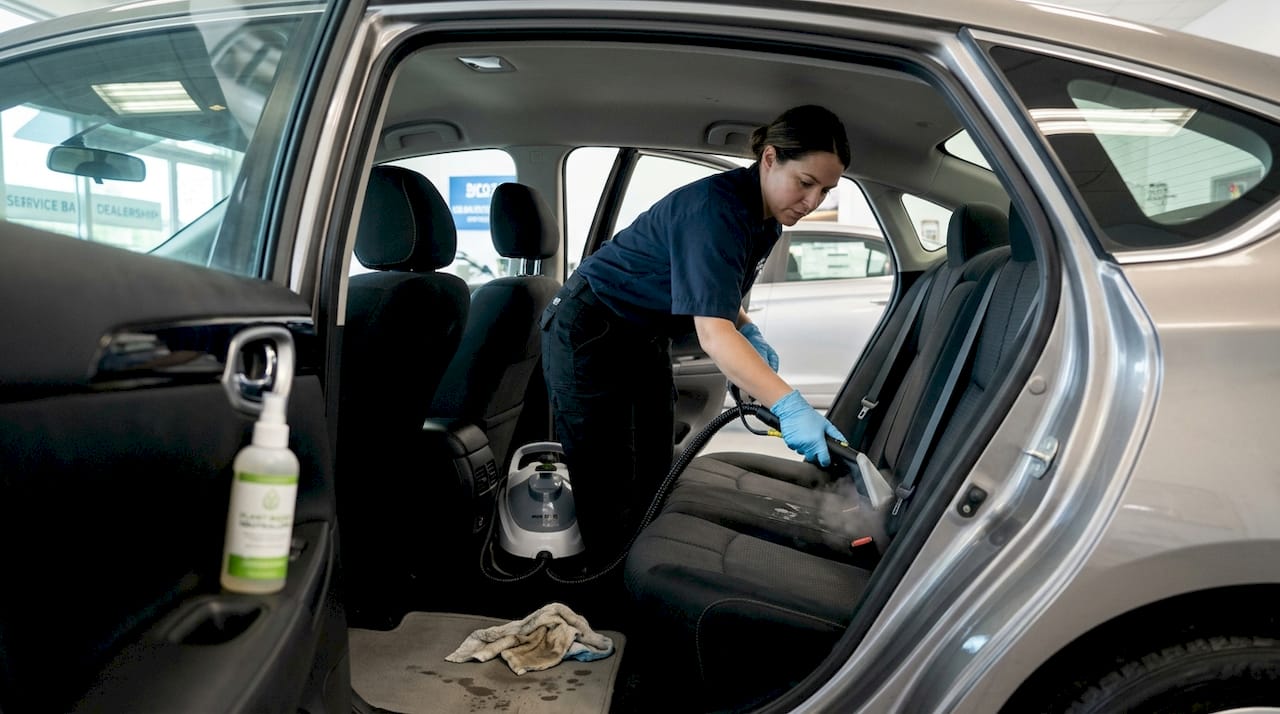
- Steam cleaner (sanitizes surfaces without chemical residue)
- Microfiber towels (gentle on leather and sensitive trim)
- Borescope or flashlight for inspecting hidden areas
- Moisture meter to detect hidden dampness under carpets
Cleaning agents and neutralizers:
- Proprietary enzyme-based liquids formulated for vehicle interiors
- Plant-based odor neutralizers that break down odor molecules at the molecular level
- Activated charcoal sachets for post-treatment absorption
- pH-neutral, non-toxic surface cleaners safe for leather, Alcantara, and wood trim
Eco-friendly methods prioritize enzyme cleaners, steam cleaning without harsh chemicals, plant-based neutralizers, and activated charcoal over ozone or chlorine dioxide. This matters especially in luxury vehicles where a single discolored leather panel can cost thousands to replace.
Here is a quick comparison of the most common treatment approaches:
| Treatment type | Effectiveness | Safety for luxury interiors | Eco-friendly |
|---|---|---|---|
| Enzyme cleaners | High | Excellent | Yes |
| Steam cleaning | High | Excellent | Yes |
| Ozone machines | Moderate | Poor | No |
| Air fresheners | Very low | Good | Mixed |
| Chlorine dioxide | Moderate | Poor | No |
| Activated charcoal | Moderate (maintenance) | Excellent | Yes |
For dealerships managing a fleet of trade-ins or pre-owned luxury inventory, sourcing from a green-certified odor removal provider ensures compliance with eco-standards and protects your brand reputation. For specific odor types like food odor removal methods, the enzyme approach is particularly effective because it targets the bacteria producing the smell.
Pro Tip: Always test any product on an inconspicuous spot first, such as underneath a seat or on the back of a trim panel, before applying it to visible surfaces. Even plant-based cleaners can react unexpectedly with specialty coatings.
With the right tools in hand, you’re ready to tackle the odor problem step by step using an approach trusted by luxury auto professionals.
Step-by-step vehicle interior odor removal workflow
This is the workflow used by professional detailers and dealerships managing high-value inventory. Stick to the sequence because each step builds on the last.
- Remove all debris and loose items. Clear out floor mats, seat covers, and any items in storage compartments. Bag and dispose of any fabric items that cannot be cleaned.
- HEPA vacuum every surface. Vacuum seats, carpets, trunk, headliner, and door panels thoroughly. Pay attention to seat rail gaps and under the front seats where food and debris accumulate.
- Inspect hidden odor sources. Check ventilation ducts, under the carpet padding, and around the spare tire well for mildew or trapped moisture.
- Apply enzyme or plant-based cleaner. Saturate affected areas (without over-wetting) and allow dwell time according to the product’s instructions, typically 10 to 15 minutes.
- Steam clean all fabric and carpet surfaces. Steam lifts residue, kills bacteria, and drives the enzyme cleaner deeper into fibers without soaking the padding beneath.
- Wipe all hard surfaces. Clean the dashboard, door panels, center console, and leather with a pH-neutral, non-toxic cleaner and microfiber towels.
- Neutralize with activated charcoal or proprietary liquid. Place activated charcoal bags throughout the interior or apply a finishing neutralizer spray to kill any remaining odor molecules.
- Dry the interior completely. Use fans or a low-heat drying system. Never close a vehicle before it is fully dry, as trapped moisture leads to mildew.
- Optional: apply a subtle, safe scent. A light, non-synthetic finishing scent can enhance freshness without masking any remaining odor.
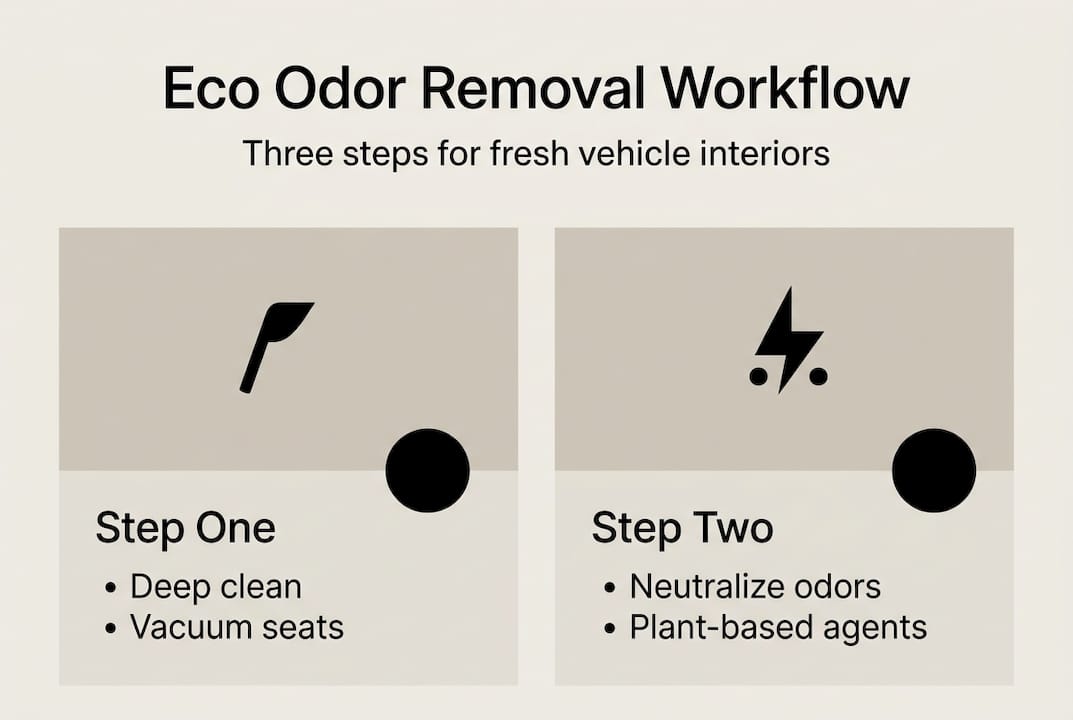
Dealerships use a 3-step process: clean, neutralize with safe solutions, and apply a subtle scent. Proprietary enzyme and liquid solutions are favored for luxury vehicles because they are both effective and surface-safe. Following a dealership eco-friendly workflow ensures that the vehicle is ready for the showroom floor quickly and safely.
Here is a quick reference for treatment timing by odor type:
| Odor type | Recommended treatment | Approximate dwell time |
|---|---|---|
| Tobacco/smoke | Enzyme cleaner + steam | 15-20 minutes |
| Pet odor | Enzyme cleaner + HEPA vacuum | 10-15 minutes |
| Mildew | Steam + charcoal | 20-30 minutes |
| Food residue | Enzyme cleaner + steam | 10-15 minutes |
For cases requiring speed without sacrificing quality, reviewing fast odor removal tips can help you prioritize which steps to accelerate safely. The full professional odor removal workflow is designed to be thorough and repeatable.
Pro Tip: Focus special attention on ventilation ducts. Spray a small amount of plant-based neutralizer into each vent with the HVAC fan running on recirculate for 5 minutes. Odors locked inside the duct system are the number one reason smells return after cleaning.
Once you’ve worked through the workflow, it’s critical to confirm that odors are truly gone. Here’s how.
Verification, maintenance, and troubleshooting
Completing the cleaning process does not automatically mean the job is done. Verifying success and setting up a maintenance routine is what separates a lasting result from a temporary fix.
How to verify the odor is gone:
- Close the vehicle completely for 30 to 60 minutes with the windows up, then open the door and take your first impression. Your nose adapts quickly, so the first breath matters most.
- Check visually for staining or discoloration that might indicate an untreated source area.
- Run the HVAC on full recirculate and smell at each vent individually.
- Check under the carpet edges and in the trunk for residual dampness or mildew.
“Luxury interiors require safe products and continual odor prevention to protect surfaces.” — Alex Sevren, Founder of Master Odor Removal
Ongoing maintenance is where most vehicle owners fall short. A single deep clean will not prevent odors from returning if the habits that caused them continue. For reliable ongoing neutralization tips, keep activated charcoal bags in the interior between deep cleanings and wipe down surfaces weekly with a pH-neutral cleaner.
Troubleshooting persistent odors:
- If smoke odor returns after 1 to 2 weeks, the HVAC system likely still contains contaminated air filter media. Replace the cabin air filter and treat the duct system again.
- If mildew returns, there is an active moisture source. Check door seals, sunroof drains, and the windshield base for water intrusion.
- If pet odor persists, the foam padding beneath the carpet may need to be removed and treated separately.
For stubborn cases that resist repeated attempts, consulting a licensed professional is the right call. Reviewing odor prevention strategies can also give you a longer-term framework for protecting the interior after the job is complete.
Even with an excellent workflow, some common misconceptions persist in the industry. Let’s dig into what most get wrong and what actually works from an insider’s perspective.
The uncomfortable truth about ‘quick-fix’ odor treatments
Here’s something the air freshener industry does not want you to think about: covering a smell is not the same as removing it. Not even close. We’ve worked on vehicles where the owner had used six different sprays, two ozone treatments, and a professional shampoo, and the odor came back within days every single time.
The reason is simple. Products that mask smells do not break down the odor molecule. They compete with it temporarily. Masking with fresheners fails long-term, and luxury vehicle clients demand methods that actually protect the interior rather than complicate it with chemical layering.
Real odor removal is a process, not a product. It requires identifying the source, treating it at the molecular level, and then confirming the result. Shortcuts skip the diagnosis phase entirely, which is why they fail. Rushing through a treatment on a super car odor removal job, for example, risks damaging materials that cost more to replace than the service itself.
Patience and process are what protect both the vehicle and the client relationship.
Professional odor removal: The next step to a truly fresh vehicle
When the odor is severe, the materials are too delicate for DIY attempts, or your dealership inventory simply cannot afford a misstep, professional help is the smartest move.

Master Odor Removal’s odor removal specialists bring licensed expertise, proprietary eco-friendly solutions, and same or next-day availability to vehicle owners and luxury dealerships across the region. Every service is backed by a satisfaction guarantee and uses only green odor elimination methods that are safe for passengers, pets, and premium surfaces. Whether you manage a single vehicle or a full lot of pre-owned inventory, our luxury dealership odor solutions are built around your timeline and standards. Contact us today for a fresh, chemical-free result that lasts.
Frequently asked questions
Why shouldn’t I use ozone generators to remove vehicle odors?
Ozone can damage materials and pose real health risks, particularly in the enclosed space of a luxury vehicle. Enzyme-based and plant-based methods deliver safer, equally effective results without the downside.
What is the most effective eco-friendly product for persistent car odors?
Enzyme cleaners and plant-based neutralizers are the most reliable options because they break down odor molecules rather than covering them, making them ideal for sensitive luxury surfaces.
How do dealerships handle vehicle odor removal differently?
Dealerships follow a structured 3-step process: deep clean, neutralize with safe enzyme or liquid solutions, and finish with a subtle scent. This workflow minimizes downtime while maximizing results for showroom-ready inventory.
How long does a professional eco-friendly vehicle odor removal process take?
Most professional treatments take between 2 and 4 hours from start to finish, including full drying time. Severe odors or larger vehicles may require slightly longer, depending on the method and source location.
Can regular cleaning prevent odors from returning?
Yes. Continual odor prevention through consistent interior maintenance, cabin air filter replacement, and the use of activated charcoal sachets significantly reduces the chance of odors returning between professional treatments.
Recent Comments