
TL;DR:
- True neutralization chemically breaks down smoke odor molecules at their source, unlike masking.
- High-end materials trap smoke compounds deeply, requiring professional, science-backed treatments.
- A structured process with assessment, cleaning, professional treatment, and verification ensures lasting results in luxury properties.
A faint trace of smoke in a luxury penthouse or boutique hotel suite can drop perceived property value by thousands of dollars and trigger guest complaints that damage your reputation for months. Masking that smell with candles or air fresheners is not a solution; it is a delay. True neutralization means dismantling odor molecules at their source, making it impossible for the smell to return. In this guide, you will find science-backed strategies, clear timelines, and actionable steps drawn from real experience working in high-value residential and commercial environments. If you manage a property where standards are non-negotiable, this is where the conversation starts.
Table of Contents
- What does neutralizing smoke odors really mean?
- How smoke odors persist in luxury properties
- Proven methods for neutralizing smoke odors
- Implementing a smoke odor neutralization plan for luxury spaces
- Luxury odor control: What most guides miss
- Professional solutions for guaranteed smoke odor neutralization
- Frequently asked questions
Key Takeaways
| Point | Details |
|---|---|
| True neutralization required | Only molecular-level treatments fully eliminate smoke odors in luxury properties. |
| Surface and air strategy | Success demands treatment of both surfaces and air systems for lasting results. |
| Professional intervention | Specialists achieve rapid, proven results using advanced methods and testing. |
| Ongoing prevention | Routine testing and sealing keep odors from returning in high-value environments. |
What does neutralizing smoke odors really mean?
Many property managers believe they have solved a smoke problem when the smell is no longer immediately obvious. A week later, complaints come back. That is because there is a fundamental difference between masking and neutralizing, and in luxury spaces, only one of them is acceptable.
Neutralizing smoke odors means chemically breaking down the volatile organic compounds (VOCs) and particulate residues that carry the smell. Masking, by contrast, layers a more pleasant scent on top of the problem. When the masking agent fades, the original odor returns, often stronger than before because heat and humidity have continued to release trapped compounds from fabrics, walls, and wood.
True odor neutralization in a luxury property is not a cleaning task. It is a scientific process that requires identifying every source, treating it at a molecular level, and verifying the result with measurable air quality data.
High-end properties carry a particular risk. Guests and tenants in luxury environments have heightened expectations. A single negative impression from an odor can turn into a public review, a canceled lease, or a lost referral. The stakes are real and financial.
Here is what separates genuine neutralization from surface-level fixes:
- Source identification: Every porous material that absorbed smoke must be located before treatment begins.
- Molecular breakdown: Treatment agents must chemically react with odor compounds, not just overpower them.
- Verification: Air quality testing after treatment confirms actual VOC reduction.
- Residue removal: Tobacco smoke residue removal goes beyond visible staining, targeting invisible chemical films on walls and finishes.
Thorough cleaning reduces airborne VOCs by over 50%, but that still leaves nearly half the problem untreated without a professional follow-up. This is precisely why a layered approach, guided by a solid smoke odor control guide, produces the only results worth guaranteeing in a luxury setting.
With the importance of true neutralization in mind, let’s break down how smoke odors persist and what makes them so difficult to remove completely.
How smoke odors persist in luxury properties
Smoke is not a single substance. It is a complex mixture of gases, fine particles, and VOCs that travel through air and settle into every available surface. The lighter particles float and get pulled into HVAC systems. The heavier compounds bond to upholstery fibers, drapery, and even the microscopic pores in paint and plaster.
In a standard rental unit, this is a significant problem. In a luxury property, it is compounded by the very features that make the space premium: silk drapes, hand-finished leather sofas, custom millwork, and high-pile wool carpets are all exceptional at trapping and holding odor molecules.
Luxury finishes are not just aesthetically sensitive. They are chemically reactive, which means they absorb smoke compounds faster and release them more slowly than standard commercial materials.
Here are the most commonly overlooked sources of persistent smoke odor in high-end spaces:
- HVAC ductwork: Smoke particles are recirculated every time the system runs, spreading the odor to every room.
- Fine drapery and window treatments: Floor-to-ceiling fabric panels absorb and hold VOCs long after a smoking incident.
- High-end carpets and rugs: Dense fiber construction traps particulates deep below the surface where vacuuming cannot reach.
- Custom woodwork and cabinetry: Unfinished or lightly lacquered wood absorbs smoke compounds into the grain.
- Cigarette tar in paint: Years of exposure leave yellow-brown films that continue off-gassing without specialized treatment.
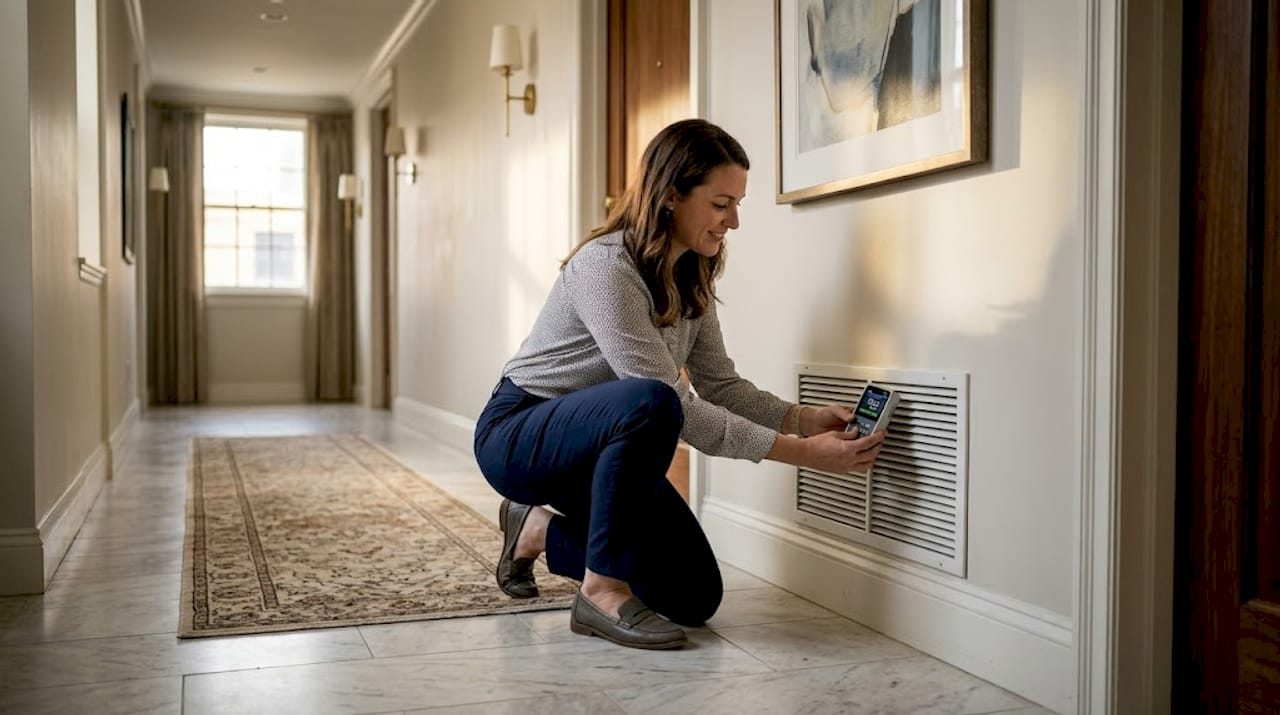
Pro Tip: Always test air quality in return air vents before and after any treatment. If the ductwork is not addressed, the HVAC system will recontaminate a freshly treated room within hours.
Professional treatments eliminate odors in 24 to 72 hours with ozone or 3 to 5 days with hydroxyl methods, but those timelines assume all odor sources have been identified first. Missing even one source, like a smoke-saturated area rug or a contaminated HVAC filter, resets the clock. For HVAC and air quality tips specific to smoke remediation, duct cleaning and filter replacement should happen before any neutralization treatment begins, not after.
Now that you see how deeply smoke can penetrate luxury interiors, it is time to compare top elimination solutions and what to expect from each.
Proven methods for neutralizing smoke odors
Not all treatments perform equally, and choosing the wrong one for a luxury environment can cause secondary damage to sensitive materials. Here is a clear comparison of the most widely used methods:
| Method | Effectiveness | Timeline | Material Safety | Notes |
|---|---|---|---|---|
| HEPA air filtration | Moderate | Ongoing | Excellent | Best as a support tool |
| Deep cleaning and sealants | High | 1 to 3 days | Good | Requires professional execution |
| Hydroxyl treatment | Very High | 3 to 5 days | Excellent | Safe for occupied spaces |
| Ozone treatment | Very High | 24 to 72 hours | Poor | Requires space evacuation |
| Thermal fogging | High | 1 to 2 days | Moderate | Reaches hidden spaces |
HEPA filtration reduces particulates by 65%, making it a powerful support layer, but it cannot address VOCs bonded to surfaces. For a luxury property, the most effective approach is a sequential combination, not a single method.
Here is the recommended order of treatment steps:
- Source identification and removal: Discard or isolate heavily saturated items.
- Surface deep cleaning: Treat all hard and soft surfaces with appropriate agents.
- Professional chemical or hydroxyl treatment: Neutralize residual airborne and surface-bound VOCs.
- HEPA air scrubbing: Remove loosened particulates from the air.
- Post-treatment air quality testing: Confirm VOC levels meet your target threshold.
Pro Tip: Review real-world odor elimination case studies to set accurate expectations for your property type and size before committing to a treatment plan.
For luxury interiors, we strongly recommend a removal workflow for luxury interiors that prioritizes non-toxic agents and preserves premium materials. Some smoke odor treatments that work fine in standard environments can bleach silk, discolor leather, or damage custom finishes if applied without proper expertise.
With a sense of the available methods, let’s now look at how to implement a plan specifically for your luxury property.
Implementing a smoke odor neutralization plan for luxury spaces
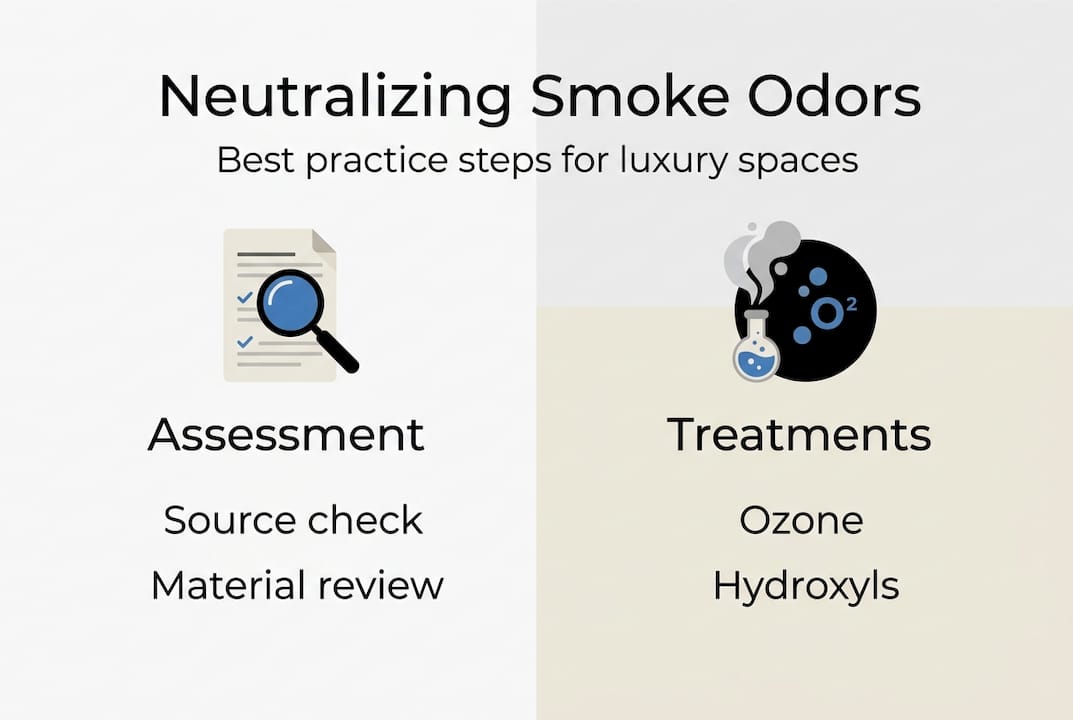
A structured plan prevents missed steps and protects your investment. Before any treatment begins, a full assessment of the property is essential. This means cataloging every porous surface, fabric, HVAC component, and structural element that may have been exposed to smoke.
Here is the sequential process that consistently delivers results in high-value properties:
- Assessment: Walk every room and document affected surfaces, materials, and the extent of exposure.
- Source removal: Remove or isolate items that cannot be treated in place, such as area rugs or drapery panels.
- Deep cleaning: Apply appropriate cleaning agents to all hard surfaces, upholstery, and accessible ductwork.
- Professional treatment: Deploy hydroxyl or thermal fogging based on material sensitivity and space configuration.
- Air scrubbing: Run HEPA air scrubbers for the duration recommended by your treatment provider.
- Surface sealing: Sealing surfaces prevents reabsorption of smoke odors and is a critical final step that many property managers skip.
- Verification: Conduct post-treatment air quality testing to document that VOC levels have returned to baseline.
| Stage | Purpose | Typical timeframe |
|---|---|---|
| Assessment | Identify all affected materials | 2 to 4 hours |
| Source removal and cleaning | Eliminate accessible odor reservoirs | 1 to 2 days |
| Professional treatment | Neutralize residual compounds | 1 to 5 days |
| Air scrubbing | Remove airborne particulates | Concurrent with treatment |
| Sealing | Prevent future off-gassing | Same day as cleaning |
| Verification | Confirm odor elimination | After treatment ends |
For maintenance, schedule quarterly air quality checks and use eco-friendly smoke smell removal products between professional visits. Discretion matters as much as results in luxury environments. Your odor removal tips resource library can help you stay proactive rather than reactive.
Pro Tip: Always specify non-toxic, fragrance-free treatment agents in your service contract. Luxury guests often have sensitivities, and the goal is a truly neutral interior, not one that smells like chemicals.
Having established a best-practice framework, it is vital to approach smoke odor neutralization with both expertise and reasonable expectations.
Luxury odor control: What most guides miss
Most odor removal guides are written for standard residential spaces. They assume standard carpets, standard paint, and standard expectations. Luxury property management is a different discipline entirely.
What we consistently see is that owners and managers underestimate what neutral actually means to a high-end guest or tenant. It does not mean the absence of a strong smell. It means zero detectable odor, confirmed by both human assessment and measurable data. Anything short of that is a liability.
The most common mistake we see is skipping post-treatment verification. A space can smell clean to the team that just worked in it for three hours and still register elevated VOC levels on a monitor. That is the difference between a subjective result and a guaranteed one.
The second mistake is treating luxury materials with generic solutions. Products safe for commercial carpet can strip protective coatings from hand-stitched leather or cloud the finish on lacquered cabinetry. Every material in a premium interior needs a tailored approach.
Focusing on smoke odor removal in homes at the luxury level means prioritizing discretion, scientific verification, and material preservation as non-negotiable standards, not optional upgrades.
Professional solutions for guaranteed smoke odor neutralization
When the standard of your property demands absolute results, professional intervention is not optional. It is the only path to a guaranteed outcome.

Our odor removal specialists work exclusively with high-value environments, bringing the same precision to a luxury penthouse as to a superyacht interior. We use eco-certified, non-toxic treatment methods that protect your materials and your guests. Same-day and next-day availability means your property returns to revenue-generating condition as fast as possible. Explore why luxury interior odor control done at this level is fundamentally different from standard cleaning services, and see how we can make your space permanently fresh.
Frequently asked questions
What is the main difference between masking and neutralizing smoke odors?
Masking covers odors temporarily, while neutralizing breaks down the actual odor molecules so the smell is completely and permanently eliminated. Only neutralization offers a lasting result in luxury environments.
How long does professional smoke odor neutralization take in luxury properties?
Ozone treatments finish in 24 to 72 hours while hydroxyl-based treatments typically require 3 to 5 days, with total project time varying based on property size and the number of affected materials.
What are the necessary steps for smoke odor neutralization in high-end properties?
Effective neutralization follows this sequence: source removal, deep cleaning, professional treatment, HEPA air scrubbing, and sealing surfaces to prevent odors from re-emerging over time.
What is the typical cost for professional smoke odor removal in luxury spaces?
Professional removal costs range from $1,500 to $3,500 for a 1,500 sq ft property, with luxury spaces often running higher due to material-specific treatment requirements and the need for verified post-treatment testing.
Recent Comments