
TL;DR:
- Mildew odors indicate active fungal growth that requires source treatment, not masking.
- Eco-friendly methods like vinegar, baking soda, enzyme cleaners, and hydrogen peroxide effectively neutralize mildew at the source.
- Proper moisture control and professional assessment are essential to prevent recurrence and protect luxury interiors.
That plug-in air freshener is not solving your mildew problem. It is covering it. For homeowners and property managers responsible for luxury residences or upscale rentals, that distinction matters enormously. Mildew odors signal an active biological process happening somewhere inside your property, and no amount of scented spray will stop it. The good news is that eco-friendly treatments like white vinegar, baking soda, hydrogen peroxide, and enzyme cleaners genuinely neutralize these odors at the source. This guide walks you through exactly how to find, confirm, and permanently eliminate mildew odors without compromising your interior finishes, your air quality, or your commitment to green living.
Table of Contents
- Understanding mildew: What is mildew and why does it smell?
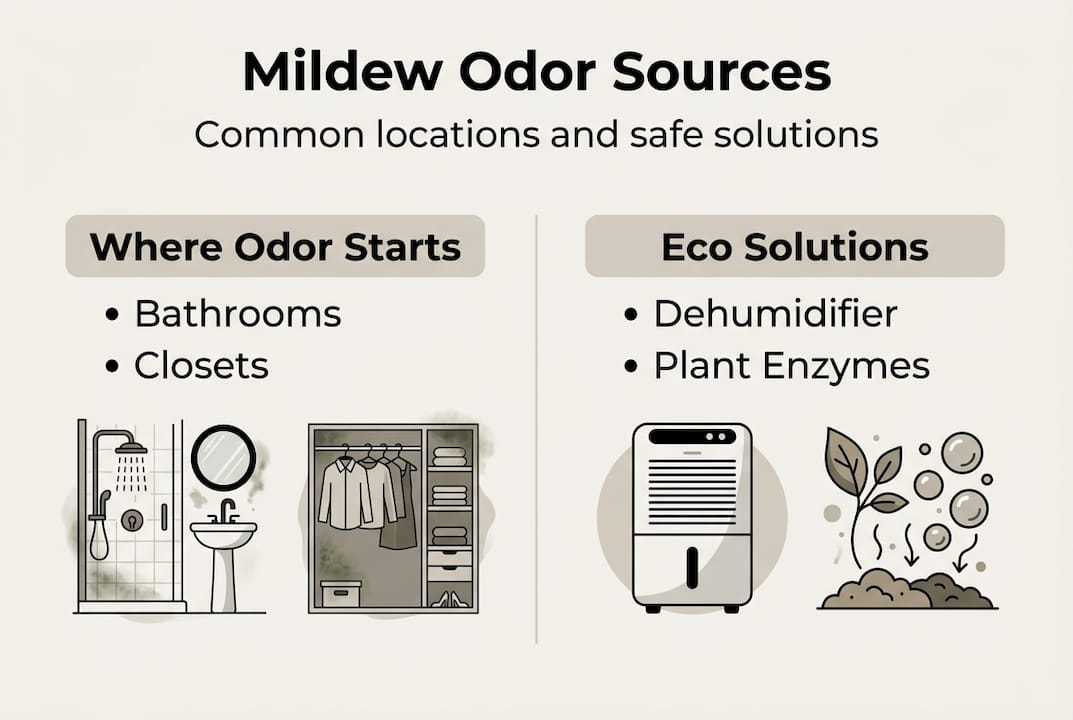
- Common sources of mildew odor in luxury homes and rentals
- Detecting and confirming mildew sources: Practical steps
- Eco-friendly and effective solutions for eliminating mildew odors
- Why true odor solutions go beyond surface cleaning
- Expert mildew odor elimination for luxury properties
- Frequently asked questions
Key Takeaways
| Point | Details |
|---|---|
| Identify true odor sources | Pinpointing the root cause of mildew odor is essential for effective removal. |
| Eco-friendly solutions work | Plant-based and non-toxic cleaners can neutralize odors and protect luxury interiors. |
| Humidity control prevents return | Keeping indoor humidity below 50 percent stops mildew from coming back. |
| Professional evaluation adds value | Expert assessment ensures deep-clean odor elimination for upscale properties. |
Understanding mildew: What is mildew and why does it smell?
Mildew is a surface-level fungal growth. Unlike mold, which tends to penetrate deep into materials and can cause serious structural damage, mildew typically stays on the surface of organic materials like fabric, paper, leather, or drywall. It appears as a flat, powdery patch, usually white or gray, and it responds relatively well to surface cleaning when caught early.
But here is the part most people miss. Even surface-level mildew produces a powerful, persistent odor. That smell comes from volatile organic compounds released as mildew grows and metabolizes. These compounds, often called MVOCs (microbial volatile organic compounds), are detectable by the human nose even at very low concentrations. This is why a small patch of mildew behind a bathroom cabinet can make an entire room smell stale and musty.
Understanding the origins of musty odors helps clarify why the smell often lingers even after visible mildew is cleaned. The compounds can absorb into surrounding materials, including painted walls, soft furnishings, and HVAC ductwork, and continue off-gassing long after the original growth is gone.
Here is what makes mildew particularly tricky in luxury environments:
- Natural fiber textiles like wool rugs, linen drapes, and silk upholstery absorb and hold MVOCs exceptionally well
- Solid wood cabinetry and paneling can trap moisture and sustain mildew growth in ways that painted surfaces do not
- Plaster and lime-based wall finishes, common in high-end renovations, are highly porous and can harbor mildew deep within their surface layers
- Leather goods and furniture are organic materials that mildew finds very hospitable
Mildew and mold are often used interchangeably, but they are not the same thing. Mold typically requires professional remediation, while early-stage mildew can often be addressed with targeted eco-friendly treatments. Knowing which one you are dealing with changes your entire approach.
The bottom line is that mildew odor is not just unpleasant. It is a signal. Treat it as information, not an inconvenience to mask.
Common sources of mildew odor in luxury homes and rentals
With a clear understanding of what mildew is, let’s examine where these odors most often originate in upscale living spaces. Luxury properties present a unique challenge because premium materials, complex architecture, and high-end finishes can actually hide mildew longer than standard construction would.
High humidity, poor ventilation, and organic materials are the three primary drivers of mildew odor development. In upscale properties, these conditions often appear in unexpected places.
Common mildew hotspots in luxury homes include:
- Master bathrooms with steam showers where ventilation is often inadequate despite high-end fixtures
- Walk-in closets packed with natural fiber clothing, shoes, and leather accessories
- Wine cellars and tasting rooms where intentional humidity control can go wrong
- HVAC systems and air handlers that circulate musty air throughout the entire property
- Basement home theaters where soundproofing materials trap moisture
- Outdoor kitchens and covered patios that connect to interior spaces
| Location | Likely cause | Quick detection tip |
|---|---|---|
| Master bathroom | Inadequate exhaust ventilation | Check grout lines and ceiling corners |
| Walk-in closet | Moisture from exterior wall | Smell shoes and leather goods first |
| HVAC system | Condensation in ductwork | Odor intensifies when system runs |
| Wine cellar | Humidity control failure | Check walls near cooling unit |
| Guest suite | Infrequent use, stale air | Open closets and smell upholstery |
| Basement theater | Soundproofing traps moisture | Check behind acoustic panels |
For guidance on eco-friendly mildew removal tailored to these specific environments, solutions exist that protect your premium finishes while eliminating odors at the source.
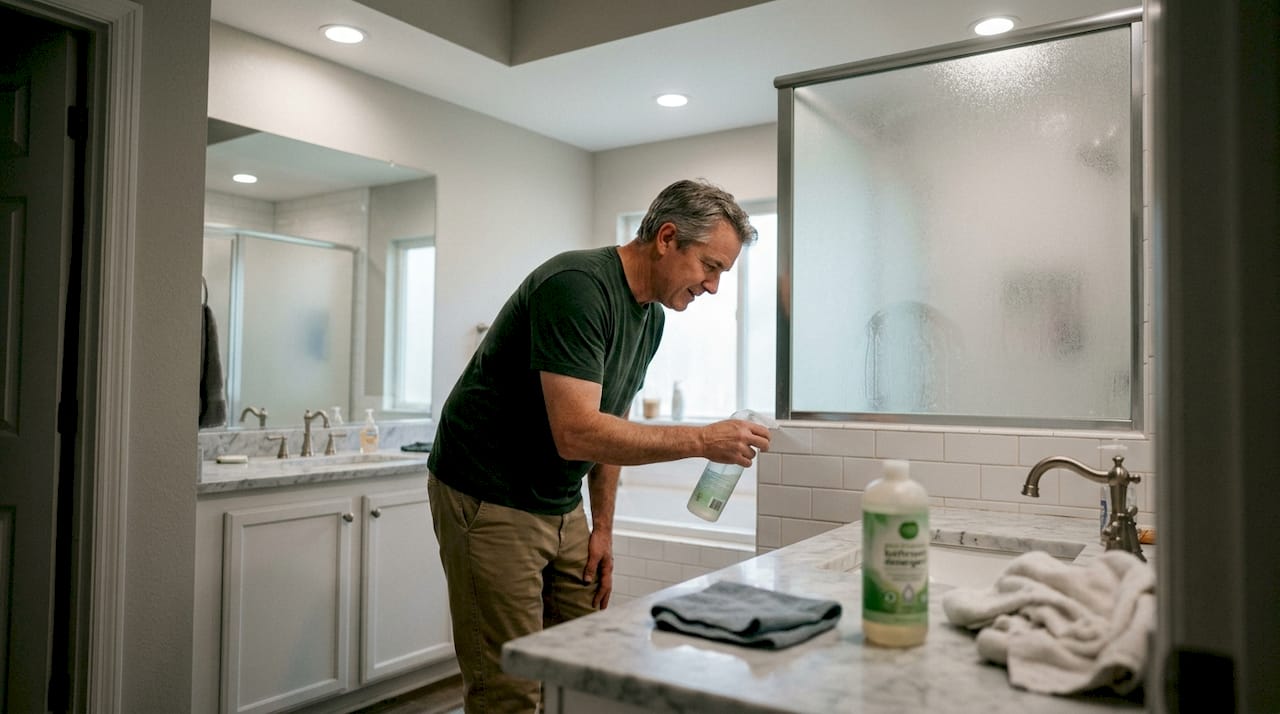
Pro Tip: Do not overlook rarely used guest suites or wine cellars. Stagnant air and infrequent foot traffic create ideal mildew conditions, and these areas often go uninspected for months. A quick smell check every 30 days can catch problems before they become expensive.
Paying attention to indoor air quality tips specific to luxury environments can also help you build a proactive monitoring routine rather than reacting to odors after they develop.
Detecting and confirming mildew sources: Practical steps
Once you know the typical hotspots for mildew, the next step is systematically identifying active or hidden odor sources. A structured approach saves time and prevents the frustration of treating the wrong area.
Follow these steps to locate mildew sources accurately:
- Start with the sniff test. Move room to room with fresh air in your lungs. The strongest concentration of musty odor points toward the source. Trust your nose before anything else.
- Look for visual clues. Check grout lines, ceiling corners, window frames, and the back panels of cabinets. Mildew often appears as a powdery gray or white film.
- Check moisture levels. A handheld moisture meter (available at hardware stores for under $30) can detect elevated moisture in walls, floors, and ceilings that your eyes cannot see.
- Inspect HVAC components. Remove and smell air filters. Check drain pans under air handlers for standing water.
- Test with a dehumidifier. Run one in a suspected area for 24 to 48 hours. If the odor reduces noticeably, you have confirmed a moisture-driven mildew problem in that zone.
Pro Tip: A dehumidifier is one of the best diagnostic tools you own. If running it in a specific room reduces the odor significantly within two days, that room is your primary source. Controlling humidity to 30 to 50% RH is both a prevention strategy and a confirmation method.
| Detection method | Speed | Accuracy | Cost | Best for |
|---|---|---|---|---|
| Sniff test | Immediate | Moderate | Free | Initial screening |
| Visual inspection | 30 minutes | Moderate | Free | Surface mildew |
| Moisture meter | 1 to 2 hours | High | Low | Hidden moisture |
| Professional inspection | Same day | Very high | Moderate | Stubborn or widespread odor |
| Air quality testing | 2 to 5 days | Very high | High | Confirming MVOC levels |
For properties between tenants or before a sale, move-in and move-out odor solutions can include professional inspection as part of a complete remediation package, which saves time and protects property value.
Eco-friendly and effective solutions for eliminating mildew odors
After identifying and confirming the sources, you are ready to apply the most effective removal methods, especially those safe for luxury interiors. The right eco-friendly approach does not just mask the smell. It neutralizes the compounds causing it.
Here are the most effective green treatments and how to use them:
- White vinegar: Apply undiluted to affected surfaces. Let it sit for at least one hour before wiping. The acetic acid disrupts mildew at the cellular level without damaging most finishes.
- Baking soda: Mix with water to form a paste for grout and tile. For fabric and upholstery, sprinkle dry, let sit overnight, then vacuum. It absorbs odor compounds rather than just covering them.
- Enzyme cleaners: These use biological catalysts to break down the organic matter that mildew feeds on. They are especially effective on natural fiber textiles, leather, and wood surfaces.
- Hydrogen peroxide (3%): Effective on porous surfaces like grout and unfinished wood. Apply, let sit 10 minutes, then wipe. It kills mildew without leaving toxic residue.
EPA Safer Choice products, which are plant-based and non-toxic, outperform bleach for mildew odor removal in most interior settings while protecting your materials and your indoor air quality. Speaking of bleach, never mix it with other cleaners. The combination can release toxic fumes that are dangerous in enclosed spaces.
Over 90% of homes benefit measurably from reducing indoor humidity as part of any mildew odor treatment plan. Without addressing the moisture source, even the best eco-friendly treatments will only provide temporary relief.
Pro Tip: Avoid harsh chemical treatments in luxury interiors. Beyond the health concerns, strong oxidizers and chlorine-based products can bleach natural stone, damage leather, and degrade high-end textile dyes. Eco-friendly solutions protect your investment while delivering lasting results.
For persistent or widespread problems, working with luxury odor removal specialists ensures the right treatment is matched to your specific materials and environment without guesswork.
Why true odor solutions go beyond surface cleaning
After years of working in premium residential and hospitality environments, we have seen the same pattern repeat. A property manager notices a musty smell, buys an expensive air purifier or scented diffuser, and considers the problem handled. Six weeks later, the odor is back, often stronger.
The luxury market has a particular blind spot here. Because high-end properties look immaculate, there is a tendency to assume that visible cleanliness equals odor-free. It does not. Mildew odors live inside materials, inside ductwork, inside wall cavities. Surface cleaning addresses the symptom. Deeper mildew odor elimination requires treating the source, the surrounding materials, and the conditions that allowed mildew to grow in the first place.
Sustainable, eco-friendly treatments are not just better for the environment. They are better for your property. They do not degrade premium finishes, they do not leave chemical residue, and they do not create new air quality problems while solving old ones. That is the standard luxury properties deserve.
Expert mildew odor elimination for luxury properties
If you are seeking reliable, lasting solutions for mildew odors in premium spaces, here is how Master Odor Removal can help.

Master Odor Removal specializes in odor removal done right for high-end residential and rental properties. Our licensed professionals use green-certified, eco-friendly methods that are safe for luxury finishes, natural textiles, and sensitive interiors. We never use ozone or chlorine treatments. Every service plan is customized to your specific environment, with same or next-day availability. Whether you are preparing a property for a new tenant, addressing a persistent odor before a sale, or protecting the long-term value of your home, our green odor elimination approach delivers permanent results. Contact us today for a free consultation with our luxury interior odor removal specialists.
Frequently asked questions
What is the main cause of mildew odor in homes?
High humidity, poor ventilation, and organic materials create the conditions mildew needs to grow and produce its characteristic musty smell. Addressing moisture is always the first priority.
Are eco-friendly mildew odor treatments effective?
Yes. Vinegar, baking soda, enzyme cleaners, and hydrogen peroxide all neutralize mildew odors effectively when applied correctly and paired with moisture control.
How can I prevent mildew odors from returning?
Keep indoor humidity between 30 and 50%, ensure consistent ventilation in bathrooms and closets, and fix any leaks or condensation issues promptly.
When should I call a professional for mildew odor removal?
Call a professional when odors persist after two rounds of treatment, or when you suspect hidden or widespread mildew inside walls, HVAC systems, or structural materials.
Recent Comments