
TL;DR:
- Professional odor removal neutralizes odors at the molecular level, ensuring permanent results.
- Expert methods follow industry standards and avoid damaging chemicals like ozone or chlorine.
- Eco-friendly, residue-free treatments protect luxury assets, preserve value, and enhance client confidence.
Luxury interiors demand far more than a can of air freshener or a weekend DIY project. Whether you manage a fleet of high-end vehicles, list premium real estate, own a superyacht, or operate an upscale hospitality venue, persistent odors can quietly erode asset value and client confidence. Many owners assume a thorough cleaning is enough, but the reality is that odor molecules bind to porous surfaces, fabrics, and HVAC systems in ways that surface treatments simply cannot reach. Professional odor removal is a discipline built on applied science, industry standards, and eco-friendly technology, and understanding what separates true specialists from generic cleaners is the first step toward protecting your most valuable assets.
Table of Contents
- What is professional odor removal?
- The science and standards behind premium odor removal
- Special considerations for luxury assets and interiors
- Eco-friendly and health-conscious approaches
- The overlooked value of specialty odor removal for high-end assets
- Luxury eco-friendly odor removal: Your next step
- Frequently asked questions
Key Takeaways
| Point | Details |
|---|---|
| Science-driven protocols | True professionals follow industry standards to eliminate odors safely and thoroughly. |
| Asset value protection | Luxury-oriented odor removal preserves property, automobile, and yacht value without harmful side effects. |
| Eco-friendly leadership | Top services use green, residue-free treatments, important for client health and sensitive materials. |
| Specialist advantage | Certified odor removal experts outperform generic cleaning services for high-end assets. |
What is professional odor removal?
Professional odor removal is not cleaning with better-smelling products. It is a structured, science-based process designed to permanently neutralize odor at its molecular source rather than masking it temporarily. IICRC-standard odor removal follows a four-step protocol that distinguishes real remediation from surface-level freshening.
The four core steps are:
- Source removal: Physically eliminating the contaminated material causing the odor, whether it is a stained headliner, saturated carpet padding, or a mold-affected wall cavity
- Cleaning: Deep cleaning all affected surfaces using appropriate agents that break down odor-causing compounds without damaging premium materials
- Penetration and deodorization: Applying specialized treatments that reach porous surfaces, seams, and air systems where odor molecules hide
- Sealing: When necessary, applying a sealant to lock out residual odor compounds and prevent reactivation from humidity or heat
Professional odor removal is a systematic process following IICRC standards, which means every step is documented, repeatable, and verifiable. That consistency matters enormously when you are protecting a $200,000 vehicle or a multi-million-dollar property listing.
What separates elite providers from generic cleaners is not just the protocol but the technology behind it. Proprietary molecular treatments, enzyme-based solutions, and bio-enzymatic agents work at the chemical level, breaking down odor compounds rather than covering them. The superior odor removal process used by top specialists also avoids ozone and chlorine, which can damage sensitive surfaces and leave harmful residues.
Pro Tip: When vetting a provider, ask specifically whether they follow IICRC guidelines and what deodorization technology they use. Any hesitation or vague answer is a red flag.
Generic cleaning companies often rely on fragrance-heavy products that temporarily overwhelm the senses. Within days, the underlying odor returns, sometimes stronger, because heat and humidity reactivate the original compounds. True professionals eliminate the source entirely, leaving interiors genuinely neutral rather than artificially scented.
The science and standards behind premium odor removal
Odor is chemistry. Every unpleasant smell originates from volatile organic compounds (VOCs), gases released by decomposing organic matter, tobacco residue, mold spores, or pet dander. Effective remediation requires identifying the specific compound, eliminating the source, and then restoring the environment to a neutral baseline.
Systematic odor removal protocols following IICRC standards ensure that each phase is executed correctly and safely. For luxury clients, this matters because shortcuts at any stage can result in recurring odors, damaged surfaces, or chemical residues that affect air quality.
Here is a comparison of standard cleaning versus professional odor remediation:
| Factor | Standard cleaning | Professional odor removal |
|---|---|---|
| Target | Surface dirt and visible stains | Odor molecules at the source |
| Method | Fragrance-based products | Molecular and enzymatic treatments |
| Durability | Days to weeks | Permanent when source is removed |
| Material safety | Variable | Tested for luxury surfaces |
| Protocol | No standard | IICRC-certified process |
A professional assessment for a luxury asset typically follows this sequence:
- Initial inspection: Identify odor type, intensity, and affected zones using diagnostic tools
- Source mapping: Locate all contaminated materials, including hidden areas like subfloor, ductwork, or upholstery backing
- Material evaluation: Assess surface sensitivity to determine safe treatment options
- Treatment application: Deploy appropriate deodorization technology matched to the odor compound and material type
- Post-treatment verification: Confirm odor neutralization through sensory and, when needed, air quality testing
For removing persistent odors from high-value interiors, skipping the inspection or material evaluation phase is where most failures occur. A treatment that works on a standard carpet can permanently discolor hand-stitched leather or cloud a lacquered wood panel.
“The difference between a professional and an amateur is not the product they use. It is the process they follow and the knowledge behind every decision.”
Engaging odor removal specialists who understand both the chemistry and the material science of luxury interiors is the only way to guarantee results without risk.
Special considerations for luxury assets and interiors
Luxury environments present challenges that standard odor removal protocols are simply not designed to handle. Hand-stitched leather, high-gloss lacquered wood, silk upholstery, integrated electronics, and rare stone surfaces all react differently to chemical treatments. Getting it wrong is not just ineffective; it can be catastrophically expensive.
Ozone treatment is one of the most common mistakes made in premium settings. While it is widely marketed as a powerful deodorizer, ozone degrades rubber seals, fades leather, and can damage sensitive electronics. Avoiding ozone treatments is not a preference for elite providers; it is a non-negotiable standard.
Here is how typical cleaning compares to elite odor removal for luxury assets:
| Asset type | Typical approach | Elite odor removal approach |
|---|---|---|
| Luxury vehicle | Ozone treatment or air freshener | Proprietary molecular treatment, no ozone |
| Premium real estate | Fragrance diffusers or surface spray | Source removal, HVAC treatment, sealing |
| Superyacht | General cleaning products | Marine-safe bio-enzymatic protocols |
| Hospitality venue | Commercial deodorizer spray | Zone-specific treatment, fragrance-free finish |
Key benefits for high-end clients include:
- Asset value preservation: Neutral, odor-free interiors command higher resale prices and faster sales
- Material protection: Treatments matched to specific surface types prevent costly damage
- Reputation management: For dealers and agents, a fresh interior signals quality and professionalism
- Guest and buyer experience: First impressions are sensory; odor is often the first thing noticed upon entry
Proprietary systems avoid ozone-related damage, preserving asset value while delivering permanent odor elimination. For real estate odor removal, this means listings sell faster and at stronger prices because buyers are not distracted or deterred by lingering smells.
Pro Tip: For luxury auto dealers, schedule professional odor removal before any trade-in vehicle enters your showroom inventory. Addressing odor at intake rather than at listing saves time and protects your brand’s reputation on the floor.
Custom solutions for premium clients often include fragrance-free finishes, which leave interiors genuinely neutral rather than layered with a replacement scent. This is particularly important for buyers or guests with sensitivities, and it signals a higher level of professionalism than any air freshener ever could.
Eco-friendly and health-conscious approaches
The demand for non-toxic, hypoallergenic odor removal has grown significantly among high-end clients. Guests in luxury hotels, buyers touring premium properties, and owners of high-value vehicles are increasingly sensitive to chemical residues, artificial fragrances, and treatments that compromise indoor air quality.
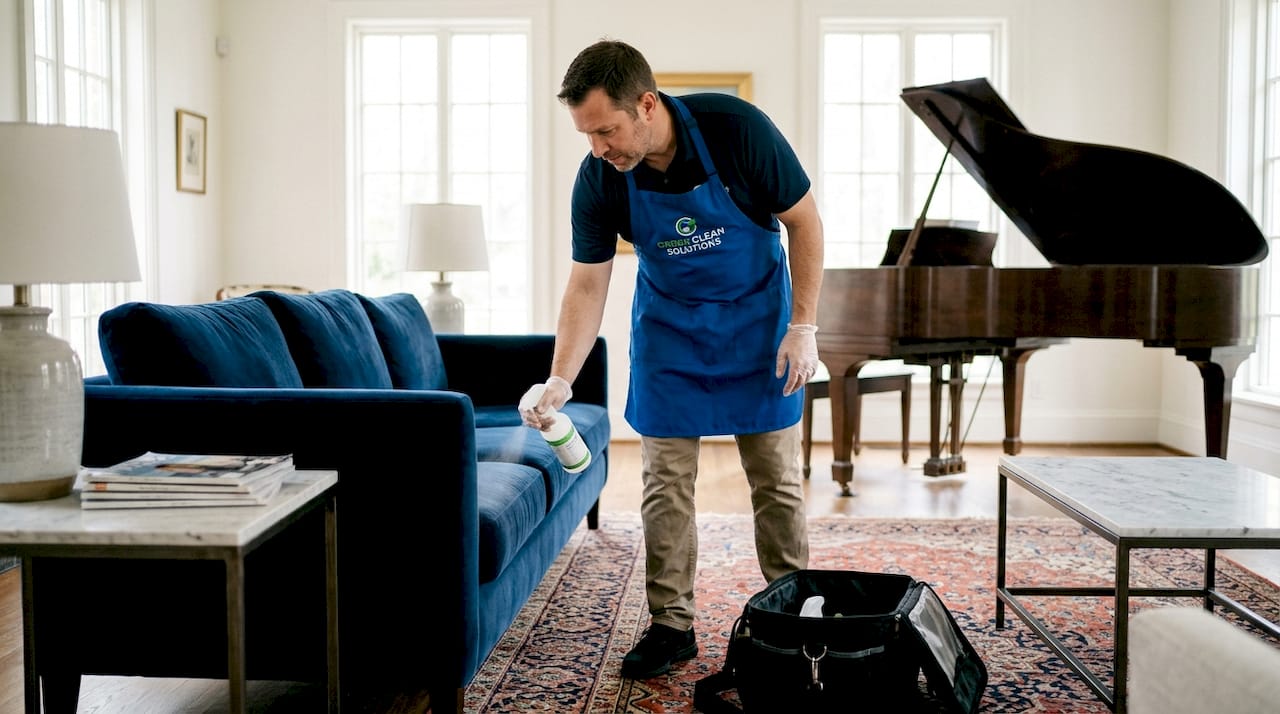
Eco-friendly odor solutions are not a compromise. Modern green-certified treatments use bio-enzymatic and molecular technologies that outperform harsh chemicals in both effectiveness and safety. They leave no residue, produce no harmful off-gassing, and are safe for children, pets, and guests with respiratory sensitivities.
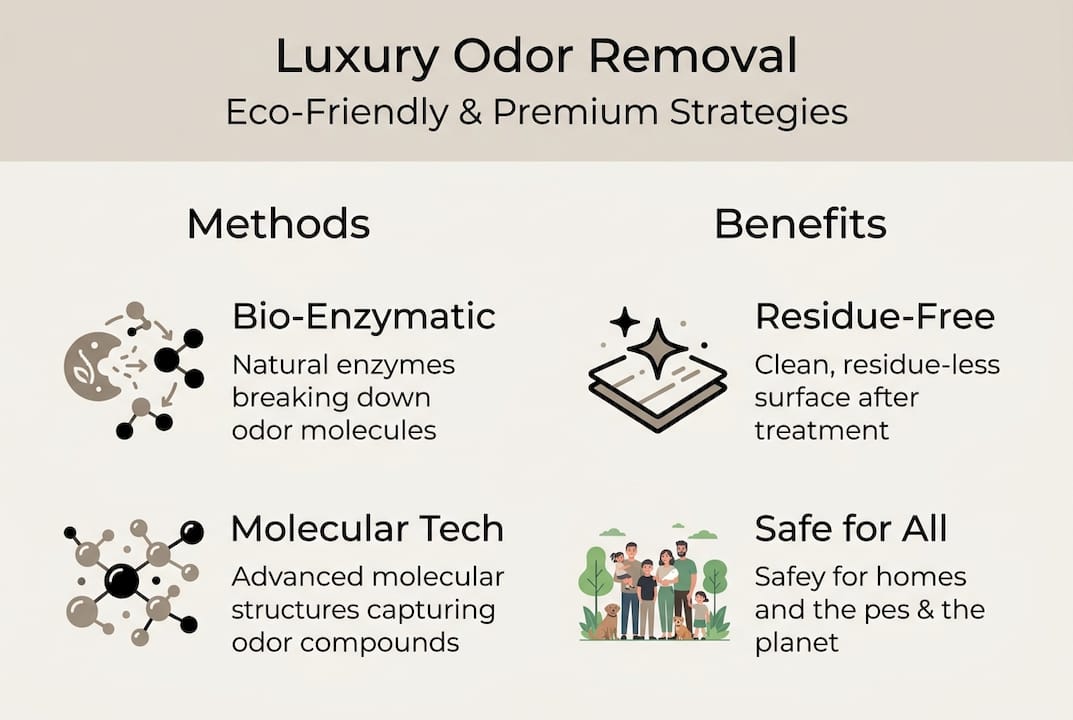
Master Odor Removal uses proprietary eco-friendly systems specifically designed for sensitive, high-value environments. This approach protects not just the people inside the space but also the long-term condition of the asset itself.
Common pitfalls with conventional treatments include:
- Ozone generators: Damage rubber, leather, and electronics; require full evacuation; leave reactive residues
- Chlorine-based products: Bleach and discolor premium fabrics and surfaces; harmful to respiratory health
- Masking agents: Fragrance sprays and plug-ins temporarily override odor without eliminating it, causing rebound odor within days
- Unverified enzyme products: Low-quality enzyme sprays may not target the specific compounds present, delivering inconsistent results
When evaluating a provider for workplace odor removal or any luxury setting, use this checklist:
- Confirm they do not use ozone or chlorine treatments
- Ask for documentation of eco-certifications or green-certified product lines
- Request a list of the specific technologies used and their safety data sheets
- Verify experience with your specific asset type, whether vehicle, property, yacht, or hospitality venue
- Confirm they offer a satisfaction guarantee backed by a documented process
Pro Tip: Fragrance-free results are the gold standard for luxury environments. If a provider’s finished product has a noticeable scent, the job is not done. True odor elimination leaves a neutral baseline, not a replacement smell.
Sustainability is no longer a bonus feature for premium clients. It is an expectation. Providers who lead with green-certified, residue-free protocols are aligned with the values of today’s high-end market.
The overlooked value of specialty odor removal for high-end assets
Most luxury clients invest heavily in visible finishes: custom upholstery, premium paint, architectural detail, and designer furnishings. Yet odor, which is invisible, often has a greater impact on first impressions than any of those elements. A prospective buyer who walks into a listing and detects cigarette smoke or mildew does not see the marble countertops. They smell a problem.
This is where specialty odor removal delivers value that most clients underestimate. It is not just about freshness. It is about protecting the perceived quality of an asset and the reputation of the professional presenting it. Dealers, agents, and hospitality operators who use certified odor removal specialists communicate a standard of care that discerning clients notice and remember.
Following open house odor tips and working with verified specialists can mean the difference between a fast, full-price transaction and a prolonged negotiation driven by sensory doubt. A single professional service can prevent thousands of dollars in devaluation or client dissatisfaction. That is not a cleaning expense. It is an asset protection investment.
Luxury eco-friendly odor removal: Your next step
Your luxury asset deserves a solution that matches its standard. Whether you are preparing a vehicle for the showroom floor, listing a premium property, refreshing a superyacht, or maintaining a five-star hospitality environment, the right professional makes the difference between a neutral interior and a lingering problem.

Master Odor Removal’s certified odor removal specialists are available same or next day, using proven eco-friendly protocols with no ozone, no chlorine, and no masking agents. From luxury auto dealership odor solutions to full property remediation, every service is backed by a satisfaction guarantee. Explore our green odor elimination approach and request a consultation today. Protect your asset, your reputation, and your clients’ experience with a service built for the standard you hold.
Frequently asked questions
How does professional odor removal differ from regular cleaning?
Professional odor removal is a systematic process that removes source, cleans, applies deodorizer, and seals if necessary, targeting odor molecules at the molecular level rather than masking them with fragrance.
Are eco-friendly odor treatments as effective as traditional methods?
Modern eco-friendly systems for sensitive environments use advanced residue-free technology proven effective for luxury interiors, without the health or material risks associated with harsh chemicals or ozone.
Why should luxury auto dealers and real estate agents use professional odor removal?
Proprietary systems avoid ozone-related damage, preserving asset value, appealing to discerning buyers, and ensuring that interiors reflect the quality standard your brand represents.
What standards should I look for in a professional odor removal provider?
Choose providers who follow IICRC standards for systematic results and use safe, proven technologies specifically matched to your asset type and surface materials.
Recommended
- Odor neutralization: eco-friendly solutions for luxury – Master Odor Removal
- Odor removal guarantees: How luxury properties stay fresh – Master Odor Removal
- Odor removal standards explained: guide for eco-friendly interiors – Master Odor Removal
- Next-day odor removal: Fast, eco-friendly luxury solutions – Master Odor Removal
Recent Comments