
TL;DR:
- Ozone treatments are ineffective at safe levels and can cause permanent interior damage.
- They pose significant health risks, especially to vulnerable populations like children and the elderly.
- Safer, eco-friendly odor removal methods include enzymatic treatments, HEPA filtration, and targeted chemical applications.
Ozone generators are marketed as a powerful, nature-inspired fix for stubborn interior odors, and many luxury homeowners and property managers have been tempted by that pitch. The reality is far less reassuring. Evidence from environmental agencies and independent researchers consistently shows that ozone treatments carry serious health risks and can cause permanent damage to the very interiors you’re trying to protect. If you manage high-value properties or own a luxury home, understanding what ozone actually does, and what works instead, is one of the most important decisions you can make for your space and the people in it.
Table of Contents
- What is ozone odor treatment and how does it work?
- Health risks of ozone: What homeowners and managers must know
- Material damage: Why ozone can be catastrophic for luxury interiors
- Safer, eco-friendly odor removal solutions for luxury properties
- Why ozone ‘quick fixes’ backfire: A professional’s take
- Discover luxury-safe, eco-friendly odor removal solutions
- Frequently asked questions
Key Takeaways
| Point | Details |
|---|---|
| Ozone risks outweigh benefits | Safe odor removal in luxury properties requires alternatives that don’t endanger health or valuables. |
| Health dangers at low levels | Even small amounts of ozone can irritate lungs and harm vulnerable occupants. |
| Irreversible material damage | Ozone can permanently degrade sensitive materials common in high-end interiors. |
| Eco-friendly solutions exist | Green treatments and filtration outperform ozone in effectiveness and safety. |
| Professional guidance matters | Partner with qualified experts to protect luxury property value and occupant well-being. |
What is ozone odor treatment and how does it work?
Ozone (O3) is a molecule made of three oxygen atoms. It occurs naturally in the upper atmosphere, but at ground level it’s a pollutant. Ozone generators create this gas indoors and release it in high concentrations, with the idea that the extra oxygen atom will react with and break down odor-causing compounds.
The problem is that the science doesn’t support the marketing. At levels below 0.1 parts per million (ppm), which is the safety threshold set by regulatory agencies, ozone simply does not neutralize embedded odors or sanitize surfaces effectively. Ozone levels for odor removal are 50 to 100 times higher than what is safe for occupied spaces. That gap is not a minor detail. It’s the entire problem.
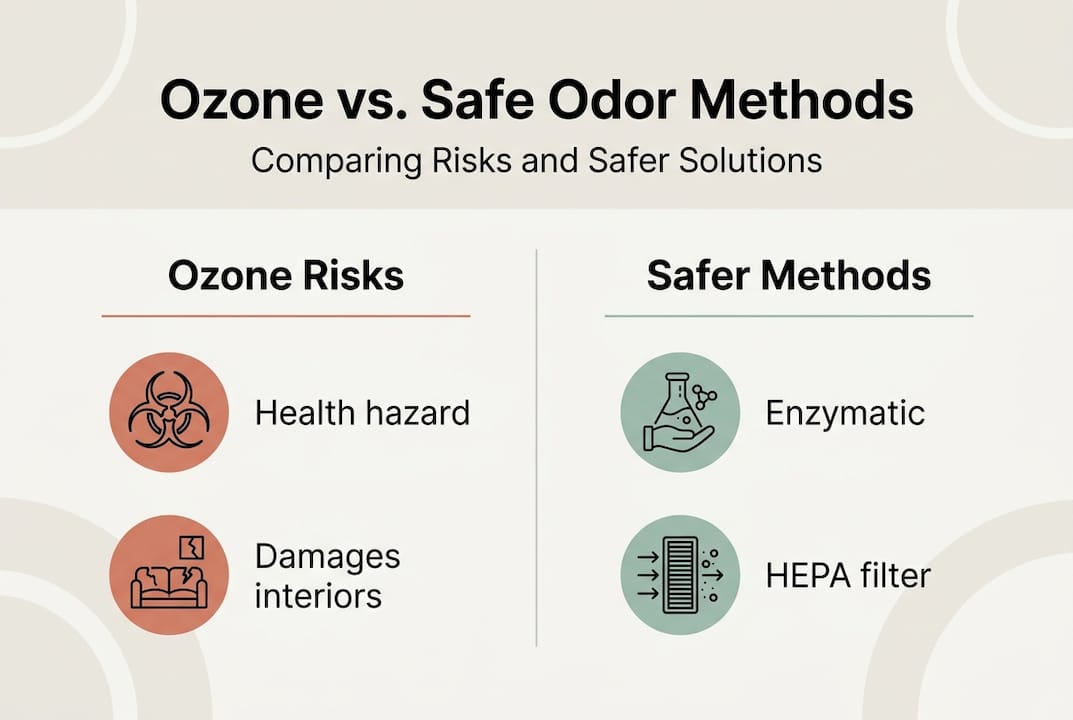
To actually break down odors, ozone must be used at concentrations between 5 and 10 ppm, sometimes higher. At those levels, the space must be completely vacated, sealed, and then thoroughly ventilated before re-entry. Even then, results are inconsistent. Odors embedded in porous materials like upholstery, carpet, and wood often return because ozone reacts with surface compounds but doesn’t penetrate deeply enough.
Here’s a quick comparison of what’s claimed versus what’s demonstrated:
| Claim | Reality |
|---|---|
| Works at safe levels | Ineffective below 0.1 ppm |
| Eliminates odors permanently | Often temporary; embedded odors return |
| Safe and natural | Toxic above safety thresholds |
| Suitable for occupied spaces | Must be vacated during treatment |
Ozone does have legitimate industrial ozone use cases in water treatment and food processing, where concentrations are tightly controlled and monitored by professionals. Residential and luxury property applications are a completely different context. The equipment is often consumer-grade, the monitoring is minimal, and the stakes for error are high.
For property managers who want to understand the contrast between passive ozone and direct odor removal vs ozone, the difference in both safety and effectiveness is significant. Targeted treatments address the odor source directly rather than flooding a space with a reactive gas and hoping for the best.
Key limitations of ozone odor treatment:
- Requires complete evacuation of people, pets, and plants
- Ineffective at safe concentration levels
- Results are often temporary in porous materials
- No professional monitoring in most residential applications
- Re-entry requires extended ventilation periods
Health risks of ozone: What homeowners and managers must know
Understanding ozone’s mechanics is only half the story. Its health impacts are even more vital, especially where client safety is paramount.
The EPA is direct on this point: ozone inhalation causes respiratory irritation, worsens asthma and COPD, and poses risks even at low levels. Short-term exposure can cause coughing, throat irritation, chest tightness, and shortness of breath. These aren’t edge-case reactions. They happen at concentrations that ozone generators routinely produce.
Statistic to know: The EPA classifies ozone as a lung irritant with no safe indoor exposure level for sensitive populations. Even brief exposure above 0.07 ppm can trigger respiratory symptoms in healthy adults.
For luxury properties, the risk profile is particularly serious. Your guests, tenants, and family members may include children, elderly individuals, or people with respiratory conditions, all of whom are far more vulnerable to ozone’s effects. A treatment that forces a property out of use for 12 to 24 hours while it ventilates also has a direct financial cost in lost rental revenue or disrupted schedules.
Chronic or repeated ozone exposure carries even heavier consequences. Research links long-term exposure to irreversible lung damage and reduced lung capacity. For a property management company or homeowner who relies on regular treatments to keep a space fresh, that cumulative risk is real.
Who faces the highest risk from ozone exposure:
- Children under 12
- Adults over 65
- Anyone with asthma, COPD, or allergies
- Pregnant women
- Pets (birds are especially sensitive)
Pro Tip: If a vendor recommends ozone treatment and tells you the space is safe to re-enter after just a couple of hours, that’s a red flag. Proper ventilation after high-concentration ozone treatment takes far longer, and rushing it puts occupants at risk.
For property managers who want to stay ahead of issues like this, reviewing luxury property odor tips from professionals who specialize in high-end interiors is a smarter starting point. Understanding why luxury interior odor experts avoid ozone entirely reflects the standard of care that premium properties deserve.
Material damage: Why ozone can be catastrophic for luxury interiors
Beyond health, luxury property owners face another critical issue: ozone’s interaction with valuable materials and finishes.
Ozone is a powerful oxidizer, and it doesn’t discriminate. It reacts with almost everything it contacts. Ozone damages rubber, plastics, electronics, and can fade dyes or degrade insulation, which is devastating for luxury interiors filled with high-value items.
Rubber seals in HVAC systems, plumbing components, and appliances are particularly vulnerable. Ozone causes rubber to crack and degrade rapidly, leading to leaks and mechanical failures that are expensive to repair. In a luxury home or rental property, a single treatment could trigger thousands of dollars in HVAC or plumbing damage that isn’t immediately obvious.
“Ozone doesn’t just treat the odor. It treats everything in the room, including the things you paid a great deal to protect.”
Textiles, dyed fabrics, and leather are equally at risk. Ozone bleaches and weakens fibers, causing color fading and structural breakdown in upholstery, rugs, and curtains. For properties with custom furnishings or antique textiles, this damage is irreversible. Artwork, particularly oil paintings and works on paper, can suffer accelerated deterioration from ozone exposure.
| Material | Ozone risk | Safer alternative |
|---|---|---|
| Rubber seals and HVAC parts | Cracking, premature failure | Enzymatic treatment |
| Electronics and wiring | Oxidation, insulation damage | HEPA filtration |
| Dyed fabrics and leather | Fading, fiber breakdown | Green chemical application |
| Artwork and antiques | Accelerated deterioration | Professional targeted treatment |
| Wood and painted surfaces | Surface oxidation, finish damage | Source-specific removal |
Sensitive electronics, including audio systems, smart home components, and computers, are also at risk. Ozone oxidizes metal contacts and degrades insulation on wiring. In a property equipped with premium technology, the repair or replacement cost can far exceed the price of a professional odor removal service.
For property managers and homeowners who want a treatment approach that protects rather than risks their investment, eco-friendly odor removal methods are designed specifically to avoid these material interactions while still delivering permanent results.
Materials most at risk in luxury interiors:
- Custom upholstery and area rugs
- Leather furniture and accessories
- Oil paintings and works on paper
- Smart home electronics and audio systems
- HVAC rubber components and seals
Safer, eco-friendly odor removal solutions for luxury properties
To protect property, occupants, and reputations, here are proven solutions to use instead of risking ozone damage.
Professionally-monitored solutions are consistently recommended as the best approach for occupied and luxury interiors. The key difference is precision. Rather than flooding a space with a reactive gas, professional treatments target the specific odor source and neutralize it without affecting surrounding materials.
Effective, non-damaging odor removal options:
- Enzymatic treatments. Enzymes break down the organic compounds that cause odors at a molecular level. They work on pet odors, food smells, and biological sources without leaving residue or damaging surfaces. Safe for occupied spaces.
- HEPA air filtration. High-efficiency particulate air filters capture airborne particles that carry odors. Combined with activated carbon filters, they’re highly effective for ongoing odor management in luxury interiors.
- Green-certified chemical applications. Professional-grade, eco-certified formulas are applied directly to odor sources. They neutralize rather than mask odors and are safe for people, pets, and materials. Learn more about direct chemical odor removal and how it compares to gas-based approaches.
- Source identification and removal. Sometimes the most effective step is locating and physically removing the odor source, whether that’s contaminated insulation, a hidden mold colony, or saturated subflooring. Professional assessment makes this possible.
- Thermal fogging with safe agents. When broader coverage is needed, thermal fogging with non-toxic, green-certified agents reaches into crevices and porous materials without the risks ozone carries.
If you’ve already used ozone in a property, the immediate priority is thorough ventilation and a professional assessment of any material damage. Don’t repeat the treatment. Instead, consult specialists who can identify what the ozone failed to address and apply a targeted solution.
For odor removal best practices in high-traffic or high-value settings, the consistent theme is precision over power.
Pro Tip: When evaluating any odor removal service, ask specifically whether they use ozone or chlorine-based treatments. A genuinely eco-friendly provider will avoid both and be able to explain exactly what agents they use and why they’re safe for your specific interior.
Why ozone ‘quick fixes’ backfire: A professional’s take
The appeal of ozone is understandable. It’s marketed as natural, powerful, and fast. But in practice, we’ve seen the aftermath in luxury properties repeatedly, and the pattern is consistent. The odor comes back, the materials show damage, and the property owner is left with a more expensive problem than they started with.
The industry’s shift away from ozone isn’t based on theory. It’s based on real incidents: cracked HVAC seals after a single treatment, faded custom upholstery, guests reporting respiratory symptoms, and odors returning within weeks because the source was never actually addressed. Proponents claim ozone is a natural oxidizer, but experts and agencies consistently show risks outweigh any benefits, especially in occupied spaces.
Marketing language around “nature-inspired” or “oxygen-based” treatments is designed to sound safe. The science says otherwise. True luxury care means choosing methods that protect every element of your property, not just the ones you can see. For expert odor removal advice that reflects this standard, the conversation starts with what you won’t use, not just what you will.
Discover luxury-safe, eco-friendly odor removal solutions
If you manage luxury properties or own a high-value home, you deserve odor removal solutions that work without putting your interiors or occupants at risk.

At Master Odor Removal, we specialize in green odor elimination solutions that are specifically designed for premium environments. We never use ozone or chlorine-based treatments. Our odor removal professionals use green-certified, targeted methods that eliminate odors permanently while protecting your furnishings, finishes, and the health of everyone inside. With same or next-day availability and a satisfaction guarantee, we give property managers and homeowners the peace of mind they need. Explore our eco-friendly luxury odor solutions and see what genuinely safe, effective odor removal looks like.
Frequently asked questions
Is ozone odor treatment safe for homes with children or elderly residents?
No. Even low ozone levels cause chest pain and worsen asthma and COPD, making it especially dangerous for children, the elderly, and anyone with a respiratory condition.
Does ozone permanently remove odors in luxury properties?
No. Ozone is ineffective on surfaces at levels safe for occupied rooms, and it can permanently damage rubber, plastics, fabrics, and artwork in the process.
What are better alternatives to ozone for safe odor removal?
Professional enzymatic treatments, green-certified chemical applications, and HEPA air filtration are all safer and more effective options for high-value interiors, with no risk to occupants or materials.
Are ozone machines ever appropriate for odor removal?
Only in unoccupied industrial settings with professional monitoring and ventilation controls. They are never appropriate for occupied homes or spaces containing luxury furnishings and electronics.
Recommended
- Allergy-Safe Odor Removal: Solutions for Pristine Interiors – Master Odor Removal
- Odor neutralization: eco-friendly solutions for luxury – Master Odor Removal
- Odor Removal – 5 Star Reviewed – Master Odor Removal
- Direct Odor Removal Services vs Passive Ozone Machine – Master Odor Removal
- Protect pet health: eliminate household odors safely – Percy Loves
Recent Comments