
TL;DR:
- True allergy-safe odor removal neutralizes odors chemically or biologically without masking with fragrances.
- Combining HEPA filtration and activated carbon effectively reduces airborne allergens and odors in luxury spaces.
- Professional intervention is essential for embedded or persistent odors, ensuring healthy, lasting indoor air quality.
That air freshener your housekeeper sprays after every turnover? It may be making your occupants’ allergies significantly worse. Most conventional odor products rely on synthetic fragrances and volatile organic compounds (VOCs) that coat the air with irritants rather than clearing it. For luxury homeowners and property managers responsible for high-end interiors, that trade-off is unacceptable. True allergy-safe odor removal means eliminating the source of the odor, not layering scent on top of it. This guide breaks down exactly what that looks like, which technologies actually work, and when professional intervention is the only real answer.
Table of Contents
- What makes odor removal truly allergy-safe?
- The science behind allergy-safe odor removal
- Practical options: Allergy-safe products, technology, and natural alternatives
- When and why to hire professional allergy-safe odor removal
- Expert perspective: What most allergy-safe odor removal guides miss
- Experience allergy-safe odor removal at the highest standard
- Frequently asked questions
Key Takeaways
| Point | Details |
|---|---|
| Prioritize neutralization | True allergy-safe odor removal focuses on eliminating, not masking, odors with fragrance-free, low-VOC solutions. |
| Invest in advanced filtration | HEPA and activated carbon technology offer industry-leading odor and allergen removal for luxury interiors. |
| Balance tech with natural methods | Pairing eco-friendly DIY options with smart purification tech delivers lasting allergen and odor control. |
| Know when to hire experts | Professional services ensure deep, ongoing control in demanding, high-end environments where standards are highest. |
What makes odor removal truly allergy-safe?
The term “allergy-safe” gets thrown around loosely in the cleaning industry, but it has a specific meaning when applied to odor removal. It refers to methods and products that do not introduce new allergens, irritants, or chemical triggers into the environment while addressing the odor. That rules out the vast majority of consumer sprays on the market.
The core problem is masking versus neutralization. Masking uses fragrance molecules to override your perception of an odor. The original odor is still there. You have simply added a new chemical layer on top of it. For anyone with respiratory sensitivities, asthma, or fragrance allergies, this is a net negative. Allergy-safe odor removal prioritizes fragrance-free, low-VOC neutralizers that chemically alter or encapsulate odor molecules rather than masking them with scents that trigger allergies.
True neutralization works through three main mechanisms. Chemical neutralizers react with odor molecules and render them inert. Biological agents use enzyme-based formulas to break down organic matter at the source. Physical removal, through filtration and adsorption, pulls odor particles out of the air entirely. Each of these approaches addresses the actual problem rather than disguising it.
“Masking sprays provide temporary relief but risk VOC irritation. Experts consistently prefer neutralization over covering, and ozone-generating ionizers should be avoided entirely for anyone with asthma.”
For luxury interiors, the standard should be even higher. Indoor air quality tips consistently point to a layered approach: neutralize at the source, filter the air continuously, and avoid any product that introduces fragrance or harsh chemicals. The HEPA filter role in this equation is to physically capture airborne particles, including mold spores, pet dander, and dust mite debris, that contribute to both odor and allergy symptoms.
| Approach | Odor removed? | Allergens reduced? | Fragrance added? | Safe for sensitive occupants? |
|---|---|---|---|---|
| Masking sprays | No | No | Yes | No |
| Fragrance-free neutralizers | Yes | Partially | No | Yes |
| HEPA filtration | Partially | Yes | No | Yes |
| Activated carbon filtration | Yes | Partially | No | Yes |
| Professional neutralization | Yes | Yes | No | Yes |
The takeaway is straightforward. If a product smells like anything at all, it is not allergy-safe by definition.
The science behind allergy-safe odor removal
Understanding how these solutions work helps you make smarter decisions for your property and your occupants. Odors are volatile molecules that bind to surfaces, fabrics, and airborne particles. When those molecules are also allergens, like pet dander proteins or mold spores, the problem compounds quickly.
HEPA filtration (High Efficiency Particulate Air) physically captures particles as small as 0.3 microns. HEPA filters trap 99.97% of particles at that size, which covers most biological allergens and odor-carrying particles. Activated carbon works differently. It adsorbs (meaning it binds to its surface) gas-phase molecules, including VOCs and odor compounds, achieving over 92% deodorization in controlled tests. These two technologies work best together because they target different parts of the problem.
For odor removal in luxury interiors, the process typically follows a structured sequence:
- Identify the odor source through inspection and, if needed, air sampling.
- Neutralize at the source using enzyme-based or chemical neutralizers appropriate for the material.
- Treat porous surfaces including upholstery, carpeting, and drapery where odor molecules embed deeply.
- Run HEPA and activated carbon filtration to clear the air of residual particles and gas-phase compounds.
- Verify results with a follow-up air quality check before declaring the space complete.
| Removal method | Particle size targeted | Odor efficiency | Allergen reduction |
|---|---|---|---|
| HEPA filtration | 0.3 microns and above | Moderate | High |
| Activated carbon | Gas-phase molecules | High | Moderate |
| Enzyme neutralizers | Organic odor sources | High | Moderate |
| Chemical neutralizers | Broad spectrum | High | Low |
| UV-C light | Biological contaminants | Low | Moderate |
Pro Tip: Replace HVAC filters every 60 to 90 days in occupied luxury properties, and every 30 days during high-use seasons. A clogged filter recirculates the exact particles you are trying to eliminate. Pair filter changes with a scheduled HVAC filter replacement routine to keep the system performing at full capacity.
Practical options: Allergy-safe products, technology, and natural alternatives
Now that the science is clear, here is how to put it into practice. The market offers a growing range of allergy-safe solutions, but not all of them are equal in performance or appropriate for every situation.
For product selection, look for fragrance-free enzyme or oxidizing neutralizers with low or zero VOC ratings. These are available in professional concentrations that outperform anything sold at a grocery store. Smart air purifiers with certified HEPA and activated carbon stages are worth the investment for any occupied luxury space. Pair them with a HEPA vacuum for regular surface maintenance, especially on upholstered furniture, area rugs, and drapery.
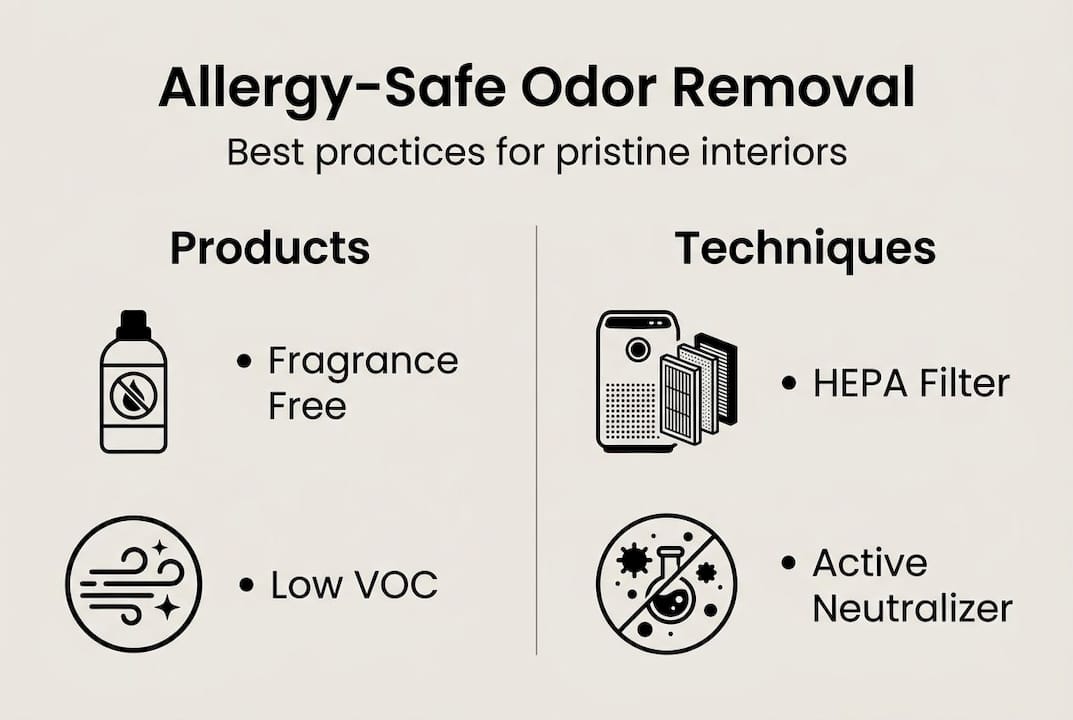
Natural alternatives have a place in the toolkit, though they work best as maintenance tools rather than primary solutions. Natural alternatives like vinegar and baking soda are cost-effective but less potent for embedded odors. Pair them with carbon purifiers for comprehensive control in lower-intensity situations.
Here is a practical breakdown of natural options and their best use cases:
- Baking soda: Absorbs mild odors from carpets, upholstery, and refrigerators. Effective for maintenance, not remediation.
- White vinegar: Neutralizes alkaline odors like pet urine when applied directly. Strong smell dissipates quickly.
- Activated charcoal bags: Passive adsorption for enclosed spaces like closets, vehicles, and storage areas.
- Zeolite minerals: Natural odor adsorbers with no fragrance. Effective for ongoing air maintenance.
- Essential oil diffusers: Not allergy-safe. Despite being “natural,” they introduce airborne particles that trigger reactions in sensitive occupants.
For improving indoor air in high-end settings, the most effective strategy layers natural maintenance with professional-grade technology. UV light systems integrated into HVAC units can also reduce biological contaminants. UV light for allergies works by disrupting the DNA of mold, bacteria, and viruses, reducing both odor sources and allergen load simultaneously.
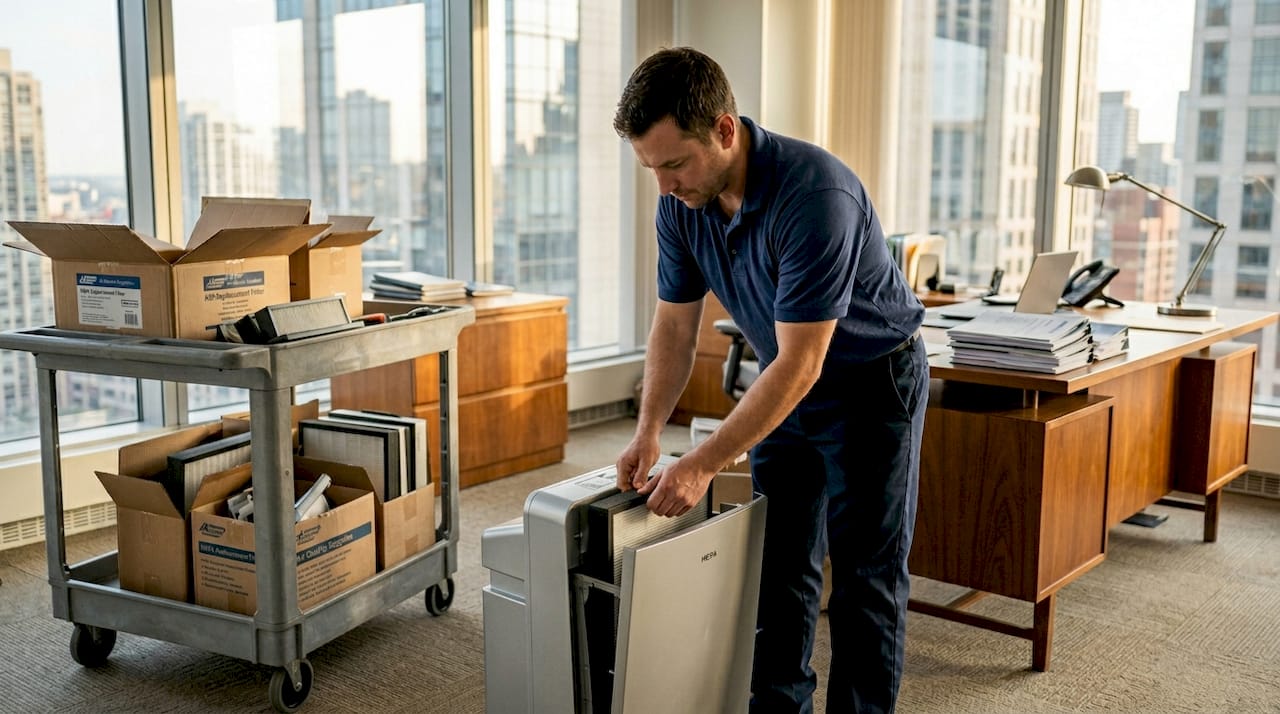
Pro Tip: Do not rely on a single solution. Layer a HEPA air purifier, a fragrance-free surface neutralizer, and a passive adsorber like activated charcoal for results that hold between professional service visits.
When and why to hire professional allergy-safe odor removal
DIY solutions handle light maintenance well. They do not handle embedded tobacco odors in plaster walls, mold contamination behind cabinetry, or pet odors that have soaked through subfloor materials. For those situations, professional intervention is not optional. It is the only path to a genuinely clean result.
Property managers should escalate to professional services in three clear scenarios: when an odor persists after multiple DIY attempts, when an occupant reports allergy symptoms that correlate with a specific space, or when a property is being prepared for a high-value listing or luxury rental. In each case, the cost of professional service is minor compared to the risk of a failed occupancy or a health complaint.
Here is what a professional allergy-safe odor removal workflow looks like at the luxury level:
- Initial assessment: Technicians inspect the property, identify odor sources, and evaluate material types and contamination depth.
- Source treatment: Professional-grade neutralizers are applied directly to contaminated materials, including subfloor, drywall, and HVAC components if needed.
- Surface and fabric treatment: Upholstery, carpeting, and drapery receive targeted enzyme or oxidizing treatment.
- Air purification: Industrial HEPA and carbon filtration units run through the space to clear residual airborne compounds.
- Final verification: Air quality is tested and results are documented before the team leaves.
Bonus advantages of working with certified professionals:
- Same or next-day availability for urgent property needs
- Written satisfaction guarantees and service documentation
- No ozone, no chlorine, no fragrance masking agents
- Expertise across materials including rare woods, natural stone, and luxury textiles
“For luxury homes, integrate professional services for deep cleans, HEPA HVAC filters, and smart purifiers with app control to maintain pristine air without daily effort.”
If you are managing a property transition, expert move-in odor removal services are specifically designed for this window. Working with certified odor removal specialists ensures that every material type is treated correctly and that the result is documented and verifiable.
Expert perspective: What most allergy-safe odor removal guides miss
Most guides stop at “use fragrance-free products” and call it done. That advice is correct but incomplete. True allergy-safe odor management in a luxury property is a system, not a product swap.
The most common failure we see is surface-level cleaning that misses hidden contamination. Odors from tobacco, mold, or pets do not stay on the surface. They migrate into insulation, HVAC ductwork, wall cavities, and subfloor materials. Swapping your air freshener for a fragrance-free spray does nothing for contamination you cannot see.
The second pitfall is treating allergy-safety as a one-time fix. Air quality in occupied properties degrades continuously. Occupants bring in new particles, HVAC systems recirculate settled debris, and seasonal humidity shifts create new mold conditions. Managers who maintain luxury standards schedule routine air quality assessments, not just reactive cleanings.
Our recommendation is to build a layered control system: professional remediation when needed, continuous HEPA and carbon filtration, and scheduled assessments every quarter. Deep air quality tips support this approach consistently. The properties that maintain the highest standards are not the ones that react to problems. They are the ones that prevent them.
Pro Tip: Schedule a professional air quality assessment every 90 days for occupied luxury properties. It costs far less than addressing a complaint after the fact.
Experience allergy-safe odor removal at the highest standard
For property managers and luxury homeowners who want results that hold, the difference between a DIY approach and professional service is measurable. Our team uses green-certified, fragrance-free neutralization methods with zero ozone and zero chlorine, designed specifically for high-end interiors and sensitive occupants.

Whether you are managing a property transition, addressing a persistent odor complaint, or simply maintaining the standard your occupants expect, we are available same or next day. Explore odor removal done right to understand our process, connect with our odor removal specialists directly, or review our superior odor removal process to see exactly how we deliver lasting, allergy-safe results.
Frequently asked questions
What is the safest way to remove odors for allergy sufferers?
The safest methods use fragrance-free, low-VOC neutralizers and HEPA or activated carbon filtration. Allergy-safe removal prioritizes neutralizing odor molecules rather than masking them with scents that trigger reactions.
Do air purifiers really help with both odors and allergens?
Yes, certified HEPA and activated carbon air purifiers address both problems simultaneously. HEPA filters trap 99.97% of particles at 0.3 microns while activated carbon achieves over 92% deodorization, making them effective for allergens and odors together.
Why shouldn’t I use traditional air fresheners in luxury properties?
Most air fresheners rely on synthetic fragrances and VOCs that only mask odors rather than removing them. Masking sprays provide temporary relief while adding chemical irritants that worsen conditions for sensitive occupants.
When is professional odor removal necessary?
Professional help is essential when odors are persistent, embedded in structural materials, or when occupant health is a concern. For luxury homes, professional deep cleans combined with ongoing filtration deliver results that DIY methods simply cannot match.
Recommended
- Odor removal standards explained: guide for eco-friendly interiors – Master Odor Removal
- Odor neutralization: eco-friendly solutions for luxury – Master Odor Removal
- Smoke Odor Removal for Luxury Interiors – Master Odor Removal
- Odor removal guarantees: How luxury properties stay fresh – Master Odor Removal
- UV Light in HVAC – Allergy Relief for Tampa Homes
Recent Comments