
TL;DR:
- Buyers form instant subconscious judgments about a home’s condition based on odors, which influence offers and perceptions. Unpleasant smells signal risks like moisture, fire damage, or sanitation issues, causing lower sale prices and longer market times. Professional odor removal and neutral scents significantly enhance property value and buyer confidence, leading to faster, higher offers.
Most buyers decide within seconds of walking through your front door. That snap judgment happens before they check the roof, test the water pressure, or calculate square footage. Understanding why odors affect property value is the difference between a confident offer and a buyer who walks out making mental notes about “problems.” Your home’s smell communicates condition, care, and safety, and buyers process all of that without even realizing it.
Table of Contents
- Key takeaways
- Why odors affect property value so strongly
- Odor sources that tank buyer confidence
- How odors influence sale price and time on market
- Steps to eliminate odors and protect your asking price
- My perspective on what sellers keep getting wrong
- Protect your sale price with professional odor removal
- FAQ
Key takeaways
| Point | Details |
|---|---|
| Smell triggers instant reactions | Buyers form subconscious judgments about a home’s condition the moment they detect an odor. |
| Odors function as risk signals | Buyers interpret unpleasant smells as evidence of hidden damage, mold, or poor maintenance. |
| Masking odors backfires | Heavy artificial fragrances make buyers more suspicious, not less. |
| Odors directly lower sale price | Odor issues create “confidence discounts” that exceed the actual cost of remediation. |
| Professional removal pays off | Certified indoor air quality improvements can increase property value by 5 to 10 percent. |
Why odors affect property value so strongly
The reason odors carry such weight in real estate has everything to do with how your brain is wired. Olfactory signals bypass the thalamus and go directly to the limbic system, the part of your brain that controls emotion and memory. Every other sense has to pass through a relay station first. Smell does not. That means a buyer’s emotional response to your home’s scent is instant and largely unconscious, hitting before any rational evaluation begins.
This is not a minor quirk. It means that by the time a buyer consciously thinks, “I wonder what that smell is,” their gut has already registered a verdict. If that verdict is negative, everything they see afterward gets filtered through suspicion. The kitchen renovation looks great, but something feels off. The hardwood floors are beautiful, but they can’t picture living here.
“Buyers form immediate subconscious reactions to odors before any conscious evaluation begins, making scent one of the most powerful and overlooked factors in how a home is perceived on first impression.”
Think about what odors actually signal to the brain. Mustiness signals moisture. Smoke signals fire damage or neglect. Pet odors signal sanitation concerns. These are ancient threat-detection responses. Buyers aren’t being unreasonable when they feel uneasy about a smell. They’re responding to cues their brains have been trained to associate with risk.
The practical result is that buyers spend less time in odor-affected homes, they form weaker emotional connections to the space, and they leave with less conviction. All of that translates directly into fewer offers, lower bids, and longer time on market. The smell isn’t just cosmetic. It’s doing real financial damage.
Odor sources that tank buyer confidence
Sellers often assume buyers will overlook a smell once they see the house’s other features. That’s not how it works. Certain odors trigger buyer assumptions that are very hard to undo.
- Pet odors suggest that carpets, subfloor, and walls may be saturated. Buyers picture expensive remediation, not just a good clean.
- Cigarette or marijuana smoke raises concerns about nicotine residue in HVAC systems, walls, and insulation. It’s one of the most difficult odors to permanently eliminate, and buyers know it.
- Musty or mildew smells immediately imply water intrusion, active mold growth, or drainage problems. This is the one most likely to kill a deal outright.
- Cooking odors, especially from strong spices or fried foods, make it harder for buyers to visualize the kitchen as their own. It creates a sense of “someone else’s space.”
- Garbage or drain odors suggest neglect. Simple but devastating to first impressions.
Here is where sellers make their biggest mistake. When they realize the house has an odor issue, many reach for air fresheners, plug-in scent diffusers, or candles. Heavy artificial fragrances often worsen buyer perception more than the original odor does. Buyers notice the cover-up and immediately wonder what’s being hidden. A cloud of lavender in a bedroom doesn’t say “clean.” It says “there’s something under this lavender.”
Buyers are sensitive to heavy artificial scents and often interpret them as a red flag for mold, stained carpets, or water damage. The masking strategy signals the very problems you’re trying to avoid disclosing.
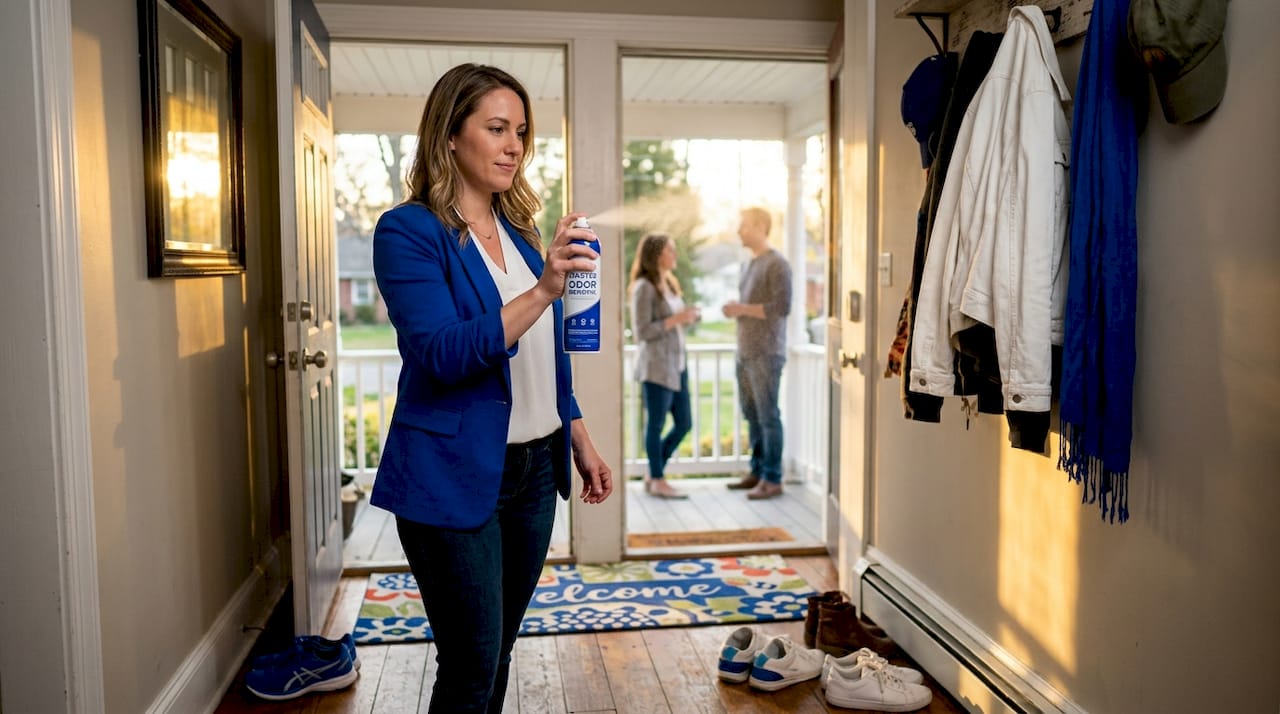
Pro Tip: Before any showing, air the home out completely for several hours. Fresh air and a neutral scent baseline will always outperform any artificial fragrance you put in its place.
Real estate agents report buyers negotiating hard specifically because of smell. In competitive markets, an odor issue gives buyers the leverage to ask for price reductions or repair credits that far exceed what actual remediation would cost. Smell is not just a comfort issue. It’s a negotiation tool buyers will use against you.
How odors influence sale price and time on market
The financial impact of odors on a property is measurable, and the numbers are not in a seller’s favor.
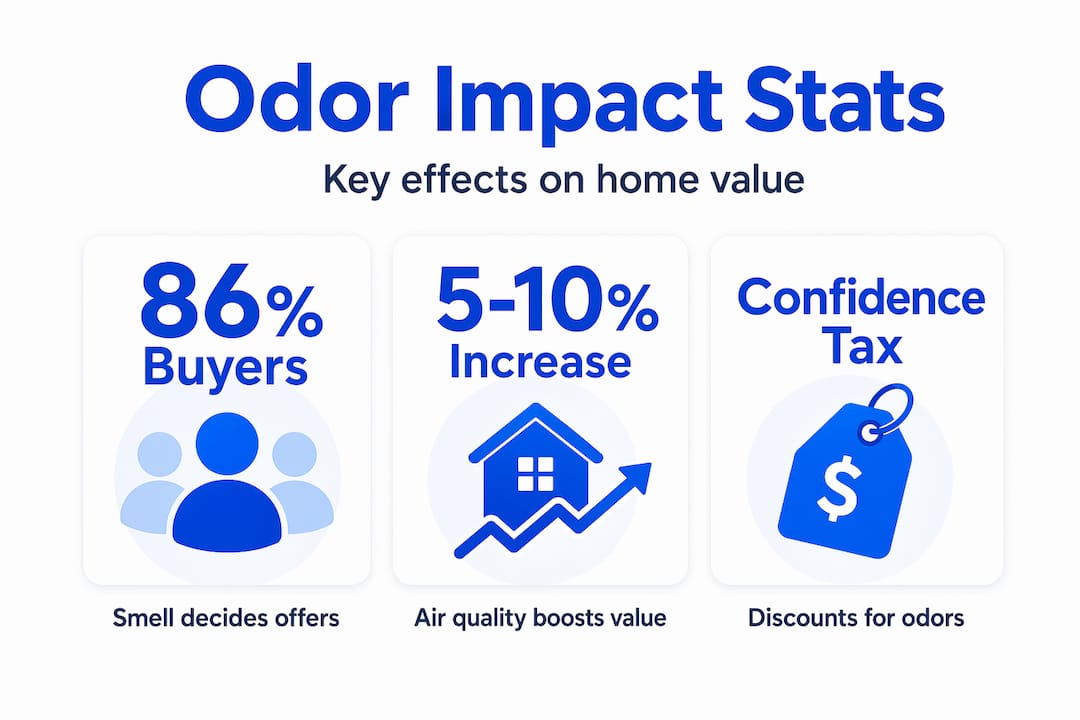
86 percent of buyers say a home’s smell can decide whether they make an offer. That is not a small segment of picky buyers. That is nearly every buyer walking through your door. And the impact goes beyond whether they make an offer at all. Odors shape how much they offer.
| Scenario | Typical Impact |
|---|---|
| Neutral, fresh-smelling home | Full asking price consideration, shorter time on market |
| Mild pet or cooking odor | 2 to 5 percent discount request, increased scrutiny during inspection |
| Smoke or strong pet odor | 5 to 10 percent or more discount, significantly longer time on market |
| Mold or sewage odor detected | Offers contingent on full remediation or deals falling through entirely |
| IAQ-certified clean home | 5 to 10 percent above comparable properties, faster sale |
Odors create a confidence tax where buyers price in uncertainty discounts far larger than the actual cost of fixing the problem. A thorough professional odor treatment might cost a few hundred to a few thousand dollars. But the “risk discount” a buyer applies to their offer because of that smell can reach tens of thousands of dollars. That math makes odor remediation one of the highest-return investments you can make before listing.
Properties with certified indoor air quality improvements can increase property value by 5 to 10 percent, while homes with known air quality issues face delayed sales and lower offers. The gap between these two outcomes makes the decision clear. And properties that use scent strategically see 23 percent higher follow-up requests and shorter time on market, with the strongest effect among buyers aged 38 to 54, which is the core move-up and downsize demographic in most markets.
Steps to eliminate odors and protect your asking price
Getting a home truly odor-free takes more than surface cleaning. Here is a practical approach that actually works.
- Get a professional odor assessment. You’ve likely developed “nose blindness” to your own home. A professional can identify odor sources you’ve stopped noticing entirely. Knowing what you’re dealing with is the first step.
- Address the source, not the symptom. Cleaning surfaces that smell is necessary, but odors embedded in subfloor, drywall, or HVAC ductwork require targeted treatment. Fast professional treatment is far more effective than repeated DIY attempts.
- Deep clean HVAC systems. The ductwork in most homes circulates odors through every room. Changing filters alone won’t fix a smoke or pet odor issue. A duct cleaning is often non-negotiable before listing.
- Use neutral scents strategically. Once odors are eliminated, subtle natural scents work in your favor. Fresh bread, coffee, and clean laundry are among buyers’ most preferred scents. These aren’t tricks. They create comfort and familiarity.
- Document your efforts. If you’ve had professional odor removal or air quality testing done, keep the paperwork. Sharing this documentation with buyers builds trust and reduces the friction that leads to aggressive negotiation.
- Maintain freshness through the listing period. One pet accident or smoky weekend can undo weeks of work before an open house. Treat freshness as an ongoing commitment, not a one-time task.
Pro Tip: Multi-sensory environments combining pleasant scent with soft lighting and ambient sound increase buyer dwell time. Longer dwell time correlates directly with higher offer intention. Keep your home on the right side of that equation.
You can also look at exterior cleaning strategies as part of your overall presentation plan. Curb appeal and interior freshness work together. Buyers who arrive at a clean, well-maintained exterior walk through the door with a more positive baseline before they smell a thing.
My perspective on what sellers keep getting wrong
From my experience working with homeowners and real estate professionals across luxury properties and everyday listings, the odor issue almost always comes down to the same misunderstanding. Sellers treat odors as cosmetic flaws. They’re not. They function as psychological risk signals that buyers use to price in uncertainty, negotiate harder, or simply walk away.
I’ve seen properties with strong bones and beautiful finishes sit on the market for months because of a persistent smoke odor in the primary bedroom. I’ve watched buyers offer $40,000 under asking price on a home that would have cost $1,500 to treat professionally. The seller didn’t think the smell was that bad. The buyer very much did.
The nose blindness problem is real. Sellers who have lived in a home for years genuinely cannot detect odors that are obvious to fresh visitors. This is not a character flaw. It’s basic sensory adaptation. But acting as though it doesn’t apply to you will cost you money at the closing table.
My take is this: if you are serious about getting full value for your property, treat odor elimination with the same seriousness you would give to a fresh coat of paint or a kitchen touch-up. The return on investment is there, often greater than those surface-level upgrades. And unlike paint colors, a neutral, fresh-smelling home is universally appealing. No buyer ever walked away because a house smelled too clean.
— Master
Protect your sale price with professional odor removal
If you’ve read this far, you already understand that the impact of smells on real estate goes deeper than comfort. A genuinely odor-free home closes faster and holds its asking price. That’s where Masterodorremoval comes in.

Masterodorremoval specializes in the permanent elimination of interior odors from homes, including tobacco, pet, mold, smoke, and cooking sources. Every treatment uses green-certified, eco-friendly methods with no ozone or chlorine, making the results safe for families, pets, and buyers with sensitivities. Service is available same or next day in most areas, and all work is backed by a satisfaction guarantee.
Whether you’re preparing a luxury listing or a family home for sale, the team at Masterodorremoval delivers the kind of clean that holds up under a buyer’s sharpest scrutiny. Explore the full range of residential odor removal services or learn about the eco-friendly treatment options that align with today’s buyer expectations. You can also read more on open house preparation tips for maximizing your property’s first impression.
FAQ
Do odors actually decrease home value?
Yes. Odors decrease home value by creating a “confidence discount” where buyers price in uncertainty well beyond the actual cost of remediation, often reducing offers by 5 to 10 percent or more.
Why do buyers react so strongly to home odors?
Olfactory signals go directly to the brain’s emotion and memory centers, triggering instant subconscious reactions before any rational evaluation occurs. Buyers interpret unpleasant odors as risk signals about the property’s condition.
Can air fresheners fix an odor problem before a showing?
No. Heavy artificial fragrances typically worsen buyer perception by signaling that something is being concealed. Professional elimination of the odor source is the only approach that builds buyer confidence.
How much can fixing odors improve a home’s sale price?
Properties with verified indoor air quality improvements can see value increases of 5 to 10 percent compared to homes with known odor or air quality issues.
What scents actually help sell a home?
Buyers prefer subtle natural scents like fresh bread, coffee, and clean laundry over strong artificial fragrances. These scents create comfort without triggering suspicion, and they work only after underlying odors have been fully eliminated.
Recommended
- Immediate odor removal: Why fast action protects property value – Master Odor Removal
- 10 Issues To Ask During a Home Inspection That Can Cause Odor Issues – Master Odor Removal
- MOR Odor Elimination News and Tips for Open Houses – Master Odor Removal
- Essential odors to check before selling your luxury car – Master Odor Removal
Recent Comments