
Blot the spill, apply an enzyme cleaner, extract every drop of moisture, and check the HVAC system. That four-part sequence is what actually stops a sour milk smell in a car, because it destroys the milk proteins instead of covering them up. Skip the extraction step or ignore a moldy evaporator, and the smell always finds its way back. If it does return after drying, that’s your signal to call a professional before the odor sets deeper into the padding.
TL;DR:
- Enzyme cleaners with protease and lipase are essential for breaking down milk proteins, and thorough extraction is critical for lasting odor removal.
- Immediate action within the first two hours, including blotting, vacuuming, and avoiding heat, can prevent the smell from soaking into padding and becoming harder to eliminate.
- HVAC system components like cabin filters and evaporator coils are common sources of sour odors and should be checked and cleaned before treating upholstery.
- Persistent smells after DIY treatment indicate contamination has reached deep into padding or flooring, requiring professional cleaning with specialized equipment.
- Using false remedies like air fresheners or ozone treatments can mask or damage interior materials, making deep cleaning by experts the safest long-term solution.
Table of Contents
- What To Do In The First Two Hours After A Milk Spill
- The Cleaning Steps That Actually Remove The Odor
- Could The Smell Be Coming From Your AC Instead Of A Spill?
- When DIY Isn’t Enough And What A Pro Does Differently
- What Most Car Owners Get Wrong About This Smell
- Persistent Odor After Cleaning? Here’s Your Next Step
- Where To Learn More
- Sources
What To Do In The First Two Hours After A Milk Spill
Speed matters more than technique in the first two hours. Milk proteins start fermenting into butyric acid almost immediately, and in a warm car that process can produce a noticeable sour dairy smell within 24 to 48 hours. The longer the liquid sits, the deeper it soaks into foam padding, and the harder it becomes to reach later.
Here’s what to grab and do right away:
- Crack the windows and pull out anyone and anything you don’t want smelling like a dairy farm.
- Remove the floor mats entirely so they can dry separately.
- Blot with clean towels, never rub, and scrape off any solid curds with a plastic scraper or old spoon.
- Run a wet/dry vac over the area to pull out as much liquid as possible before it soaks in further.
- Skip hot water. Heat actually cooks the proteins into the fabric fibers, making them harder to break down later.
- Keep a UV flashlight in your glove box. It’s a cheap way to spot dried splatter you missed the first time.
If you don’t own a wet/dry vac, a compact extraction unit like the Kärcher SE 3 Compact is built for exactly this kind of fabric and upholstery job. It’s worth owning if you have kids or pets.
The Cleaning Steps That Actually Remove The Odor
Air fresheners don’t fix this problem. They just add a second smell on top of the first, and once the car heats up, the original odor pushes right back through. The only way to eliminate a sour milk smell permanently is to break down the proteins causing it, and that requires enzymes, not fragrance.
Here’s the sequence that works:
- Remove residue. Vacuum any dried curds or debris before applying anything wet.
- Prep with a vinegar rinse (optional). A light vinegar and water solution can loosen surface residue and neutralize surface bacteria, but it does not replace enzyme treatment. Think of it as a rinse, not a cure.
- Apply an enzyme cleaner. Products with protease and lipase enzymes are built to digest the specific proteins and fats in milk. Saturate the stained area, including well past the visible edge, since the smell often spreads wider than the stain.
- Let it dwell. Enzymes need time to work. Follow the product’s dwell time, usually 10 to 15 minutes, and don’t let it dry out during that window.
- Extract thoroughly. Use a wet/dry vac or a hot-water extractor to pull out the enzyme solution along with the broken-down proteins. This is the step most DIY attempts skip, and it’s the one that determines whether the smell actually leaves the car. Repeat if the padding still feels damp or smells off.
Once the seat is completely dry, sprinkle baking soda over the area, let it sit a few hours, then vacuum it up to absorb any lingering trace odor.
Pro Tip: Run the car with the windows shut in direct sun for an hour after everything is dry, then get in and smell it. If nothing comes back, you’re done. If it does, you missed some protein.
Never mix any of these products with bleach, and always crack a window while working since enzyme cleaners and vinegar both release fumes in an enclosed space.
Could The Smell Be Coming From Your AC Instead Of A Spill?
Not every sour smell traces back to a spill you remember. If the odor is strongest the moment you start the car and fades a minute or two after the fan kicks on, the source is likely inside your HVAC evaporator or cabin air filter, not the upholstery at all.
Check these areas before you keep re-treating seats that were never the problem:
- Pull the cabin air filter (usually behind the glovebox) and look for dark staining or a musty odor. A clogged filter re-releases odor every time the fan runs, so replacing it is often the single most effective fix in this category.
- Swap in a filter with an activated-charcoal layer, which absorbs odor molecules instead of just trapping dust.
- Spray an HVAC-safe disinfectant into the outside air intake, then run the system on recirculate for 10 minutes to treat the evaporator coil.
- Check the sunroof and door drains for blockages, and feel under the seats and carpet edges for hidden dampness.
Blocked drains and slow leaks create the damp, dark conditions mold needs to grow, and mold can produce a smell that’s easy to confuse with spoiled milk. If you find standing water anywhere, fix the leak first. Cleaning the fabric won’t matter if water keeps getting back in.
When DIY Isn’t Enough And What A Pro Does Differently
DIY treatment usually resolves a fresh, surface-level spill within a few days. But if the smell returns once the cabin heats up, or lingers after two full enzyme and extraction cycles, the contamination has likely reached the padding or subfloor where a household wet/dry vac can’t reach.
Watch for these signs that it’s time to call a professional:
- The odor comes back stronger every time the car sits in the sun.
- You can smell it but can’t visually locate the source, even with a UV light.
- The spill happened more than a few days ago and soaked into carpet padding.
Professionals bring tools most car owners don’t have access to: hot-water extraction rigs that pull moisture from deep inside foam, controlled hydroxyl treatment for whole-cabin neutralization, and the ability to pull carpet or padding for replacement when contamination is too deep to salvage.
| Approach | Typical timeline | Best suited for |
|---|---|---|
| DIY enzyme treatment | Several days, often multiple passes | Fresh, surface-level spills caught early |
| Professional remediation | 1 to 2 days | Deep-set spills, returning odors, high-value vehicles |
Before you hire anyone, ask whether they use ozone or chlorine treatments. Both can damage upholstery dyes and leave residual fumes, which is exactly why green-certified, non-ozone methods have become the preferred standard for high-end vehicle interiors.
What Most Car Owners Get Wrong About This Smell
The single biggest mistake is treating the symptom instead of the source. Spraying an air freshener over a milk spill doesn’t remove anything. It just adds a second scent that fades within hours, while the actual bacteria keep multiplying underneath until the heat of the next sunny afternoon pushes it back out.
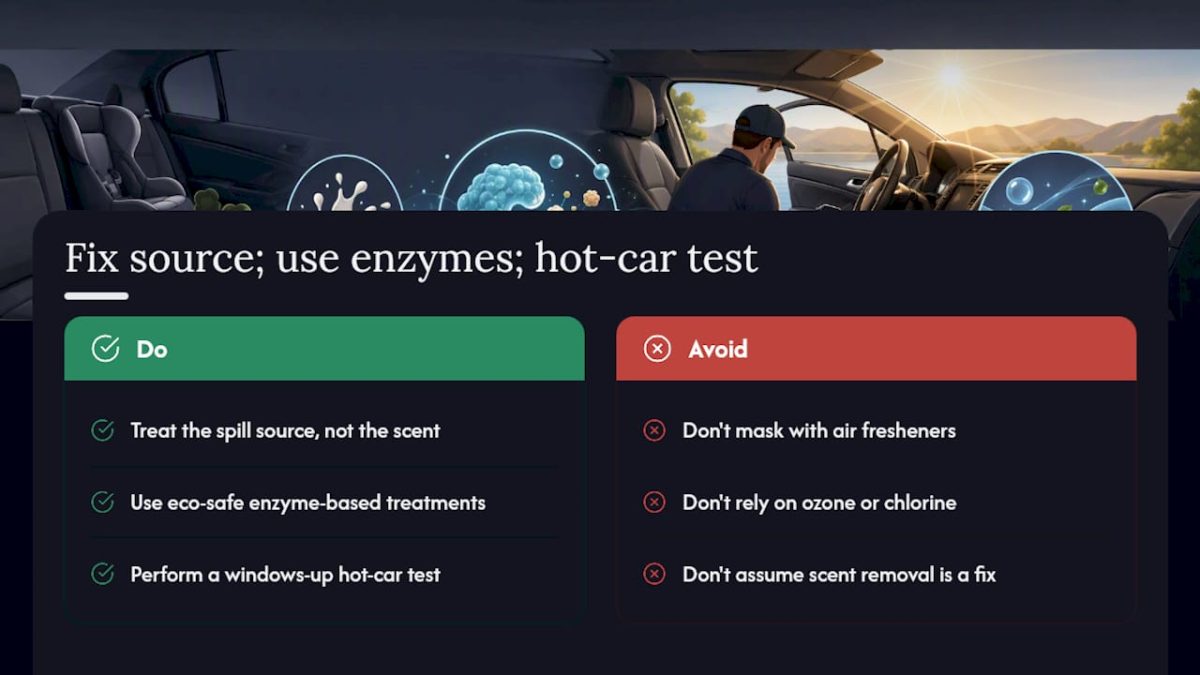
The hot-car test is the most reliable way to confirm you actually fixed the problem rather than just masking it temporarily. If a windows-up hour in the sun brings the smell back, more protein is still hiding in the padding.
Eco-safe, enzyme-based treatment isn’t a slower version of ozone or chemical fogging. It’s simply the method that doesn’t leave a second problem behind after it solves the first one, since ozone and chlorine can degrade interior materials even when they succeed at killing odor.
— Master
Persistent Odor After Cleaning? Here’s Your Next Step
If you’ve already run the enzyme and extraction cycle twice and the smell still greets you every time the car warms up, DIY has probably reached its limit. That’s the exact situation Masterodorremoval was built to solve: eco-friendly, green-certified odor removal that skips ozone and chlorine entirely, so you’re not trading one interior problem for another.

Masterodorremoval specializes in exactly the deep, hidden contamination that a household wet/dry vac can’t reach, whether that’s padding soaked through from an old spill or an evaporator that’s been quietly recirculating a sour smell for weeks. The team works on everything from daily drivers to luxury dealership inventory, which means the same vehicle odor neutralization process applied to six-figure interiors is available for yours. Get a sense of the process and expected turnaround on the odor removal overview page, and book a same or next-day appointment when you’re ready to stop chasing the smell yourself.
Where To Learn More
For a deeper look at AC-related odors, Consumer Reports covers evaporator and filter diagnostics. To understand how odors penetrate fabric long-term, see how odors bond to car upholstery.
Sources
- Why Does My Car Smell Like Rotten Milk or Sour Dairy? (5 Causes)
- How to rid your car of odors — Consumer Reports
Recent Comments