
TL;DR:
- Implementing comprehensive smoke-free policies and enforcing them consistently improves public health and reduces costs. Residue from smoking bonds to surfaces and requires professional cleaning to fully eliminate. Combining policy enforcement with professional remediation ensures spaces are truly smoke-free.
Smoke-free environment steps are practical policies and actions designed to eliminate indoor smoking, protect people from secondhand smoke, and reduce the long-term health risks tied to tobacco exposure. The American Lung Association and the Community Preventive Services Task Force both confirm that comprehensive smoke-free policies outperform partial measures in protecting public health. A striking 70% of residents prefer living in smoke-free buildings, yet 44–53% of non-smokers in multi-unit housing still report exposure to neighboring smoke. That gap between preference and reality is exactly what these steps are designed to close.
1. What are the core smoke-free environment steps?
A smoke-free environment, also called a tobacco-free space in workplace and housing policy contexts, starts with a written policy. Without a formal document, enforcement has no foundation.
Step 1: Write a clear, comprehensive policy. The policy must prohibit smoking indoors and within a set distance of entrances, windows, and air intakes. Vague language creates loopholes. Specify that the ban covers tobacco cigarettes, e-cigarettes, cannabis, and cigars. Lease addenda listing all smoke types make enforcement legally cleaner and reduce disputes.
Step 2: Communicate the policy before it takes effect. Send written notice to all residents, employees, or guests at least 30 days before the policy starts. Post signage at every entrance and common area. Verbal announcements alone do not create a paper trail.
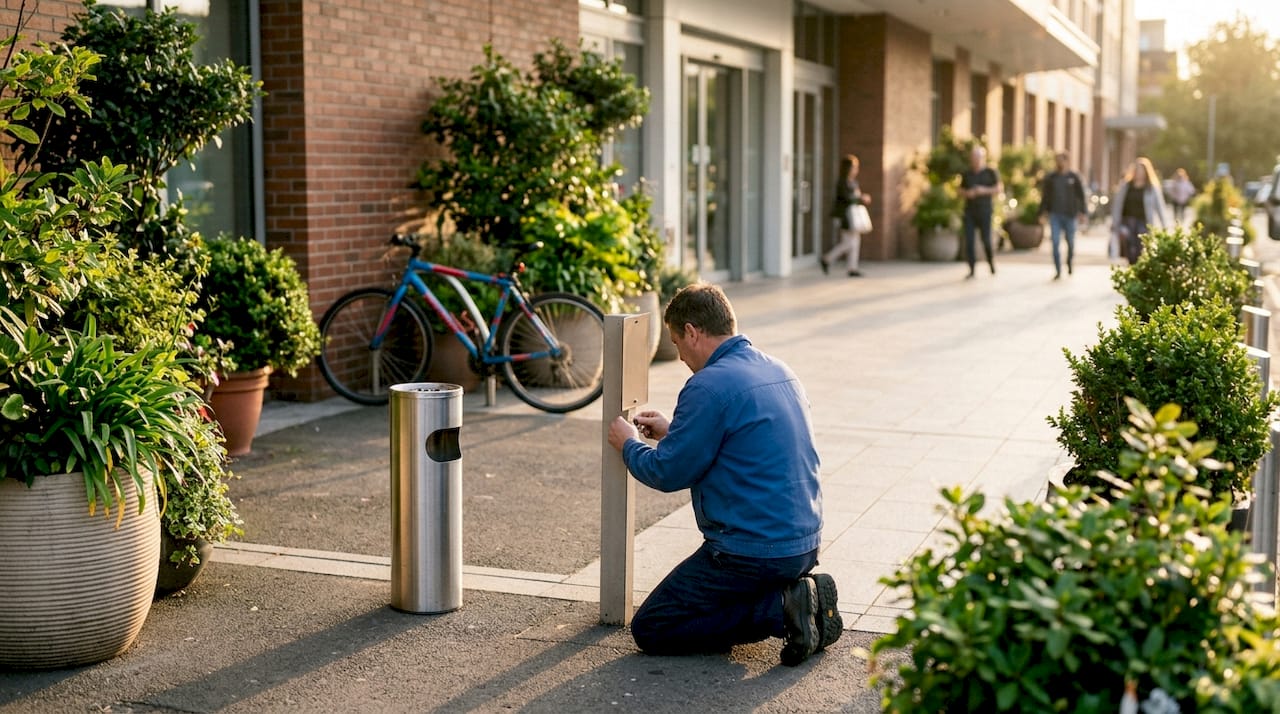
Step 3: Designate outdoor smoking areas. Place them far from building entrances, operable windows, and HVAC intakes. Distance matters because smoke toxins travel through structural gaps and ventilation systems.
Step 4: Include cessation support. Combined behavioral counseling and FDA-approved cessation medications increase quitting success well beyond the 4–7% rate seen in unaided attempts. Connecting smokers to resources is not optional if you want lasting compliance.
Step 5: Build the policy into agreements. For landlords and employers, this means lease addenda or employee handbooks. For hospitality venues, it means guest policies and staff training documentation.
Pro Tip: Plan for 6–12 months of preparation before rolling out a new smoke-free policy. Organizations that follow this timeline report 35% lower indoor particulate matter and significantly better compliance rates.
2. How to maintain and enforce smoke-free policies effectively
Policy without enforcement is decoration. Consistent follow-through is what separates a working smoke-free space from a sign on the wall.
Effective enforcement relies on a few non-negotiable practices:
- Post visible signage. Place no-smoking signs at all entrances, elevators, stairwells, and outdoor smoking boundaries. Residents and guests need constant visual reminders.
- Cover all smoke types. Policies that only mention cigarettes invite cannabis and vaping violations. Clear rules covering all smoke types prevent legal loopholes and improve compliance.
- Use a progressive response system. Start with a verbal warning, move to a written notice, then apply financial penalties or lease consequences. Evictions for violations are rare when this ladder is followed consistently.
- Conduct routine inspections. Walk common areas and check for odor, ash, or cigarette debris on a regular schedule. Document every finding.
- Educate, not just penalize. Share the health rationale behind the policy with residents and staff. People comply more readily when they understand the reason.
Pro Tip: When a violation involves odor seeping between units, document the complaint in writing immediately. This creates the record you need if the situation escalates to formal enforcement.
Enforcement aligned with standard lease or organizational violation procedures keeps the process legally defensible. Inconsistent enforcement, where some violations are ignored and others penalized, is the fastest way to lose credibility and compliance.
3. What environmental and behavioral measures support smoke-free environments?
Policy and enforcement address behavior. Environmental controls address what lingers after smoking has already occurred.
The most common misconception is that ventilation solves the problem. Ventilation, fans, and air purifiers alone cannot eliminate harmful tobacco smoke toxins or thirdhand smoke residues. Smoke particles bond with surfaces, fabrics, and walls. This is called thirdhand smoke, and it requires professional cleaning or material replacement to remove effectively.
Practical environmental measures include:
- Air quality sensors. Place them in common areas and high-risk rooms to detect particulate spikes. Match filtration units to room size using the manufacturer’s CADR (Clean Air Delivery Rate) rating.
- Designated entry zones. Create a shoe and jacket zone near the entrance so smokers do not carry residue into living spaces. This is especially relevant for households with infants or people with asthma.
- Clothing changes before caregiving. Anyone who has smoked should change clothes before holding a baby or caring for someone with a respiratory condition. Thirdhand smoke on fabric transfers directly to skin.
- Smoke-free vehicles. Extending the policy to personal vehicles used for work or family transport closes a major exposure gap that indoor policies miss.
| Measure | What it addresses | Limitation |
|---|---|---|
| HEPA air purifiers | Airborne particles | Cannot remove surface-bonded residue |
| Ventilation systems | Fresh air exchange | Smoke toxins migrate through gaps |
| Professional cleaning | Surface and fabric residue | Requires periodic retreatment |
| Air quality sensors | Real-time particulate detection | Detects, does not remove |
Pro Tip: If a space has a history of indoor smoking, tobacco smoke residue removal by a licensed professional is the only reliable way to neutralize thirdhand smoke before new occupants move in.
4. What are the health and economic benefits of smoke-free environments?
The evidence for smoke-free policies is not theoretical. It shows up in hospital admission data and healthcare budgets.
Smoke-free policies reduce hospital admissions by 5.1% for acute cardiovascular events and 20.1% for asthma incidents. That reduction translates to a median healthcare cost savings of $409,000 per 100,000 persons in the first year alone, and $1.1 million over five years. These are not marginal gains.
Key benefits for individuals and organizations include:
- Reduced chronic disease burden. Secondhand smoke exposure drives cardiovascular disease, asthma, and lung cancer. Removing the source cuts risk at the population level.
- Lower cleaning and maintenance costs. Smoke residue damages walls, carpets, HVAC filters, and furniture. Smoke-free buildings spend less on turnover cleaning and repairs.
- Reduced fire risk. Smoking-related fires are a documented cost driver for property managers and insurers. Smoke-free policies eliminate this category of risk.
- No economic harm to businesses. Research shows no negative economic impact on hospitality businesses from smoke-free policies. Many report cost savings and neutral or positive patron retention.
“Smoke-free policies protect health more effectively than partial or designated smoking areas, which fail to contain smoke toxins. The American Lung Association recommends comprehensive smoke-free policies as a standard akin to building codes, not optional upgrades.”
The economic case matters because resistance to smoke-free policies often centers on feared revenue loss. The data consistently shows those fears are unfounded.
Key Takeaways
Comprehensive smoke-free policies, combined with consistent enforcement and professional remediation, deliver measurable health and economic gains that partial measures cannot match.
| Point | Details |
|---|---|
| Written policy is the foundation | Cover all smoke types in formal agreements before enforcement begins. |
| Enforcement requires a clear ladder | Use verbal warning, written notice, then penalties to maintain credibility. |
| Ventilation is not enough | Thirdhand smoke bonds to surfaces and requires professional cleaning to remove. |
| Health gains are measurable | Smoke-free policies cut asthma hospitalizations by 20.1% and cardiovascular admissions by 5.1%. |
| Economic concerns are unfounded | Research shows no negative business impact and significant long-term cost savings. |
What I’ve learned from years of working in smoke-affected spaces
Most people underestimate how permanent smoke damage really is. They assume that opening windows, running an air purifier, or waiting a few weeks will clear a space. It does not. Thirdhand smoke bonds chemically to drywall, wood, carpet fibers, and HVAC components. A space that smells “fine” after a few days of airing out can still off-gas nicotine compounds for months.
The other mistake I see constantly is treating smoke-free policy as a one-time announcement. You post a sign, send an email, and assume the work is done. Compliance requires repetition, documentation, and a willingness to follow through on consequences. The organizations that do this well are the ones that treat their smoke-free policy the same way they treat fire safety rules: non-negotiable, consistently enforced, and regularly communicated.
Partial solutions are the most dangerous middle ground. A designated smoking room with “good ventilation” gives people false confidence while smoke toxins migrate through every structural gap in the building. The American Lung Association is explicit on this point, and the science backs it up. Full prohibition is the only approach that actually works.
My honest recommendation: combine your policy with a professional remediation of any space that has a smoking history. No policy change undoes existing residue. You need both.
— Master
Professional odor removal to complete your smoke-free plan
Creating a smoke-free space is the right call. But if the space has a history of indoor smoking, the residue does not disappear when the policy goes into effect.

Masterodorremoval specializes in permanent tobacco smoke residue elimination across homes, commercial properties, hospitality venues, and vehicles. The process uses eco-friendly odor elimination methods with no ozone or chlorine treatments, making it safe for occupants and the environment. For properties in transition, the move-in and move-out odor removal service restores interiors to a neutral baseline before new residents arrive. Same-day and next-day availability means you do not wait weeks for results. Contact Masterodorremoval’s odor removal specialists to schedule a professional assessment.
FAQ
What does a smoke-free environment policy cover?
A smoke-free environment policy prohibits smoking of all types, including tobacco, e-cigarettes, and cannabis, indoors and near building entrances. Comprehensive policies also cover outdoor areas within a set distance of air intakes and windows.
Can ventilation systems make a space smoke-free?
No. Ventilation alone cannot remove tobacco smoke toxins or thirdhand smoke residues from surfaces. Professional cleaning is required to fully remediate a space with a smoking history.
How long does it take to implement a smoke-free workplace policy?
A 6–12 month planning period improves compliance and produces better outcomes. This timeline allows for policy drafting, stakeholder communication, cessation support setup, and signage installation.
Do smoke-free policies hurt business revenue?
Research from the Community Preventive Services Task Force shows no negative economic impact on hospitality businesses. Most report cost savings from reduced cleaning and lower fire risk.
What is thirdhand smoke and why does it matter?
Thirdhand smoke is the residue left on surfaces, fabrics, and walls after smoking. It bonds chemically to materials and continues to release harmful compounds long after the smoke clears, requiring professional remediation to remove safely.
Recent Comments