
Pet-friendly travel is no longer a niche market. Millions of guests now expect to bring their animals along, and hotels that accommodate them are winning more bookings. But there’s a catch: pet odors left behind in rooms can quietly destroy your ratings, push guests to competitors, and signal a lack of care that no amount of lobby flowers can fix. The pet odor remediation market is expanding fast precisely because operators like you are realizing that odor control is not optional. It’s a core part of your guest experience strategy.
Table of Contents
- What pet odors mean for hotels
- How to identify and track persistent pet odors
- Top 7 proven pet odor removal tips for hotels
- Comparing odor removal methods: Costs, speed, and eco-friendliness
- Build a long-term pet odor management plan
- Professional pet odor removal services for hotels
- Frequently asked questions
Key Takeaways
| Point | Details |
|---|---|
| Pet odors impact reputation | Persistent pet odors can lead to poor reviews and fewer bookings for hotels and rentals. |
| Eco-friendly products work | Enzyme-based and green solutions safely eliminate organic pet odors without harsh chemicals. |
| Regular checks are vital | Routine inspection and proactive cleaning stop odors before they impact guests. |
| Professional services help | Specialists offer fast, guaranteed odor elimination when in-house solutions fall short. |
What pet odors mean for hotels
A single negative review mentioning smell can cost you dozens of future bookings. Guests are sensitive to odors in ways they aren’t always sensitive to other issues. A slightly worn carpet gets a pass. A room that smells like a dog does not. That asymmetry matters when you’re managing occupancy rates and repeat business.
Pet odors also carry health implications. Dander, urine compounds, and bacteria embedded in soft surfaces can trigger allergies and respiratory irritation in subsequent guests who never brought a pet at all. In some jurisdictions, persistent contamination in guest rooms can attract regulatory scrutiny, especially in properties that serve guests with documented sensitivities.
“The pet-friendly hospitality segment is growing rapidly, and operators who fail to address odor control risk falling behind competitors who treat it as a brand standard.”
The business case is clear. The remediation market is projected to nearly double from 2024 to 2033, driven by rising pet-friendly policies across hotel chains and independent properties. That growth reflects real demand from operators investing in solutions. You can review hotel odor removal case studies to see how properties similar to yours have tackled this challenge.
Key reasons pet odors hurt your business:
- Guest ratings drop when smell complaints appear in reviews, even if everything else is perfect
- Repeat bookings decline because guests associate the property with discomfort
- Brand perception suffers when pet-friendly policies aren’t matched by cleaning standards
- Health risks increase for allergy-prone guests staying in previously pet-occupied rooms
Now that you know why this matters, let’s look at what causes stubborn pet odors and the best ways to identify them.
How to identify and track persistent pet odors
The challenge with pet odors is that they hide. Staff doing a standard turnover clean may not catch what a fresh guest will notice the moment they open the door. Training your team to actively look for odor sources is the first line of defense.
Common hotspots include carpet fibers, upholstered headboards, curtains, HVAC vents, and the gaps between furniture and walls. Urine in particular soaks into padding beneath carpet and stays there long after the surface looks clean. Luxury property odor detection requires a more systematic approach than a quick sniff test.
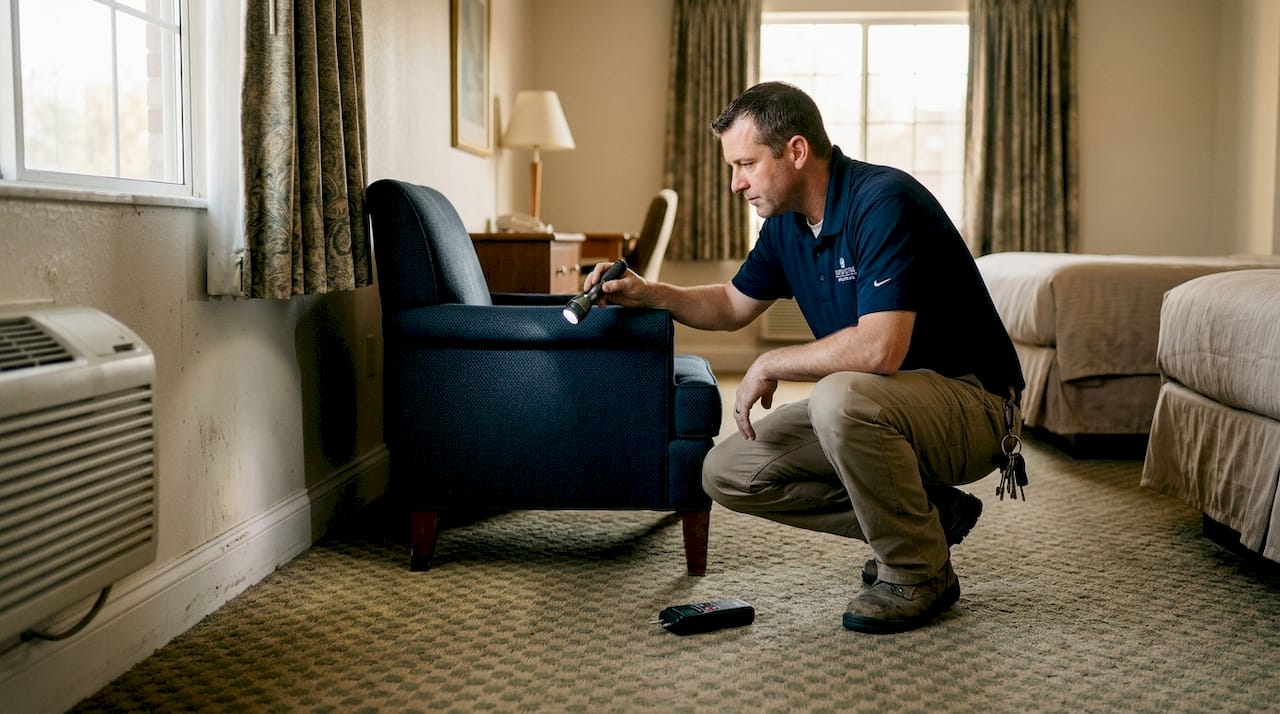
Pro Tip: Use a UV blacklight during room inspections. It reveals dried urine deposits invisible to the naked eye, letting your team target treatment precisely instead of guessing.
Here’s a practical inspection checklist for every pet-room turnover:
- Enter the room cold before any cleaning products are used, and note any odors immediately upon opening the door
- Check all soft surfaces including mattress edges, sofa cushions, curtain hems, and throw rugs
- Inspect HVAC vents and filters for trapped dander and odor-carrying particles
- Use a UV light to scan floors and lower wall areas for urine traces
- Test corners and baseboards where pets tend to mark or rest repeatedly
- Document findings by room number and date to track recurring problem areas
- Escalate to professional assessment when odors persist after two standard cleaning cycles
Note that while enzyme cleaners and targeted treatments are popular for breaking down organic odors, the detection step must come first. Treating the wrong surface wastes time and budget.
Once you’ve pinpointed odor sources, it’s time to choose the right removal methods.
Top 7 proven pet odor removal tips for hotels
Not every method works equally well in every situation. Here are seven approaches that hospitality operators rely on, along with honest notes on where each one fits.
Enzyme-based cleaners on fabrics and carpets. Enzyme cleaners remain a leading eco-friendly solution for persistent organic odors. They break down the compounds causing the smell rather than masking them. Apply directly to affected areas and allow adequate dwell time before extraction.
Deep cleaning of soft furnishings and linens. Duvets, pillow inserts, mattress toppers, and decorative cushions absorb odors deeply. Standard laundering often isn’t enough. Use high-temperature cycles and odor-neutralizing laundry additives certified for hospitality use.
HEPA air purification in rooms and common areas. High-efficiency particulate air filters capture dander and odor-carrying particles actively circulating in the room. Running a HEPA unit during and after cleaning accelerates the process significantly.
Carpet and upholstery steam cleaning. Hot water extraction reaches below the surface layer where odor compounds settle. This is especially effective after enzyme treatment, as it flushes out broken-down residue.
Regular room airing. Opening windows and running fans during turnover removes airborne odor particles before they resettle. Simple, fast, and costs nothing.
HVAC maintenance and filter replacement. Pet dander circulates through your ventilation system and redeposits in every room the system serves. Replacing filters on a tighter schedule in pet-friendly wings is non-negotiable.
Periodic professional odor assessment. Even well-managed properties benefit from scheduled professional evaluations. Explore national odor removal options to find services that fit your property’s scale and turnaround requirements.
Pro Tip: Rotate enzyme treatments with steam cleaning rather than relying on one method alone. The combination addresses both surface residue and deeper contamination more effectively than either approach used in isolation.
Quick reference for method selection:
- Isolated spots on carpet or upholstery: Enzyme cleaner plus steam extraction
- Whole-room odor after extended pet stay: Professional assessment plus HEPA purification
- Recurring odor in specific rooms: HVAC inspection plus deep soft furnishing clean
- Preventive maintenance between pet stays: Airing, filter replacement, and UV inspection
With these methods in hand, compare which ones work best for your unique property.
Comparing odor removal methods: Costs, speed, and eco-friendliness
Eco-friendly solutions such as enzyme treatments are gaining popularity among hospitality managers because they deliver results without introducing harsh chemicals that could affect subsequent guests. Here’s how the main methods stack up.
| Method | Avg. cost per room | Speed | Eco-friendly | Best for |
|---|---|---|---|---|
| Enzyme cleaner | Low | 1 to 4 hours | Yes | Spot treatment, fabrics |
| Steam cleaning | Medium | 2 to 6 hours | Yes | Carpets, upholstery |
| HEPA air purification | Medium (equipment) | Ongoing | Yes | Airborne particles |
| Professional service | Higher | Same or next day | Yes (green-certified) | Whole-room, persistent odors |
| HVAC filter replacement | Low to medium | Immediate | Yes | Systemic dander control |
Speed matters enormously in hospitality. A room that can’t be turned over costs you revenue. Most enzyme and steam combinations can be completed within a standard housekeeping window. Professional services, when scheduled proactively, also fit within tight turnaround timelines. You can explore commercial odor removal options and move-in/out odor services to understand how professional providers structure their timelines for high-turnover environments.
The eco-friendliness column matters beyond marketing. Guests with chemical sensitivities, children, and pets themselves are all affected by residual cleaning agents. Green-certified methods protect everyone in the room after treatment.
Having compared these strategies, let’s look at how to maintain a long-term odor-free environment.
Build a long-term pet odor management plan
Reactive cleaning is expensive and inconsistent. A proactive plan keeps costs predictable and guest satisfaction high. Continual investment in odor removal is critical for maintaining a competitive edge in pet-friendly hospitality, and that investment pays off in reviews, loyalty, and rate premiums.
Here’s what a sustainable plan looks like in practice:
- Designate pet-friendly rooms strategically. Cluster them near exterior access points to reduce odor migration to non-pet areas and simplify your cleaning protocols.
- Create a dedicated cleaning protocol for pet rooms that goes beyond standard turnover, including UV inspection, enzyme treatment, and HVAC filter checks.
- Train staff regularly on odor identification, proper product application, and escalation procedures when standard cleaning doesn’t resolve the issue.
- Communicate clearly with guests about your pet policies, cleaning standards, and any fees associated with deep cleaning after their stay.
- Monitor guest feedback actively. A single mention of smell in a review is a signal, not an anomaly. Track it, investigate the room, and adjust your protocol.
- Schedule professional assessments quarterly or after any extended pet stay to catch issues before they become embedded.
Pro Tip: Add a brief post-stay survey question specifically about room freshness for guests in pet-friendly rooms. The data will tell you exactly which rooms need more attention before a review does.
For properties managing multiple locations or high volumes of pet-friendly rooms, nationwide odor management services can provide consistent standards across your entire portfolio without requiring you to source and vet local vendors in every market.
For those seeking deeper expertise or ready-made solutions, professional support can help ensure every room is guest-ready.
Professional pet odor removal services for hotels
At some point, in-house protocols hit their limits. Deeply embedded odors in mattresses, subfloor contamination from urine, or persistent smells that survive multiple cleaning cycles all require a level of expertise and equipment that goes beyond what most housekeeping teams carry.

Master Odor Removal works with hotels and vacation rental operators to deliver permanent odor elimination using green-certified, eco-friendly methods. No ozone. No chlorine. No cover-ups. Just clean, neutral interiors that your next guest will notice for all the right reasons. With same or next-day availability, our licensed professionals fit into your turnover schedule without disrupting operations. Whether you need a one-time deep treatment or a recurring assessment program, explore Odor Removal Done Right to see how we approach hospitality environments. Our Odor Removal Specialists bring the tools and expertise to handle even the most persistent cases, and our Green Odor Elimination methods ensure every treated room is safe for guests, staff, and pets alike.
Frequently asked questions
Which pet odor removal method is safest for hotel guests and staff?
Enzyme-based cleaners are widely favored for their low toxicity and effectiveness on organic odors, making them a safe choice for occupied hospitality environments. Green-certified professional treatments offer the same safety profile at a larger scale.
How fast do professional odor remediation services work for hotel turnovers?
Most professional treatments are designed to deliver results within hours, and providers like Master Odor Removal offer same or next-day availability to keep your rooms on schedule. Fast, effective remediation is a core expectation in hospitality-focused services.
Are there truly eco-friendly solutions for pet odor in hotels?
Yes. Eco-friendly enzyme treatments and green-certified professional services are now standard options in the hospitality industry, offering effective odor removal without harsh chemicals or environmental trade-offs.
What are early signs of persistent pet odor problems in guest rooms?
Subtle smells that return after cleaning, repeated complaints tied to specific rooms, and visible staining under UV light are all early warning signs that standard protocols aren’t reaching the source of the problem.
Recommended
- Move-In and Move-Out Cleaning Odor Removal Service – Master Odor Removal
- Try These Odor Removal Tips Before You Call An Odor Removal Professional – Master Odor Removal
- Identify signs of persistent odors in luxury properties – Master Odor Removal
- Tobacco Smoke and Marjuana Smoke Odor Removal in Homes and Airbnbs – Master Odor Removal
Recent Comments