
Most property managers assume an odor removal guarantee means one visit, one treatment, and the problem disappears forever. That assumption is wrong, and it costs luxury properties dearly. A true guarantee is conditional, method-specific, and only as strong as the preparation behind it. In high-end residential towers, boutique hotels, and upscale commercial spaces, even a faint lingering smell can trigger complaints, damage reputation, and push tenants toward competitors. Understanding exactly what backs a legitimate guarantee, which eco-friendly methods qualify, and how to verify results is not optional. It is the difference between a resolved problem and a recurring one.
Table of Contents
- What does an odor removal guarantee actually mean?
- Eco-friendly odor removal methods: What makes them reliable?
- Challenging odor scenarios: Edge cases and multi-step guarantees
- Validating odor removal: Air quality tests, walkthroughs, and post-treatment options
- The inconvenient truth about odor removal guarantees in luxury settings
- Connect with guaranteed eco-friendly odor removal experts
- Frequently asked questions
Key Takeaways
| Point | Details |
|---|---|
| Define guarantee scope | A valid odor removal guarantee should specify what it covers and the client’s responsibilities for source removal. |
| Choose right method | Matching treatment technique to odor type ensures effectiveness and sustainable eco-friendly results. |
| Address edge cases | Persistent or complex odors require multi-step approaches and adapted guarantees for luxury properties. |
| Verify removal | Objective testing—like air quality checks and property walkthroughs—validates success and protects satisfaction. |
| Sustain results | Using post-removal options such as HVAC fragrance diffusion can maintain freshness and enhance property value. |
What does an odor removal guarantee actually mean?
A guarantee in odor removal is not a blanket promise. It is a structured commitment tied to specific conditions, and luxury clients need to read those conditions carefully before signing off on any service.
At its core, a guarantee covers the elimination of a defined odor type within a defined scope. That might mean tobacco odor in a penthouse unit, pet odor in a ground-floor suite, or mildew in a commercial lobby. The guarantee applies to the treated area under the conditions present at the time of service. It does not extend to new contamination introduced after treatment, and it does not survive if the source of the odor was never fully removed.
Here is what reputable odor removal guarantees typically cover and exclude:
- Covered: Odors from tobacco, marijuana, pets, mildew, food, and smoke in treated interior spaces
- Covered: Re-treatment at no charge if the original odor returns within the guarantee window
- Excluded: Odors that return due to unresolved moisture, structural damage, or active contamination
- Excluded: Areas where recommended replacements (such as carpets or drywall) were not completed before treatment
- Excluded: Cases where another chemical process was applied after treatment but before re-inspection
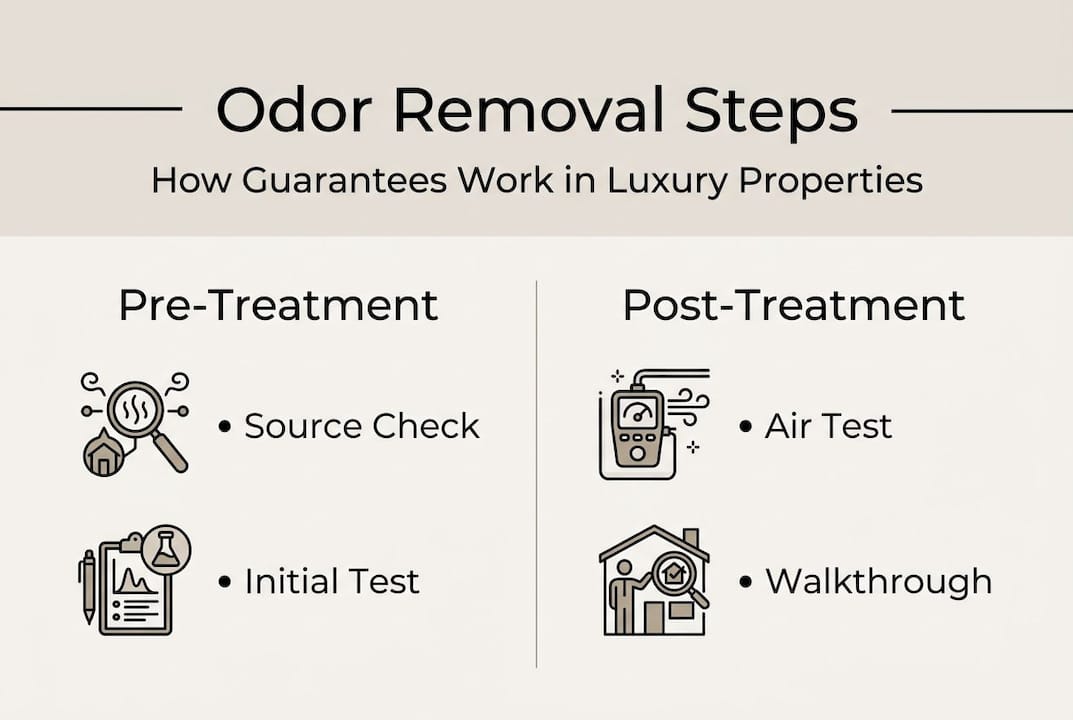
Verification is a critical part of any credible guarantee. Air quality testing before and after treatment gives both parties an objective baseline. A walkthrough with the property manager following treatment confirms the result is tangible, not just claimed. As expert deodorization guidance confirms, guarantees hold only after the source is removed, and the right method must match the odor type, whether biological or smoke-based, with air quality tests providing verification.
Pro Tip: Before scheduling any treatment, document the odor source in writing. Photographs, maintenance logs, and prior inspection reports all support a stronger guarantee and prevent disputes later.
For luxury clients specifically, the expectation is zero return complaints. That standard requires more than a standard service agreement. It requires a provider with nationwide odor removal experience across diverse property types, the ability to adapt protocols to unique building configurations, and a satisfaction policy that puts the client first.
Eco-friendly odor removal methods: What makes them reliable?
The method a provider uses determines whether a guarantee is realistic or just marketing language. In luxury settings, eco-friendly methods are not just preferred, they are often required by building codes, tenant agreements, and sustainability commitments. Knowing which method fits which situation is what separates a credible guarantee from a hollow one.
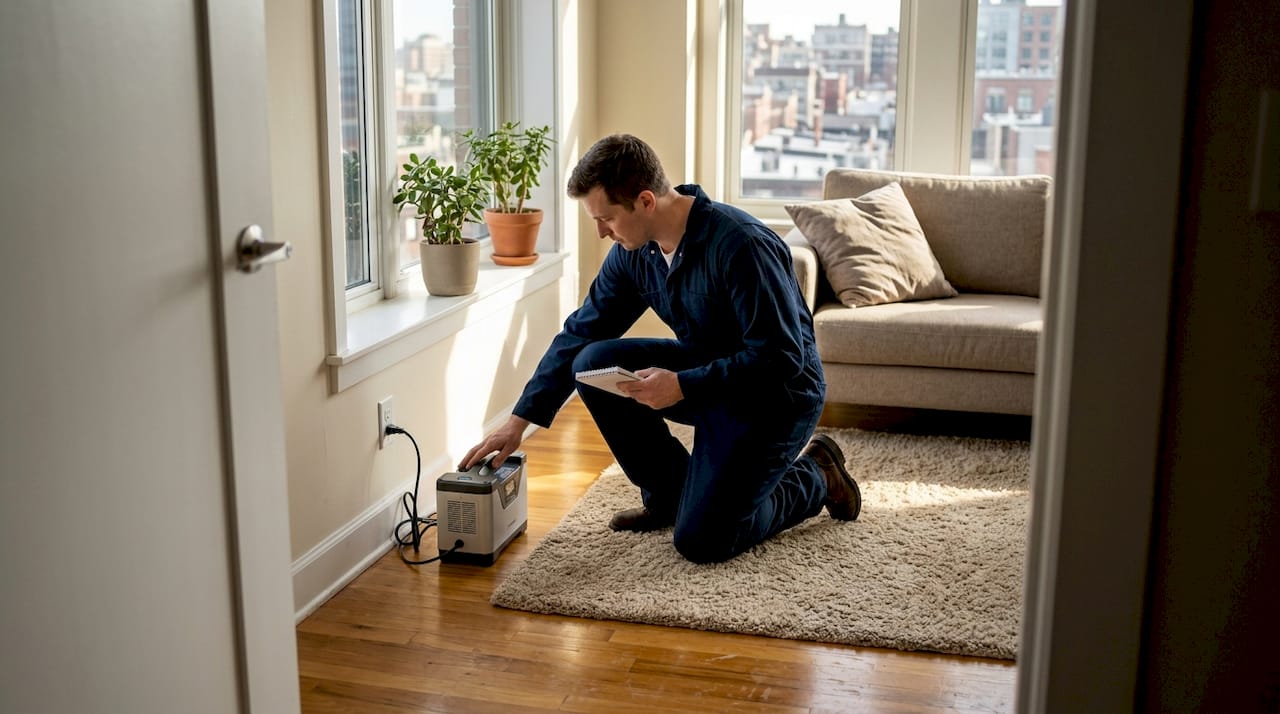
The three primary professional methods are hydroxyl generation, ozone generation, and thermal fogging. Each has a distinct profile:
| Method | How it works | Safe during occupancy? | Best for |
|---|---|---|---|
| Hydroxyl generation | Destroys odor molecules using UV-generated radicals | Yes | Ongoing occupancy, sensitive environments |
| Ozone generation | Oxidizes odor compounds at high concentration | No, requires evacuation | Severe smoke, mold, unoccupied spaces |
| Thermal fogging | Fine particle penetration into porous surfaces | Depends on product used | Deep-set odors in walls, furniture, flooring |
As deodorization methodology research outlines, hydroxyl generation is eco-friendly and safe for occupied spaces because it permanently destroys odor molecules rather than masking them. Ozone is faster but requires full evacuation due to health risks. Thermal fogging penetrates surfaces with fine particles and leaves a residual deodorizing effect.
For luxury properties, hydroxyl is often the default choice because it allows treatment without disrupting residents or guests. However, it requires longer dwell time than ozone. Understanding this tradeoff is essential when structuring a guarantee timeline.
- Hydroxyl works best in occupied suites, hotel rooms, and offices where downtime is not an option
- Ozone delivers faster results in vacant units undergoing turnover between tenants
- Thermal fogging reaches inside walls, subflooring, and HVAC ducts where surface treatments cannot penetrate
The comparison between chemical vs gas approaches matters significantly when the odor is embedded in building materials rather than just surface-level. Choosing the wrong method does not just produce poor results. It voids the guarantee entirely because the odor source was never fully addressed.
Pro Tip: Ask your provider to specify in writing which method will be used and why it matches your odor type. A provider who cannot explain the rationale is not ready to back a guarantee.
Following eco-friendly odor removal standards also protects your property from chemical residue, off-gassing, and tenant health complaints that can arise from aggressive treatments like chlorine or ozone in occupied buildings.
Challenging odor scenarios: Edge cases and multi-step guarantees
Not every odor situation fits a straightforward protocol. Luxury properties face scenarios that require layered treatment plans, and guarantees in these cases are structured differently.
Trash rooms, commercial kitchens, pet-friendly common areas, and units with long-term tobacco use all present multi-source contamination. A single treatment rarely resolves these completely. Reputable providers structure their guarantees around a stepwise protocol:
- Source removal and surface cleaning
- Primary odor treatment (hydroxyl, fogging, or enzyme application)
- HVAC diffusion to address airborne residue throughout the building
As property management odor research confirms, persistent odors in trash rooms require a multi-tiered approach combining cleaning, hydroxyl or ozone treatment, and HVAC diffusion. Pet urine and smoke odors specifically need enzyme pre-treatment to break down biological compounds before gas-phase treatment can work. Guarantees fail when a moisture source persists beneath treated surfaces.
Here is a breakdown of common edge cases and their guarantee implications:
| Scenario | Required steps | Guarantee risk factor |
|---|---|---|
| Trash room odor | Cleaning, hydroxyl, HVAC diffusion | Recontamination if bins not replaced |
| Pet urine in flooring | Enzyme pre-treatment, thermal fogging | Subfloor moisture not addressed |
| Long-term tobacco in walls | Surface cleaning, hydroxyl, re-inspection | Paint or drywall not replaced |
| Mildew in HVAC system | Duct cleaning, fogging, air quality test | Active moisture source not fixed |
Knowing the signs of persistent odors before treatment begins allows the provider to set realistic guarantee terms. If the subfloor under a pet-damaged unit is saturated, no treatment will hold until that material is replaced. Enzyme pre-treatment breaks down uric acid crystals, but it cannot replace structural remediation.
Using low-VOC paint application after odor treatment in repainted units also reduces the risk of new chemical smells conflicting with the treated environment, which matters in luxury settings where air quality is closely monitored.
For long-term success, preventing property odors through scheduled maintenance protocols reduces the frequency of intensive treatments and keeps guarantee claims to a minimum.
Validating odor removal: Air quality tests, walkthroughs, and post-treatment options
A guarantee without verification is just a promise. Luxury property managers need objective proof that treatment worked, and that proof comes from structured post-treatment validation.
Here is the standard validation sequence used by professional providers:
- Pre-treatment air quality baseline: Measure VOC levels (volatile organic compounds, the chemical markers of odor) and particulate counts before treatment begins
- Immediate post-treatment reading: Confirm that VOC levels have dropped to acceptable thresholds within hours of treatment completion
- Joint walkthrough: Property manager and technician inspect all treated areas together, noting any areas that need follow-up
- Seven-day re-inspection: A follow-up visit within the guarantee window to confirm results have held under normal occupancy conditions
- Documentation: Written report with before-and-after readings provided to the property manager for records
As post-treatment maintenance guidance recommends, integrating HVAC fragrance diffusion after odor removal sustains satisfaction in luxury sectors and enhances both property value and resident perception. This is not about masking odors. It is about maintaining a neutral, premium-quality air environment that aligns with the property’s brand.
“The goal is not just an odor-free space. It is an environment where the absence of odor is itself a quality signal to residents and guests.”
Air quality data also protects property managers legally. If a tenant later claims the unit was not properly treated, documented air quality assessment results provide clear evidence of the standard reached at the time of service. That documentation matters in luxury residential leasing and commercial property management where liability is always a consideration.
Following established odor removal standards throughout the validation process ensures the guarantee is defensible, not just verbal.
The inconvenient truth about odor removal guarantees in luxury settings
Here is what the industry rarely says out loud: most guarantee failures are not the provider’s fault. They are the result of clients expecting a single treatment to override years of contamination, unresolved structural issues, or ongoing sources that were never addressed.
We have seen penthouse units where tobacco odor had penetrated drywall, subflooring, and HVAC ducts over a decade of occupancy. A single hydroxyl session will not fix that. Neither will any other single method. What fixes it is a staged protocol, honest scope-setting, and a client willing to follow through on recommended replacements.
As expert deodorization guidance makes clear, guarantees hold only after the source is removed, and matching the method to the odor type with air quality verification is what makes a guarantee real. Luxury properties are complex environments. They deserve complex, honest solutions, not oversimplified promises.
Knowing the persistent odor signs before committing to a guarantee scope is the first step every serious property manager should take.
Connect with guaranteed eco-friendly odor removal experts
If you manage luxury residential or commercial properties and need odor removal that actually holds up, the next step is a consultation with specialists who understand your standards.

Our odor removal specialists work with property managers across the country, delivering stepwise treatment protocols backed by a satisfaction guarantee. We use green odor elimination methods that are safe for occupied spaces, compliant with eco-friendly building standards, and proven across luxury residential, hospitality, and commercial environments. Whether you need a single-unit treatment or a building-wide protocol, our nationwide odor removal services are available same or next day. Reach out today and get a customized plan with clear guarantee terms.
Frequently asked questions
Can odor removal guarantees cover pet urine and smoke odors?
Odor removal guarantees can cover pet urine and smoke odors, but only after enzyme pre-treatment and full source removal. Lingering moisture or active contamination will void the guarantee.
Are eco-friendly odor removal methods as effective as traditional ones?
Yes. Hydroxyl generation is eco-friendly, safe for occupied spaces, and permanently destroys odor molecules, making it highly effective when matched correctly to the odor type.
How do property managers confirm odor removal has worked?
Managers use air quality tests and joint walkthroughs with technicians to objectively verify odor elimination after treatment.
What happens if the odor returns after treatment?
If the odor returns due to an unresolved source like persistent moisture, the guarantee typically does not apply. Additional remediation of the underlying cause is required before re-treatment.
Do luxury properties need special odor removal approaches?
Luxury properties typically require multi-step protocols and HVAC fragrance diffusion post-removal to maintain air quality standards and sustain resident satisfaction long-term.
Recent Comments