
The deal-breaking property odors that repel buyers and high-end clients fastest are cigarette smoke, pet urine and dander, mold and mustiness, sewer gas, heavy artificial masking scents, food and grease smoke, and marijuana smoke. If any of these are present and persistent in a home, yacht, vehicle, or commercial property, call a professional eco-friendly odor removal service — surface sprays and air fresheners will not fix them. Experts rank stale cigarette smoke among the smells that instantly repel buyers, and buyers interpret strong odors as evidence of hidden damage before they even look at the floor plan.
- Cigarette and marijuana smoke (absorbed into walls, HVAC, upholstery)
- Pet urine and dander (carpet padding, subfloor, drywall)
- Mold and mustiness (hidden moisture, HVAC biofilm)
- Sewer gas or rotten-egg smell (dry P-traps, plumbing failure)
- Heavy artificial masking scents (candles, plug-ins, chemical sprays)
- Food, grease, and cooking smoke (range hood, ducts, cabinetry)
- Decaying organic material (trash, disposal, hidden sources)
Table of Contents
- The Full List of Property Odor Turn-Offs and Their Urgency
- Why Masking and Airing Out Usually Fail
- How a Professional Eco-Friendly Team Diagnoses and Removes Odors
- Timeline and Cost Factors for Odor Remediation
- What to Ask an Odor-Removal Pro Before You Hire
- Key Takeaways
- Why Eco-Friendly Methods Are the Right Call for Luxury Properties
- Masterodorremoval: Eco-Friendly Odor Removal When You Need It Fast
- Useful Sources and Further Reading
The Full List of Property Odor Turn-Offs and Their Urgency
Every odor below is a documented deal-breaker in real estate and luxury property management. The urgency rating reflects health risks, buyer perception, and the likelihood of hidden structural damage.
| Odor | Typical Cause | Urgency | Why It Matters |
|---|---|---|---|
| Cigarette smoke | Walls, ceilings, carpet, HVAC, window coverings | Immediate | VOCs re-emit for years; signals long-term contamination |
| Marijuana smoke | Same absorption pattern as tobacco; often underestimated | Immediate | Buyers associate it with habitability and legal concerns |
| Pet urine | Carpet padding, subfloor, baseboards, drywall | Immediate | Uric acid crystals re-activate with humidity; very hard to mask |
| Mold and mustiness | Hidden leaks, HVAC coil biofilm, damp basements | Immediate | Health risk; affects insurability and valuation |
| Sewer gas | Dry P-traps, cracked pipes, failed wax rings | Immediate | Potential safety hazard; signals costly plumbing repairs |
| Pet dander and general animal odor | Bedding, upholstery, air ducts | High | Triggers allergies; buyers assume deep cleaning costs |
| Food and grease smoke | Range hood, duct interiors, cabinetry surfaces | High | Absorbed into porous surfaces; ventilation alone won’t clear it |
| Heavy masking scents | Candles, plug-ins, chemical sprays used to cover other odors | High | Buyers read heavy fragrance as a cover-up; raises suspicion |
| Decaying organic material | Trash, disposal, dead pests inside walls | Moderate | Signals poor maintenance; some sources require structural access |
| Stale or closed-up air | Poor ventilation, damp laundry, closed rooms | Moderate | Suggests moisture or neglect; fixable but needs diagnosis |
Sewer gas and mold-related smells carry the highest urgency because they often point to safety or structural problems that affect valuation and insurability — not just buyer comfort.
Why Masking and Airing Out Usually Fail
Spraying air freshener over a smoke or pet odor problem is roughly as effective as painting over rust. The smell comes back because the source is still there.
Persistent property odors fall into three categories: microbial growth, absorbed organic contamination (smoke, cooking, biological waste), and residual incident damage. VOCs and odor molecules from all three categories absorb into porous materials — drywall, carpet padding, wood framing, upholstery foam — and re-emit continuously. Running fans or burning candles dilutes the scent temporarily but does nothing to the source.
HVAC systems make this worse. Microbial biofilms on evaporator coils and condensate pans produce a musty or “dirty sock” smell that spreads to every room when the system runs. Cleaning the air without cleaning the coils just redistributes the problem.
The only effective long-term strategy for persistent odors tied to VOCs and microbial growth is identifying and eliminating the source — not dilution or masking. ATSDR guidance recommends fixing leaks, removing contaminated materials, and addressing root causes before any deodorization step.
| Approach | What It Does | Result |
|---|---|---|
| Air fresheners / candles | Adds a competing scent | Temporary; odor returns within hours or days |
| Ventilation / airing out | Dilutes airborne molecules | Temporary; absorbed VOCs continue to re-emit |
| Ozone or chlorine treatment | Oxidizes surface odors | Can damage luxury materials; does not remove absorbed organics |
| Source elimination + green neutralization | Removes contaminated material, neutralizes residual molecules | Permanent when combined with HVAC cleaning and verification |
How a Professional Eco-Friendly Team Diagnoses and Removes Odors
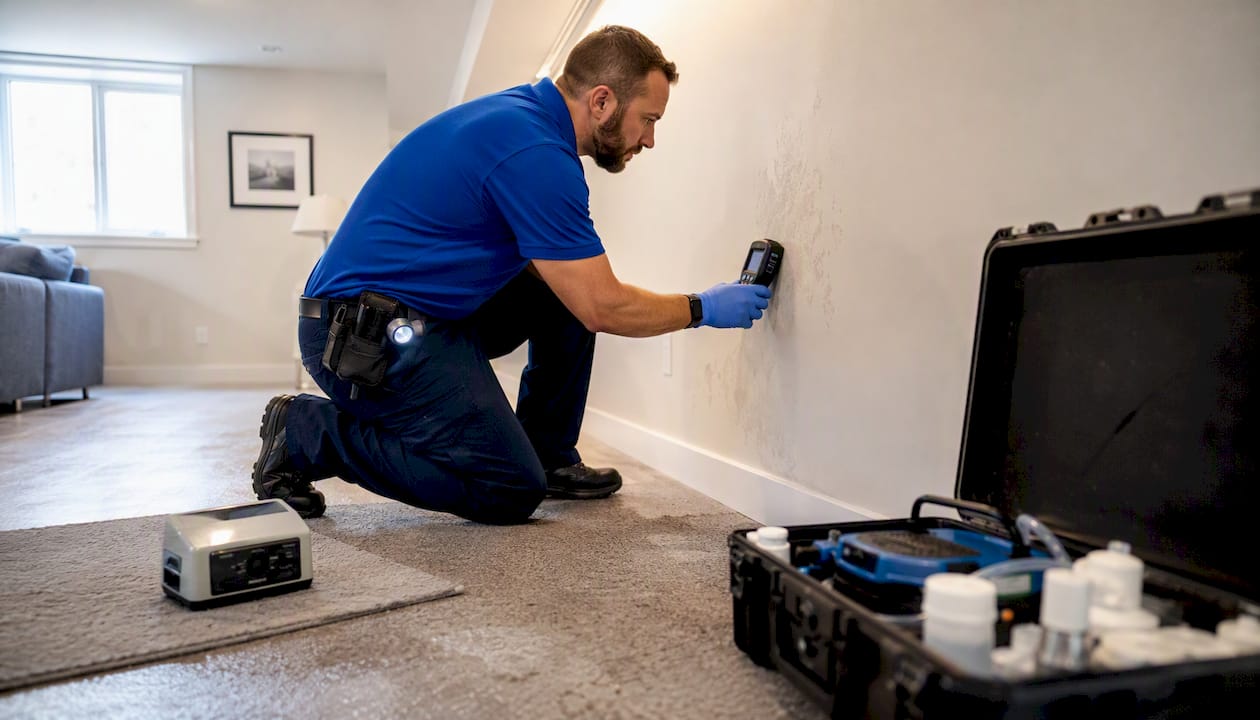
Professional diagnosis is not a sniff test. It combines visual inspection, moisture testing, olfactory mapping, and HVAC assessment before any treatment begins — and the science-backed workflow matters as much as the products used.
Step-by-step professional process:
- Intake and visual inspection — Technicians document visible staining, water damage, and material conditions throughout the property.
- Olfactory mapping — Each room and zone is assessed to identify odor intensity and likely source locations, including closets, crawl spaces, and HVAC returns.
- Moisture and P-trap testing — Musty odors almost always trace to moisture in unexpected places: hidden leaks behind drywall, dry P-traps allowing sewer gas, or damp basement materials.
- HVAC inspection — Coils, condensate pans, ductwork, and air handlers are assessed for biofilm and odor redistribution.
- Targeted source removal — Contaminated padding, insulation, or materials are removed before any neutralization step.
- Material repair or replacement — Subfloor sealing, drywall replacement, or upholstery removal as needed.
- Green neutralization — Eco-friendly, non-ozone, non-chlorine agents are applied to neutralize residual odor molecules without damaging luxury surfaces.
- Follow-up verification — Olfactory re-testing or VOC measurement confirms the odor is gone, not just reduced.
Pro Tip: Ask the technician to inspect the HVAC air handler coils early in the process. Contaminated coils spread odors to every room whenever the system runs, and treating surfaces without addressing the HVAC often means the smell returns within weeks.
What to expect on your first on-site visit:
- A full walkthrough with the technician, not just a quote over the phone
- Moisture readings in suspect areas (basement, bathroom, kitchen)
- A written scope of work identifying sources, materials affected, and proposed methods
- A clear explanation of what will be removed versus treated in place
- A timeline and a satisfaction or re-visit guarantee in writing
Timeline and Cost Factors for Odor Remediation
Most jobs fall somewhere between a same-day spot treatment and a multi-week full-interior restoration. Where yours lands depends on the odor source, how long it has been present, and what materials are affected.
Major cost drivers:
- Source type: Urine and mold require material removal and are more labor-intensive than cooking smoke or stale air.
- Material affected: Leather, marine upholstery, and custom millwork require specialized handling that adds time and cost.
- Accessibility: Odors inside wall cavities, under flooring, or in HVAC ductwork require more invasive work.
- HVAC scope: Coil cleaning and duct treatment add cost but are often unavoidable for whole-property results.
- Property size and type: A yacht salon or a luxury vehicle interior has different constraints than a 4,000-square-foot home.
| Scenario | Typical Timeline | Common Hidden Cost |
|---|---|---|
| Single-room smoke or cooking odor | Same day to 1–2 days | HVAC filter and duct treatment if odor has spread |
| Pet urine in carpet and padding | 1–3 days | Subfloor sealing or replacement if uric acid has penetrated |
| Whole-home mold and mustiness | 1–2 weeks | Hidden moisture remediation, drywall replacement |
| Yacht or luxury vehicle interior | 1–3 days | Upholstery removal, bilge or trunk liner treatment |
| Full commercial or hospitality property | 1–4 weeks | HVAC system cleaning, recurring maintenance contract |
Renovation-related odors from fresh paint are worth flagging separately. VOCs from conventional paints can linger and contribute to persistent indoor smells; specifying low-VOC finishes during any repair work reduces the chance of introducing new odor problems after remediation.
What to Ask an Odor-Removal Pro Before You Hire
Vetting a provider takes five minutes and protects you from contractors who mask rather than remove.
Questions to ask:
- What is your inspection methodology? Do you use moisture testing and HVAC assessment, or just a visual walkthrough?
- Are your methods green-certified? Do you use ozone or chlorine treatments?
- Can you provide before-and-after documentation or case studies for similar properties?
- What is your guarantee? Will you return at no charge if the odor comes back?
- Are your technicians licensed and trained in odor source identification?
Red flags:
- Reliance on air fresheners, ozone machines, or chlorine-only treatments
- No moisture or HVAC testing in the scope of work
- Vague guarantees with no re-visit clause
- No written scope identifying materials to be removed or replaced
- Inability to show certifications or case studies on request
Contract items to request in writing:
- Full scope of work with specific materials to be removed or treated
- Verification method (olfactory re-test, VOC measurement, or both)
- Satisfaction guarantee with a defined re-visit or refund policy
- Green certification documentation for products used
- Timeline and any conditions that could extend the scope
Key Takeaways
The most effective approach to property odor turn-offs is source elimination, not masking — and HVAC inspection is the step most providers skip.
| Point | Details |
|---|---|
| Top deal-breaking odors | Cigarette smoke, pet urine, mold, sewer gas, and heavy masking scents are the fastest buyer turn-offs. |
| Masking always fails long-term | VOCs and absorbed organics re-emit from porous materials; only source removal delivers permanent results. |
| HVAC is the hidden spreader | Contaminated coils redistribute odors throughout a property; always include HVAC in the scope. |
| Sewer gas and mold need immediate action | Both indicate structural or safety issues that affect valuation and insurability, not just showability. |
| Masterodorremoval’s approach | Masterodorremoval uses green-certified, non-ozone, non-chlorine methods with licensed technicians and same/next-day availability. |
Why Eco-Friendly Methods Are the Right Call for Luxury Properties
Eco-friendly odor removal is not a marketing preference. It is the technically correct choice for high-value interiors, and the distinction matters more than most property managers realize.
Ozone and chlorine treatments can permanently damage leather, silk, and custom wood finishes — the exact materials that define a luxury interior. Green-certified neutralizers work at the molecular level without oxidizing surfaces, which means a yacht salon or a hand-stitched vehicle cabin comes out of treatment in the same condition it went in. That is not a minor detail when you are protecting a seven-figure asset.
The trust signals worth looking for in any provider: a documented visual plus moisture plus HVAC inspection methodology, green-certified neutralizers with no ozone or chlorine, licensed technicians with verifiable case studies across luxury vehicles, yachts, and high-end residential properties, and a written satisfaction guarantee with same or next-day availability. Masterodorremoval’s luxury interior specialization is built around exactly these standards. Ask any provider you consider for their certifications and case studies before signing anything.
Masterodorremoval: Eco-Friendly Odor Removal When You Need It Fast
When the odor is real and the property is high-value, the difference between a masked smell and a permanently eliminated one is the difference between a closed deal and a price reduction.

Masterodorremoval serves luxury homeowners, real estate agents, yacht and boat owners, auto dealerships, hotels, and Airbnb operators with green-certified odor elimination that uses no ozone and no chlorine. Every job starts with a full inspection, includes HVAC assessment, and ends with verification testing. Same-day and next-day appointments are available, and every service comes with a satisfaction guarantee. For commercial properties and hospitality venues, ongoing maintenance contracts keep interiors consistently fresh between turnovers. Contact Masterodorremoval to schedule your on-site assessment and get a written scope of work before any treatment begins.
Useful Sources and Further Reading
- ATSDR Odor Control Guidance (CDC Archive) — Authority guidance on source identification and elimination for VOC-related and microbial odors
- 41 Smells That Repel Buyers — HomeStratosphere — Ranked list of buyer turn-off odors compiled from real estate experts
- Persistent Property Odour Removal — Ideal Response — Industry breakdown of odor categories and why absorbed organics require source removal
- Why Does My House Smell Musty? — HomeFixer101 — Practical diagnostics for locating moisture-related odor sources
- 7 Odors That Scare Buyers Away — Donahue Property Group — Real estate perspective on urgency and buyer perception
- Low-VOC Paints and Indoor Air Quality — Solshine — Guidance on reducing VOC introduction during renovation and repair
- Science-Backed Eco-Friendly Odor Elimination — Masterodorremoval — Four-step professional workflow used by Masterodorremoval
- Tobacco and Marijuana Smoke Odor Removal — Masterodorremoval — Detailed guidance on smoke residue remediation across vehicles and residences
- Pet Odor Elimination — Masterodorremoval — Eco-friendly solutions for pet urine, dander, and persistent animal odors
Recent Comments