
TL;DR:
- Tobacco odor is deeply bonded to porous surfaces, making it difficult to eliminate with surface cleaning alone.
- Effective removal requires advanced air filtration, thorough surface treatment, and HVAC system cleaning.
- Professional intervention using specialized filters and materials offers the best chance for permanent odor neutralization.
You’ve scrubbed the walls, washed every curtain, and burned through two cans of air freshener, yet that stale tobacco smell is still there, greeting you every time you walk through the front door. Tobacco odor is uniquely stubborn because it is not just a smell sitting on surfaces. It is a cocktail of chemicals that have physically bonded to your walls, floors, and furniture. This guide walks you through exactly why that happens, what tools you actually need, and the step-by-step process that professionals use to make tobacco odor disappear for good, not just for a few days.
Table of Contents
- What causes persistent tobacco odors in homes?
- Essential tools and materials for tobacco odor removal
- Step-by-step: Neutralizing tobacco smell for good
- How to verify results and avoid common pitfalls
- A fresh take: Why most tobacco odor fixes fail (and what actually works)
- Choose professional help for guaranteed tobacco odor removal
- Frequently asked questions
Key Takeaways
| Point | Details |
|---|---|
| Persistent problem | Tobacco odor deeply permeates surfaces and air, requiring more than surface cleaning to eliminate. |
| Science-backed tools | Citric acid-treated HEPA filters and targeted cleaning offer the most effective tobacco odor removal. |
| Step-by-step solution | Following preparation, specialized cleaning, air purification, and verification steps removes odor for good. |
| Professional support | Professional odor removal services ensure complete neutralization when DIY methods are not enough. |
What causes persistent tobacco odors in homes?
Tobacco smoke is not a single substance. It is a mixture of more than 7,000 chemicals, including nicotine, formaldehyde, benzene, and dozens of volatile organic compounds (VOCs). VOCs are gases that evaporate easily at room temperature and travel quickly through the air, which is why the smell spreads so fast and so far.
Once those particles land, they do not just sit on top of a surface. They penetrate into it. Porous materials like drywall, wood, fabric, and carpet act almost like sponges, absorbing smoke compounds deep into their structure. Even painted walls develop a thin film of nicotine and tar that slowly releases odor back into the room over weeks and months. This process is called off-gassing, and it is why rooms can still smell like smoke long after no one has smoked in them.
Here is a breakdown of the most common surfaces where tobacco residue hides:
- Soft furnishings: Sofas, mattresses, rugs, curtains
- Walls and ceilings: Especially flat or matte-painted surfaces
- HVAC ducts and filters: Nicotine and particulates from smoke penetrate porous materials and spread through air handling systems, circulating odor into every room
- Subflooring and insulation: Beneath carpet or hardwood where chemicals pool
- Wood cabinetry and trim: High surface area materials that trap residue
“Thirdhand smoke residue on surfaces continues to release harmful gases for years after active smoking has stopped, making surface treatment a critical component of any removal plan.”
Your HVAC system deserves special attention. When smoky air cycles through the system, residue coats the ductwork, the blower, and the filter media. Every time the system runs, it redistributes those odor molecules through your entire home. Understanding the tobacco odor removal basics helps explain why a room-by-room cleaning approach alone almost never delivers lasting results.
| Surface type | Odor retention level | Ease of cleaning |
|---|---|---|
| Carpet and rugs | Very high | Moderate |
| Upholstered furniture | Very high | Difficult |
| Painted drywall | High | Moderate |
| Hard floors (wood/tile) | Moderate | Easy to moderate |
| HVAC ducts | High | Requires professional |
| Glass and metal | Low | Easy |
Understanding the tobacco smoke residue impacts on different materials helps you prioritize where to focus your energy and budget during remediation.
Essential tools and materials for tobacco odor removal
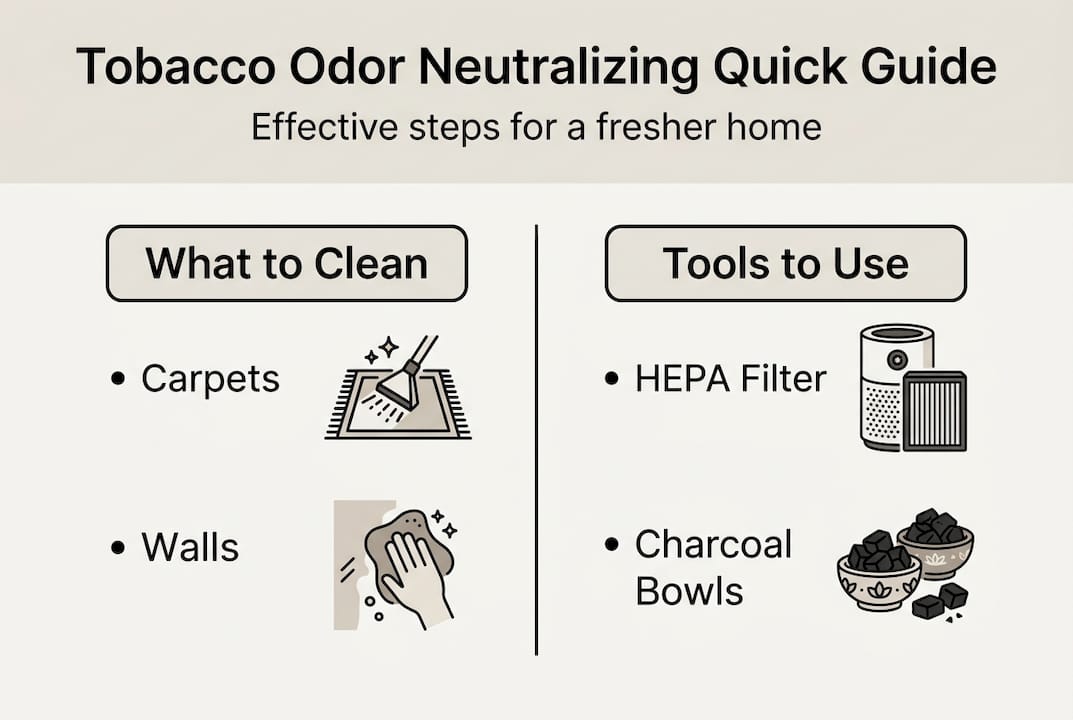
To address these stubborn odors, the right tools can make all the difference. Walking into a hardware store and grabbing whatever says “odor eliminator” on the label is a reliable way to waste money. Here is what actually works.
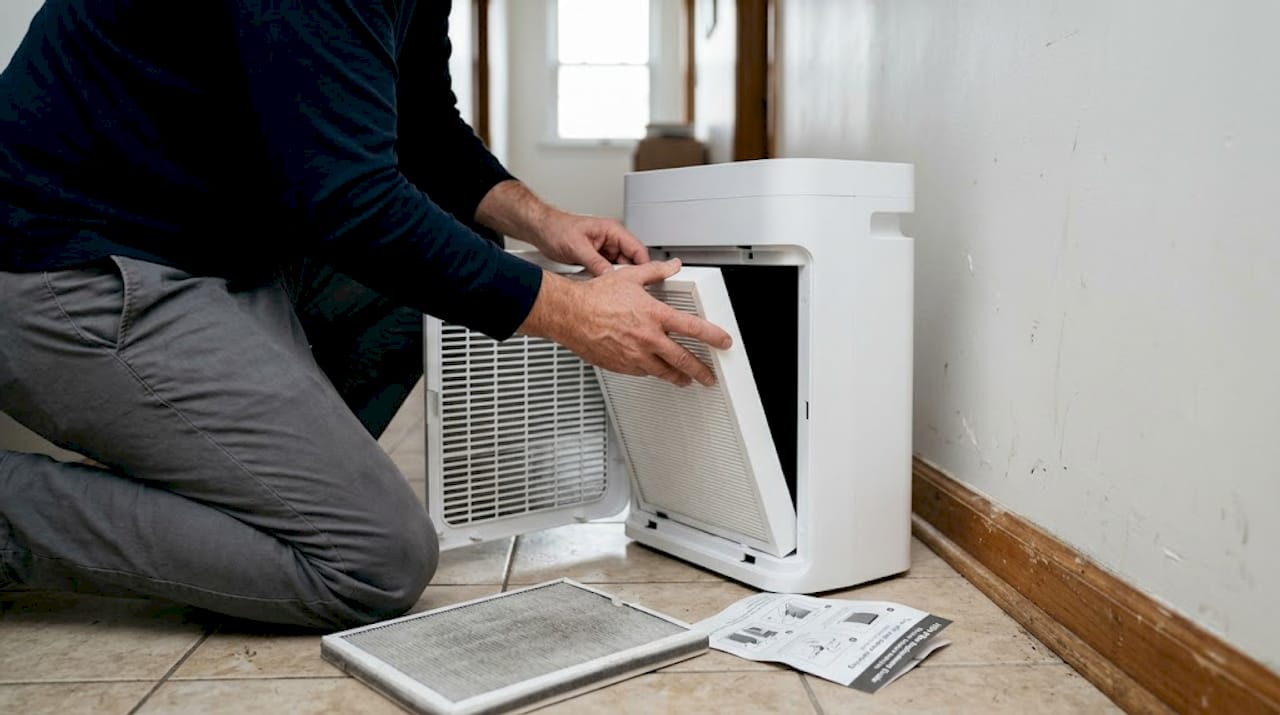
Air purification is your most important investment. A unit combining a true HEPA filter with an activated carbon layer targets both fine particles and gaseous compounds simultaneously. Standard HEPA filters capture most smoke particles, but citric acid-treated HEPA filters capture 99% of nicotine compared to just 42 to 57% with untreated filters. That gap matters enormously when you are dealing with heavy tobacco exposure.
| Filter type | Nicotine capture rate | Best for |
|---|---|---|
| Standard HEPA | 42-57% | Light odors |
| HEPA + activated carbon | ~75-85% | Moderate odors |
| Citric acid-treated HEPA | ~99% | Heavy tobacco exposure |
| Untreated carbon only | Variable | Gas odors only |
Beyond air purifiers, your material checklist should include:
- Trisodium phosphate (TSP) cleaner or sugar soap for washing walls and ceilings
- Enzyme-based odor neutralizers for fabrics, carpets, and upholstery
- White vinegar and baking soda for a first-pass deodorizing rinse (temporary, but useful)
- Odor-sealing primer (shellac-based) for heavily saturated walls before repainting
- HEPA-filter vacuum with upholstery attachments for furniture and carpets
- Nitrile gloves and an N95 respirator mask to protect yourself from dislodged smoke particles during cleaning
For improving home air quality long term, size your air purifier to the square footage of each room, not the whole house. One under-powered unit running in the living room will not reach the bedroom down the hall.
Pro Tip: Run your air purifier on its highest setting for the first 48 to 72 hours of treatment. After that, switch to a medium setting for ongoing maintenance. The first few days are when you remove the highest concentration of airborne particles.
Step-by-step: Neutralizing tobacco smell for good
Once equipped, follow these field-tested steps to tackle tobacco odors in every corner of your home.
- Ventilate the space. Open all windows and doors. Set box fans to push air outward from rooms, not inward. This reduces the concentration of airborne particles before you start disturbing surfaces.
- Protect floors and valuables. Lay drop cloths on floors before washing walls. Move small electronics and art pieces out of the room.
- Wash all hard surfaces top to bottom. Use a TSP solution on walls, ceilings, baseboards, window frames, and trim. Always work from ceiling to floor so drips fall on uncleaned surfaces.
- Clean soft goods aggressively. Machine-wash all curtains, bedding, and removable covers using a hot-water cycle with a cup of white vinegar added. For items that cannot be washed, use an enzyme-based spray and allow full drying time.
- Shampoo carpets and upholstery. A single pass is rarely enough for tobacco-saturated rooms. Budget for two or three passes with a hot-water extractor and an enzyme cleaner.
- Seal porous walls if needed. If odor persists after washing, apply an odor-sealing shellac primer before repainting. This physically blocks off-gassing from the wall material.
- Replace HVAC filters immediately and schedule a duct cleaning if the space had heavy smoke exposure over months or years. This step is where many DIY attempts fall short.
- Run citric acid-treated HEPA purifiers continuously. Ongoing air purification with HEPA and carbon units maintains results; acid-treated filters significantly boost nicotine capture rates throughout the remediation period.
For spaces with extreme tobacco saturation, such as homes or Airbnbs where smoking occurred daily for years, professional intervention is often the only way to achieve a neutral baseline. Reviewing real odor elimination outcomes can give you a realistic sense of what is achievable at different severity levels.
Pro Tip: After the initial deep clean, place small bowls of activated charcoal in closets and under furniture. Charcoal passively absorbs off-gassing residue between your cleaning sessions and costs almost nothing.
How to verify results and avoid common pitfalls
After completing the removal process, you will want assurance your efforts have paid off. Do not just rely on your own nose. Olfactory fatigue is real, meaning you become temporarily desensitized to smells you have been around for hours. Ask someone who has not been in the space to do a blind smell test in the problem areas.
Use this checklist to confirm full removal:
- [ ] No detectable odor in closets and enclosed spaces (odor concentrates there)
- [ ] HVAC vents pass a smell test when the system is running
- [ ] Upholstered furniture passes a press-and-sniff test (press the fabric firmly and smell)
- [ ] Walls and ceilings have no visible yellowing or tacky film
- [ ] Air purifier pre-filter shows minimal discoloration after 72 hours of use
“Persistent odors from incomplete removal of smoke particulates are well-documented in lab data, underscoring the need for thorough, multi-step remediation rather than a single-pass approach.”
The most common pitfalls that cause remediation efforts to fail include:
- Skipping the HVAC system. This is the number one reason odors return. A dirty system re-contaminates clean rooms within days.
- Under-treating soft goods. One shampoo pass is almost never sufficient for heavily saturated carpet or furniture.
- Using only masking agents. Plugins, sprays, and candles layer a new scent on top of the odor without neutralizing the underlying compounds. The tobacco smell always wins.
- Not allowing full drying time. Damp materials trap odor. Make sure every surface dries completely before closing windows or reassembling the room.
For a structured approach to the full remediation workflow, the sustainable smoke odor removal workflow outlines best practices used in high-end property settings.
A fresh take: Why most tobacco odor fixes fail (and what actually works)
After years in odor removal, the pattern is clear. Most homeowners try the same sequence: wipe surfaces, buy a scented spray, open a window, and hope. When the smell comes back, they assume tobacco odor is simply impossible to remove permanently. That is not true. The process just has to go deeper than most people realize.
The real problem is invisible residue in materials that no surface wipe can reach. Smoke compounds travel into porous building materials and continue to release back into the air for months. This off-gassing cycle keeps rooms smelling stale long after cleaning.
Science is changing what is possible here. Citric acid-treated HEPA filtration, enzyme-based neutralizers, and whole-home air exchange strategies are producing results that air fresheners never could. The latest expert insights on odor removal increasingly point to material-level treatment combined with sustained air purification as the gold standard.
The uncomfortable truth is that when nothing has worked, it is usually because the treatment stopped at the surface. Real, lasting results require treating the air, the materials, and the HVAC system together, all at the same time.
Choose professional help for guaranteed tobacco odor removal
Sometimes, the scale of tobacco residue in a home simply exceeds what any homeowner can reasonably tackle alone. When odors return within days of cleaning, or when the property has years of smoke buildup, that is the signal to bring in professionals.

At Master Odor Removal, we use methods validated by the latest filtration and remediation science, including eco-friendly approaches that are safe for your family, pets, and the environment. No ozone. No harsh chlorine treatments. Just results. Whether you need a single-room refresh or a full-property remediation, explore our complete service catalog and see how we approach every job. Learn about our commitment to eco-friendly odor solutions and why we believe clean air should never come at the cost of your health. Start with Odor Removal Done Right to understand our process.
Frequently asked questions
What is the most effective filter for tobacco odor?
Citric acid-treated HEPA filters combined with activated carbon are proven to capture over 99% of nicotine and 94 to 99% of smoke particulates, making them the top choice for heavy tobacco exposure.
Can you fully remove tobacco smell from a home?
Yes. Proven methods combining thorough surface cleaning, advanced filtration, HVAC treatment, and professional services can permanently neutralize even heavy tobacco odors.
Are homemade solutions like vinegar effective against tobacco smell?
Vinegar and baking soda can reduce surface odors temporarily, but they do not penetrate deeply enough into porous materials to deliver lasting results the way specialized filtration and enzyme-based cleaners can.
How long does it take to neutralize tobacco odor?
Most homes require several hours to several days depending on how severe the odor is and which methods are applied. Properties with years of heavy smoke exposure may need multiple treatment sessions.
Recent Comments