
TL;DR:
- Hotel odor problems stem from sources like carpets, PTAC units, and moisture buildup, which standard cleaning cannot fully remove. The best approach targets these sources through deep cleaning, ventilation, and eco-friendly neutralizers, ensuring lasting freshness. Regular maintenance and proper scheduling help sustain guest-perceived cleanliness and odor-free environments.
The hotel freshness restoration process is the structured practice of eliminating odor sources and renewing indoor air quality across guest rooms and common areas. Industry professionals call this “source-based odor remediation,” and the distinction matters. Freshly cleaned hotel rooms carry 4–8 times higher Total VOC concentrations than corridors, with levels remaining 2–3 times elevated at check-in. That means standard cleaning routines actively degrade the air quality guests experience. A true restoration process targets the source, not the symptom, and that shift in approach is what separates properties with loyal guests from those buried in one-star reviews.
What triggers odors in hotel rooms and why conventional cleaning falls short
Odor problems in hotel rooms come from a predictable set of sources. Carpets and upholstery absorb tobacco, food, pet, and body odors over time. PTAC units (the wall-mounted heating and cooling systems found in most American hotel rooms) circulate air across dirty coils and filters, redistributing odors throughout the space. Moisture buildup behind walls, under flooring, and inside bathroom fixtures creates mildew that no surface spray can reach.
Conventional cleaning makes the problem worse in a specific way. Heavy-duty chemical air fresheners create a VOC signature that guests perceive subconsciously as unclean. The brain registers the chemical smell as a cover-up, not as cleanliness. That perception directly affects review scores.
Common odor sources hotel operators overlook:
- PTAC coils and drain pans: Mold and bacteria accumulate here and re-enter the room with every fan cycle.
- Carpet padding: The pad beneath the carpet holds moisture and organic material long after the surface looks clean.
- Upholstered headboards and seating: Fabric absorbs odors that steam cleaning alone cannot fully remove.
- Grout lines and caulking: Mildew grows in bathroom grout and releases odor continuously.
- Drapes and soft goods: Curtains trap smoke and cooking odors from adjacent rooms and hallways.
Pro Tip: Open the room’s exterior window or set the PTAC to exhaust mode for 10 minutes during bathroom cleaning. This single step, confirmed by ventilation research, reduces VOC buildup more effectively than any spray product.
Airflow is the most underused tool in hotel freshness management. A 10-minute ventilation window during turnover measurably lowers VOC concentrations. It costs nothing and requires no product purchase.
Essential tools and preparations for effective freshness restoration
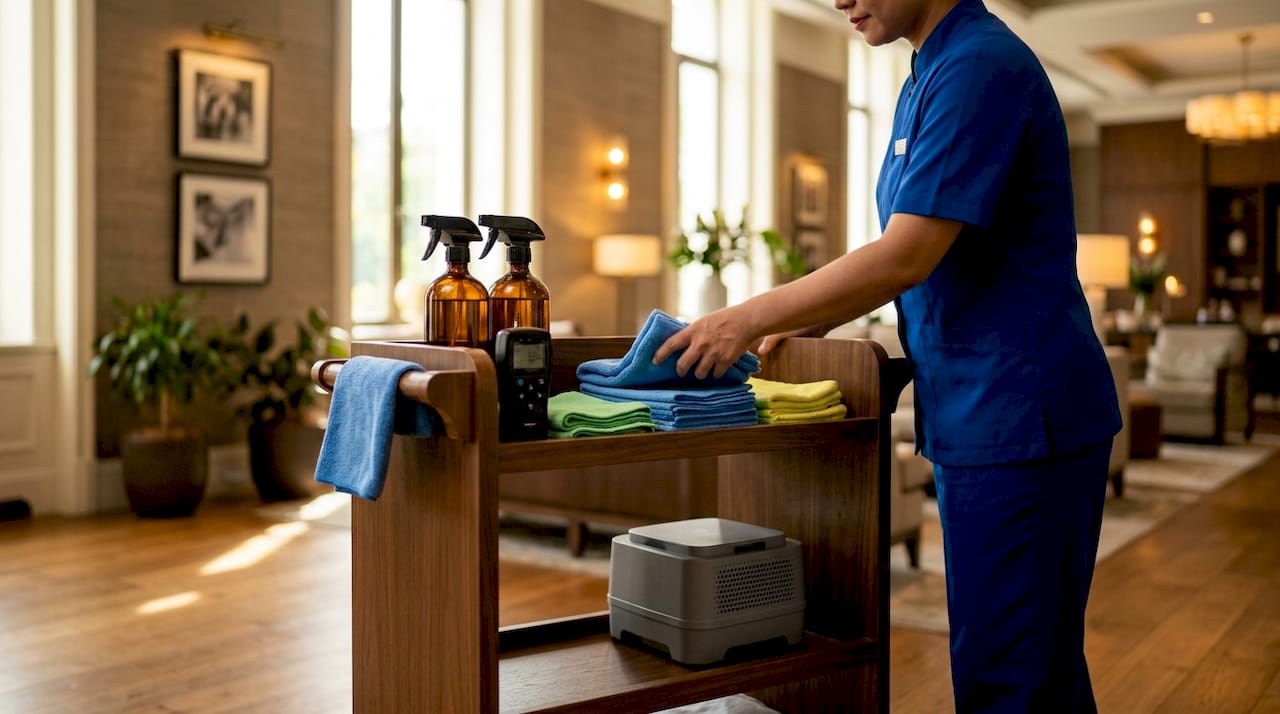
Professional restoration requires the right equipment before any cleaning begins. Guessing at odor sources wastes time and money. A structured room audit, conducted with the right tools, identifies exactly what needs treatment and where.
| Tool | Purpose |
|---|---|
| VOC sensor (handheld) | Measures air quality baseline and confirms post-treatment results |
| Professional air scrubber | Filters airborne particulates and odor compounds during treatment |
| Deep extraction carpet machine | Removes embedded organic material from carpet and padding |
| Upholstery steam cleaner | Penetrates fabric fibers to break down odor-causing residue |
| PTAC coil cleaning kit | Cleans coils, drain pans, and filters to stop recirculated odors |
| Eco-friendly enzymatic cleaner | Breaks down organic odor molecules at the source without harsh VOCs |
Room audits are the foundation of any effective restoration. A reference room photo checklist catches specification errors before they multiply across dozens of rooms. Checking one room against brand standards before full rollout prevents expensive re-mobilization. This step alone saves properties significant rework costs on large-scale projects.
Preparation steps before restoration begins:
- Schedule restoration during low-occupancy periods or block rooms in phases.
- Document current odor complaints and guest feedback by room number.
- Photograph all surfaces, soft goods, and mechanical units before treatment.
- Confirm eco-friendly cleaning agents are on hand. Avoid products with high VOC content.
- Coordinate with housekeeping, engineering, and front desk to manage room availability.
Sustainable cleaning agents matter beyond environmental responsibility. Products with low VOC formulations do not add chemical odor to the room after treatment. This is the practical reason eco-friendly odor removal outperforms conventional chemical approaches in guest-perceived freshness.
Step-by-step hotel freshness restoration process for operational excellence
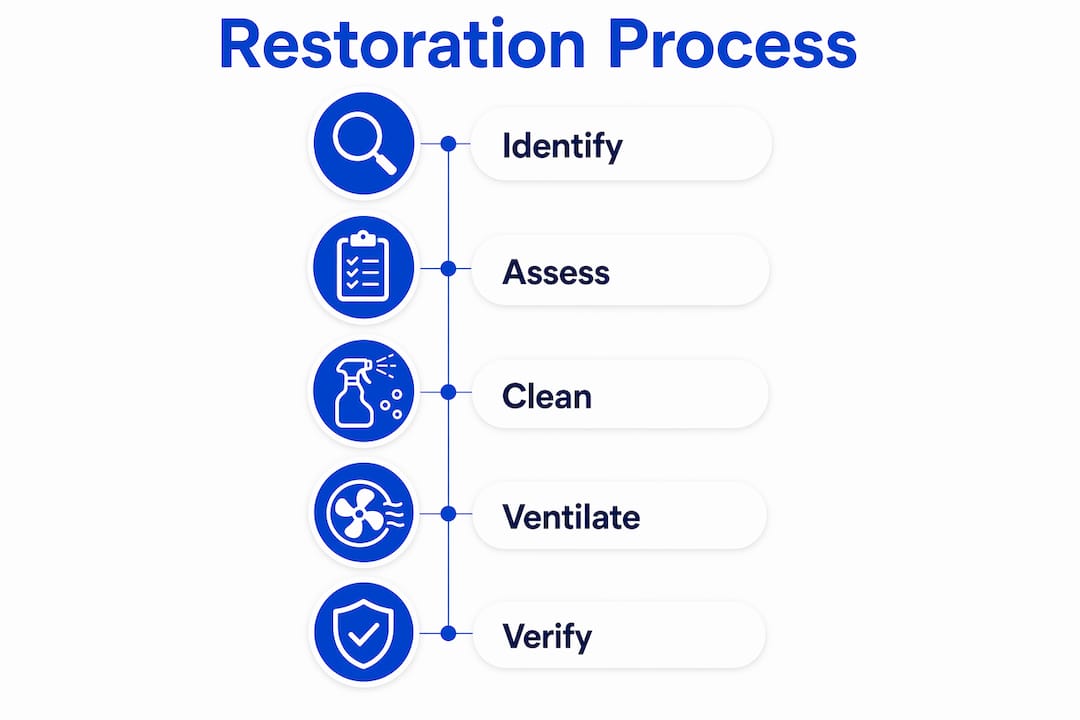
A structured restoration follows five defined steps. Skipping any step typically results in odor return within weeks.
Source identification and inspection. Walk the room with a VOC sensor. Log readings at carpet level, near the PTAC unit, inside the bathroom, and at upholstered surfaces. Note any visible moisture staining, mildew, or worn soft goods. This data drives every subsequent decision.
Targeted deep cleaning. Odor source elimination requires treating carpets, upholstery, PTAC units, and hard surfaces directly. Extract carpet padding where moisture is detected. Clean PTAC coils and drain pans with an approved coil cleaner. Steam-treat upholstered headboards, chairs, and drapes. Scrub grout lines with an enzymatic cleaner.
Ventilation protocol. After deep cleaning, open windows or activate exhaust ventilation for a minimum of 10 minutes. Run the air scrubber simultaneously to capture airborne particulates released during cleaning. This step prevents cleaned surfaces from re-contaminating the air.
Odor neutralization. Apply professional-grade enzymatic or bio-based neutralizers to treated surfaces. These products break down odor molecules chemically rather than masking them. Avoid aerosol sprays with synthetic fragrance at this stage. The goal is a neutral room, not a scented one.
Final evaluation and guest-ready confirmation. Re-test with the VOC sensor. Compare readings to the baseline from Step 1. Confirm readings fall within acceptable indoor air quality thresholds. Photograph the completed room against the reference checklist before releasing it to inventory.
Pro Tip: For large-scale water intrusion or smoke events, use a phased restoration schedule. A 2026 boutique hotel project returned 40 guestrooms to service in 10 days with zero guest complaints by treating sections sequentially rather than closing the entire property.
| Restoration phase | Estimated room downtime |
|---|---|
| Standard odor restoration (single room) | 4–8 hours |
| Deep carpet and upholstery treatment | 8–12 hours |
| PTAC cleaning and mildew remediation | 12–24 hours |
| Multi-room water damage with phased drying | 3–10 days |
Phased restoration keeps revenue flowing. Blocking every affected room simultaneously is rarely necessary and almost always avoidable with proper scheduling.
Maintenance strategies and hotel refresh techniques to sustain guest-perceived freshness
Restoration solves the immediate problem. Maintenance prevents it from returning. The most effective hotel operators treat freshness as an ongoing operational standard, not a one-time project.
The 80/20 color rule keeps rooms feeling current without full renovation. Keep 80% of room finishes in neutral tones and rotate 20% through trend-forward accent pieces seasonally. This approach, which uses tools like Pantone color forecasting, refreshes guest perception with minimal capital expenditure and near-zero downtime.
Furniture and fixture condition scoring drives proactive replacement decisions. Items scoring 3 or lower out of 5 on appearance, comfort, or function should be scheduled for replacement within two quarters. Waiting until guests complain costs more in negative reviews than the replacement itself.
Ongoing maintenance practices that prevent odor recurrence:
- HVAC and PTAC servicing: Clean coils, replace filters, and flush drain pans on a quarterly schedule. This is the single highest-impact maintenance action for air quality.
- Soft goods rotation: Replace pillows, mattress pads, and drapes on a condition-based schedule rather than a fixed calendar. Inspect at every deep clean cycle.
- Guest feedback integration: Map odor complaints by room number and floor. Patterns reveal systemic issues like plumbing leaks or HVAC failures before they escalate.
- Housekeeping standard audits: Verify that turnover teams follow the ventilation protocol on every room turn. Spot-check with VOC sensors monthly.
Micro-refurbishment extends the life of a restoration by keeping the visual environment aligned with the olfactory one. A room that smells fresh but looks worn still generates negative reviews. Both dimensions require attention. For deeper guidance on managing common hotel odors, a structured identification approach makes maintenance far more efficient.
Common pitfalls and troubleshooting in hotel freshness restoration
Most restoration failures trace back to four repeatable mistakes. Recognizing them before they happen is cheaper than fixing them after.
- Overreliance on masking agents. Aerosol sprays and plug-in fresheners add VOCs to the room without removing the source odor. Guests detect the chemical overlay and associate it with poor cleanliness.
- Skipping the ventilation step. Cleaning without ventilation traps newly released VOCs in the room. The air quality reading at check-in can be worse after cleaning than before it.
- No room audit before treatment. Starting cleaning without a baseline inspection means treating symptoms rather than sources. Odors return within days because the actual source was never identified.
- Ignoring phased restoration for large events. Water intrusion, smoke events, and mold outbreaks across multiple rooms require a phased approach. Treating all rooms simultaneously strains resources and extends total downtime.
Permanent odor removal requires identifying and eliminating the source. Temporary masking with sprays or fresheners does not constitute restoration and will result in recurring guest complaints.
The why odors affect guest experience guide covers the psychological and review-score impact of these failures in detail. Understanding the guest perception side of odor management reinforces why the technical steps above are non-negotiable.
Key Takeaways
A successful hotel freshness restoration process eliminates odor at the source through deep cleaning, structured ventilation, and phased treatment, not through masking agents or surface-level sprays.
| Point | Details |
|---|---|
| Source identification first | Use VOC sensors to locate odors in carpets, PTAC units, and upholstery before any treatment begins. |
| Ventilation is non-negotiable | A 10-minute ventilation window during turnover reduces VOC levels more effectively than chemical sprays. |
| Phased restoration saves revenue | Treating rooms in sections keeps the property operational during large-scale odor or water damage events. |
| Maintenance prevents recurrence | Quarterly PTAC servicing and condition-based soft goods replacement stop odors from returning. |
| Verification closes the loop | Re-test with VOC sensors and a reference room photo checklist before releasing any room to inventory. |
What I’ve learned after years of hotel odor restoration work
The most persistent myth in hospitality freshness management is that a stronger-smelling product means a cleaner room. It does not. Every time I walk into a hotel room that smells heavily of synthetic fragrance, I know the underlying problem was never addressed. The fragrance is a signal, not a solution.
Cross-department coordination is the factor most operators underestimate. Housekeeping, engineering, and front desk all touch the restoration process. When those teams operate in silos, the ventilation step gets skipped, the PTAC filter goes unchanged, and the room audit never happens. The technical process is straightforward. Getting three departments to execute it consistently is the real work.
Eco-friendly methods are not a compromise. They are the better technical choice. Products without harsh VOCs leave rooms genuinely neutral rather than chemically masked. Guests notice the difference, and it shows up in review scores. Sustainability and performance point in the same direction here.
The properties that maintain the highest freshness standards treat restoration as a system, not an event. They audit, they ventilate, they score their furniture, and they act on the data before guests complain. That discipline is what separates a consistently fresh property from one that cycles through restoration projects every season.
— Master
Professional odor restoration support for hotel operators
Masterodorremoval works with hotel operators who need permanent odor elimination, not temporary fixes. The process avoids ozone and chlorine treatments entirely, relying instead on green-certified methods that leave rooms genuinely neutral.

Same-day and next-day service is available for urgent situations, including smoke events, water damage aftermath, and persistent pet or mildew odors. Every project is handled by licensed professionals who follow the source-identification and verification steps outlined in this guide. For properties that demand premium results without operational disruption, professional odor removal from Masterodorremoval delivers measurable, lasting outcomes. Hotels with specific sustainability requirements can also review the green odor elimination options available for high-end properties.
FAQ
What is the hotel freshness restoration process?
The hotel freshness restoration process is a structured, multi-step method that identifies and eliminates odor sources through deep cleaning, ventilation, and professional neutralization. It differs from standard cleaning by targeting the source rather than masking odors with sprays.
Why do freshly cleaned hotel rooms still smell bad?
Freshly cleaned rooms carry 4–8 times higher VOC concentrations than corridors because chemical cleaning agents release their own odor compounds. A 10-minute ventilation protocol during turnover reduces these levels more effectively than any air freshener.
How long does hotel odor restoration take?
A single-room standard restoration typically takes 4–8 hours. Multi-room water damage or smoke events require a phased approach and can take 3–10 days while keeping the property operational.
What are the most common odor sources in hotel rooms?
PTAC units, carpet padding, upholstered headboards, bathroom grout, and drapes are the most common odor sources. Each requires targeted treatment rather than surface-level cleaning to achieve lasting results.
How do hotel operators prevent odors from returning after restoration?
Quarterly PTAC servicing, condition-based soft goods replacement, monthly VOC spot-checks, and consistent turnover ventilation protocols prevent odor recurrence. Integrating guest feedback by room number also reveals systemic issues before they escalate.
Recent Comments