
For persistent private jet cabin odor, the right call is a licensed, material-safe, eco-friendly professional treatment rather than a heavier chemical shortcut. Aviation OEM guidance from manufacturers like Dassault points toward pH-neutral, tested cleaning agents over harsh disinfectants, and reputable odor specialists skip ozone and chlorine entirely because both can degrade leather, veneer, and cabin electronics. If the smell has settled into carpets, seat foam, or headliner after more than a day or two, stop masking it and schedule an inspection.
TL;DR:
- Professional odor removal should use pH-neutral, tested, and eco-friendly treatments without ozone or chlorine to avoid damaging leather and cabin electronics.
- Persistent odors lasting beyond two to three flights, moisture damage, or visible staining indicate the need for specialist intervention rather than DIY airing out.
- Complete source removal includes targeting seat seams, carpet edges, lavatory seals, and under cushions, with treatment times extending if mold or embedded residue are present.
- Effective treatment combines low-moisture extraction, enzyme neutralizers, activated carbon, and targeted thermal fogging, following OEM guidance and avoiding aggressive oxidizers.
- Verification through ATP swabs and thorough ventilation ensures the odor is genuinely eliminated, not just temporarily masked, before returning the aircraft to service.
Table of Contents
- How Do You Identify the Source of a Private Jet Cabin Odor?
- When Should You Call a Professional Odor Removal Service?
- Which Eco-Friendly Methods Actually Remove Odor From a Jet Cabin?
- What Happens During a Professional Cabin Odor Removal Visit?
- How Do You Prevent Odor From Coming Back Between Treatments?
- What Does Master Odor Removal Recommend Before You Book Anyone?
- Ready to Clear the Air in Your Cabin?
- Sources
- FAQ
How Do You Identify the Source of a Private Jet Cabin Odor?
Not every smell needs a specialist, but most persistent ones do. Tobacco and marijuana residue cling to soft goods and HVAC ductwork, food odor seeps into carpet padding, mildew shows up after any moisture intrusion around window seals or the lavatory, and pet odor tends to concentrate in seat seams and under cushions. Smoke odor from an electrical event or a nearby fire is its own category and usually calls for immediate professional attention regardless of severity.
A quick walkthrough tells you whether you are dealing with a surface smell or something embedded. Check these areas before deciding on next steps:
- Seat and divan seams, where spills and pet residue collect out of sight
- Carpet edges and under removable panels, common spots for mildew and moisture staining
- Lavatory seals and drain lines, a frequent source of persistent sour odor
- Galley surfaces, ice drawers, and waste bins after any missed turnaround service
- Under cushions and in seat tracks, where crumbs and moisture pool over time
Transient odors fade after a few ventilation cycles. Embedded odors do not; they linger through multiple flights and often come with visible staining or a musty note that gets stronger in humid weather. If you spot moisture discoloration, isolate that zone, run cabin ventilation, and remove any trash or soiled material immediately. That buys time, but it is not a fix.
When Should You Call a Professional Odor Removal Service?
Three thresholds tell you it is time to stop DIY airing-out and book a specialist.
- The odor persists past two or three flight cycles despite ventilation and spot cleaning. That is a sign the smell has moved past surface residue into fabric, foam, or subflooring.
- You see or smell moisture damage. Mold and mildew do not resolve with wipe-downs, and delaying treatment risks spreading spores through the cabin air system.
- Charter or resale exposure is on the line. A single client complaint about lingering smoke or pet odor can cost repeat bookings, and pre-sale inspections routinely flag odor as a value detractor.
Operational planning matters here too. A straightforward tobacco or food odor case, treated by a specialist familiar with tobacco and marijuana smoke odor removal, might take a single service visit with same-day or next-day turnaround. Saturated carpet, mold behind panels, or odor that has penetrated multiple zones extends the timeline because drying and re-treatment cycles need to run in sequence, not all at once. Build in buffer time before the next scheduled charter leg rather than assuming a same-day fix on a complex case.
Which Eco-Friendly Methods Actually Remove Odor From a Jet Cabin?
Effective odor removal for high-value cabin interiors comes down to matching the method to the material, not applying one aggressive treatment everywhere. Licensed specialists typically combine several approaches depending on what they find during inspection:
- Low-moisture extraction for carpets and soft seating, which lifts residue without saturating foam underneath
- Enzyme-based neutralizers that break down organic odor sources like pet residue and food spills at the molecular level rather than covering them
- Activated-carbon adsorbents to pull volatile organic compounds out of the air, the same principle behind cabin filtration systems like Pall’s A-CAF media, which pairs HEPA filtration with synthetic carbon to cut VOCs faster than air exchange alone
- Targeted, aviation-safe thermal fogging for deeply embedded smoke odor, using chemistries formulated for enclosed cabins rather than industrial-strength products
- UV-C surface sanitation on hard surfaces where appropriate, as a complement to chemical treatment rather than a replacement for it
Ozone and chlorine get avoided for a specific reason: both are effective oxidizers, but they also break down rubber seals, discolor leather, and corrode certain metals over repeated exposure. For an interior with six-figure refurbishment costs, that trade-off is not worth the risk. Dassault’s cabin cleaning guidance recommends isopropanol-based disinfectants tested on inconspicuous areas first, with roughly a recommended ventilation period afterward, which reflects the broader OEM philosophy of testing before wide application.
Pro Tip: Ask any provider for the SDS and TDS on every product they plan to use in your cabin. If they can’t produce those documents on request, that’s a red flag, not a minor omission.
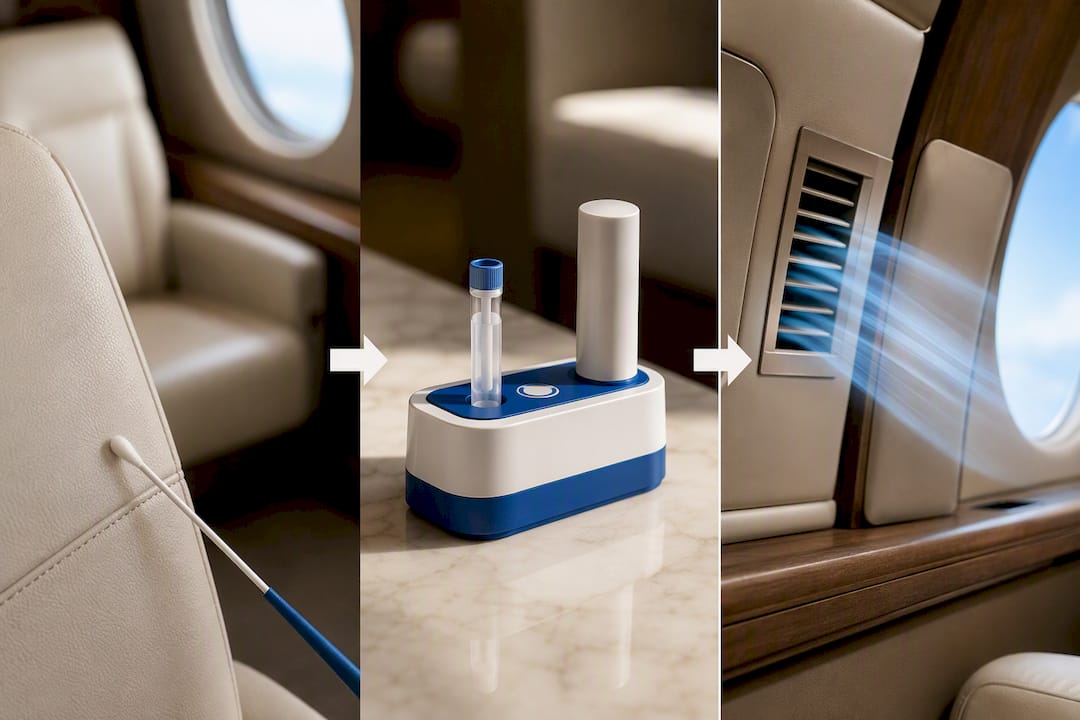
Verification separates a real fix from a temporary mask. ATP swab testing measures residual biological load on surfaces, giving you a number instead of a guess, and a follow-up olfactory check after full ventilation confirms the odor is actually gone rather than just diluted for the moment.
What Happens During a Professional Cabin Odor Removal Visit?
A properly run service visit follows a sequence, not a single spray-and-go pass.
- Pre-visit coordination. The technician reviews the reported issue, checks OEM material guidance for your specific cabin finishes, and confirms SDS/TDS documentation for every product going into the aircraft. Crew gets briefed on access windows and any areas to avoid disturbing.
- Source removal. Waste, contaminated soft goods, and any removable panels get pulled before treatment starts, since cleaning around a lingering source wastes time and product.
- Targeted cleaning and treatment. Low-moisture extraction, enzyme application, or adsorbent treatment gets applied to the specific zones identified during inspection, not blanket-sprayed across the whole cabin.
- Controlled drying and filtration cycling. The cabin needs proper airflow to fully clear residual moisture and any product off-gassing, following OEM-recommended ventilation windows rather than rushing the aircraft back into service.
- Verification and handover. ATP swabs, a final olfactory check, and documented ventilation times give you a paper trail. You should leave the visit with written notes on what was treated, what products were used, and when the cabin is clear for full operation.
This is the same disciplined approach behind luxury vehicle interior odor neutralization work, just adapted to the tighter material tolerances and access constraints of an aircraft cabin.
How Do You Prevent Odor From Coming Back Between Treatments?
Maintenance between professional visits determines how often you need one in the first place. A basic cadence works for most flight departments:
- Turnaround checks after every flight: waste removal, quick wipe-down of galley and lavatory surfaces
- Weekly deep wipe-downs of high-touch surfaces and seat seams
- Monthly inspection of drain lines, cushion undersides, and carpet edges for early moisture signs
- HEPA and VOC filter replacement on the manufacturer’s recommended cadence, since a saturated filter stops pulling odor-causing compounds out of the air
Rapid spot-cleaning after any spill or pet accident prevents a surface issue from becoming an embedded one. If a smell returns within days of a professional treatment, or you notice new staining, that is your signal to call the specialist back rather than layering more air fresheners on top of the problem.
What Does Master Odor Removal Recommend Before You Book Anyone?
Master Odor Removal treats interior odor removal as a material-safety problem first, which is why the approach stays eco-friendly, non-ozone, and built around licensed technicians who understand what a cabin’s leather and veneer can and cannot tolerate. Before hiring anyone for a jet cabin, ask what methods they use, whether they carry SDS and TDS for every product, how they verify the result, and whether their process is compatible with your specific OEM interior guidance. A provider who cannot answer those four questions plainly is not ready for a six or seven-figure interior.
— Master
Ready to Clear the Air in Your Cabin?
Most odor providers treat a jet cabin the same way they treat a used sedan: spray, mask, move on. Professional odor removal services typically emphasize eco-friendly, green-certified methods with no ozone and no chlorine, especially for high-value leather interiors.

Booking starts with an inspection. A technician evaluates the odor source, recommends a targeted treatment plan, and finishes with verification testing so you know the smell is actually gone, not just covered up. Same-day and next-day scheduling is typically available, which matters when a charter leg is booked and the cabin needs to be ready. Get a clear look at what treatment and turnaround will actually involve on how long odor removal takes, or head straight to the commercial and high-end odor removal page to check availability and request a quote for your aircraft.
FAQ
Is Ozone Treatment Safe for Private Jet Cabins?
No. Ozone can degrade rubber seals, discolor leather, and corrode certain metals with repeated exposure, which is why aviation-safe specialists avoid it in favor of pH-neutral, enzyme-based, or carbon-adsorbent methods.
How Long Does Professional Odor Removal Take on a Jet Cabin?
A straightforward case, like isolated food or tobacco odor, can often be resolved in a single same-day or next-day visit, while embedded moisture damage or mold requires multiple drying and treatment cycles over several days.
Can HEPA Filters Alone Fix a Persistent Cabin Odor?
HEPA filtration paired with VOC-absorbing carbon media reduces airborne particulates and transient smells quickly, but odor embedded in carpet, foam, or leather needs targeted surface treatment, not filtration alone.
What’s the Difference Between Bleed-Air Odor and Interior Odor?
Bleed-air odor comes from fuel or oil vapor entering the air system and is addressed through mechanical and filtration fixes, while interior odor from tobacco, pets, or mildew is embedded in cabin materials and requires direct treatment.
How Do I Know if an Odor Provider Is Actually Aviation-Safe?
Ask for SDS and TDS documentation on every product, confirm they test on inconspicuous areas first, and verify they use ATP swab testing or a similar method to confirm results rather than relying on smell alone.
Recent Comments