
That kerosene smell drifting through the cabin during boarding or taxi is almost always exhaust from the auxiliary power unit or ground equipment getting pulled into the ventilation system, not a fuel leak near passengers. It’s usually gone within minutes and doesn’t signal danger on its own. Tell a flight attendant if the smell lingers, gets stronger, or you start feeling sick, and treat visible smoke or haze as a different situation entirely.
TL;DR:
- Flight crews report that kerosene odors during boarding or taxi often result from ground exhaust or APU fumes entering the ventilation system, not fuel leaks.
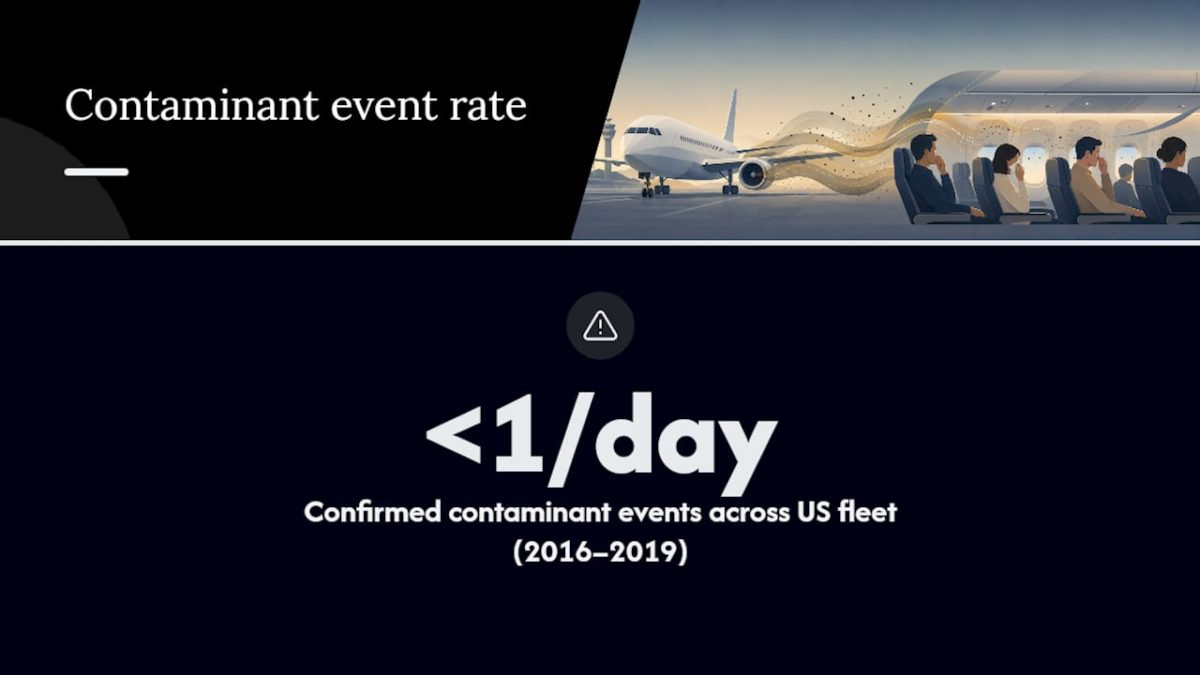
- Brief, pass-through smells are common and rarely signify dangerous contamination, with confirmed odor events occurring at rates of less than one per day across US flights.
- Symptoms from exposure are typically short-lived, but persistent or worsening symptoms should prompt immediate reporting, relocation, and medical consultation.
- Airplane odor sources can be highly variable, influenced by wind, maintenance, and specific conditions, making intermittent odors difficult to diagnose.
- Reporting odors accurately and promptly helps airlines and regulators track patterns, improve maintenance, and reduce the volume of complaint-related issues.
Table of Contents
- How Cabin Air and the Bleed-Air System Let Odors In
- The Usual Suspects Behind the Smell
- How Often Does This Actually Happen?
- When a Smell Signals a Real Health Concern
- What to Do the Moment You Smell Jet Fuel
- Why the Same Aircraft Can Smell Fine One Day and Off the Next
- How Airlines and Regulators Track These Events
- When a Fuel-Like Smell Follows You Home
- A Safety-First Take on Reporting Cabin Odors
- Getting Rid of a Fuel or Chemical Smell That Won’t Quit
- Where to Verify This Information Yourself
- Sources
How Cabin Air and the Bleed-Air System Let Odors In
Before the engines spin up for departure, the auxiliary power unit (APU) does the work of heating, cooling, and pressurizing the cabin. It sits at the tail of most aircraft, drawing in outside air and venting exhaust close to where ground crews are working and where doors sit open for boarding. That proximity is the whole story.
Once engines start, bleed air taken from the engine compressors feeds the packs that condition cabin air. Either path, APU or engine bleed, can carry contamination if something is off.
A few conditions make an odor more likely to reach you:
- Doors open during boarding let ground exhaust or nearby vehicle fumes drift straight into the jet bridge and cabin
- Wind direction on the ramp can push APU exhaust back toward the fuselage skin and intakes
- A small amount of oil or fuel residue on the APU inlet or engine cowling is enough to produce a noticeable smell once air passes over it
None of that requires a major leak. A technical briefing on cabin air sources notes that even trace contamination near an inlet can travel efficiently through the ventilation ducting.
The Usual Suspects Behind the Smell
Not every odor in the cabin has the same cause, and knowing the difference helps you judge how seriously to take it.
- APU or ground fuel fumes: Sharp, kerosene-like, strongest during boarding and taxi, fading once you’re airborne
- Turbine oil breakdown: Often described as a “dirty socks” or acrid smell, caused by synthetic oil overheating near the engine or APU
- Deicing fluid: A sweet, chemical odor on cold-weather departures, usually tied to ground operations
- Cabin-sourced smells: Galley food, cleaning products, or another passenger’s perfume, none of which relate to fuel systems at all
Aviation Week’s reporting on maintenance practices found that tiny drops of turbine oil reaching the environmental control system are a frequent, if underappreciated, cause of odor complaints that get lumped in with “fuel smell” reports.
Pro Tip: If the smell reminds you more of a locker room than a gas station, you’re probably dealing with an oil odor, not fuel. Mention that distinction when you report it. It helps the maintenance team narrow down the cause faster.
How Often Does This Actually Happen?
Smoke, odor, and fume events aren’t rare, but genuine contaminant events, the kind involving real oil, hydraulic fluid, or fuel byproducts rather than a passing whiff of exhaust, are uncommon on any single flight.
A Department of Transportation analysis covering 2016 through 2019 found definite contaminant SOF events occurring at a rate of less than one event per day across the US airline fleet, representing a low number of events per million departures. Given that US carriers operate tens of thousands of flights daily, the odds that your specific flight involves a documented contaminant event are low.
That statistic covers confirmed contamination, not every reported smell. Plenty of odor complaints turn out to be a brief whiff of APU exhaust during boarding that never gets classified as a contaminant event at all. The gap between “I smelled something” and “an investigation confirmed contamination” is wide, and it’s why context matters more than the smell alone.
When a Smell Signals a Real Health Concern
Most exposures are brief and don’t cause lasting harm, but your body may still react to them in the moment.
Typical short-term symptoms include:
- Headache or lightheadedness
- Nausea
- Eye, nose, or throat irritation
- A metallic or oily taste
Treat it as urgent if you see visible smoke or haze, smell something that keeps intensifying rather than fading, or if symptoms worsen instead of improving once you’re away from the source. Those signs point toward an active fume event rather than a passing odor, and crews are trained to respond differently to each.
Longer-term health questions around repeated low-level exposure remain debated among researchers, which is exactly why documentation matters. Guidance from the Association of Professional Flight Attendants notes that some passengers and crew report delayed symptoms hours after exposure, making a written record of what happened and when genuinely useful later.
What to Do the Moment You Smell Jet Fuel
- Alert a flight attendant immediately. Don’t assume someone else already noticed. Note the flight number, seat, and approximate time.
- Move if you can. If the smell is stronger in one area and other seats are open, relocating reduces your exposure while crew investigates.
- Watch for worsening symptoms. Headache or nausea that fades quickly is different from symptoms that build over the flight.
- Seek medical attention if symptomatic, even after landing. Delayed reactions happen, and a same-day medical record matters more than one written weeks later.
- Request the incident be documented. Airlines are required to log noxious odor or smoke reports as Service Difficulty Reports, and a time-stamped record strengthens any follow-up.
Pro Tip: Write down what you experienced on your phone before you land, while the details are still fresh. Memory fades fast once you’re distracted by baggage claim and connections.
Why the Same Aircraft Can Smell Fine One Day and Off the Next
Passengers often assume a smell means something is broken, but odor events are notoriously inconsistent even on the exact same airframe.
- APU inlet placement means wind direction and ramp traffic change how much ground exhaust actually reaches the cabin on any given day
- A maintenance error like over-servicing engine oil can leave a residue that only vaporizes under specific temperature or pressure conditions
- One drop of oil per minute leaking into the environmental control system can be enough to cause a detectable smell, according to Aviation Week’s coverage of oil-related odor events
- Residue trapped deep in ducting sometimes evades inspection entirely, producing a “no fault found” result even after a genuine odor was reported
That’s not a dismissal of the report. It’s why maintenance teams sometimes need multiple flight reports before they can trace an intermittent source, a challenge documented in aeronautical engineering research on contaminated cabin air.
How Airlines and Regulators Track These Events
The system isn’t passive; for background on regulatory activity and reporting practices, see the FAA MOSAIC Rule. The FAA requires manufacturers to demonstrate that cabin air stays free of harmful smoke, vapor, or noxious fumes under normal and probable failure conditions, and airlines must file Service Difficulty Reports whenever a noxious odor or smoke event occurs.
That reporting requirement feeds real changes:
- Airlines and engine makers have shifted toward turbine oil formulations with less offensive odor, cutting complaint volume even when small leaks persist
- Maintenance crews use SDR data to identify aircraft with repeat complaints and prioritize inspections
- Crew training increasingly emphasizes distinguishing routine operational smells from genuine fume events requiring immediate response
Passenger reports matter here too. A single complaint might get logged and closed, but a pattern across multiple flights on the same tail number is often what triggers a deeper inspection.
When a Fuel-Like Smell Follows You Home
A cabin odor should fade within minutes of landing. If a similar chemical or fuel-like smell lingers in your car, home, or boat well after a trip, especially after transporting fuel containers, generators, or equipment, that’s a different problem: actual contamination rather than a passing exposure.
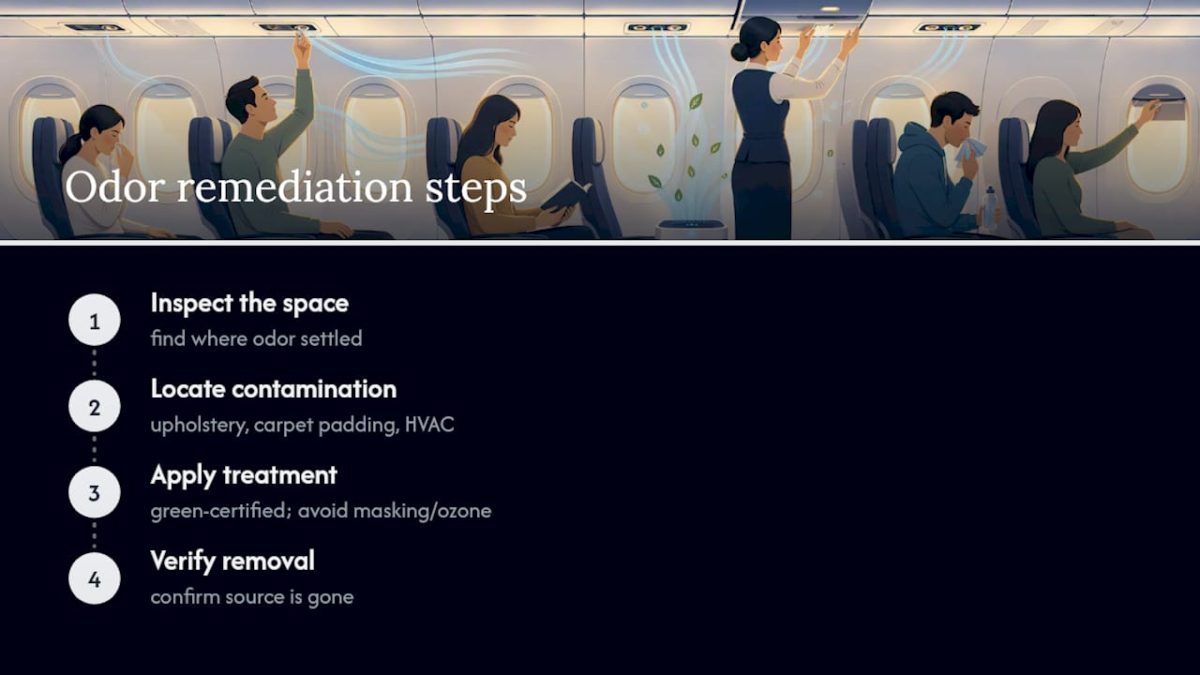
The tell is persistence. A transient smell fades with fresh air and time. Contamination soaks into upholstery, carpet padding, or HVAC systems and keeps returning no matter how much you air the space out. Professional remediation starts with an inspection to locate where the odor has settled, followed by targeted, green-certified treatment rather than masking sprays or ozone shock treatments that only hide the smell temporarily. A verification step afterward confirms the source is actually gone, not just faded. Timelines vary by material and severity, but most jobs resolve faster than owners expect once the right method is matched to the commercial or residential space involved.
A Safety-First Take on Reporting Cabin Odors
Passengers underreport smell events because they don’t want to seem dramatic over something that faded in five minutes. That instinct works against everyone’s interest. Aggregated reports, not any single flight’s experience, are what let the FAA and airlines spot patterns worth inspecting.
If something smells wrong, say so and note the details. It costs you nothing and helps build the record that keeps maintenance teams ahead of recurring problems. That same principle of taking persistent odor seriously rather than tolerating it applies just as much on the ground, whether it’s a cabin, a car, or a home.
— Master
Getting Rid of a Fuel or Chemical Smell That Won’t Quit
Master Odor Removal exists for exactly the smell that doesn’t fade on its own, the fuel, oil, or chemical odor that soaks into a vehicle, home, or commercial interior and keeps coming back no matter how many air fresheners you try. Unlike DIY sprays or ozone machines that mask the problem or leave harsh residue behind, the approach here is green-certified and built to remove the source, not cover it.

The process starts with an inspection to find exactly where odor-causing residue has settled, whether that’s upholstery, carpet padding, or ventilation. From there, targeted treatment addresses the actual contamination using non-ozone, non-chlorine methods safe for interiors. If a fuel-like or chemical smell has lingered in your space longer than it should, request an inspection through Master Odor Removal’s commercial odor removal service and get a clear answer on what it will take to fix it.
Where to Verify This Information Yourself
For the official word on cabin air standards, the FAA’s cabin air quality guidance lays out manufacturer requirements. The DOT’s 2016–2019 SOF final report has the frequency data. Aviation Week’s technical reporting covers oil and APU causes in depth, and the APFA’s exposure guidance addresses health questions and crew reporting practices.
Sources
- Smoke, Odors, and Fumes Events in US Airliners: 2016-2019 final report
- Cabin air quality | Federal Aviation Administration
- Passing the smell test | Aviation Week
- Cabin Air Contamination: Exposure Info and Medical SOF Event (APFA)
Recent Comments