
Open the windows and pull the fresh-air intake immediately, then vacuum the seats, mats, and headliner where vapor settles. That handles most fresh vape smell in a car fairly quickly. If the odor keeps coming back after cleaning, it means aerosol residue has bonded to fabric, vents, or foam, and you need a deep clean, not another air freshener. Persistent cases usually call in a licensed eco-friendly odor removal specialist.
TL;DR:
- Residue from vape aerosol bonds to fabrics, vinyl, and foam, making simple air fresheners ineffective for long-term odor removal.
- Deep cleaning requires vacuuming, extraction of upholstery, wiping hard surfaces, and careful cleaning of vents and filters to eliminate trapped residue.
- Vapor buildup is particularly concentrated in seats, headliner, and HVAC system, which often necessitate professional treatment to fully resolve persistent smells.
- Neutralizing treatments using enzyme-based or plant-derived chemicals are more effective than masking with fragrances, especially when residue is deeply embedded.
- Regular ventilation, choosing lower-VG e-liquids, and replacing cabin filters can prevent strong vape odors from accumulating over time.
Table of Contents
- How to Get Rid of Vape Smell in a Car Fast (15 to 30 Minutes)
- Step-by-Step Deep Clean: How to Eliminate Residue That Traps Vape Odor
- Why Do Vents and the Cabin Filter Keep Bringing the Smell Back?
- Advanced Options for Odors That Won’t Quit
- Do Baking Soda and Charcoal Actually Work on Vape Smell?
- When Should You Call a Professional Odor Removal Service?
- How to Stop Vape Smell From Building Up Again
- Common Vape Residues That Cause Persistent Odors
- Do Odor Neutralizers Actually Remove Vape Smell, or Just Cover It?
- Does the Vape Flavor You Use Change How Bad Car Odor Gets?
- What a Licensed Technician Actually Looks For
- Master Odor Removal: The Eco-Friendly Fix When DIY Hits a Wall
- Sources
How to Get Rid of Vape Smell in a Car Fast (15 to 30 Minutes)
Vape aerosol is mostly propylene glycol and vegetable glycerin, and both tend to settle onto cold surfaces relatively quickly in a closed cabin. Ventilation disperses these particles before they have a chance to stick, which is why speed matters more than product choice in the first half hour.
- Roll down every window and switch the HVAC to fresh-air intake, not recirculate.
- Pull out floor mats, trash, and any cloth item that absorbed vapor, since fabric holds odor longer than hard plastic.
- Drive with windows cracked for several minutes to force cross-ventilation through the cabin.
- Sprinkle baking soda over seats and carpet, let it sit for some time, then vacuum thoroughly.
This sequence won’t fix a car that’s been vaped in daily for months. It resets a car after a single session or a short-term buildup, and it buys you time before a real cleaning session.
Step-by-Step Deep Clean: How to Eliminate Residue That Traps Vape Odor
Here’s what most people miss: vape smell isn’t really a smell problem, it’s a residue problem. E-liquid aerosol leaves behind a thin, sticky film of PG and VG that bonds to fabric, vinyl, and glass much like cigarette smoke does, and that film keeps releasing odor molecules every time cabin temperature rises. Spraying scent over it just adds a second smell on top of the first one. The residue is still there, and it will resurface, often within a day or two once the mask wears off.
Removing it takes a specific order of operations. Skipping steps or doing them out of sequence usually means redoing the whole job.
- Vacuum first, always. Pull loose dust and particles out before introducing any liquid cleaner, or you’ll just push grime deeper into the fibers.
- Extract the upholstery and carpet. A wet/dry upholstery extractor with a pH-neutral cleaner lifts residue out of fabric instead of pushing it around. A spray bottle and a rag won’t cut it on cloth seats.
- Wipe every hard surface. Dashboard, door panels, center console, and cup holders all catch aerosol film. A microfiber cloth with a mild all-purpose cleaner breaks down the oily residue without leaving streaks.
- Clean interior glass last. Windows and the windshield collect a faint haze from vapor condensation, and that haze is often the last visible sign of leftover residue.
Avoid soaking any surface. Over-wetting carpet and seat padding creates a second problem, trapped moisture, which leads to mildew smell layered on top of whatever vape scent remains. Light, repeated passes with a barely damp cloth or extractor beat one heavy soaking every time.
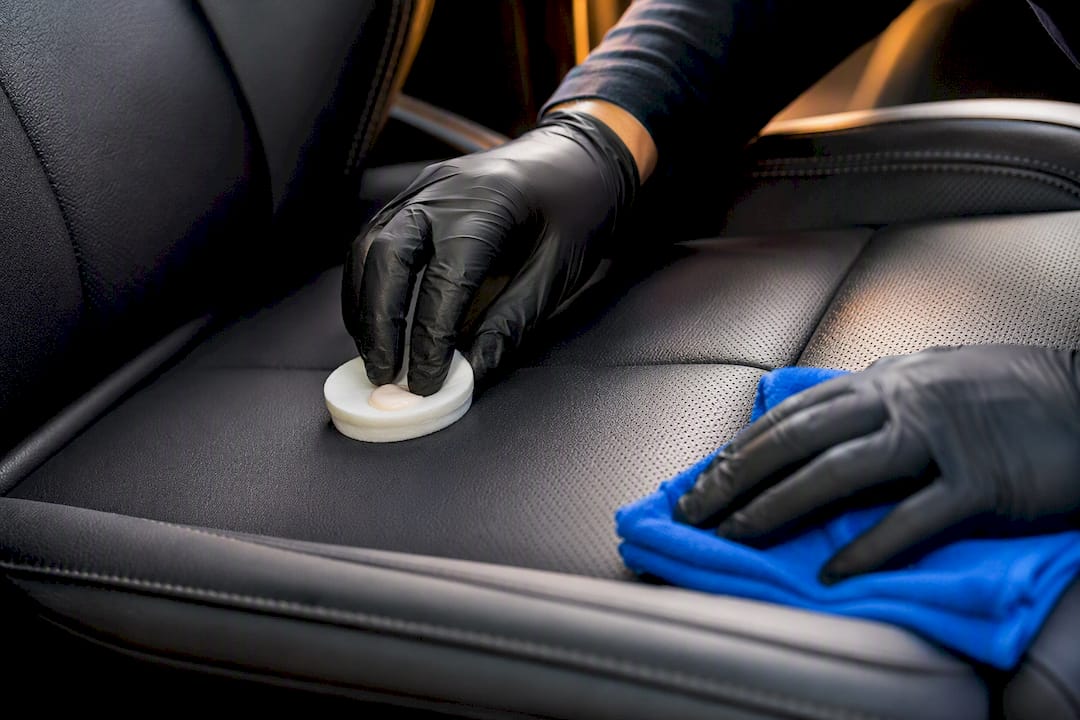
Leather seats need their own approach. Use a cleaner formulated for leather, never an all-purpose degreaser, and follow with a conditioner. Skipping conditioner after cleaning leaves leather dry and more porous, which means it absorbs odor faster next time.
Pro Tip: Run a clean, dry white cloth across the inside of the windshield after you finish. If it comes back with a faint gray film, residue is still airborne or still clinging to a nearby surface, and you need another pass before calling the job done.
Why Do Vents and the Cabin Filter Keep Bringing the Smell Back?
If a car smells clean everywhere except when the fan kicks on, the HVAC system is the source, not the seats. Vape aerosol gets pulled into the intake and settles inside the ductwork and on the cabin air filter, which then recirculates trapped particles every time the blower runs.
- A stale or musty smell that only appears with the fan on is the clearest sign of contaminated ductwork or a saturated filter.
- Cabin air filters sit behind the glove box on most vehicles and should be pulled and inspected; a filter that smells sour or looks gray with residue needs replacing, not cleaning.
- Activated-carbon replacement filters trap odor compounds better than standard paper filters for vehicles regularly exposed to vaping or smoke.
- Vents themselves can be wiped at the visible louvers with a foam-tipped applicator and a mild cleaner, but the ductwork behind them isn’t reachable without disassembly; for detailed instructions, see Dohányfüst szag eltávolítása autóból – Így lesz újra friss.
- Deep duct contamination, the kind that keeps producing odor after a filter swap, usually needs professional equipment built for reaching inside the system.
Advanced Options for Odors That Won’t Quit
Some cars need more than elbow grease. This is where ozone generators enter the conversation, and where caution matters. Ozone breaks down odor molecules through oxidation, but it can also degrade rubber, foam, and certain plastics inside a vehicle, and it poses inhalation risks if anyone re-enters the space before ozone levels drop back to normal.
Eco-focused professionals generally skip ozone and chlorine dioxide treatments in favor of gentler chemistries.
- Enzyme-based or plant-derived neutralizers break down odor compounds at a molecular level instead of covering them.
- Encapsulating sealers lock residue into porous materials like foam cores, stopping off-gassing where a surface wipe can’t reach.
- Low-heat thermal treatments loosen embedded residue in upholstery without the surface risks that come with ozone.
A single professional treatment often resolves moderate cases in one visit, though heavily saturated interiors, think headliner and foam padding, sometimes need a follow-up pass.
Pro Tip: After any advanced treatment, ventilate the car for at least an hour before driving with the windows up, and avoid vaping in it again right away. Fresh residue on top of a just-treated interior undoes the work fast.
Do Baking Soda and Charcoal Actually Work on Vape Smell?
Short answer: they help, but they’re not a fix. Baking soda and activated charcoal are absorbers, and they pull odor molecules out of the air and off surface fibers without touching the sticky residue underneath.
- Baking soda works best left on fabric for an hour or more, then vacuumed out completely, not just brushed off.
- Activated charcoal bags placed in the cabin overnight absorb ambient odor between cleanings.
- Vinegar in a shallow bowl left overnight can cut through some odor in the air, though it does nothing for residue on hard surfaces or in vents.
- Common air fresheners mask smell rather than remove anything, which is why the vape scent often returns as soon as the fragrance fades.
These methods make sense before a same-day showing, a quick rental turnaround, or as maintenance between full cleanings. They’re not a substitute for extracting the residue itself.
When Should You Call a Professional Odor Removal Service?
DIY cleaning has a ceiling. If you’ve vacuumed, extracted the upholstery, wiped every hard surface, and the smell is still there after a couple of days, or if it comes back specifically when the fan runs, the residue has worked its way into places a home cleaning routine can’t reach.
- Persistent odor after a full deep clean is the single strongest sign you’re past the DIY stage.
- A greasy haze that returns on interior glass within a day of cleaning points to residue still off-gassing from somewhere in the cabin.
- Odor that intensifies with the HVAC running usually means contaminated ductwork, not just a dirty filter.
A licensed odor removal specialist runs a systematic inspection first, checking upholstery, foam padding, vents, and headliner rather than guessing at the source. Treatment targets the specific material and contamination level, followed by a verification check, often that same glass-haze test, before calling the job finished.
When vetting a provider, ask what chemistries they use, whether they’re eco-certified and avoid ozone or chlorine, what guarantee backs the work, and how long the job takes. Pricing and turnaround vary with how deep the contamination runs and how large the vehicle is, but a straightforward case is often resolved same-day or next-day.
Pro Tip: Ask for a walk-through of what the technician found before treatment starts, not just after. A provider who can point to exactly where residue is concentrated, seat foam, headliner, vent housing, is diagnosing the problem instead of just spraying a general treatment and hoping.
How to Stop Vape Smell From Building Up Again
Prevention beats repeat cleaning every time. A few habit changes cut residue buildup dramatically before it ever becomes a removal project.
- Crack a window or run the fan on fresh-air intake any time you vape inside the car, rather than after the fact.
- VG-heavy e-liquids leave more residue than PG-heavy blends, since higher glycerin content settles onto surfaces faster and thicker.
- Vacuum seats and carpet on a regular schedule, not just when odor becomes noticeable, since residue accumulates well before you can smell it.
- Wipe interior glass periodically and treat any returning haze as an early warning sign, not a cosmetic annoyance.
- Replace the cabin air filter on the schedule your vehicle’s manual recommends, or sooner if you vape in the car often.
None of this requires giving up vaping in your own car. It just means treating ventilation and cleaning as routine, the same way you’d treat oil changes, instead of waiting until the smell is impossible to ignore.
Common Vape Residues That Cause Persistent Odors
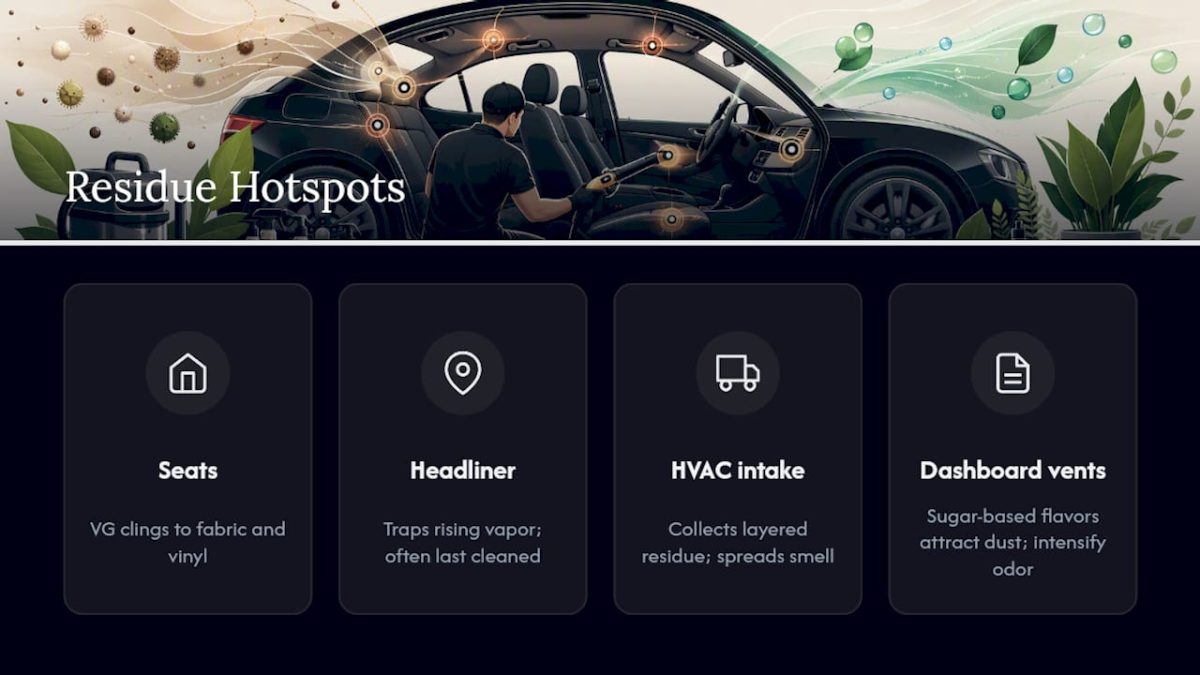
Not all vape residue behaves the same way, and knowing what you’re dealing with changes how you clean it. Propylene glycol produces a thinner, faster-evaporating film, while vegetable glycerin leaves a thicker, tackier layer that clings to fabric and vinyl longer. Flavor additives and sweeteners common in many e-liquids add another layer, literally, since sugar-based flavoring compounds can leave a faint stickiness on hard surfaces that attracts dust and intensifies odor over time.
Nicotine salts contribute their own residue profile, chemically different from freebase nicotine, though both settle onto the same surfaces: dashboard plastic, seat fabric, headliner fabric, and the inside of vent housings. Headliners deserve particular attention because fabric ceiling material traps rising vapor more than any other surface in the cabin, and it’s often the last place people think to clean.
The practical takeaway: a car that’s seen months of regular vaping usually has residue layered in at least three places, seats, headliner, and HVAC intake, even if only one of them is producing a noticeable smell right now. Treating just the obvious source and skipping the other two is the most common reason vape smell “comes back” after a cleaning that seemed successful.
Do Odor Neutralizers Actually Remove Vape Smell, or Just Cover It?
There’s a real difference between a neutralizer and a fragrance spray, and it matters for anyone trying to solve this permanently. Fragrance products add a stronger scent on top of the existing odor, competing with it rather than eliminating it. True neutralizers work at a chemical level, breaking down odor-causing molecules so there’s nothing left to smell, which is a fundamentally different mechanism.
Products marketed specifically for vape and smoke odor often use enzyme or plant-derived compounds designed to target the PG/VG residue and the byproducts it leaves as it breaks down over time. These tend to outperform generic air fresheners in vehicles because car interiors are small, enclosed, and heat up quickly, conditions that make masked odors resurface fast once the temperature rises and residue starts releasing compounds again.
The catch is that even a well-formulated neutralizer only reaches surfaces it can physically contact. Spraying the cabin air doesn’t touch residue buried in seat foam or lodged inside vent housings. That’s the ceiling every consumer neutralizer product runs into, and it’s the reason professional treatments combine neutralizing chemistry with physical extraction rather than relying on either one alone.
Does the Vape Flavor You Use Change How Bad Car Odor Gets?
Flavor affects how noticeable the smell is, but not necessarily how much residue builds up. Sweet, dessert-style, or fruit-forward e-liquids tend to produce a more identifiable, lingering scent because their flavor compounds are stronger and more aromatic than tobacco-style or menthol blends. That doesn’t mean they’re leaving more physical residue. It means what’s there is easier for anyone getting into the car to notice.
VG ratio matters more than flavor for actual buildup. Higher-VG liquids settle thicker and stickier than PG-heavy blends, regardless of what flavor is mixed in, so a sweet, high-VG liquid produces both a stronger smell and more residue, a worst-case combination for car interiors.
There’s a practical angle here for anyone who vapes regularly in their own vehicle: choosing a lower-VG, milder-flavor e-liquid for in-car use won’t eliminate residue buildup, but it slows it down and keeps the smell less noticeable to passengers or a next owner. It’s a small lever, not a solution, but it’s one worth knowing about before you’re standing in a driveway wondering why a two-year-old car suddenly smells like dessert every time the heat comes on.
What a Licensed Technician Actually Looks For
Eco-first odor removal starts with diagnostics, not spraying. Technicians check three signs first: haze on interior glass, contamination inside vent housings, and saturation in the headliner, since those three locations predict how deep the treatment needs to go.
One recent case involved a leased sedan returning to a dealership with heavy vape odor throughout the cabin. A same-day inspection found saturated headliner fabric and vent contamination behind a filter that looked clean. Targeted extraction and a non-ozone neutralizing treatment resolved it in a single visit, verified by a clear glass test before the car left the shop.
— Master
Master Odor Removal: The Eco-Friendly Fix When DIY Hits a Wall
Professional odor removal service is the option built for exactly the point where vacuuming and baking soda stop working. Some professional approaches rely on neutralizing chemistry that targets PG/VG residue directly, in vents, headliner fabric, and seat foam, without leaving harsh chemical exposure behind for the next person who gets in the car.

Booking usually starts with an inspection, similar to the diagnostic check covered above: glass haze, vent contamination, headliner saturation. From there, a technician builds a treatment plan matched to how deep the residue has settled and provides an estimated turnaround time.
If your car still smells like vape after a real cleaning attempt, that’s the signal to stop guessing and get odor removal done right. Reach out for a consultation and find out what a same-day or next-day appointment looks like for your vehicle.
Sources
For more on why deep cleaning beats masking, see AutoDetailPedia’s breakdown of permanent smoke and vape odor removal and ShunAuto’s guide on detecting vape odor in vehicles. For community-sourced DIY approaches, COPD360Social’s discussion thread covers common fixes and their limits.
Recent Comments