
A persistent mildew smell in a rental almost always means moisture is trapped somewhere you can’t see yet. Start ventilating and documenting today, before you do anything else.
Open the windows, run the bathroom and kitchen exhaust fans, and pull any damp towels, rugs, or curtains outside to dry in the sun. If you can reach your HVAC filter, check whether it’s soaked or caked with grime and swap it if it’s accessible without a tool kit. While you’re at it, take photos and a short video walkthrough of every room, with a timestamp, so you have a record of conditions before you touch anything else.
- Open windows and run exhaust fans in bathrooms and kitchens for at least 20 to 30 minutes.
- Move wet towels, bath mats, rugs, and curtains outside or into direct airflow to dry.
- Replace an accessible HVAC filter if it’s damp, moldy, or hasn’t been changed in months.
- Photograph and film every room where the smell is noticeable, with today’s date visible if possible.
If the smell is strong, seems to come from one specific spot, or shows up alongside a water stain, bubbling paint, or a soft patch of drywall, don’t wait to see if it fades on its own. Escalate immediately: notify your landlord in writing the same day and ask about next steps.
Pro Tip: *Buy a $10 digital hygrometer and place it in the room with the worst smell.
Key Takeaways
Fast ventilation and documentation buy you time, but a mildew smell that persists past a few days of cleaning almost always signals hidden moisture that needs a targeted fix, not just more airing out.
| Point | Details |
|---|---|
| Act within 24–48 hours | Mold can begin growing that fast on a wet surface, so ventilate and dry damp areas the same day you notice a smell. |
| Document before you clean | Timestamped photos, humidity readings, and written landlord notices protect your habitability claim later. |
| Know the 10 square foot rule | Mold covering more than about 10 square feet, or hidden behind walls, generally calls for professional remediation. |
| Target 30%–50% humidity | Keep problem rooms in this range with fans, ventilation, and a dehumidifier to stop recurrence. |
| Call in specialists for recurring odor | Masterodorremoval provides inspection, containment, HVAC checks, and eco-friendly odor neutralization when DIY steps stop working. |
Where to Learn More About Mildew, Mold, and Rental Rights
The EPA’s mold course lays out the science of mold growth and moisture control in plain terms, and it’s the source worth citing directly if a landlord pushes back on a repair timeline.
For deeper reading beyond this guide, the EPA’s mold course covers growth conditions and prevention basics, HUD’s mold guidance explains habitability standards tenants can reference, and the University of Georgia’s home mold prevention guide breaks down humidity targets in more technical detail. If you’re also dealing with lingering odor in carpet or flooring, these carpet care tips cover cleaning approaches worth pairing with the steps above.
Table of Contents
- What Causes a Musty Smell in a Rental Property?
- How Do You Find the Source of a Musty Smell?
- What Renter-Safe Steps Reduce Mildew Odor Right Away?
- What Should You Avoid Doing About a Musty Smell?
- How Do You Prevent Mildew Smells From Coming Back?
- Is a Musty Smell in Your Apartment a Health Risk?
- How Do You Document and Report Mildew to Your Landlord?
- When Should You Call a Professional for Mildew Odor?
- Why Professional Odor Removal Makes Sense for a Persistent Mildew Smell
- Frequently Asked Questions
- Sources
What Causes a Musty Smell in a Rental Property?
Mildew and musty odors trace back to trapped moisture, and in a rental that moisture usually comes from one of seven predictable sources: a recent or ongoing leak, chronically high indoor humidity, condensation on cold surfaces like windows, a slow plumbing or roof leak, wet fabrics stored in a closed space, a clogged appliance or HVAC condensate drain, or plain poor ventilation in bathrooms and kitchens.
Each cause tends to leave its own signature. A roof or attic leak often shows up as a brown ceiling stain paired with a musty smell that gets worse after rain. Sweating windows in humid weather can hide mold growing quietly on the sill or in the frame track, out of sight until you pull back the trim. A washing machine that sits closed with wet clothes inside for even a day can turn a whole laundry closet sour. None of these require a major disaster. Most start small and compound because nobody notices until the smell announces it.
HVAC systems complicate the hunt because they’re excellent at distributing a smell that originates somewhere else entirely. A musty odor coming from your vents commonly points to moisture inside the indoor unit itself, a clogged condensate drain, dirty evaporator coils, or contaminated ductwork, and it needs investigating quickly rather than masked with a filter change alone.
The smell you notice in your living room might have nothing to do with your living room. Air handlers pull moisture-laden air from wherever the leak is and push that scent through every vent in the unit, which is why so many tenants chase the wrong room first.
Musty odors are frequently the byproduct of microbial volatile organic compounds, the gases mold and mildew release as they grow. That smell can signal hidden mold deep in a wall cavity, behind insulation, or inside ductwork long before anything becomes visible, which is exactly why the nose is often a better early warning system than the eyes.
How Do You Find the Source of a Musty Smell?
Locating the source means working from where the smell is strongest outward, not guessing at random. Bathrooms, closets, basements, crawlspaces, the space behind and under appliances, under sinks, and anywhere near HVAC vents, filters, or the air handler closet are where moisture problems concentrate in most rentals.
Work through the space in this order:
- Localize the smell. Walk room to room with the doors closed for a few minutes each, then open them and note where the odor hits hardest.
- Look before you touch. Check for discoloration, water stains, bubbling paint, or warped baseboards in that area.
- Feel for dampness. Run a hand along baseboards, window sills, and under sink cabinets. Cool, slightly damp surfaces are a red flag even without visible staining.
- Check for peeling paint or soft drywall. Both indicate moisture has been sitting behind the surface for a while.
- Inspect HVAC components last. Pull the filter, look at the vent covers for dust streaked with moisture, and if you can safely access it, glance at the air handler closet for a wet drain pan or standing water.
A phone camera, a small flashlight, and a cheap hygrometer cover most of what you need. A moisture meter is a useful add if you already own one, and gloves are worth wearing anytime you’re reaching into a damp cabinet or closet you haven’t inspected before.
Pro Tip: Don’t cut into drywall or pull up flooring to “see what’s underneath.” Document what you can observe from the surface, then hand that evidence to your landlord and let a professional handle anything invasive. Renters who open walls on their own often end up owning the repair bill.
What Renter-Safe Steps Reduce Mildew Odor Right Away?
You can meaningfully cut a musty smell within a day using nothing but ventilation, drying, and basic cleaning, all of which are safe moves in a rental you don’t own.
Ventilation comes first. Open windows on opposite sides of the unit if you can, to create cross airflow, and run bathroom and kitchen exhaust fans well past the point where steam clears, since moisture lingers in the air longer than it’s visible. A portable fan aimed at a damp corner or closet speeds drying dramatically compared to letting the air sit still.
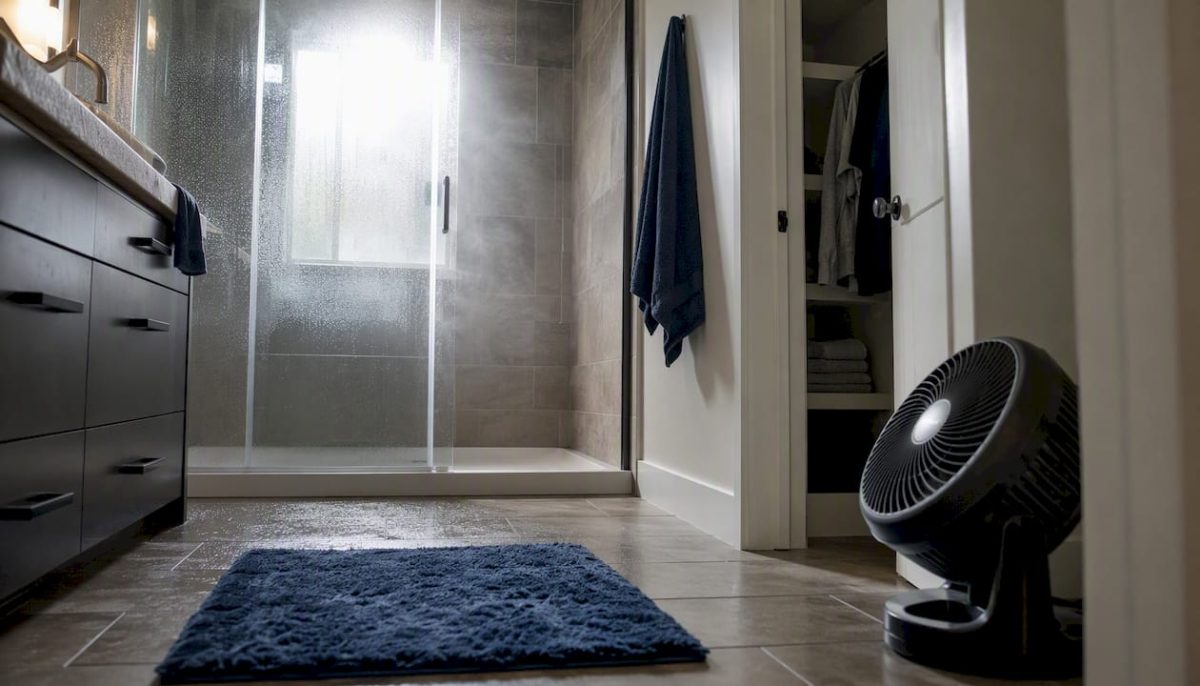
Damp textiles need to come out of enclosed spaces immediately. Pull towels, bath mats, rugs, and curtains that smell musty and launder them on a hot cycle where the fabric allows, then dry them fully before they go back into a closet. Sun and open air are doing real work here: airing and drying stored fabrics is one of the more effective first steps against musty odors in textiles, since mildew spreads readily inside sealed bags or closed dresser drawers.
For hard surfaces, plain detergent or a diluted white vinegar solution handles most non-porous mildew without controversy. Skip bleach on porous materials like grout lines packed with residue or fabric, and never use it in a closed room without ventilation. Bleach kills surface mold on non-porous tile and glass reasonably well, but it does little for mold that has worked into a porous material, and the fumes are genuinely unpleasant to breathe in an unventilated bathroom.
A quick rule that holds up in almost every case: document first, then dry and clean. Photographic evidence paired with prompt drying and cleaning speeds repairs and protects your position if the landlord conversation turns into a dispute later.
If you have access to a filter, replace or clean it, and flag any visible standing water near a vent or in the air handler closet to your landlord right away rather than waiting for your next scheduled contact. A portable dehumidifier run for a few hours in the worst-smelling room, or a few silica gel packs tucked into a closet, buys you real time while you wait for a permanent fix.
Pro Tip: Position a dehumidifier at least a foot from the wall so it can pull air freely, and empty the tank daily. A unit crammed into a corner with restricted airflow does a fraction of the job.
What Should You Avoid Doing About a Musty Smell?
Some of the most common tenant instincts make the problem worse, not better, and a few of them can cost you your security deposit.
Spraying air freshener and calling it solved just masks the smell while moisture keeps working behind the scenes. Painting over a stained or damp patch of drywall without letting it dry and without addressing the source seals moisture in, which almost always makes the mold problem worse under a fresh coat that looks fine for a few weeks. Heavy bleaching of porous materials, carpet, drywall, upholstery, tends to bleach the surface color without killing mold rooted deeper in the material, and it can spread spores into the air in the process. Cutting into a wall or pulling up flooring without your landlord’s knowledge turns a maintenance issue into a security deposit argument, even if your intentions were good.
Practical property maintenance advice bears repeating here: prioritize eliminating the source over masking it. Air fresheners and paint only hide the symptom and delay the real repair, and delay is exactly what lets a small leak become a bigger one.
One more line worth remembering: if the moisture involved sewage backup or actual floodwater, that’s not a DIY cleaning job under any circumstances, and it warrants professional remediation immediately for health and safety reasons.
How Do You Prevent Mildew Smells From Coming Back?
Once a room sits above 60% for any length of time, the risk of rapid mold spore germination climbs sharply, which is why that threshold matters more than most people realize.
Turning that number into daily habits is straightforward:
- Run bathroom and kitchen exhaust fans during and for 15 to 20 minutes after every shower or cooking session.
- Place a dehumidifier in the room that runs highest on your hygrometer, with the tank emptied daily and the unit set to maintain the 50% mark.
- Keep indoor air moving with fans or cracked windows rather than sealing a space shut, especially in humid climates.
- Never store damp towels, gym clothes, or wet umbrellas inside a closed closet or hamper.
- Schedule a quick self-inspection after any heavy rain, checking ceilings, window sills, and closets you don’t use often.
Small routine changes carry more weight than people expect. Leaving the bathroom door open after a shower instead of closing it lets moisture disperse instead of concentrating on one surface. Drying laundry promptly rather than letting a full hamper sit for days keeps mildew from getting a foothold in fabric. A $10 to $20 hygrometer left in a problem room gives you a running number instead of a guess, which matters if you ever need to make your case to a landlord.
Short-term and vacation rental operators lean on the same principle at a bigger scale, combining humidity control, ventilation, and monitoring sensors to catch problems between guest turnovers before they become complaints. Renters can borrow the same logic on a smaller budget.
Pro Tip: If the same room keeps developing a musty smell no matter what you do, stop treating it as a cleaning problem and ask your landlord for a permanent fix: better exhaust ventilation, a dedicated dehumidifier, or an HVAC service call. Recurring odor is a maintenance issue, not a habit issue.
Is a Musty Smell in Your Apartment a Health Risk?
Mold growth can start within just 24 to 48 hours after a surface stays wet, which is faster than most tenants assume and part of why acting the same day you notice a smell matters more than acting the same week.
For most healthy adults, brief exposure to a musty smell isn’t an emergency. For people with asthma, allergies, or compromised immune systems, mold exposure can trigger respiratory irritation, sneezing, coughing, or worsened allergy symptoms, and those reactions are worth taking seriously rather than pushing through.
| Humidity Level | Mold Risk | Recommended Action Window |
|---|---|---|
| 30%–50% RH | Low, considered the healthy target range | Maintain with normal ventilation |
| 50%–60% RH | Moderate, worth monitoring | Add ventilation or a dehumidifier within days |
| Above 60% RH | High, rapid germination risk | Address moisture source within 24–48 hours |
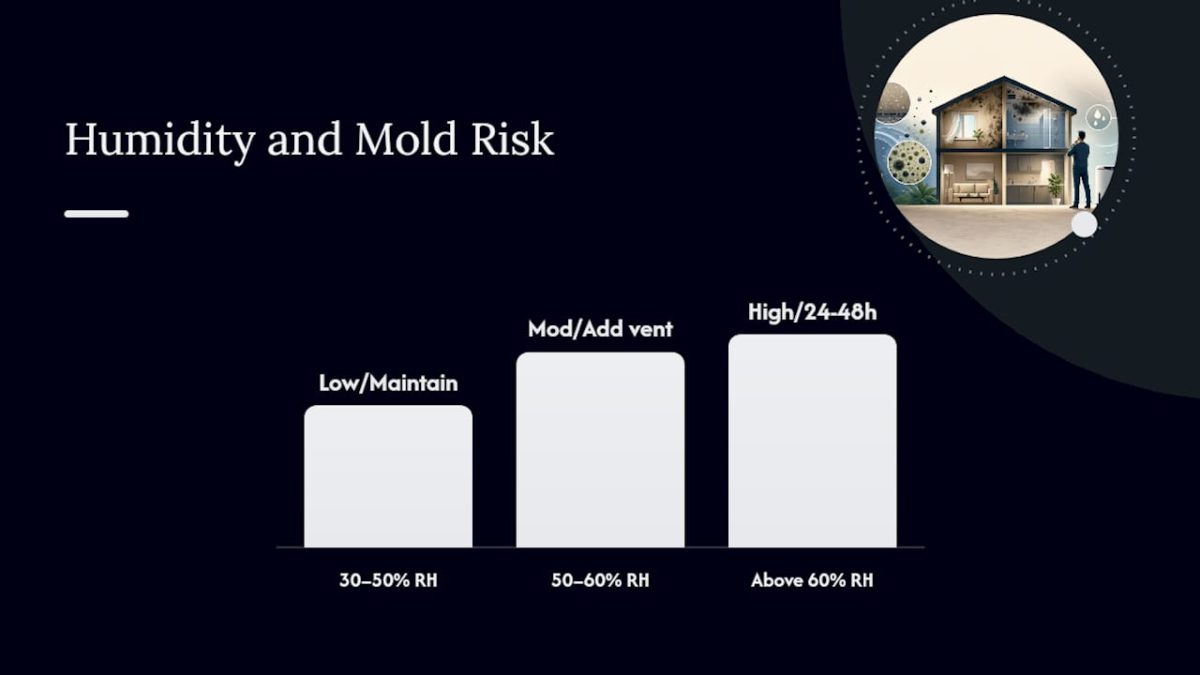
The single number worth remembering from all of this: mold can begin colonizing a damp surface in as little as a day or two. That’s the timeline that should shape how fast you move once you smell something off, not the timeline of when it’s convenient to call your landlord.
The EPA’s mold guidance is the authoritative source worth citing directly when you notify a landlord or property manager, since it removes any ambiguity about whether a 24 to 48 hour response window is a reasonable ask.
How Do You Document and Report Mildew to Your Landlord?
Documentation is what turns “there’s a smell in here” into a request your landlord has to take seriously, and in many jurisdictions it’s also what protects your position if the issue drags into a dispute over repairs or your deposit.
- Take timestamped photos and a short video of the affected area, including any visible stains, discoloration, or standing water.
- Record a humidity or moisture reading if you have a hygrometer or moisture meter, and note the date and room.
- Write down when the smell is strongest, whether that’s after rain, after a shower, or constantly regardless of weather.
- Save copies of every text, email, or written note you send to your landlord or property manager about the issue.
- Follow up any verbal report with something in writing the same day, even a short email restating what you said on the phone.
Many jurisdictions’ implied warranty of habitability requires landlords to keep a rental free of significant health hazards, and mold caused by an unaddressed leak or structural dampness often falls squarely into that category. Documentation is what makes that legal protection usable rather than theoretical.
A short notice you can adapt: “On [date], I noticed a persistent musty odor in [room/area]. I’ve observed [visible staining / dampness / no visible source] and measured [humidity reading, if available]. I’m requesting an inspection and repair within [reasonable timeframe, commonly 7 to 14 days for non-emergency issues]. Photos are attached.”
Pro Tip: Send that notice by email, not just text, and request a read receipt if your provider supports it. A dated email thread holds up far better than a text screenshot if you ever need to show a timeline of what you reported and when.
When Should You Call a Professional for Mildew Odor?
Certain signs mean it’s time to stop treating the smell as a DIY project and bring in someone with the equipment and training to find and fix the actual source.
- The affected area is larger than roughly 10 square feet, a widely used threshold between DIY cleaning and professional remediation.
- The smell is strong but you can’t find any visible source after a thorough check, which usually means the mold is inside a wall, under flooring, or in ductwork.
- There’s standing water anywhere in the unit, especially near the HVAC air handler.
- The moisture came from a contaminated source like sewage backup or floodwater.
- Anyone in the household is experiencing ongoing respiratory symptoms, headaches, or allergy flare-ups tied to time spent in the unit.
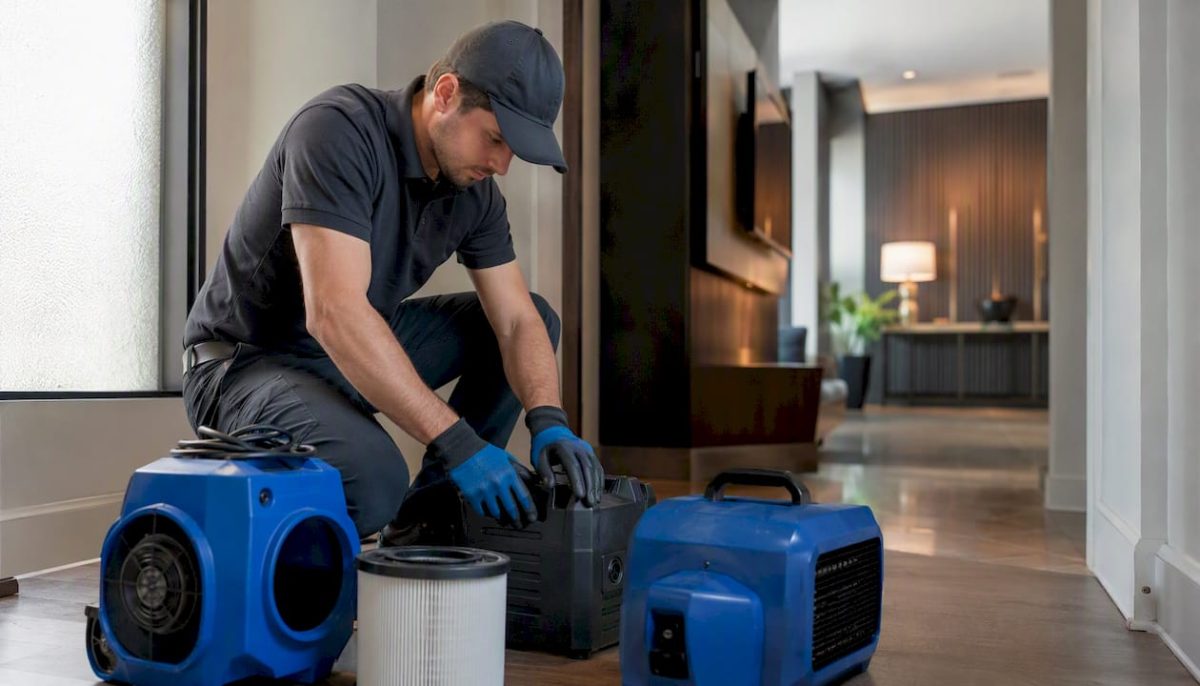
A professional visit typically starts with an inspection and moisture mapping to pinpoint exactly where the water is coming from, followed by containment of the affected area so spores don’t spread while work happens. From there, techs remove or remediate porous materials that can’t be salvaged, check and clean HVAC components if the ductwork is implicated, and finish with odor neutralization rather than just surface cleaning. Persistent mildew odor traced to HVAC often points to clogged condensate drains, a wet drain pan, or dirty evaporator coils that need specialized cleaning well beyond swapping a filter.
Costs vary widely depending on the scope, whether it’s a single closet or a whole HVAC system, so ask for a written estimate before work begins, and ask specifically what’s included: inspection, containment, material removal, and odor neutralization are not always bundled together by every provider. The line between DIY cleaning and licensed remediation usually comes down to scale and whether the source is visible. A wipeable bathroom tile is a cleaning job. A hidden leak behind a wall that’s been feeding mold for weeks is a remediation job, and that’s where odor neutralization services become the right call rather than an upsell.
A Practitioner’s Take on the Mistakes Renters Make Most Often
Musty odors almost never show up the way people expect. Most renters assume the smell is coming from wherever it’s strongest in the room, when in reality that’s often just where the air currently sitting is worst, not where the moisture actually lives. The fastest fixes that actually work are boring: real airflow, real drying, and getting a fabric or surface fully dry rather than “dry enough.”
One habit that consistently helps a remediation team work faster: keep a simple log with dates, photos, and any humidity readings from the moment you first notice the smell. That timeline tells a technician whether they’re dealing with a fresh event or something that’s been building for months, and it shapes how aggressively they need to investigate.
Permanent elimination of a mildew odor is a technical process, not a weekend project. It usually requires locating and correcting the moisture source, addressing any porous materials that absorbed it, and neutralizing residual odor compounds with methods that go beyond what a bottle of vinegar or an air purifier can reach. That’s the gap between managing a smell and actually ending it.
Why Professional Odor Removal Makes Sense for a Persistent Mildew Smell
When you’ve ventilated, cleaned, documented, and notified your landlord and the musty smell keeps coming back, the honest answer is that airing out a room isn’t going to solve a moisture problem living inside a wall cavity or an HVAC system. That’s the point where Masterodorremoval becomes the practical next step instead of another round of DIY guesswork.

Masterodorremoval specializes in eco-friendly odor elimination that skips ozone and chlorine entirely, using science-backed methods built to neutralize odor at its source rather than mask it temporarily. A typical visit includes a full inspection and moisture mapping, containment of the affected area, targeted remediation of porous materials that have absorbed the smell, and a check of HVAC components when ductwork is part of the problem. That’s a materially different scope than a filter swap or a bottle of enzyme spray.
For renters dealing with a landlord who’s slow to act, or a smell that keeps returning no matter how carefully you clean, bringing in licensed odor removal specialists gives you documented proof of the problem’s severity and a real fix rather than a temporary patch. Masterodorremoval offers same or next-day service in many cases, so reach out to schedule an inspection and get a clear read on what’s actually causing the smell in your unit.
Frequently Asked Questions
How do I get rid of a musty smell in my rental apartment fast?
Ventilate the space with open windows and exhaust fans, remove and launder any damp fabrics, and clean non-porous surfaces with detergent or diluted vinegar. These steps reduce odor within a day or two if the moisture source is minor, but a smell that returns points to a hidden leak needing professional attention.
Can my landlord ignore a mold or mildew smell complaint?
Many jurisdictions’ implied warranty of habitability requires landlords to address significant mold tied to leaks or structural moisture, since it qualifies as a health hazard. Document the issue with photos and written notices, and follow up in writing if a verbal complaint gets no response.
How long does it take for mildew to start smelling in a rental property?
Mold can begin growing within 24 to 48 hours of a surface staying wet, and the musty smell often follows shortly after as the colony develops. That’s why acting the day you first notice moisture matters more than waiting to see if it dries out on its own.
Is it safe to use bleach to remove a mildew smell?
Bleach works reasonably well on hard, non-porous surfaces like tile and glass, but it does little for mold embedded in porous materials like drywall or fabric, and the fumes are harsh in an unventilated room. Diluted white vinegar or a standard detergent is often the safer, equally effective choice for most rental surfaces.
When should I hire a professional instead of cleaning it myself?
Call a professional when the affected area exceeds roughly 10 square feet, the smell has no visible source, there’s standing water, or anyone in the home has ongoing respiratory symptoms. A service like Masterodorremoval can map the moisture source, contain it, and neutralize the odor rather than just cleaning the surface.
This article is general information, not a substitute for advice from a qualified doctor. Consult a qualified healthcare professional about your own circumstances before acting on anything here.
Sources
- EPA — Mold course: Chapter 1
- Preventing mold in your home (University of Georgia Field Report)
- Musty Smell in AC Vents? Atlanta Landlord Repair Guide 2026
Recent Comments