
Hotel-level luxury rental cleaning means pristine sanitation, material-safe techniques, hospitality-grade staging, and documented verification, delivered the same way every single turnover. Not most of the time. Every time. That is the bar guests paying $800 a night expect, and it’s a different job entirely from a standard vacation-rental clean.
Getting there requires a specific set of building blocks. Skip one and the whole system wobbles.
- Written SOPs that spell out sequence, technique, and the definition of “done” for every room
- A room-by-room checklist covering living spaces, kitchen, bedrooms, bathrooms, and entry points
- Linen laundered at documented, hospitality-standard temperatures
- Material-specific care for stone, wood, brass, and delicate upholstery
- Photo proof of high-miss zones before a supervisor signs off
- A final walkthrough that catches what the cleaner’s own eye missed
Luxury rental cleaning practices aren’t a longer checklist. They’re a different operating philosophy, one where verification matters as much as the scrubbing itself.
One more piece belongs on that list, and owners often learn it the hard way: odor management. A property can look flawless in photos and still lose a guest’s confidence in the first ninety seconds if the air smells wrong. We’ll cover prevention and in-turnover fixes below, along with the point at which it makes sense to bring in a specialist like Masterodorremoval instead of hoping a candle handles it.
Table of Contents
- How Luxury Rental Cleaning Differs From a Standard Turnover
- The Hotel-Grade Room-By-Room Cleaning Checklist
- Turnover Timelines, Staffing, and Deep-Clean Cadence
- Disinfection and Laundry Standards That Protect Guests
- Written SOPs, Cleaner Training, and Quality-Control Audits
- Preventing and Eliminating Odors Without Overcorrecting
- Supplies, Equipment, and Eco-Friendly Product Choices
- What Luxury Turnovers Actually Cost to Run
- VIP Staging Touches That Signal True Luxury
- Caring for Delicate Materials and Luxury Furnishings
- Handling Special Requests From High-End Guests
- Sustainability Practices That Fit an Eco-Luxury Property
- Why Standardized Process Protects Both Guests and Assets
- When Odor Problems Need a Professional, Not Another Candle
- Key Takeaways for Property Managers
- Sources
How Luxury Rental Cleaning Differs From a Standard Turnover
A standard vacation-rental clean optimizes for speed. A cleaner runs a checklist, wipes visible surfaces, swaps linens, and moves to the next booking, often inside a 60 to 90 minute window. Luxury rental cleaning practices optimize for something else entirely: asset protection and guest perception, which take more time and a different skill set to deliver.
The difference shows up in tasks a budget clean simply skips.
- Polishing brass fixtures and marble counters with pH-balanced products instead of an all-purpose spray
- Steaming or spot-treating upholstery rather than a quick visual check
- Staging robes, slippers, and welcome trays with hotel-style precision
- Resetting ambient scent, lighting, and thermostat to a defined “welcome” preset
- Documenting condition of high-value furnishings to catch wear before it becomes damage
The payoff for that extra effort is measurable in outcomes, not just aesthetics. Properties that consistently hit hotel-grade standards tend to command higher average daily rates, generate fewer guest complaints about cleanliness, and preserve the resale and rental value of expensive furnishings longer. A luxury hotel housekeeping checklist built around consistency and layered inspection isn’t overkill for a five-bedroom villa charging premium rates. It’s the minimum operating standard.
The Hotel-Grade Room-By-Room Cleaning Checklist
Every room in a luxury property has its own failure points, the small misses that guests notice even when they can’t articulate why a space feels “off.” Building a printable checklist around each room closes those gaps before a guest ever walks in.
Living room. Dust every surface, including picture frames and light fixtures, using a top-down sequence so debris doesn’t resettle on cleaned areas. Wipe remotes, tablets, and touchscreens with electronic-safe cloths, never standard glass cleaner, which can damage screen coatings. Steam or spot-treat upholstery fabric, checking under cushions for crumbs, coins, and stains left by the previous guest.
Kitchen. Sanitize every surface, not just countertops, including cabinet handles, faucet bases, and the inside of the microwave. Appliance interiors (oven, refrigerator, dishwasher) need periodic deep cleaning, not just after visible spills. Restock and arrange glassware and barware to a set presentation standard, and follow a strict trash and refrigerator policy so nothing lingers between guests.
Bedrooms. Hospital-corner bed-making with zero visible wrinkles is the visual signature of a luxury turn. Rotate linens on a documented schedule rather than reusing the same set until it looks worn, and inspect mattresses for spots or damage each turnover. Handle delicate bedding, silk pillowcases, embroidered duvets, with the same care you’d give a hotel’s Egyptian cotton stock.
Bathrooms. Mirrors and glass need a genuinely streak-free finish, which usually means a dedicated glass product rather than an all-purpose cleaner. Grout lines and mineral deposits around faucets require targeted treatment, since these are the first things a discerning guest notices in an otherwise spotless bathroom. Toiletries should follow a consistent layout and replenishment standard, not a random pile by the sink.
Outdoor and entry. Sweep entrances, stage welcome mats, and disinfect exterior touchpoints, door handles, keypad, doorbell, since these are the very first surfaces a guest touches.
Pro Tip: The areas that fail inspections most often aren’t the obvious ones. Under couch cushions, the grime line where a shower curtain meets the tub, and fingerprint smudges on remote controls catch experienced cleaners off guard because they’re outside a normal sightline. Build a specific checklist line for each.
Turnover Timelines, Staffing, and Deep-Clean Cadence
A 60-minute speed turn works for a budget condo. It does not work for a property with marble counters, upholstered furniture, and six sets of premium linens to inspect and reset. Luxury turnovers built the right way often require multiple man-hours, and turnover standards for luxury rentals put that figure at four to eight hours depending on square footage and material complexity.
- Block realistic time. A 3,000-square-foot villa with stone surfaces and delicate upholstery needs closer to a full day than a quick sprint, especially between back-to-back bookings.
- Choose a staffing model that fits your portfolio. In-house teams give you the most control over quality and give cleaners repeated familiarity with a property’s specific materials. Outsourced turnover companies scale faster for owners managing several properties without hiring overhead. A hybrid model, in-house lead cleaner plus outsourced backup for peak season, works well for portfolios of five to fifteen units.
- Schedule photo verification and walkthroughs deliberately, not as an afterthought squeezed in before the next guest arrives. Build a 15 to 20 minute supervisor buffer into every turn.
- Run deep-clean events on a fixed cadence. Seasonal or quarterly deep cleans, carpet extraction, grout resealing, upholstery shampooing, catch wear that a routine turnover clean isn’t designed to address, and industry maintenance guidance on luxury rental property standards treats this cadence as essential to preserving asset value, not optional polish.
Disinfection and Laundry Standards That Protect Guests
Guest safety and guest perception both hinge on the same set of practices: what gets disinfected, and how linens get laundered. OTA guidance recommends washing towels and bedding at 60°C/140°F between every single stay, a temperature threshold that matters because it’s high enough to address common pathogens that survive a cooler, gentler wash cycle.
Guests don’t see the wash cycle. They feel the result: linens that smell genuinely clean, not just fragranced to mask the fact that they weren’t hot enough to sanitize properly.
High-touch disinfection deserves the same rigor. Light switches, doorknobs, remote controls, faucet handles, and thermostat panels get touched by every guest and often get missed by cleaners focused on visible dirt rather than contact frequency. The VRMA cleaning guidelines formalized this high-touch priority list, and it remains a solid operational baseline for any luxury property today.
Textile handling needs its own system, separate from general cleaning:
- Maintain a par level of at least three complete linen sets per bed to allow for laundering rotation without gaps
- Color-code cleaning tools and cloths by room type to prevent cross-contamination between bathroom and kitchen surfaces
- Bag soiled linens immediately rather than staging them in hallways or living areas
- Inspect linens for stains or damage before they go back into circulation, not after a guest complains
One caution belongs here: disinfectants and laundry additives that work fine on budget linens can damage delicate fabrics, embroidery, or specialty finishes. Read compatibility labels before applying anything stronger than a standard detergent to premium textiles.
Written SOPs, Cleaner Training, and Quality-Control Audits
A single excellent cleaner does not make a luxury operation reliable. A written, digitized Standard Operating Procedure does, because it makes the guest experience independent of any one person’s memory or mood that day. A proper SOP defines the outcome for each room, spells out the exact sequence of tasks, and specifies how verification happens before the space gets marked ready.
Turning that document into a daily habit takes a structured onboarding process.
- Shadow shift: a new cleaner watches an experienced lead complete a full turnover, then narrates the sequence back.
- Supervised run: the new cleaner completes a full turn with a lead checking work in real time.
- Solo run with photo audit: the cleaner works independently, but every high-miss zone gets photographed for supervisor review.
- Certification: after three to five clean audits, the cleaner is cleared for solo turns without a mandatory photo check on every job.
Quality control doesn’t stop at certification. Vacation rental housekeeping run as a real operation, not a series of one-off cleans, depends on consistent photo verification, supervisor sign-off, and a clear escalation path when something falls short of standard. Track a few fields on every job: inspection photos of designated high-miss zones, a linen replacement log, and a maintenance-flag field for anything a cleaner notices that isn’t their job to fix (a loose cabinet hinge, a stained grout line that needs resealing).
- Photo requirement: under-cushion areas, remote controls, shower grout, and bathroom mirrors, every time
- Sign-off requirement: a named supervisor approves the turn before the property gets marked bookable
- Escalation trigger: any flagged issue that a standard clean can’t resolve routes to a manager within the hour
Pro Tip: A simple photo-evidence policy, four required photos per turn, timestamped and stored, does two things at once: it catches recurring misses before a guest does, and it protects owners from disputed damage claims when a guest tries to blame the cleaning crew for pre-existing wear.
Preventing and Eliminating Odors Without Overcorrecting
Odor is the fastest way to undo an otherwise flawless clean, and it’s also the easiest thing for a rushed turnover to miss. The most common sources in rentals are predictable: smoking indoors despite house rules, pet accidents on upholstery or carpet padding, lingering food odors from grease traps or garbage disposals, and mildew building up in bathroom exhaust systems or under sinks.
Prevention beats remediation every time.
- Enforce a strict no-smoking policy with clear consequences, and inspect for evidence at every turnover, not just when a complaint comes in
- Require pet fees and inspect upholstery and carpet edges specifically for accidents after pet-friendly stays
- Empty kitchen trash and clean disposal units at every single turn, since food odor compounds fast in a closed rental
- Check HVAC filters and bathroom exhaust fans on a monthly schedule, not just when someone mentions a musty smell
When a mild odor does turn up mid-turnover, most cases respond to standard fixes:
- Deep-clean affected textiles, curtains, upholstery, rugs, with a fabric-safe enzyme treatment rather than masking fragrance
- Run an enzyme treatment specifically on any pet-accident sites, since surface cleaning alone leaves the odor source intact in the padding below
- Check and replace HVAC filters if the smell seems to be circulating through the ventilation system
- Choose a subtle, low-VOC scenting option only after the source odor is actually gone, never as a substitute for removing it
Some odors don’t respond to any of that, and that’s the signal to stop DIY-ing it. Persistent smoke odor embedded in walls and HVAC ductwork, pet odor that’s soaked into subflooring, or a smell that keeps reappearing across multiple properties in a portfolio all point to a problem beyond surface cleaning. That’s exactly the gap Masterodorremoval fills: a proper inspection identifies the actual source, a tailored eco-certified protocol addresses it without ozone or chlorine treatments that can damage finishes, and a follow-up visit confirms the fix held. If you’re planning ahead for a known problem property, scheduling odor removal for luxury properties around your turnover calendar avoids losing booking days to reactive scrambling.
Supplies, Equipment, and Eco-Friendly Product Choices
The wrong product on the right surface causes damage that costs far more than the cleaning saved. Luxury materials, marble, reclaimed wood, specialty metal finishes, are damaged by acidic or high-alcohol cleaners that would be perfectly fine on a laminate countertop. Professionals default to pH-neutral agents specifically because they clean effectively without etching stone or stripping a wood finish’s protective coat.
The equipment list for a hotel-grade operation looks different from a standard cleaning kit:
- HEPA-filter vacuums that capture fine dust and allergens instead of recirculating them
- Low-moisture, electronics-safe wipes for remotes, tablets, and touchscreens
- Steam cleaners for upholstery and grout that sanitize without chemical residue
- Microfiber cloth systems, color-coded by room, to prevent cross-contamination
- pH-neutral stone and wood cleaners rather than generic all-purpose sprays
- Eco-certified detergents and low-VOC fragrance systems for a scent profile that reads as clean, not perfumed
The fastest way to turn a $40,000 furnishings budget into a $4,000 replacement bill is a well-meaning cleaner using the wrong bottle on the wrong surface.
Avoid aggressive acids, bleach, and high-alcohol formulas on any natural stone, unsealed wood, or specialty metal entirely. If a product label doesn’t specify safety for the exact surface you’re treating, don’t use it on a luxury finish until you’ve confirmed compatibility. Approaches built around chlorine-free, eco-friendly cleaning for luxury spaces exist precisely because standard commercial-grade chemicals weren’t designed with $200-a-yard upholstery fabric in mind.
What Luxury Turnovers Actually Cost to Run
Budgeting for hotel-grade cleaning means understanding what actually drives the cost up. Property size is the obvious factor, but material complexity, marble versus laminate, silk versus polyester, often matters more than square footage alone. Bedroom and bathroom count drives linen volume directly, and inspection labor, the supervisor time spent on photo review and walkthroughs, adds real hours that a budget clean skips entirely.
| Cost Driver | Low-Complexity Property | High-Complexity Luxury Property |
|---|---|---|
| Property size | Under 1,000 sq ft, 1 to 2 bedrooms | 3,000+ sq ft, 4+ bedrooms |
| Material profile | Laminate, standard fixtures | Marble, reclaimed wood, specialty metals |
| Linen program | 2 sets per bed, standard cotton | 3+ sets per bed, premium/embroidered linens |
| Inspection labor | Minimal, spot-check only | Full photo audit plus supervisor walkthrough |
| Typical turnover time | 1 to 2 hours | 4 hours |
Choosing a staffing model comes down to two questions: how many properties are you running, and how much direct control do you need over quality? An in-house team gives maximum control and works well once you’re managing five or more properties consistently. Outsourcing to a specialized turnover company reduces your management overhead but requires tight SOP documentation so quality doesn’t vary between crews. A hybrid model, an in-house lead who trains and audits outsourced staff, tends to be the sweet spot for owners scaling past a handful of units without wanting to build a full internal cleaning department.
VIP Staging Touches That Signal True Luxury
Cleanliness gets a guest in the door without complaints. Staging is what makes them feel like the space was prepared specifically for them, and that perception is worth more to your reviews than an extra hour of scrubbing. VIP room prep standards built for luxury housekeeping emphasize precise presentation details: wrinkle-free premium linens, perfectly aligned amenities, and a deliberate final walkthrough that catches small details a rushed inspection would miss.
The touches that actually register with guests are smaller than most owners assume:
- Towels folded to a consistent hotel-style standard, not just clean and stacked
- Slippers and robes placed in a visible, deliberate spot, not tucked in a closet
- A curated welcome tray or minibar selection that feels chosen, not generic
- Subtle scenting in entry and living areas, applied lightly enough that it reads as ambient rather than aggressive
Ambience matters as much as objects. Reset lighting to a warm “welcome” preset rather than leaving harsh overhead lights on, set the thermostat to a comfortable default temperature before arrival, and clear any music or streaming app history from the previous guest’s session. None of that shows up on a standard cleaning checklist, but all of it shows up in guest reviews.
Build a final staging checklist into every turnover: linens wrinkle-free and hospital-cornered, amenities aligned and stocked, scent applied and dissipated to a light level, lighting and thermostat reset, and technology cleared of prior guest data. Verify every line before marking the property ready, not just the cleaning tasks.
Caring for Delicate Materials and Luxury Furnishings
Marble countertops, reclaimed wood tables, brass fixtures, and specialty leather or silk upholstery all require handling that a standard cleaning crew wasn’t trained for. The mistake owners make most often is assuming that “gentle” or “natural” cleaning products are automatically safe for every surface. They’re not. A citrus-based all-purpose cleaner that’s genuinely eco-friendly can still etch unsealed marble because the acidity, not the chemical harshness, is what causes the damage.
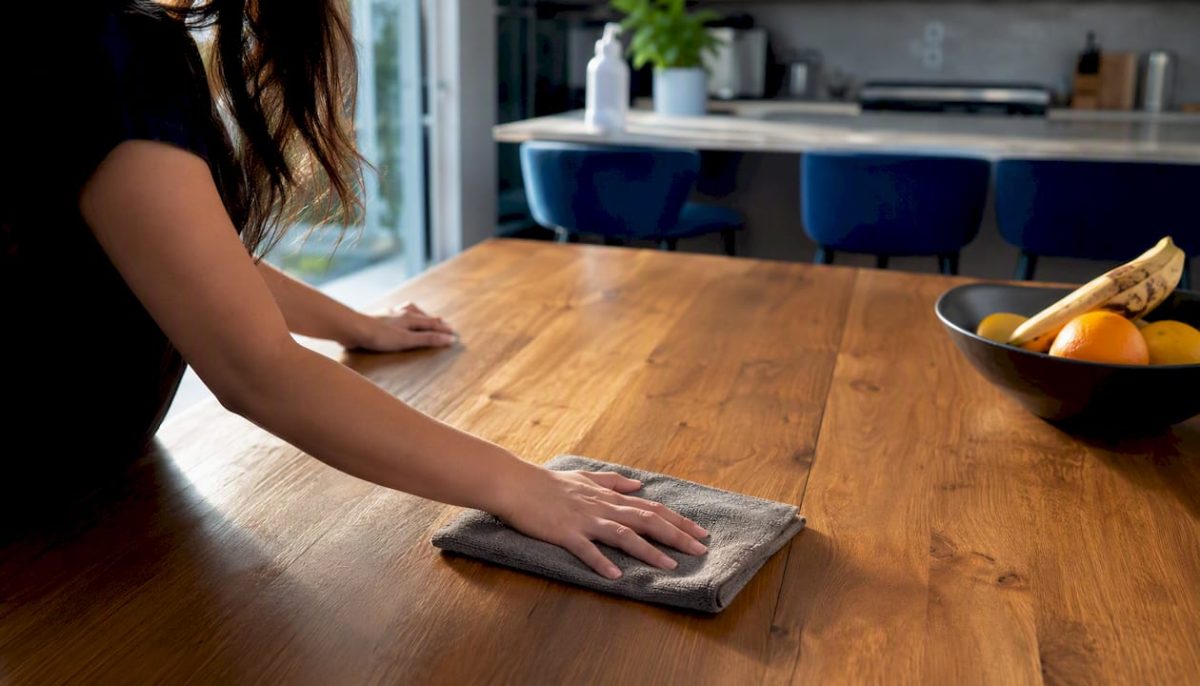
The right approach starts with knowing what each material can’t tolerate. Marble and natural stone can’t handle acidic cleaners, vinegar, lemon, most citrus formulas, without pH-neutral alternatives. Reclaimed and unsealed wood loses its finish to excess moisture and harsh solvents, so a barely-damp microfiber cloth beats a spray-and-wipe approach every time. Brass and specialty metal finishes tarnish or scratch under abrasive pads, and require polish formulated specifically for that metal type, not a generic metal cleaner. Silk and specialty upholstery need professional spot-treatment rather than a standard steam cleaner setting, since heat and moisture levels that work fine on cotton blends can warp delicate fibers.
Train your cleaning team to recognize materials on sight, or better, keep a laminated material guide in the cleaning closet listing exactly which product goes with which surface in that specific property. A five-minute reference check prevents a five-figure furniture replacement.
Handling Special Requests From High-End Guests
Luxury guests book expecting a degree of customization a standard rental never offers, and the properties that deliver on that expectation earn the reviews and repeat bookings that justify premium rates. That starts before the guest arrives: a pre-arrival questionnaire covering allergies, fragrance sensitivities, and specific preferences (extra pillows, a particular water brand stocked, dietary notes for a welcome basket) turns your cleaning and staging checklist from generic to personalized.
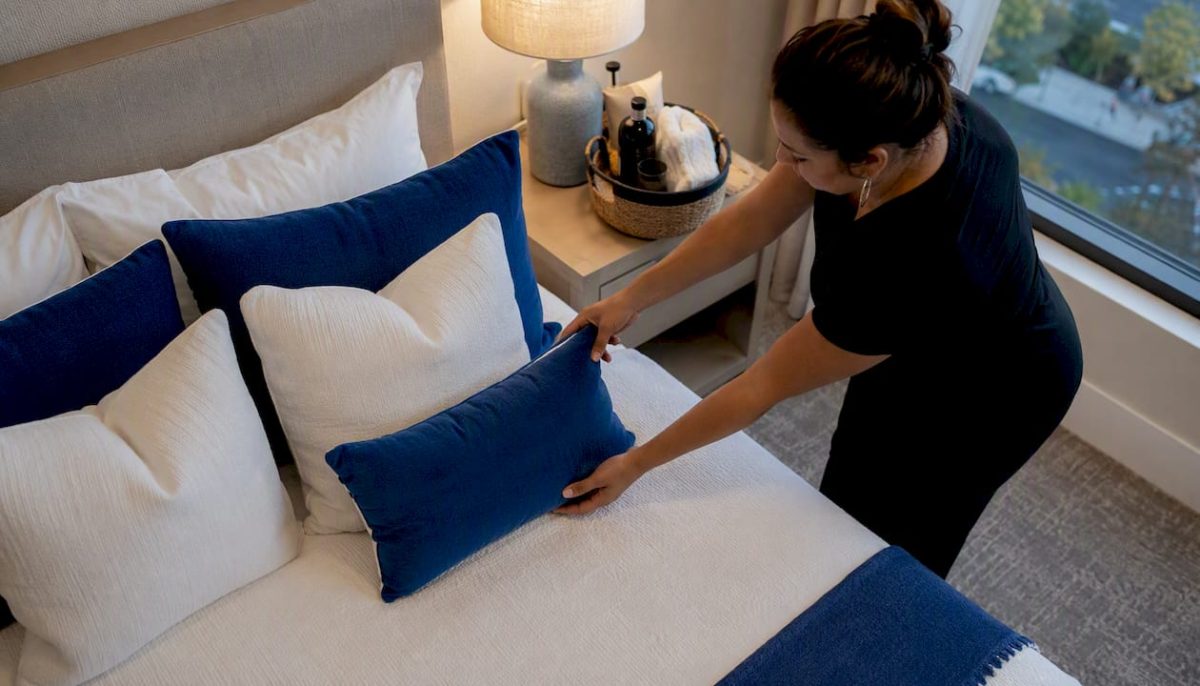
Fragrance sensitivity deserves special attention, since a scent choice that feels luxurious to one guest reads as overwhelming or triggers allergies for another. Default to no scent or a very light, neutral option unless a guest has specifically requested something, and always disclose what products were used if asked.
Some requests require coordination beyond the standard cleaning checklist entirely: arranging fresh flowers, stocking a specific champagne, or resetting a home office setup for a business traveler. Build a simple request-intake process, a form or a message thread the property manager reviews 48 hours before arrival, so the cleaning and staging crew has clear instructions rather than last-minute scrambling. The properties that handle this well treat every booking’s prep sheet as slightly different, because it is.
Sustainability Practices That Fit an Eco-Luxury Property
Luxury and sustainability aren’t in tension the way some owners assume, and a growing share of high-end guests actively look for it. Eco-certified detergents and low-VOC fragrance systems, already part of a material-safe cleaning kit, double as a sustainability signal without requiring separate sourcing. The same goes for avoiding ozone or chlorine-based treatments, methods that carry both environmental and material-damage risk, in favor of green-certified alternatives.
A few sustainable practices fit naturally into an already hotel-grade operation:
- Microfiber cloth systems reduce single-use paper towel and disposable wipe waste across every turnover
- Refillable amenity dispensers cut plastic bottle waste compared to single-use toiletries, without sacrificing the premium feel guests expect
- HEPA vacuum systems reduce the need for aerosol air fresheners by actually removing allergens rather than masking them
- Linen laundering programs that batch loads efficiently reduce water and energy use compared to running partial loads after every single turn
None of this requires trading down on quality. A pH-neutral, eco-certified stone cleaner performs as well as a harsher commercial product, often better, since it won’t dull a polished finish over repeated use. Framing sustainability as part of the luxury standard, rather than a compromise against it, tends to land well with the guest demographic booking premium properties in the first place.
Why Standardized Process Protects Both Guests and Assets
Consistency is the entire game in luxury rental cleaning practices, and consistency comes from process, not from finding one exceptional cleaner and hoping they never quit. Properties that rely on individual skill rather than documented systems see quality swing wildly between turnovers, and guests notice that inconsistency faster than owners realize.
Layered verification, a cleaner’s own photo proof plus a supervisor’s independent walkthrough, creates a quality-control chain that catches problems before a guest does. It also protects owners in the other direction: when a guest disputes a damage charge, timestamped photos from the turnover before their stay settle the question in minutes instead of becoming a drawn-out argument.
Odor sits in a special category within that system, because it’s one of the few issues a visual inspection can’t catch. A property can pass every photo check and still carry a lingering smell that only shows up once someone walks through the door. That’s why we built our escalation guidance around a clear line: routine odor prevention and in-turnover fixes handle the vast majority of cases, but embedded or recurring odors need a specialist who can identify the actual source rather than masking it. Partnering with a dedicated odor-removal service protects both the guest experience and the underlying materials, since the wrong DIY fix often does more damage than the smell itself. Standardized process is what separates a property that occasionally feels luxurious from one that reliably does.
When Odor Problems Need a Professional, Not Another Candle
Some odor problems are beyond what any cleaning crew, however well-trained, can fix with surface products. Smoke embedded in drywall, pet odor that’s soaked through subflooring, or a musty smell recurring across multiple units in a portfolio all point to a source deeper than a standard turnover can reach.
Masterodorremoval specializes in exactly this gap: eco-certified, non-ozone, non-chlorine odor elimination built for the high-end properties, dealerships, and hospitality venues that can’t afford harsh chemical residue on premium materials. The process starts with an actual inspection to identify the odor’s source, not a guess, followed by a protocol tailored to your property’s specific materials and the type of odor involved (smoke, pet, mildew, or food). Same-day or next-day scheduling means a persistent odor doesn’t cost you a full booking cycle while you wait, and licensed technicians document the treatment so owners have a record if a guest or future buyer ever asks. If a property in your portfolio has a smell that keeps coming back no matter how deep the clean, find out why Masterodorremoval specializes in luxury interiors and get a targeted plan instead of another temporary fix.
Key Takeaways for Property Managers
Luxury rental cleaning practices succeed when SOPs, material-safe technique, and documented verification operate together as one system, not as separate checklist items.
| Point | Details |
|---|---|
| Write and digitize SOPs | Define room-by-room outcomes and sequence so quality doesn’t depend on one cleaner’s memory. |
| Set a linen par level | Stock at least three sets per bed and launder at 60°C/140°F between every stay. |
| Require photo verification | Photograph under-cushion areas, remotes, and grout before supervisor sign-off on every turn. |
| Match products to materials | Use pH-neutral cleaners on stone and wood; skip acids and high-alcohol formulas entirely. |
| Escalate embedded odors early | Bring in Masterodorremoval for smoke, pet, or recurring odors that survive a standard deep clean. |
Sources
Building a luxury cleaning operation from scratch doesn’t mean guessing at standards. A few references are worth adopting directly and adapting to your property’s specifics:
- About vacation rental cleaning standards
- Turnover Cleaning Standards for Luxury Rentals: The 2026 Gold Standard – GuestLee
Treat these as a starting framework, not a rigid script. Adopt what fits your property type, adapt the specifics to your materials and guest profile, and document the result as your own written SOP so the standard survives staff turnover.
Recent Comments