
Green-certified yacht cleaning means maintaining your vessel with biodegradable, marine-safe products that meet recognized standards like the EU Ecolabel, while using methods that actively prevent marine pollution. It’s not just an environmental preference. Regulatory pressure is tightening across US marinas, and certified eco-friendly practices are increasingly required to dock, charter, and maintain resale value.
Here’s what the practice actually covers:
- Product standards: Cleaners must be largely biodegradable per OECD guidelines and free from phosphates, hydrochloric acid, and formaldehyde derivatives
- Certification verification: Labels like EU Ecolabel and USDA Biobased Preferred confirm third-party lifecycle safety, not just marketing claims
- Method integration: Combining mechanical cleaning (microfiber cloths, steam) with certified chemical products reduces chemical runoff into the water column
- Crew and vessel health: Avoiding harsh solvents protects both the crew working in enclosed spaces and the yacht’s finishes, gelcoat, and upholstery over time
- Regulatory compliance: MARPOL standards and local marina discharge rules require vessels to use products that won’t contaminate harbor water
The payoff is concrete. Eco-friendly certified products prevent vessel damage from harsh cleaners and help preserve resale value, while keeping you on the right side of an increasingly strict regulatory environment.
How to decode green product labels and avoid greenwashing
The phrase “eco-friendly” on a cleaning product label means almost nothing without a third-party certification behind it. Greenwashing is widespread in the marine cleaning market, and crew must verify certifications like the EU Ecolabel to confirm actual lifecycle environmental safety, not just a marketing claim.
The certifications that carry real weight in the US market:
- EU Ecolabel: Covers the full product lifecycle, from raw material sourcing to disposal. Products bearing this mark have passed independent testing for biodegradability and aquatic toxicity.
- USDA Biobased Preferred: Confirms a product is made from renewable biological ingredients rather than petroleum-derived chemicals. Useful for interior cleaners and degreasers.
- HMIS 0-0-0 rating: The Hazardous Materials Identification System rates health, flammability, and physical hazard on a 0–4 scale. A 0-0-0 rating indicates minimal hazard for crew and the environment, and it’s a fast filter when scanning product data sheets.
- EWG Verified: The Environmental Working Group evaluates cleaning product ingredients for safety. Products earning EWG Verified status have disclosed all ingredients and passed toxicity screening.
Watch for these greenwashing red flags: vague terms like “natural,” “non-toxic,” or “ocean-safe” with no certification number or certifying body listed; certifications from obscure or self-created bodies; and ingredient lists that omit preservatives or fragrance components.
Pro Tip: When evaluating a new product, search the certifying body’s database directly rather than trusting the label. EU Ecolabel has a public product database at ecolabel.eu, and USDA BioPreferred maintains a searchable catalog at biopreferred.gov. If the product isn’t listed, the claim isn’t verified.
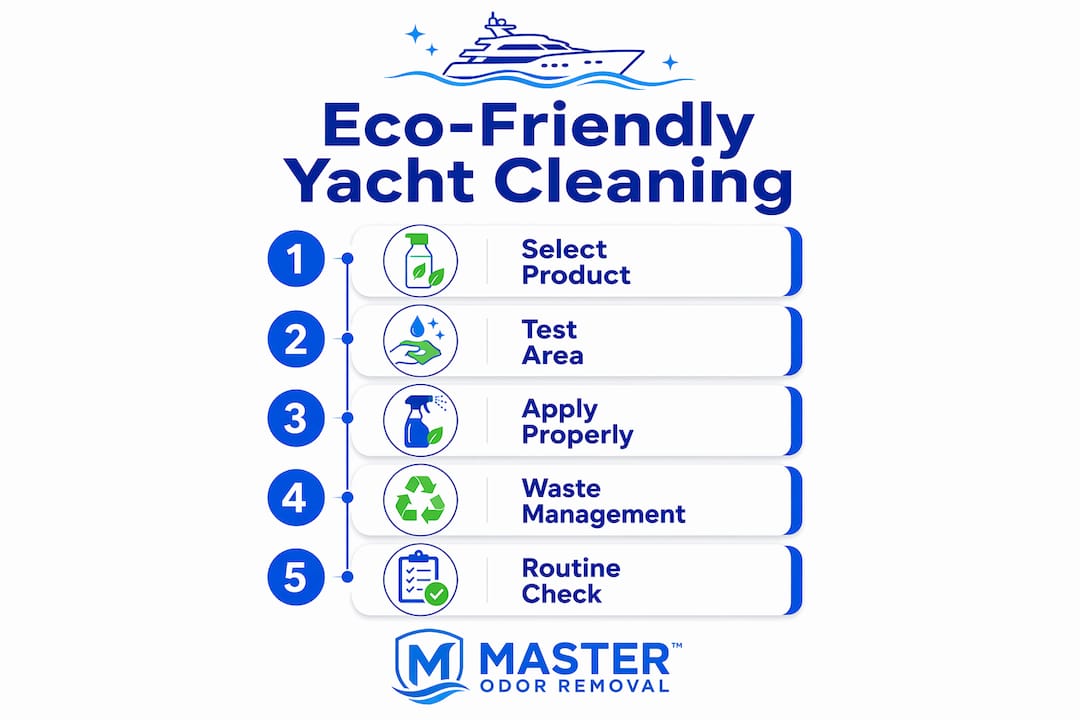
Ingredients to avoid in any yacht cleaning product
Certain chemicals show up in conventional marine cleaners and cause direct harm to aquatic ecosystems. Knowing what to exclude is as practical as knowing what to seek out.
- Phosphates: Trigger algal blooms that deplete oxygen in the water, killing fish and other marine life. Common in older deck washes and bilge cleaners.
- Hydrochloric acid: Highly corrosive to gelcoat, metal fittings, and marine organisms. Often found in hull descalers marketed as “heavy-duty.”
- Formaldehyde derivatives: Carcinogenic to crew in enclosed spaces and persistent in marine sediment. Appear in some disinfectants and fabric treatments.
- Biocides (tributyltin, copper compounds): Antifouling biocides leach continuously into the water column, accumulating in shellfish and coral. Several are now banned or restricted under US EPA rules.
- PFAS (per- and polyfluoroalkyl substances): Persistent forever chemicals found in some stain-resistant fabric treatments and certain hull coatings. They do not break down and accumulate in marine food chains.
- VOCs (volatile organic compounds): Found in solvent-based polishes and varnishes. Harmful to crew health in confined spaces and contribute to air pollution at marinas.
- Synthetic fragrances: Trigger headaches and allergies in enclosed yacht interiors. Natural alternatives like essential oils and baking soda deodorize without chemical residues.
One common misconception: undiluted vinegar is sometimes promoted as a universal natural cleaner. It works well on glass and stainless steel, but it will etch marble and natural stone if applied without dilution and a patch test first.
How to find and select truly eco-friendly yacht cleaning products
Start with the certification, not the marketing copy. A product that carries EU Ecolabel or USDA Biobased Preferred has been independently tested. One that says “green formula” on the label has not.
Practical selection criteria:
- Biodegradability standard: Look for products that meet OECD 301 biodegradability guidelines. MarineClean 500, for example, is over 95% biodegradable per OECD 301, acid-free, phosphate-free, and safe for fiberglass, gelcoat, epoxy, and chrome.
- Full ingredient disclosure: Avoid products with “fragrance” or “preservative blend” listed without specifics. Reputable eco-certified brands disclose every ingredient.
- Surface compatibility: Confirm the product is rated for your specific materials. A cleaner safe for fiberglass may still damage teak or leather.
- Mechanical-first approach: Reduce chemical use by defaulting to microfiber cloths and steam for routine interior cleaning, reserving certified chemical products for specialized tasks like leather care or heavy hull deposits.
- US availability: Products like MarineClean 500 and those carrying EWG Verified status are available through US marine supply retailers and online distributors. The USDA BioPreferred catalog lists US-stocked options by category.
Pro Tip: Before switching your full cleaning inventory, test any new product on a small, inconspicuous area of each surface type aboard. Some eco-certified products streak on certain gelcoat finishes or underperform against salt spray. A 30-minute test prevents a costly mistake across the whole vessel.
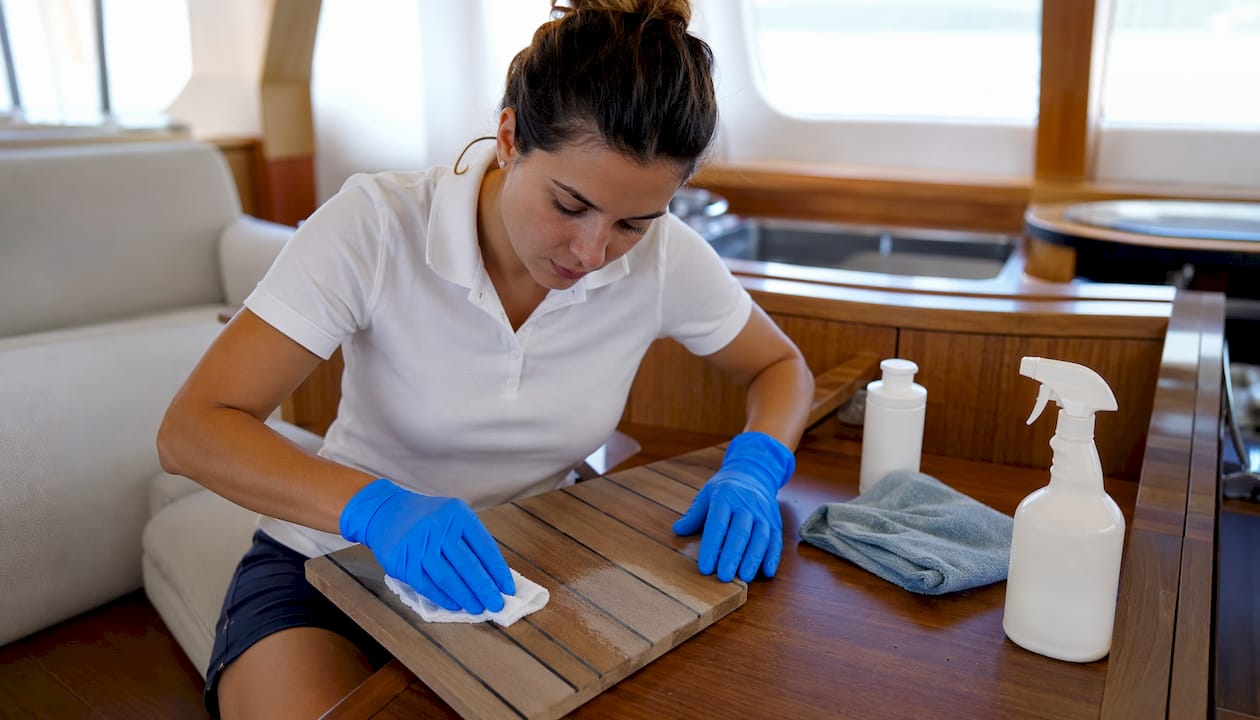
Eco-friendly cleaning practices and a sustainable routine checklist
A hybrid cleaning method that combines mechanical tools with certified chemical products minimizes chemical runoff and meets both MARPOL and marina discharge standards. The goal is to use chemistry only where mechanical methods fall short.
Routine cleaning stages:
- Hull: Clean with a phosphate-free, OECD-compliant cleaner for algae, salt crust, and light rust. Avoid pressure washing near sensitive marine habitats. Schedule hull cleaning during slack tide to reduce disturbance to bottom-dwelling organisms.
- Deck: Microfiber mops and diluted castile soap handle most deck grime. Reserve stronger certified degreasers for engine room spills and fuel residue.
- Superstructure: Steam cleaning works well on sealed surfaces like stainless steel rails and glass. Avoid steam on unsealed wood or heat-sensitive finishes.
- Interiors: Microfiber cloths handle the majority of interior surfaces without any chemical product. Baking soda absorbs odors in lockers and storage areas. Essential oil diffusers replace synthetic air fresheners.
- Waste management: Collect all cleaning runoff where possible. Use containment mats under the vessel during hull work at the dock. Never discharge bilge water containing cleaning chemicals directly into marina water.
| Area | Recommended method | Frequency | Environmental note |
|---|---|---|---|
| Hull exterior | OECD-compliant liquid cleaner + soft brush | Monthly or as needed | Apply at slack tide; rinse with fresh water |
| Deck surfaces | Microfiber mop + diluted castile soap | Weekly | Avoid runoff into marina water |
| Stainless steel | Steam cleaner or microfiber + white vinegar | Weekly | No chemical discharge |
| Interior surfaces | Dry microfiber cloths | Daily | Zero chemical use |
| Heads and galley | EU Ecolabel or EWG Verified disinfectant | After each use | Check marina discharge rules |
| Upholstery and leather | Eco-certified material-specific cleaner | Monthly | Patch test before full application |
| Bilge | Biodegradable bilge cleaner | Quarterly | Contain and dispose of waste water properly |
Proper waste management on vessels requires using biodegradable products and preventing chemical runoff from polluting harbor water. It’s also a legal requirement under MARPOL Annex V at most US marinas.
Eco-friendly odor removal for yacht interiors
Yacht interiors present a specific odor challenge. Enclosed spaces, limited ventilation, marine humidity, and the mix of fuel, food, mildew, and guest activity create persistent odors that standard air fresheners mask rather than eliminate. The wrong approach, spraying synthetic fragrance or using ozone generators, trades one problem for another.
Odor types commonly found aboard and their green-certified solutions:
- Mildew and moisture odors: Baking soda in lockers and storage areas absorbs moisture-based odors without any chemical residue. Activated charcoal sachets work similarly in confined spaces.
- Tobacco and smoke: Require molecular neutralization, not masking. Vapor-based green odor elimination methods penetrate upholstery and soft furnishings without leaving toxic residue.
- Food and galley odors: White vinegar diluted in water cuts grease and neutralizes food smells on hard surfaces. Castile soap handles most galley cleaning tasks.
- Pet odors: Enzyme-based cleaners that are biodegradable and phosphate-free break down the organic compounds causing the smell rather than covering them.
- Fuel and bilge odors: Require professional-grade treatment. Biodegradable bilge cleaners address the source, but persistent fuel odors in upholstery or carpeting need targeted odor neutralization.
Masterodorremoval uses eco-friendly, green-certified methods that avoid ozone and chlorine treatments entirely, focusing on permanent odor elimination that is safe for luxury yacht interiors and the crew who work in them. Ozone generators, still marketed by some services, can damage rubber seals, plastics, and electronics aboard, and leave residual ozone that irritates airways. Chlorine-based treatments bleach fabrics and corrode metal fittings over time.
The practical standard for a yacht interior: the space should smell clean and neutral, not scented. Synthetic fragrances trigger headaches and allergic reactions in enclosed spaces, and guests in the luxury market increasingly expect neutral rather than perfumed interiors.
How yacht cleaning affects marine ecosystems
Chemical runoff from yacht cleaning is a direct and measurable threat to marine ecosystems. Phosphates from deck washes feed algal blooms that deplete dissolved oxygen, creating dead zones where fish and invertebrates cannot survive. Biocides from antifouling paints accumulate in shellfish tissue and coral polyps. Microplastics from antifouling paint sanding account for a significant portion of microplastic pollution in coastal waters.
Hull cleaning practices carry an additional risk that’s easy to overlook: biofouling transfer. Organisms attached to a hull in one harbor can be transported and released in another, introducing invasive species to ecosystems where they have no natural predators. In-water hull cleaning without containment spreads these organisms directly into the marina.
North American boaters are increasingly adopting biocide-free antifouling coatings and waterless hull cleaning services, particularly in ecologically sensitive areas like Florida’s coastal waters and the Pacific Northwest. The shift is partly regulatory and partly market-driven, as marinas in sensitive zones are restricting or banning conventional antifouling products.
Integrating mechanical cleaning methods greatly reduces chemical impact. A vessel that uses microfiber and steam for interior work, and OECD-compliant biodegradable products for exterior surfaces, produces a fraction of the chemical discharge of one using conventional cleaners across the board.
Comparing green-certified cleaning products available in the US
Not all eco-certified marine cleaners perform equally across different surfaces and tasks. The categories below cover the main product types yacht owners and crew need, with what to look for in each.
Hull and exterior cleaners: MarineClean 500 is a well-documented example of what a compliant product looks like: acid-free, phosphate-free, over 95% biodegradable per OECD 301, and effective against algae, salt crust, rust stains, and biofilm. It’s rated safe for fiberglass, gelcoat, epoxy, and chrome. Products in this category should carry OECD 301 biodegradability documentation and be free of hydrochloric acid.
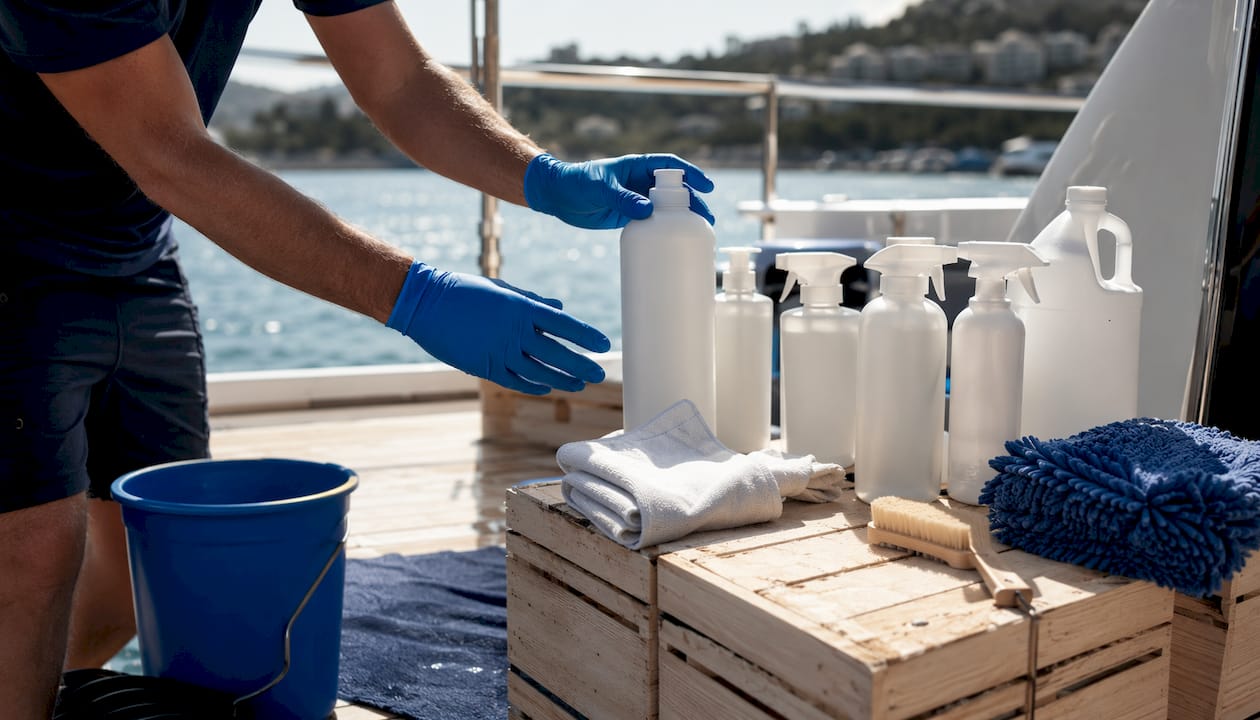
All-purpose interior cleaners: Look for EU Ecolabel or EWG Verified status, full ingredient disclosure, and a phosphate-free formula. Castile soap-based products (Dr. Bronner’s is widely available in the US) handle most interior surfaces and are genuinely biodegradable.
Antifouling coatings: Biocide-free foul-release systems physically prevent organism attachment rather than killing them with copper or tributyltin. These are available from several manufacturers in the US market and are the right choice for ecologically sensitive cruising grounds.
Fabric and upholstery treatments: Avoid PFAS-based stain repellents entirely. Seek out water-based, PFAS-free fabric protectors with full ingredient disclosure. For leather, use pH-neutral, biodegradable conditioners.
Bilge cleaners: Must be biodegradable and free of petroleum distillates. Check that the product is rated for overboard discharge under MARPOL rules before using it.
The EWG’s cleaning product database is the most practical US-based tool for verifying ingredient safety across all these categories. It rates products A through F based on ingredient hazard, and it’s searchable by product type.
What green-certified products actually cost compared to conventional cleaners
Green-certified marine cleaners typically cost more per unit than conventional products, but the total cost picture is more favorable than it first appears. Concentrated formulas, which most certified products use, dilute at ratios of 1:5 or higher, so a liter goes considerably further than a liter of ready-to-use conventional cleaner.
Regular hull cleaning using non-toxic solutions improves fuel efficiency and prevents long-term damage, which translates to real savings on fuel and repair costs over a season. A hull fouled by algae and barnacles creates drag that increases fuel consumption. Keeping it clean with a compliant product pays back in efficiency.
The other cost factor is vessel protection. Harsh conventional cleaners, particularly those containing hydrochloric acid or strong solvents, degrade gelcoat, oxidize metal fittings, and break down sealants over time. Replacing a gelcoat finish or re-sealing deck hardware costs far more than the premium on a certified cleaner.
For crew-operated vessels, the training and inventory management costs of switching to a fully certified product line are real but one-time. Once the crew knows which products to use for which surfaces, and the inventory is standardized, the ongoing cost difference narrows considerably. Many yacht management services in Fort Lauderdale and other US charter hubs now include certified product specifications in their standard maintenance contracts, which simplifies sourcing and keeps costs predictable.
How Masterodorremoval supports your green-certified yacht program

Masterodorremoval brings professional eco-friendly odor removal to yacht owners and crew who need permanent results without compromising the vessel or the environment. The service avoids ozone and chlorine entirely, using green-certified methods that are safe for luxury finishes, electronics, and the marine environment.
Whether the issue is persistent tobacco odor in the salon, mildew in the bilge area, or mystery smells that survive routine cleaning, Masterodorremoval’s luxury eco-friendly solutions address the source rather than masking it. Same-day and next-day service is available, and every treatment is backed by a satisfaction guarantee.
Key Takeaways
Green-certified yacht cleaning requires verified certifications like the EU Ecolabel, OECD-compliant biodegradable products, and mechanical-first methods to protect marine ecosystems and maintain vessel condition.
| Point | Details |
|---|---|
| Certification beats marketing | EU Ecolabel and USDA Biobased Preferred confirm third-party lifecycle safety; “eco-friendly” labels without these mean nothing. |
| Blacklisted ingredients | Avoid phosphates, hydrochloric acid, PFAS, biocides, and VOCs, which harm marine ecosystems and degrade yacht surfaces. |
| Mechanical-first cleaning | Microfiber cloths and steam handle most interior tasks without any chemical product, reserving certified cleaners for specialized surfaces. |
| Biodegradability standard | Products meeting OECD 301 guidelines, like MarineClean 500 at over 95% biodegradable, set the benchmark for hull and exterior cleaning. |
| Cost recovers over time | Concentrated certified formulas, better fuel efficiency from clean hulls, and reduced surface damage offset the higher per-unit price. |
Recent Comments