
TL;DR:
- Odors bond to car upholstery through physical adhesion and chemical bonding, embedding molecules deep into fabrics and foam. Effective removal requires enzymatic cleaners, mechanical extraction, and treatment of secondary sources like headliners and HVAC systems. This comprehensive approach ensures odors are permanently neutralized rather than masked or temporarily masked.
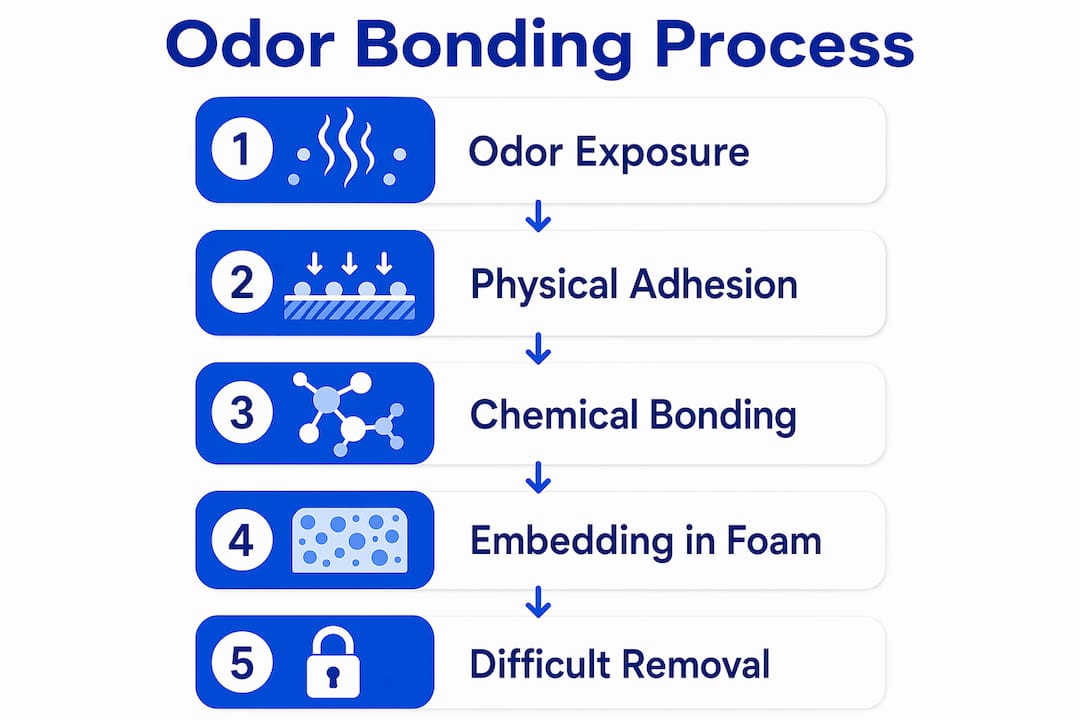
Odors bond to car upholstery through two distinct mechanisms: physical adhesion and chemical bonding, both of which embed odor molecules deep into fabric fibers and underlying foam padding. Understanding how odors bond to car upholstery is the first step toward removing them permanently rather than masking them. Volatile organic compounds (VOCs) from smoke, food, and pets latch onto microfiber and foam at a molecular level, especially when heat and moisture accelerate the process. Effective car fabric odor elimination requires treatments that reach both the surface and the deep foam substrate. Masterodorremoval specializes in exactly this kind of multi-layer approach.
How odors bond to car upholstery: the chemistry behind it
Odor molecules attach to car upholstery through two separate but related processes. The first is physical adhesion, where microscopic particles settle into the gaps between fabric fibers and get trapped mechanically. The second is chemical bonding, where VOCs react with the fabric or foam substrate and form semi-permanent molecular links.
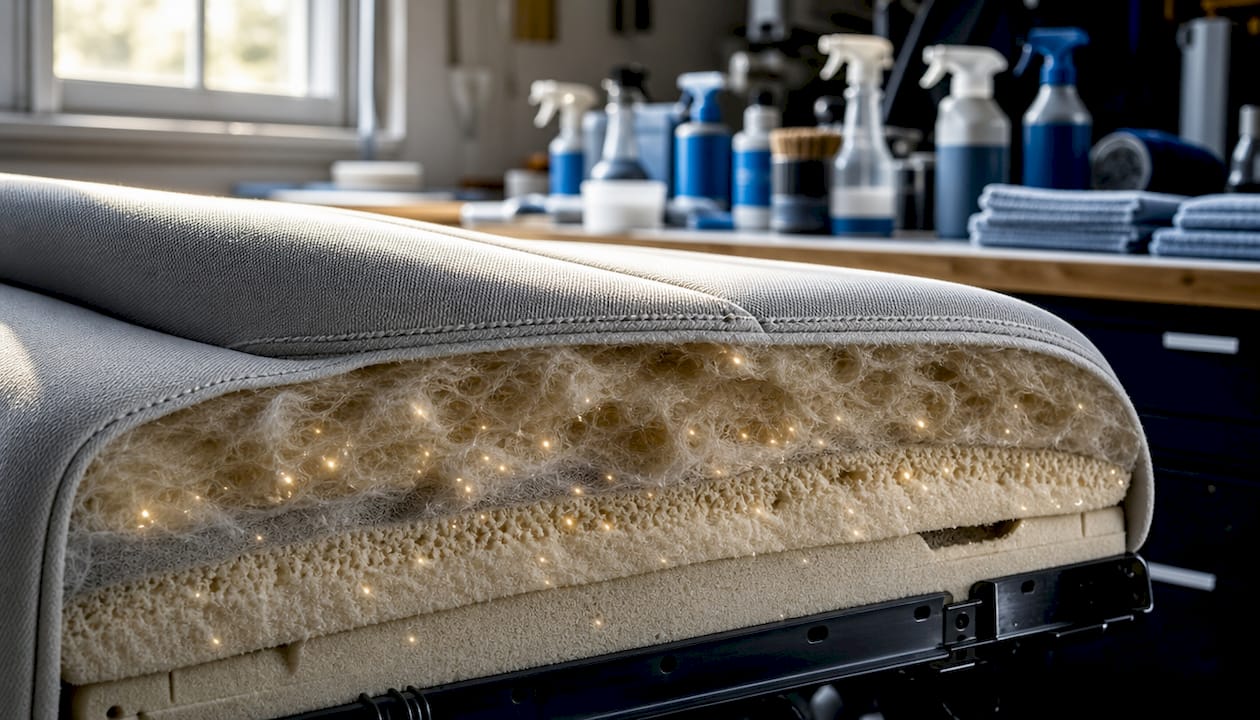
Heat and moisture are the two biggest accelerants in this process. When a car sits in the sun, interior temperatures can spike dramatically. That heat drives VOC molecules deeper into the foam padding beneath the fabric, a process sometimes called “curing.” Once cured, the odor becomes part of the upholstery matrix rather than just sitting on the surface.
Temperature cycles compound the problem. Every time the car heats up, odors cycle with heat and off-gas back into the cabin air. Every time it cools, those molecules settle back into the fabric. This is why smells linger in cars even after a basic wipe-down.
Key factors that drive odor bonding in upholstery include:
- VOC penetration: Smoke, food, and pet odors carry VOCs that penetrate microfiber weaves and foam cells within seconds of exposure.
- Heat acceleration: Elevated cabin temperatures push odor molecules past the fabric surface and into the foam core.
- Moisture as a carrier: Humidity and spills carry odor-causing bacteria and organic matter deep into the upholstery structure.
- Off-gassing cycles: Daily heating and cooling cycles repeatedly release trapped odor molecules back into the cabin.
- Chemical reactivity: Some VOCs react chemically with foam polymers, creating bonds that simple cleaning cannot break.
The practical implication is clear. Odor molecules bond instantly upon exposure and become progressively harder to remove as time passes. A smoke smell treated within hours requires far fewer treatment cycles than one left for weeks.
Why does odor removal require more than surface cleaning?
Surface cleaning addresses only the top layer of a problem that runs several inches deep. Vacuuming removes loose debris, and wiping removes surface residue, but neither method reaches the foam padding where the bulk of bonded odor molecules reside. Car seats typically use multi-layer construction: a fabric or leather face, a thin batting layer, and a dense foam core. Odors penetrate all three.
The limitations of surface-only cleaning become obvious with persistent odors like tobacco smoke or pet urine. A car owner can wipe the seats, spray an air freshener, and still smell the odor the next morning. That is because the source is in the foam, not on the fabric face.
Household cleaners make the situation worse. Residential detergents leave sticky residues that attract new dirt and odor-causing bacteria, compounding the original problem over time. pH-neutral automotive-grade products are the correct choice for upholstery cleaning.
The right approach follows a specific sequence:
- Deep vacuum first. Remove all loose debris, pet hair, and surface particles before applying any liquid. Skipping this step pushes debris deeper during wet cleaning.
- Apply an enzymatic cleaner. Enzyme-based products break down organic proteins and bacteria bonded in the fabric, neutralizing the odor source rather than masking it.
- Allow full dwell time. Enzymatic cleaners require a 10–15 minute dwell time to complete the chemical breakdown. Wiping too soon renders them ineffective.
- Extract with mechanical equipment. A hot water extractor or steam cleaner pulls the liquefied contaminants out of the foam. Without extraction, dissolved odor compounds simply resettle as the upholstery dries.
- Inspect and repeat. Deeply embedded odors from years of exposure often require two or three treatment cycles before the foam is fully cleared.
Pro Tip: Never over-saturate upholstery during cleaning. Excess moisture pushes contaminants deeper into the foam and creates conditions for mildew growth, which adds a second odor problem on top of the first.
The risk of over-saturating upholstery is one of the most common DIY mistakes. A light, controlled mist followed by mechanical extraction is always more effective than soaking and blotting.
What are the best methods to neutralize bonded upholstery odors?
Effective odor removal from car upholstery combines physical extraction, enzymatic chemistry, and controlled application. No single step eliminates deeply bonded odors on its own.
Steam cleaning as a first step is particularly effective for smoke residue. Steam loosens smoke residue and disrupts odor molecule adhesion on fabric fibers and foam before enzymatic treatment begins. Think of it as breaking the grip before the enzyme does the chemical work.
The full professional method for removing odors from car seats follows this structure:
- Crevice vacuuming: Use a narrow attachment to clean seat seams, under headrests, and between cushion gaps where odor-saturated debris collects.
- Steam pre-treatment: Apply steam to loosen bonded residue and open fabric fibers for better enzyme penetration.
- Enzyme application with dwell time: Spray an automotive-grade enzymatic cleaner and allow it to sit for the full recommended period before any agitation.
- Hot water extraction: Run a mechanical extractor over the treated area to pull dissolved contaminants out of the foam core.
- Activated charcoal placement: After cleaning, place activated charcoal bags in the cabin overnight to absorb residual odor molecules still off-gassing from the foam.
- Repeat cycles as needed: Severe odors from tobacco or pet urine may require three or more full treatment cycles across multiple days.
Pro Tip: For the eco-friendly odor removal approach, choose enzyme-based cleaners that are pH-neutral and free of chlorine or ozone-generating compounds. These protect both the upholstery and the people who use the vehicle.
The table below compares the primary treatment methods by target depth and effectiveness:
| Method | Target depth | Best for |
|---|---|---|
| Vacuuming | Surface only | Loose debris and pet hair |
| Enzymatic cleaner | Fabric and foam | Organic odors: food, pet, urine |
| Steam cleaning | Fabric surface | Smoke residue and bacteria |
| Hot water extraction | Deep foam core | All bonded odors |
| Activated charcoal | Cabin air | Residual off-gassing molecules |
Avoiding harsh household chemicals is not optional. They leave residues that trap new odors and degrade automotive foam over time. The vehicle odor neutralization process always starts with the right products, not the most convenient ones.
How do HVAC systems and headliners trap odors?
The seats are not the only odor reservoir in a car. HVAC systems and headliners both trap and recirculate odor molecules, which explains why a freshly cleaned seat can still produce a noticeable smell minutes after the AC turns on.
The headliner is the most underestimated odor source in any vehicle. The headliner holds up to 60% of lingering odor molecules in a vehicle due to its porous foam-backed fabric and the physics of heat rising. Smoke, cooking smells, and even perfume accumulate in the headliner over months and years. Most car owners never treat it.
HVAC systems create a separate problem. The ductwork, evaporator coil, and cabin air filter all collect odor molecules and biological matter. When the fan runs, it recirculates trapped odor molecules throughout the cabin, making it seem like the smell returns on its own. Understanding why car AC smells bad is key to addressing this secondary source properly.
A complete odor removal strategy addresses all of the following:
- Cabin air filter: Replace it at every odor removal service. A saturated filter reintroduces odors the moment the fan starts.
- AC vent cleaning: Treat the vent surfaces and duct openings with an appropriate antimicrobial spray to eliminate bacteria colonies. Detailed guidance on cleaning car AC vents covers the specific steps.
- Headliner treatment: Apply enzymatic cleaner with a low-pressure sprayer and allow it to dwell. Never scrub the headliner; the backing material tears easily.
- Under-seat areas and floor mats: These collect spills, pet hair, and food debris that feed odor-causing bacteria. Remove and treat floor mats separately.
- HVAC duct treatment: A professional-grade fogging treatment directed into the intake vent reaches areas that manual cleaning cannot access.
The HVAC contribution to car odors is significant enough that treating seats alone rarely produces a fully neutral interior. Any complete odor removal job must include the ventilation system.
Key Takeaways
Odors bond to car upholstery through physical adhesion and chemical bonding, and removing them permanently requires enzymatic cleaners, mechanical extraction, and treatment of secondary sources like HVAC systems and headliners.
| Point | Details |
|---|---|
| Odors bond at a molecular level | VOCs and particles embed in fabric fibers and foam, not just on the surface. |
| Heat accelerates bonding | Elevated cabin temperatures cure odors into the foam, making early treatment critical. |
| Enzymatic cleaners are essential | They break down organic odor sources chemically; allow a full 10–15 minute dwell time. |
| Headliners hold the most odor | Porous headliner fabric can hold up to 60% of a vehicle’s trapped odor molecules. |
| HVAC systems recirculate smells | Replace the cabin filter and treat ducts to prevent odors from returning after cleaning. |
What I’ve learned treating odors that won’t quit
Working with deeply embedded odors changes how you think about car interiors. The biggest mistake I see car owners make is treating the symptom rather than the source. They spray a product, smell improvement for a day, and assume the job is done. Three days later the smell is back, often stronger, because the foam was never addressed.
The second lesson is that timing is everything. Odors that get treated within the first few hours after exposure are dramatically easier to remove than odors that have been curing in the foam for weeks. A fresh coffee spill is a 20-minute job. A two-year-old tobacco smell in a fleet vehicle is a multi-session project.
Climate matters more than most detailers acknowledge. Vehicles in hot, humid regions like Florida or Texas experience faster and deeper odor bonding because heat and moisture work together to drive VOCs into the foam. The same odor in a dry, cool climate is often easier to extract.
The tools that make the real difference are professional-grade enzymatic cleaners and mechanical extractors. Household products simply cannot reach the foam core, and without extraction, dissolved odor compounds resettle as the upholstery dries. Professional-grade equipment is not a luxury. It is the only way to fully address what can upholstery trap in terms of odors over years of use.
— Master
When professional odor removal makes sense
Some odors go beyond what DIY methods can fully address.

Masterodorremoval uses professional-grade enzymatic treatments and mechanical extraction equipment to reach odor compounds that have bonded deep into foam padding and secondary surfaces. The process covers seats, headliners, floor systems, and HVAC components in a single service visit, using eco-friendly, green-certified products that contain no ozone or chlorine. For car owners dealing with tobacco, pet, mildew, or food odors that have resisted repeated cleaning attempts, the odor removal specialists at Masterodorremoval offer same-day and next-day appointments. The goal is a permanently neutral interior, not a temporary cover-up. Learn more about what a complete treatment looks like at odor removal done right.
FAQ
How do odors bond to car upholstery permanently?
Odor molecules attach through physical adhesion into fabric fibers and chemical bonding with foam polymers. Heat and moisture accelerate this process, curing the odor into the upholstery structure over time.
Why do car smells come back after cleaning?
Odors return because surface cleaning does not reach the foam core where bonded molecules reside. HVAC systems also recirculate trapped odor molecules every time the fan runs, reintroducing smells into the cabin.
What is the best method for removing odors from car seats?
The most effective method combines steam pre-treatment, enzymatic cleaner with a 10–15 minute dwell time, and mechanical extraction to pull dissolved contaminants out of the foam.
Can upholstery trap odors even after multiple cleanings?
Yes. Deeply embedded odors from tobacco or pet urine often require three or more full treatment cycles. Household cleaners can also leave residues that attract new bacteria, making the odor problem worse over time.
Does the headliner need to be treated for full odor removal?
The headliner holds up to 60% of a vehicle’s trapped odor molecules and must be treated for complete odor elimination. Skipping it means the smell will return even after the seats and carpets are fully cleaned.
Recent Comments