
TL;DR:
- Vehicle interior air contaminants include biological agents, particulate matter, and chemical pollutants that accumulate from internal and external sources. Proper maintenance, ventilation, and professional cleaning are necessary to reduce health risks from these pollutants. Neglecting filters and cleaning can lead to increased exposure, mold growth, and embedded chemical residues that require expert removal.
Vehicle interior air contaminants are biological agents, particulate matter, volatile organic compounds, and toxic chemicals that accumulate inside car cabins from both external and internal sources. The industry term for this category is “in-cabin air pollutants,” and the problem is more serious than most drivers realize. Car cabin air quality can be significantly worse than the air outside, especially during heavy traffic. Understanding what you are breathing inside your vehicle is the first step toward protecting your health on every drive.
What are the common vehicle interior air contaminants?
The three main groups of vehicle indoor pollutants are biological contaminants, particulate matter, and chemical pollutants. Each group has distinct sources, and most vehicles carry all three simultaneously.
Biological contaminants include:
- Bacteria and mold: Moisture trapped inside HVAC systems creates ideal conditions for microbial growth. Biological contaminants originate largely from moisture in HVAC systems, making humidity management a core part of cabin hygiene.
- Dust mites and allergens: Fabric seats, floor mats, and headliners trap dust mites and pet dander. These accumulate steadily between cleanings.
- Pollen: Pollen enters through open windows and vents, settling on every surface inside the cabin.
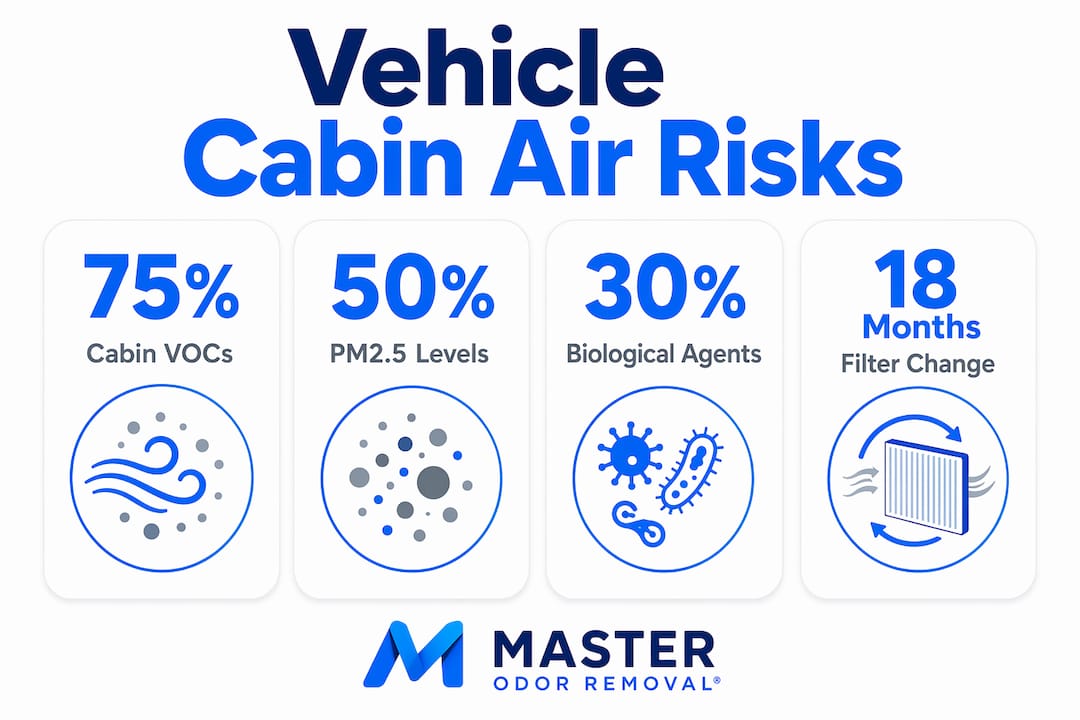
Particulate matter includes PM2.5 and ultrafine particles from traffic exhaust, brake dust, and road grime. These particles infiltrate through vents and gaps in the cabin seal. Cabin filters prevent up to 90% of dust, pollen, and spore particles from entering, but only when functioning properly. A worn or clogged filter offers far less protection.
Chemical pollutants are the most underappreciated category. Volatile organic compounds (VOCs) off-gas from plastics, adhesives, foam padding, and upholstery materials. Nearly 99% of vehicles contain the flame-retardant chemical TCIPP, a potential carcinogen released from upholstery and plastics inside cabins. That statistic comes from a study of 101 vehicles manufactured between 2015 and 2022. Occupant activities compound the problem. Smoking inside the car, food spills, and wet clothing all add biological and chemical load to the cabin environment.
How do these contaminants affect your health?
Exposure to toxic substances in cars produces a range of health effects, from minor irritation to serious long-term risks.
- Respiratory irritation: PM2.5 and ultrafine particles inflame airway tissue. Repeated exposure worsens asthma and chronic bronchitis.
- Allergic reactions: Mold spores, dust mites, and pollen trigger sneezing, watery eyes, and congestion. Drivers with existing allergies notice symptoms worsen during long commutes.
- Toxic chemical exposure: VOCs and flame retardants like TCIPP accumulate in the body over time. Long-term exposure to potential carcinogens carries risks that researchers are still quantifying.
- Drowsiness and impaired alertness: Recirculation mode reduces PM2.5 infiltration by up to 90% but leads to CO2 levels exceeding 4,000 ppm, causing drowsiness. That level of CO2 impairs driver alertness, which is a direct road safety issue.
- Persistent odors: Odors from mold, smoke, and food are not just unpleasant. They signal active biological or chemical contamination that needs to be addressed, not masked.
Exposure levels inside vehicles can exceed ambient outdoor air during peak traffic because the cabin concentrates pollutants in a small, enclosed space. Poor ventilation and worn filters accelerate that buildup. Protecting your respiratory health from contaminants requires understanding that the car cabin is an enclosed microenvironment, not a neutral space.
Pro Tip: If you feel unusually tired or get headaches on long drives, CO2 buildup from extended recirculation mode is a likely cause. Switch to fresh air mode for at least five minutes every 30 minutes.
How can you improve car air quality inside your vehicle?
Improving car cabin air quality requires a combination of regular maintenance, smart ventilation habits, and targeted cleaning. Follow these steps in order of impact.
Replace your cabin air filter every 12–18 months or every 10,000–15,000 miles. Cabin filters must be replaced on this schedule to prevent mold, bacteria growth, and airflow loss. Skipping replacements turns the filter into a pollutant source rather than a barrier.
Use your air conditioning with closed windows in heavy traffic. Running the air conditioner with closed windows reduces internal particulate levels by 20–34% and boosts protection against outdoor particles by 8–44%. The AC system forces air through the cabin filter, which is your primary line of defense.
Open windows when driving in clean air environments. Dynamic cabin air management means using closed windows and AC in high-pollution settings and opening windows in clean environments to flush accumulated CO2 and VOCs. This approach balances filtration with ventilation.
Vacuum and clean interior surfaces regularly. Dust, mold spores, and allergens settle on seats, floor mats, and dashboard surfaces. Vacuuming every two weeks removes the biological load before it becomes airborne again.
Manage moisture inside the cabin. Wet umbrellas, damp clothing, and spilled drinks feed mold growth in seat fabric and carpet. Dry the interior promptly and use moisture-absorbing products in humid climates.
Ventilate new vehicles before extended use. New car VOC off-gassing peaks in the first few months. Park with windows cracked open in the sun to accelerate off-gassing before you spend long periods inside.
Call a professional for persistent odors and embedded contaminants. Smoke residue contamination in vehicle interiors persists on soft surfaces and requires professional treatment. Opening windows for eight weeks only partially decreases residue levels. DIY methods do not reach deeply embedded chemical residues.
Pro Tip: Activated carbon cabin filters cost slightly more than standard filters but adsorb VOCs and odors that standard filters cannot capture. They are worth the upgrade if you drive in urban traffic daily.
What role do cabin air filters play in vehicle air quality?
The cabin air filter is the single most important mechanical defense against vehicle indoor pollutants. Understanding how it works, and how it fails, helps you make better maintenance decisions.
How filters work:
- Standard filters trap dust, pollen, spores, and PM through a layered fiber medium.
- Pollen filters add an electrostatic layer that captures finer particles.
- Activated carbon filters add a layer that adsorbs VOCs, exhaust gases, and odors.
How filters fail:
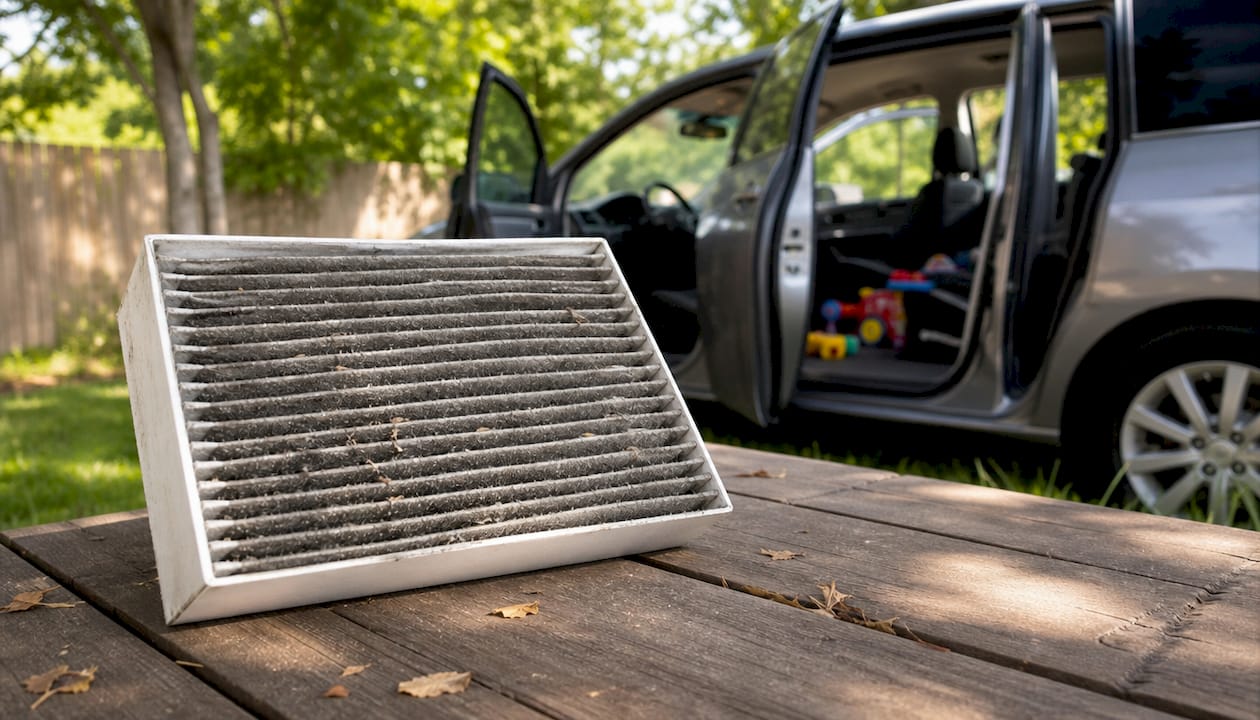
- Aged cabin air filters accumulate ultrafine particles that can resuspend and act as secondary pollution sources, causing respiratory toxicity. A filter that looks dirty is not just less effective. It is actively releasing trapped particles back into the air you breathe.
- Clogged filters restrict airflow, reducing AC and heating performance and increasing strain on the blower motor.
- Moisture-saturated filters grow mold, which then spreads spores directly into the cabin airstream.
Signs your filter needs replacement:
- Reduced airflow from vents even at high fan settings
- Musty or stale odors when the AC or heat runs
- Increased allergy symptoms during drives
- Visible debris or discoloration on the filter surface
| Filter type | What it captures | Best for |
|---|---|---|
| Standard particulate | Dust, pollen, spores, PM | General use, mild climates |
| Pollen/electrostatic | Fine particles, allergens | Allergy sufferers |
| Activated carbon | VOCs, odors, exhaust gases | Urban drivers, smoky environments |
Neglecting filter replacement does not just harm air quality. It damages the HVAC system over time and leads to repair costs that far exceed the price of a new filter. The eco-friendly odor removal workflow used by professionals always begins with filter assessment because a contaminated filter undermines every other treatment.
Key Takeaways
Vehicle interior air contaminants pose real health risks, and the most effective defense combines regular filter replacement, smart ventilation habits, and professional treatment for embedded pollutants.
| Point | Details |
|---|---|
| Cabin air is often more polluted than outdoor air | Enclosed cabins concentrate VOCs, PM2.5, and biological agents, especially in traffic. |
| TCIPP is present in nearly 99% of vehicles | This potential carcinogen off-gasses from upholstery and plastics in most modern cars. |
| Replace cabin filters every 12–18 months | Aged filters become secondary pollution sources, releasing trapped ultrafine particles back into cabin air. |
| Recirculation mode has a CO2 risk | It blocks outdoor PM effectively but raises CO2 above 4,000 ppm, impairing driver alertness. |
| Smoke residue requires professional removal | Eight weeks of open-window ventilation only partially reduces embedded smoke contaminants. |
What I have learned from years inside vehicle cabins
The most common mistake I see drivers make is treating cabin air quality as a set-and-forget problem. They replace the filter once, feel good about it, and then ignore the cabin for another three years. That approach misses the bigger picture.
The ventilation trade-off is real and most drivers do not know it exists. Fresh air mode ventilates CO2 but brings in outdoor PM and VOCs. Recirculation mode blocks outdoor pollutants but builds up CO2 fast. Neither setting is universally correct. The right answer depends on where you are driving and for how long.
I have also seen drivers underestimate how much biological contamination builds up in the HVAC system itself. Cleaning the cabin surfaces is not enough if the ducts are harboring mold. That musty smell when you first turn on the AC is not just unpleasant. It is mold spores entering your lungs.
The hardest lesson is accepting the limits of passive methods. Passive ventilation cannot remove deeply embedded chemical residues. If a vehicle has been smoked in, no amount of airing out will fully resolve the problem. The residue bonds to fabric, foam, and plastic at a molecular level. That is not a cleaning problem. It is a chemistry problem, and it requires a chemistry solution. Professional vehicle odor neutralization exists precisely for these situations.
— Master
When professional treatment makes the difference for your cabin
Maintenance habits handle most everyday contamination. But some situations call for a level of treatment that goes beyond filter swaps and vacuuming.

Masterodorremoval specializes in the permanent elimination of interior contaminants in vehicles, using green-certified methods that avoid ozone and chlorine treatments. The team addresses tobacco smoke, mold, VOC buildup, and biological pollutants with science-backed techniques that reach surfaces no standard cleaning can access. Same-day and next-day appointments are available for drivers who need fast results. If your cabin has a persistent odor, a history of smoking, or visible mold, the professional odor removal service from Masterodorremoval delivers a neutral, healthy interior without harsh chemicals. For drivers who want to know more about the full range of vehicle treatments available, the odor removal specialists page covers every service in detail.
FAQ
What are the most common vehicle interior air contaminants?
The most common are VOCs from plastics and adhesives, PM2.5 from traffic exhaust, biological agents like mold and dust mites, and flame-retardant chemicals such as TCIPP. All three categories are present in virtually every modern vehicle cabin.
How often should I replace my cabin air filter?
Replace your cabin air filter every 12–18 months or every 10,000–15,000 miles. Waiting longer allows the filter to become a secondary pollution source by releasing trapped ultrafine particles back into the cabin.
Is recirculation mode safe to use for long drives?
Recirculation mode is effective at blocking outdoor PM2.5 but raises CO2 levels above 4,000 ppm during extended use, which causes drowsiness. Switch to fresh air mode for several minutes every 30 minutes on long trips.
Can I remove smoke odor from my car by airing it out?
No. Research shows that opening windows for eight weeks only partially reduces smoke residue levels. Embedded chemical residues bond to fabric and foam and require professional treatment to eliminate fully.
Does running the AC actually improve cabin air quality?
Yes. Running the air conditioner with closed windows reduces internal particulate levels by 20–34% and improves protection against outdoor particles by 8–44%, based on a four-month measurement study.
Recent Comments