
TL;DR:
- Mildew emits a mild, musty smell, while mold produces a stronger, earthy odor indicating deeper growth. The intensity and persistence of these odors reveal the severity and location of fungal colonization, guiding effective remediation efforts.
Mold and mildew odors are defined by their intensity and source: mildew smells mild and musty, like damp socks or wet laundry, while mold produces a stronger, pungent, and earthy odor driven by active fungal metabolism. Both fungi release microbial volatile organic compounds, known as mVOCs, but mold generates far higher concentrations because its colonies penetrate deep into building materials. Understanding the mold vs mildew odor difference is not just a matter of curiosity. It is a practical diagnostic skill that tells you how serious a problem is, where to look, and how fast to act.
What causes the mold vs mildew odor difference at the microbial level?
Both mold and mildew are fungi, and both produce mVOCs as byproducts of digesting organic materials. The mVOC compounds responsible for musty smells include 1-octen-3-ol, geosmin, and various aldehydes. Each compound creates a distinct scent profile depending on the fungal species and how actively it is feeding.
Mildew grows flat on surfaces. Its colonies stay shallow, which limits how much organic material they consume and how many mVOCs they release. That is why mildew smell causes only a faint, damp odor rather than the sharp, pungent smell associated with active mold.
Mold, by contrast, penetrates porous materials like drywall, wood framing, and insulation. Deeper colonization means more active digestion, which means higher mVOC output and a much stronger smell. The odor intensity you detect is essentially a measure of how aggressively the fungus is feeding.
Mold species diversity also plays a role. Stachybotrys chartarum, commonly called black mold, produces a particularly heavy, damp, and acrid odor. Aspergillus and Penicillium species tend toward a sharper, more chemical smell. Mildew, which is typically a form of powdery mildew or downy mildew, produces a narrower range of mVOCs and a more predictable scent.
Pro Tip: If you smell something musty but cannot see any growth, the odor itself is your evidence. mVOCs are released before visible colonies appear, making your nose a more sensitive detector than your eyes in early-stage infestations.
Key mVOC characteristics to know:
- 1-octen-3-ol: Produces the classic “mushroom” or damp earth smell associated with active mold colonies.
- Geosmin: Creates the earthy, after-rain scent often linked to mildew and certain mold species.
- Aldehydes: Contribute sharp, chemical notes more common in aggressive mold species.
- Concentration matters: Higher mVOC concentrations signal deeper, more active fungal growth.
How to detect and interpret mold vs mildew odors in your home
Odor strength and character are your first diagnostic tools when investigating a musty smell. A faint, localized smell that fades quickly after opening a window points toward surface mildew or a non-fungal source. A persistent, pervasive odor that returns within minutes of ventilation points toward active mold colonization.
The EPA recommends that homeowners respond within 24–48 hours after any water event to prevent mold from establishing. Mold colonies can form within 48 hours when moisture is present. That window is short, and the odor clock starts ticking immediately.
A musty odor lasting more than 72 hours after cleaning is a reliable sign of active mold hidden behind walls, under flooring, or inside HVAC ducts. That persistence tells you surface cleaning is not enough. The source is deeper.
Not every musty smell is fungal. Dried-out P-traps in floor drains, biofilm in HVAC drip pans, and old water-damaged building materials can all mimic mold odors but require completely different fixes. Refilling a dry P-trap with water takes five minutes. Remediating mold behind a wall takes days.
Follow these steps to investigate a musty odor systematically:
- Ventilate for 15 minutes. Open windows and doors. If the odor clears and stays gone, the source is likely a non-living material like stored items or a dry drain.
- Check if the odor returns. A smell that returns quickly after ventilation signals ongoing active growth fueled by hidden moisture.
- Start low, check high. The stack effect pulls air from lower building levels to upper floors. A musty smell on the second floor often originates in the basement or crawl space.
- Measure humidity. Relative humidity above 60% creates conditions that support both mildew and mold. A basic hygrometer costs under $20 and gives you immediate data.
- Use a moisture meter. Scan walls and floors near plumbing, windows, and exterior walls. Elevated moisture readings combined with a persistent odor confirm active fungal growth.
Pro Tip: Never press your nose directly against a wall or surface to sniff for mold. Doing so risks inhaling a concentrated dose of spores. Instead, stand back and let the odor come to you, or use a fan to draw air from a suspect area toward your nose from a safe distance.
What are the visible and odor clues that separate mold from mildew?
Mildew and mold look and smell different in ways that directly inform your remediation plan. Mildew presents as a flat, powdery growth in white, gray, or yellow tones. Its odor is mild and localized. You can usually smell it only when you are close to the affected surface.
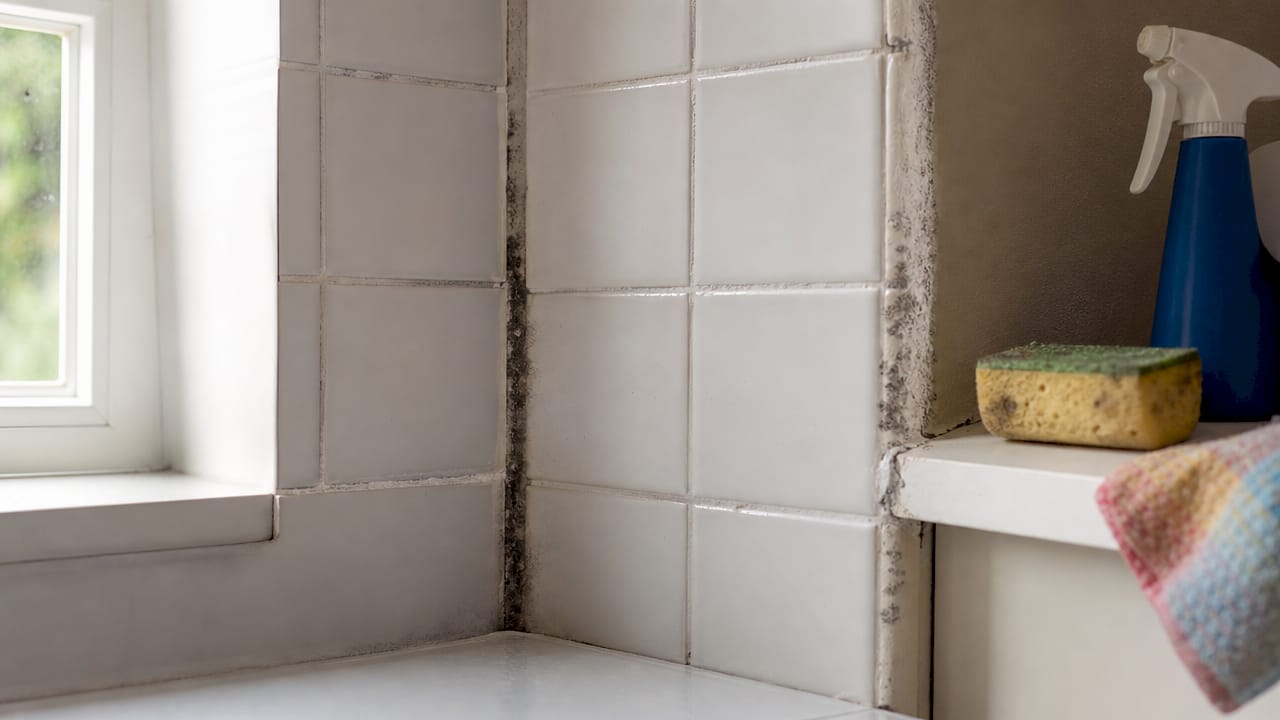
Mold presents as raised, fuzzy, or slimy patches in darker colors: green, black, brown, or red. Its odor is strong enough to detect from across a room. Mold can spread through HVAC systems, making the smell pervasive throughout an entire building rather than confined to one spot.
The table below summarizes the key differences for quick reference.
| Feature | Mildew | Mold |
|---|---|---|
| Appearance | Flat, powdery, white/gray/yellow | Fuzzy, slimy, or blotchy; green, black, or red |
| Odor character | Mild, musty, localized | Strong, pungent, earthy, pervasive |
| Growth depth | Surface only | Penetrates porous materials |
| Health and structural risk | Low; primarily a surface issue | High; can cause structural damage and health effects |
| Remediation approach | Surface cleaning with standard products | Moisture control and professional remediation |
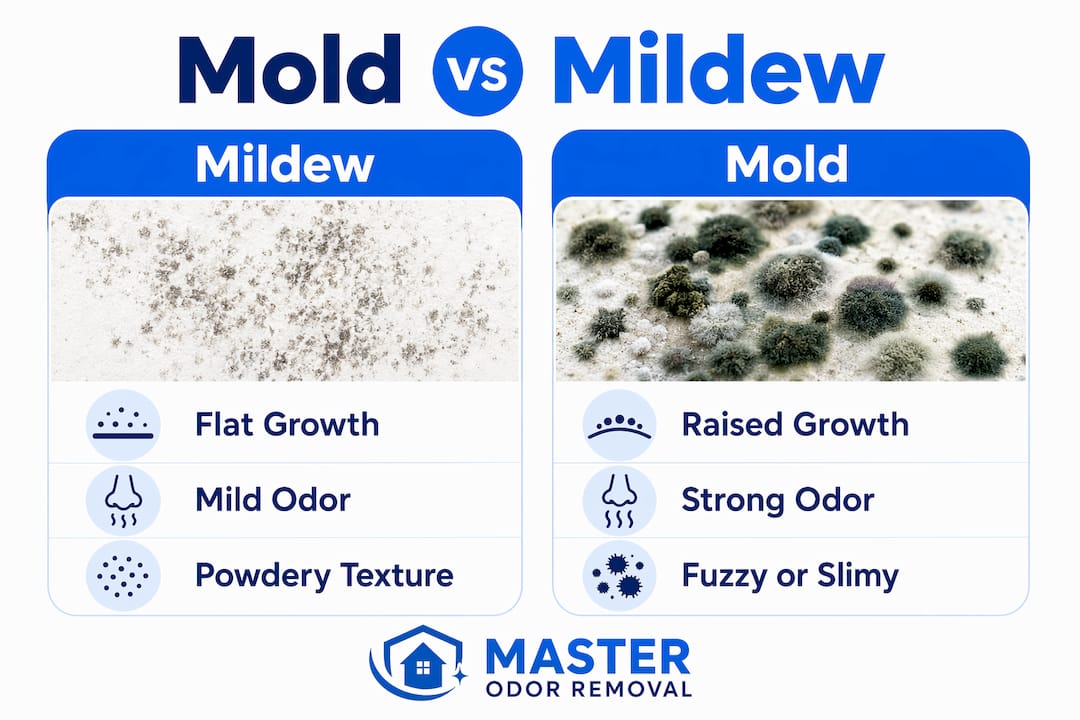
The practical implication of this comparison is direct. If you see powdery white growth on a bathroom tile and smell only a faint dampness, you are likely dealing with mildew. Clean it, fix the ventilation, and monitor. If you smell a strong earthy odor without seeing obvious growth, you are likely dealing with mold hidden inside a wall cavity or under flooring. That situation requires a different response entirely.
Mildew odor sources are typically localized and easier to trace. Mold odor, because it travels through HVAC systems and air currents, can appear far from its actual source. That gap between where you smell it and where it lives is one of the most common reasons homeowners misdiagnose the problem.
How should you act on mold vs mildew odors for effective remediation?
Speed is the single most important factor in preventing a mildew problem from becoming a mold problem. The EPA standard is clear: act within 24–48 hours of any water intrusion. After that window, mold colonization is likely underway and the remediation scope grows significantly.
Mildew remediation is a maintenance task. You can address it with standard household cleaners, improved ventilation, and a dehumidifier set below 60% relative humidity. The safe interior cleaning process for mildew focuses on surface treatment and moisture reduction.
Mold remediation is a structural task. It requires identifying and eliminating the moisture source first. Without that step, any cleaning is temporary. After moisture control, affected materials often need removal and replacement rather than surface treatment.
Key actions based on odor signals:
- Faint musty smell, no visible growth: Check humidity levels, inspect for hidden leaks, and improve ventilation. Monitor for 48 hours.
- Persistent odor after cleaning: The source is active and hidden. Use a moisture meter to locate it and consider professional inspection.
- Strong, pervasive odor throughout the building: Assume HVAC involvement. Have ducts inspected before running the system further, as circulation spreads spores.
- Odor after a flood or leak: Treat as a mold risk immediately. Remove wet materials within 24 hours and dry the space aggressively.
- Odor with visible dark growth: Do not disturb the growth without proper containment. Disturbing mold colonies releases spores into the air.
Pro Tip: Combine odor detection with a moisture meter for targeted remediation. Odor tells you something is wrong. The moisture meter tells you exactly where. Together, they cut investigation time significantly and prevent unnecessary demolition.
Odor should also guide your indoor air quality decisions after remediation. If the smell returns within weeks of treatment, the moisture source was not fully resolved. A clean, neutral smell after remediation is the confirmation that the job is done.
Key Takeaways
The mold vs mildew odor difference comes down to mVOC concentration: mildew emits a mild, localized musty scent while mold produces a strong, pervasive odor that signals deeper colonization and a greater remediation need.
| Point | Details |
|---|---|
| Odor intensity signals severity | A stronger, pungent smell indicates deeper mold colonization and higher mVOC output. |
| 72-hour rule for persistent odors | Musty smells lasting more than 72 hours after cleaning confirm active, hidden mold growth. |
| Act within 24–48 hours of water events | Mold colonies establish within 48 hours, making rapid response the most effective prevention. |
| Mildew is a surface issue; mold is structural | Mildew requires surface cleaning; mold requires moisture control and professional remediation. |
| Odor location can mislead | Stack effect airflow carries smells from basements to upper floors, so always check low points first. |
What I have learned from years of chasing musty smells
The most common mistake I see homeowners and property managers make is treating a musty smell as a housekeeping problem rather than a diagnostic signal. They spray an air freshener, open a window, and move on. Three months later, they are looking at a wall full of mold and a remediation bill that could have been avoided.
Your nose is genuinely the most sensitive instrument in the room. mVOCs are detectable at concentrations far below what any consumer-grade air quality monitor will flag. When something smells off, that chemical signal is telling you that active fungal metabolism is happening somewhere nearby. The question is not whether to act. The question is where.
The distinction between mildew and mold odors matters more than most people realize. A mild, damp smell near a shower is almost always mildew. A heavy, earthy odor that seems to come from everywhere and nowhere at once is almost always mold inside a structure. Treating the first like the second wastes money. Treating the second like the first causes serious damage.
What I have also found is that odor persistence after ventilation is the single most reliable field test available without equipment. Open the space up, let it breathe for 15 minutes, then close it and wait. If the smell comes back within an hour, you have active growth. If it stays gone, you likely have a passive source like stored items or a dry drain. That simple test has saved more than a few clients from unnecessary panic and unnecessary spending.
Trust your instincts when something smells wrong. Act on it within 48 hours. And if the odor is strong, pervasive, or keeps coming back, get a professional involved before the problem grows beyond what surface treatment can fix.
— Master
When a persistent odor needs professional attention
Some musty odors do not respond to cleaning, ventilation, or dehumidification because the source is hidden inside walls, under flooring, or deep in an HVAC system. That is where professional odor removal makes the difference between a temporary fix and a permanent solution.

Masterodorremoval specializes in identifying and permanently eliminating mold and mildew odors using eco-friendly, green-certified methods. No ozone. No chlorine. Just safe, proven techniques applied by licensed professionals who understand how fungal odors behave in real building environments. Whether you are managing a residential property, a commercial space, or a luxury interior, same or next-day service is available. If the smell keeps coming back, it is time to call in odor removal specialists who can locate the source and eliminate it at the root.
FAQ
What does mildew smell like compared to mold?
Mildew produces a mild, musty odor similar to damp laundry or wet socks. Mold emits a stronger, pungent, and earthy smell caused by higher concentrations of mVOCs released during active fungal digestion.
How do I know if a musty smell is mold or something else?
Ventilate the space for 15 minutes. If the odor clears and stays gone, the source is likely non-fungal, such as a dry P-trap or stored damp items. If the smell returns quickly, active mold growth fueled by hidden moisture is the likely cause.
How long does it take for mold to cause a persistent odor?
Mold colonies can establish within 48 hours of a moisture event. A musty odor that persists for more than 72 hours after cleaning is a reliable indicator of active, hidden mold colonization.
Can mold smell come from a room where I see no visible growth?
Yes. Mold growing inside wall cavities, under flooring, or in HVAC ducts produces odors that travel through air currents without any visible surface signs. Mold odor without visible spots is one of the most common presentations of hidden colonization.
Is it safe to sniff walls or surfaces to find mold?
No. Pressing your nose against a suspect surface concentrates spore inhalation risk significantly. Inhaling mold spores can harm lung tissue and trigger respiratory reactions. Use odor detection from a safe distance or rely on a moisture meter to locate the source.
Recent Comments