
TL;DR:
- Car carpet odor originates deep within foam padding, backing, and HVAC components, not just surface fibers. Moisture from leaks, spills, or blocked drains fosters mold and bacteria, causing persistent musty smells that surface cleaning cannot eliminate. Proper treatment involves fixing water sources, saturating with enzyme cleaners, and thorough drying to permanently remove embedded odors.
Car carpet odor is defined as persistent smell originating from contaminants embedded in multiple layers of carpet material, including surface fibers, backing fabric, and absorbent padding beneath. Most car owners assume a quick vacuum or spray deodorizer will solve the problem. It rarely does. The real sources of carpet odor in cars sit deeper than any surface cleaner can reach, locked inside foam padding, carpet backing, and sometimes the HVAC system itself. Understanding where these odors actually live is the first step toward eliminating them for good.
What causes carpet odor in cars?
Car carpet odor originates below the visible surface. Odor molecules embed in seat foam, carpet backing, and HVAC components, then re-release when the car heats up. That is why a vehicle can smell fine on a cool morning and become unbearable by noon. The carpet you see is just the top layer of a multi-layer system, and the layers beneath it act like sponges for moisture, organic material, and airborne contaminants.
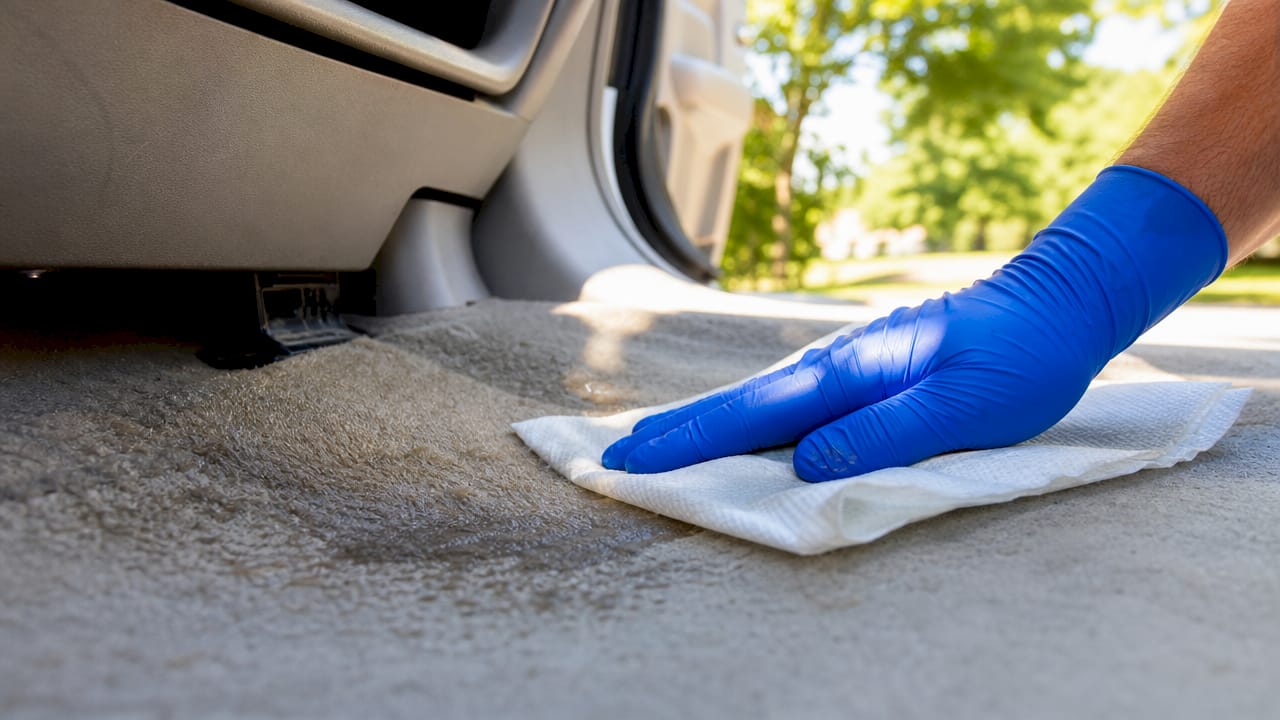
Moisture is the single biggest amplifier of car carpet smell. Water from wet shoes, spilled drinks, or a leaking window seal soaks through fibers and sits in the padding for days. Heat then turns that damp padding into a breeding ground for mold and bacteria, both of which produce the musty, sour odors that no air freshener can cover. The HVAC system compounds the problem by circulating mold spores through the cabin every time you run the air conditioning.
Surface cleaning addresses visible dirt but leaves the odor reservoir untouched. This is the core reason carpet odor in cars explained by most detailing guides still leaves car owners frustrated. Knowing the layered structure of your carpet and the role of moisture changes how you approach treatment entirely.
How moisture and mold create musty car carpet smells
Trapped moisture is the leading cause of musty odor in vehicle carpets, and it often comes from sources car owners never think to check. Blocked sunroof drains and clogged A/C condensate lines are two of the most common culprits. When these drains back up, water pools under the carpet and soaks directly into the padding. The surface may feel dry to the touch within a day, but the padding underneath can stay wet for weeks.
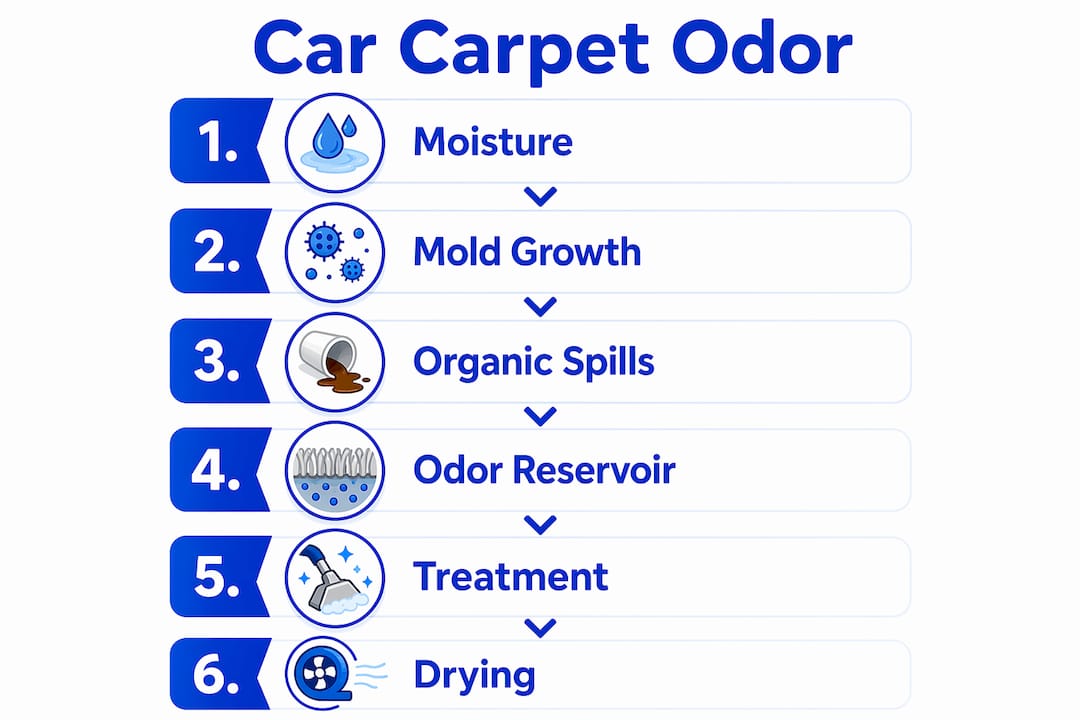
Blocked drains cause wet padding and mold growth that releases odor continuously. Mold colonies produce volatile organic compounds as they grow, and those compounds are what you smell. The HVAC system then picks up these spores and spreads them to every surface in the cabin. Replacing a cabin air filter without addressing the mold source is like changing a bandage without cleaning the wound.
Here are the key signs of hidden moisture and mold in your car carpet:
- Musty smell that intensifies when you turn on the A/C or heat
- Damp or spongy feeling underfoot, especially near the front footwells
- Visible water stains or discoloration on carpet edges
- Foggy windows that appear more frequently than expected
- Mold or mildew visible under floor mats after lifting them
Pro Tip: Before treating any musty odor, press firmly on the carpet in the front footwells with a dry paper towel. If the towel picks up moisture, you have a drainage or leak issue that must be fixed before any odor treatment will hold.
Consumer Reports specifically advises fixing the water source first before treating mold, because any treatment applied to an active moisture problem will fail within days. Check sunroof drain tubes, door seals, and the firewall grommets where wiring passes through. A $10 fix on a blocked drain can make a $200 treatment actually work.
Why organic spills produce the most stubborn carpet smells
Organic spills are the second major source of persistent carpet smell in vehicles, and they are more chemically complex than most people realize. Spilled milk, coffee with cream, pet urine, and food residue all contain proteins, fats, and sugars that soak through carpet fibers into the backing and foam padding within minutes. Once inside the padding, these materials begin to decompose, producing ammonia, sulfur compounds, and fatty acids that create the sharp, sour, or ammonia-like smells familiar to any pet owner.
Enzyme cleaners break down these odor-causing compounds chemically rather than masking them. Standard cleaners and shampoos lift surface residue but cannot dissolve the decomposing organic material locked inside foam padding. Enzyme-based products like Rocco and Roxie, Angry Orange, or Biokleen Bac-Out contain biological catalysts that target proteins and fats specifically. The key is penetration: the cleaner must reach the padding, not just the surface fibers.
Common organic spill sources and their odor profiles:
- Pet urine: Produces ammonia and mercaptans; odor intensifies with heat and humidity
- Spilled milk or dairy: Releases butyric acid during decomposition; creates a sharp, rancid smell
- Coffee with cream or sugar: Sugar ferments and fat oxidizes, producing a stale, sour odor
- Food crumbs and residue: Attract bacteria that produce hydrogen sulfide as they break down
- Sweat and body oils: Accumulate in carpet fibers over time, creating a general stale smell
Pro Tip: When applying an enzyme cleaner to a spill area, use enough product to saturate the carpet to the same depth the original spill reached. For a large pet accident, that often means soaking the area and covering it with plastic wrap for 24 hours to prevent evaporation and allow full dwell time.
Proper drying after enzyme treatment is non-negotiable. Drying post-treatment is critical because residual moisture reactivates bacterial growth and can produce a new round of odors within days. Use a wet/dry vacuum to extract as much liquid as possible, then run the car with windows cracked in direct sunlight or use a portable fan to finish the job.
Why vacuuming and shampooing often fail to remove odors
Understanding why standard cleaning fails requires a clear picture of what car carpet actually is. The structure runs from top to bottom: surface fibers, a woven backing fabric, and a thick layer of absorbent foam padding bonded to the floor. Most consumer vacuums and carpet shampoos operate only on the top two layers. The foam padding, which holds the majority of liquid contaminants and odor molecules, is largely untouched.
The table below compares what common cleaning methods actually reach versus what they miss:
| Cleaning method | Surface fibers | Carpet backing | Foam padding | HVAC system |
|---|---|---|---|---|
| Vacuuming | Yes | Partial | No | No |
| Spray deodorizer | Yes | No | No | No |
| Carpet shampoo | Yes | Partial | Rarely | No |
| Enzyme cleaner (applied correctly) | Yes | Yes | Yes (with saturation) | No |
| Steam cleaning | Yes | Yes | Partial | No |
| Hot water extraction | Yes | Yes | Yes | No |
| Professional treatment | Yes | Yes | Yes | Yes |
Heat is the mechanism that makes surface-cleaned carpets smell again. Odor molecules re-release when heated, which is why a car that smelled fine after a weekend cleaning session can reek again after sitting in a sunny parking lot on Monday. The foam padding acts as a slow-release reservoir, and no amount of surface scrubbing changes what is happening three layers down.
Carpets can feel dry on top while padding underneath remains damp, which means the smell will return even after thorough surface work. Lifting the carpet to inspect and dry the padding is the only way to confirm the problem is actually resolved.
How to remove car carpet odors: from DIY to professional treatment
Effective odor removal works in stages, starting with the least invasive methods and escalating based on severity. Follow this sequence for best results:
- Remove and clean floor mats separately. Shake them out, scrub with a brush and mild detergent, rinse thoroughly, and let them dry completely in sunlight before returning them to the car.
- Vacuum the entire carpet surface using a crevice tool to reach under seats and along edges. This removes loose debris that feeds bacterial odor production.
- Apply baking soda generously across all carpet areas. Let it sit for at least four hours, or overnight for stronger odors. Baking soda absorbs surface-level odor molecules and is safe for all carpet types. Vacuum it up completely before moving to the next step.
- Apply an enzyme cleaner to any identified spill or pet accident areas. Saturate the carpet enough to reach the padding, allow full dwell time per product instructions, then extract with a wet/dry vacuum.
- Steam clean the full carpet using a handheld steamer or a rental unit. Steam penetrates deeper than shampoo and kills bacteria and mold spores. For a detailed walkthrough, steam cleaning techniques from professional detailers explain dwell time and tool selection.
- Clear A/C and sunroof drains and replace the cabin air filter. Dirty cabin air filters allow mold spores to recirculate through vents, undoing any carpet treatment you have done.
- Allow complete drying before closing the car. Use fans, open windows, or park in direct sunlight. Never close a damp car interior.
For severe or deep-seated odors, multiple treatments over several days are realistic and necessary. Mild odors may clear in hours, but mold contamination or long-standing pet urine can require a week of repeated enzyme applications and drying cycles.
Ozone generators are sometimes marketed as a fast solution for severe odors. Ozone treatment carries respiratory hazards and requires strict no-occupancy during use and several hours of ventilation afterward. Misuse can also damage rubber seals and plastic trim. For this reason, Masterodorremoval avoids ozone entirely, using safer odor removal alternatives that achieve equivalent results without the health risk.
Pro Tip: After any wet treatment, place a small box fan facing into the open car door and run it for two to three hours. This cuts drying time significantly and prevents the mold resurgence that kills otherwise successful treatments.
How to prevent carpet odor from coming back
Prevention is far less expensive and time-consuming than remediation. These habits keep car carpet smell from developing in the first place:
- Vacuum weekly or after any trip involving food, pets, or muddy shoes. Debris left in carpet fibers begins to decompose within days.
- Address spills immediately. Blot liquid spills with a clean cloth before they reach the padding. The first 60 seconds after a spill determines whether it becomes a surface stain or a deep odor source.
- Keep carpets dry. Remove wet floor mats after rain or snow and let them dry outside the vehicle. Never leave wet items on carpet overnight.
- Replace the cabin air filter every 12,000 to 15,000 miles. A clogged filter traps mold spores and recirculates them through the cabin every time you run the climate system.
- Inspect A/C and sunroof drains seasonally. A quick check with a thin wire or compressed air keeps drains clear before they back up and flood the carpet.
- Use moisture absorbers in humid climates. Products like DampRid or silica gel packs placed under seats reduce ambient humidity and slow mold growth.
- Skip the air freshener as a solution. Masking odors with pine trees or vanilla sprays does nothing to address the source and can create a worse combined smell over time.
For pet owners, pet odor maintenance strategies that go beyond standard cleaning are worth reviewing before odors become embedded.
Key takeaways
Car carpet odor is a layered problem that requires treating the padding, backing, and HVAC system, not just the surface fibers.
| Point | Details |
|---|---|
| Odor lives in the padding | Surface cleaning misses the foam layer where most odor molecules are stored. |
| Moisture must be fixed first | Treating mold without clearing blocked drains or leaks guarantees odor return. |
| Enzyme cleaners require saturation | Product must reach the padding to break down organic compounds, not just the surface. |
| Drying is non-negotiable | Residual moisture after treatment restarts bacterial growth and odor production. |
| Ozone carries real risks | Ozone treatment requires strict safety protocols; safer professional alternatives exist. |
What I have learned treating hundreds of car interiors
Most car owners come to me after they have already tried three or four products and are convinced their car is permanently ruined. It almost never is. What went wrong in nearly every case is the same thing: they treated the surface and called it done.
The most common mistake I see is applying a product, noticing the smell is gone for two days, and assuming the job is finished. That temporary improvement is the surface odor clearing. The padding odor is still there, waiting for the next warm afternoon to remind you it never left. Patience with repeated treatments, combined with genuine drying time between applications, is what separates a solved problem from a recurring one.
I am also direct with clients about ozone. It gets marketed aggressively as a miracle treatment, but the health risks of ozone exposure are real and the damage it can do to rubber and plastics is underreported. There are better methods that do not require you to evacuate your vehicle for hours and hope nothing gets damaged. The car interior detailing field has advanced significantly, and interior detailing upgrades available in 2026 make professional-grade results more accessible than ever.
The one thing I would tell every car owner: if the smell comes back within a week of treatment, you have not found the source yet. Keep looking. Check the drains, lift the carpet, inspect the HVAC. The answer is always there.
— Master
When professional odor removal makes sense

Some car carpet odors are simply beyond what DIY methods can fully resolve. Deep mold contamination, long-standing pet urine that has soaked through to the floor pan, or tobacco smoke embedded in every surface of the cabin all require professional-grade equipment and techniques that go far beyond enzyme sprays and steam cleaners.
Masterodorremoval specializes in exactly these situations. Using eco-friendly, green-certified methods without ozone or chlorine, the team treats carpet padding, HVAC systems, and upholstery in a single visit, with same or next-day availability. If you have tried the DIY route and the smell keeps coming back, professional odor removal is the next logical step. For persistent cases across vehicles, homes, or commercial spaces, the odor removal specialists at Masterodorremoval deliver results backed by verified five-star reviews.
FAQ
Why does my car carpet smell worse after cleaning?
Cleaning with water-based products can reactivate odor molecules trapped in the padding and backing. If the carpet is not dried thoroughly, residual moisture also triggers new bacterial growth, which produces a stronger smell than before.
How long does it take to fully remove car carpet odor?
Mild odors can clear within a few hours of treatment. Deep contamination from mold, pet urine, or long-term moisture exposure may require repeated treatments over a week before the odor is fully eliminated.
Can baking soda permanently remove carpet odor from a car?
Baking soda absorbs surface-level odors effectively but does not penetrate carpet padding. It works well as a first step or for light odors, but it cannot address mold, deep organic spills, or HVAC contamination on its own.
What is the best product for removing car carpet odor?
Enzyme-based cleaners are the most effective option for organic odors because they chemically break down the source compounds rather than masking them. Products must be applied with enough volume to saturate the padding, not just the surface fibers.
When should I call a professional for car carpet odor?
Call a professional when the odor returns within days of treatment, when you suspect mold under the carpet, or when the smell intensifies with the A/C running. These are signs the odor source is beyond what surface-level cleaning can reach.
Recommended
- Green Business Certified Car Odor Removal – Master Odor Removal
- Super Car Buying and Odor Removal – Master Odor Removal
- Why odors persist in marine carpets: What yacht owners must know – Master Odor Removal
#SmokeOdorRemoval
#CigaretteOdorRemoval
#CigarOdorRemoval
#MarijuanaOdorRemoval
#WeedSmellRemoval
#PetOdorRemoval
#CatUrineOdorRemoval
#DogOdorRemoval
#MustyOdorRemoval
#MoldOdorRemoval
#MildewOdorRemoval
#HVACOdorRemoval
#AirConditioningOdorRemoval
#VehicleOdorRemoval
#AutoOdorRemoval
#LuxuryVehicleOdorRemoval
#YachtOdorRemoval
#BoatOdorRemoval
#CondoOdorRemoval
#HomeOdorRemoval
#RentalPropertyOdorRemoval
#AirbnbOdorRemoval
#LuxuryHomeOdorRemoval
#OdorRemoval
#OdorElimination
#OdorRemovalExperts
#LuxuryOdorRemoval
#NeutralIsTheNewScentStandard
#MasterOdorRemoval
#TobaccoOdorRemoval
#SmokeDamageRestoration
#IndoorAirQuality
#LuxuryAutos
#LuxuryHomes
#LuxuryYachts
#PropertyManagement
#AutoDetailing
#RealEstateProfessionals
#PreOwnedVehicles
#VehicleReconditioning
#HomeImprovement
#AirbnbHost
#YachtLife
#BoatLife
#PetOwners
#CommercialCleaning
#GreenCertified
#SouthFloridaBusiness
#MiamiHomes
#FortLauderdaleHomes
#BocaRatonHomes
#PompanoBeachBusiness
#OneAndDoneOdorRemoval
Recent Comments