
TL;DR:
- Food odors persist in vacation rentals because VOCs adsorb into porous surfaces and re-emit over time. Proper ventilation during and after cooking, along with targeted cleaning of fabrics and filters, is essential for effective odor control. Regular maintenance and professional treatments are necessary to address deeply embedded smells that surface cleaning cannot eliminate.
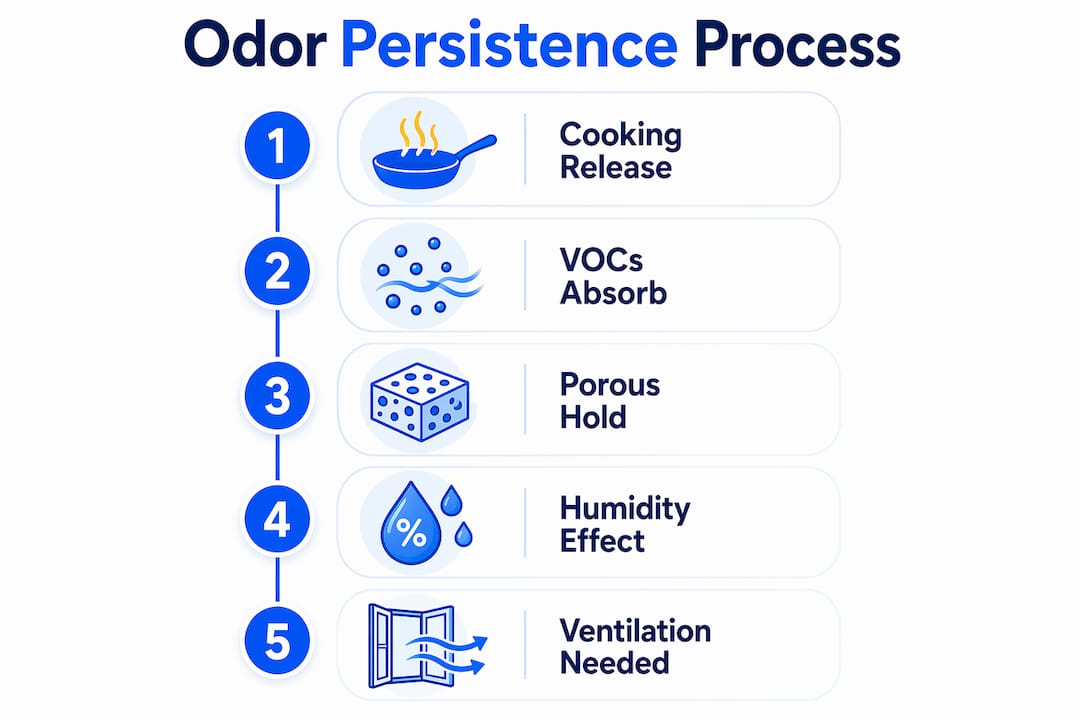
Food odors linger in vacation rentals because cooking releases volatile organic compounds (VOCs) that absorb into porous surfaces like upholstery, carpets, and curtains, then re-emit long after the meal is finished. This process, known in indoor air quality science as odor adsorption, is the reason why a thorough wipe-down of countertops still leaves a rental smelling like last night’s fish tacos. The U.S. EPA and peer-reviewed research from MDPI both confirm that inadequate ventilation accelerates this problem by allowing odor molecules to settle before they can be exhausted outdoors. For vacation rental owners and property managers, understanding the root cause is the first step toward fixing it.
Why food odors linger in vacation rentals: the science behind it
The core mechanism is straightforward. When guests cook, heat releases VOCs from food into the air. Without immediate exhaust, those molecules travel through the kitchen and adjacent rooms, landing on every porous surface they contact. A peer-reviewed MDPI review on indoor odor pollution confirms that porous materials adsorb odor compounds and later re-emit them, which is precisely why ventilation alone cannot fully clear a space once odors have settled.

The materials most responsible for this in a typical vacation rental are upholstered sofas, fabric dining chairs, area rugs, curtains, and even acoustic ceiling tiles. These materials have high surface-area-to-volume ratios, meaning they trap far more odor molecules per square foot than a painted wall or tile floor. A rental with an open-plan kitchen flowing into a furnished living area is especially vulnerable because cooking air circulates freely into fabric-heavy zones before any exhaust system can capture it.
Humidity and temperature compound the problem. Warm, humid air carries VOCs deeper into porous materials, and when the space cools or humidity drops, those materials release the stored compounds back into the air. This is why a rental can smell fine during a warm afternoon showing but noticeably stale to a guest who checks in on a cool evening.
How does ventilation affect odor dispersal in rentals?
Ventilation is the first line of defense, and it is also where most vacation rentals fall short. The EPA recommends running a range hood vented outdoors during cooking and for 10 to 20 minutes afterward to capture odor particles before they settle onto surfaces. That post-cooking window is critical. Once molecules adsorb into fabrics, no amount of airflow will fully reverse the process.
The design of the ventilation system matters as much as whether one exists at all. A range hood that vents directly outdoors through a dedicated duct is far more effective than one that recirculates air back into the kitchen. Fan placement, duct diameter, and the distance between the hood and the cooktop all influence how much of the cooking plume gets captured versus escaping into the room. Many rental kitchens, particularly in older buildings or condos, have ductwork that was never designed for high-volume cooking.
Common ventilation mistakes in vacation rentals include:
- Ductless recirculating hoods with saturated charcoal filters. A Jaspector guide on range hood installation warns that charcoal filters lose odor control efficacy once saturated, and most property managers replace them far less frequently than needed.
- Relying on windows alone. Opening windows helps, but the EPA notes this is a supplement to exhaust ventilation, not a substitute.
- Turning off the hood the moment cooking stops. Odor molecules remain airborne for several minutes after the burner is off. Shutting down exhaust too early lets them settle.
- Poor HVAC integration. A central HVAC system that pulls kitchen air into return ducts can redistribute cooking odors to bedrooms and bathrooms throughout the property.
Pro Tip: Post a laminated card near the range reminding guests to run the hood fan during cooking and for 15 minutes after. This single guest instruction, aligned with your cleaning protocol, can meaningfully reduce odor load between stays.
Why do porous materials hold smells so stubbornly?
Surface cleaning addresses what you can see. Odor adsorption operates at a molecular level that a sponge and spray cleaner cannot reach. The MDPI review describes adsorption as a physicochemical process where VOC molecules bond to the surface structure of porous materials. Once bonded, they require either heat, airflow, or chemical treatment to dislodge. Standard cleaning products rarely provide any of these at sufficient intensity.
The table below shows the most common surfaces in vacation rentals and their relative odor retention risk:
| Surface | Odor retention risk | Why it matters |
|---|---|---|
| Upholstered sofas and chairs | Very high | Dense fabric fibers trap VOCs deep in the weave |
| Area rugs and carpets | Very high | Large surface area and pile depth hold odor molecules |
| Curtains and drapes | High | Hang in open air, absorbing cooking plumes directly |
| Painted drywall | Medium | Porous enough to absorb odors over repeated exposure |
| Tile and sealed hardwood | Low | Non-porous surfaces release odors more readily |
Cleaning visible grease alone will not solve persistent odors. Residues trapped in fabrics and porous materials require targeted treatment, whether that means professional upholstery cleaning, enzyme-based fabric sprays, or full odor remediation between high-use seasons. The Wirecutter guide on home smells reinforces this point: grease and food residue embedded in porous materials are the primary driver of odors that survive standard cleaning.
What makes odor control harder beyond ventilation?
Ventilation and surface cleaning address active cooking odors. Several other factors cause smells to persist in rentals, and they operate quietly between guest stays.
Vacancy and sealed environments are a major contributor. When a rental sits closed for days or weeks, trapped moisture, dust, and organic matter break down slowly, producing musty, stale compounds. Vacation Property Maids reports that standard cleaning often doesn’t remove these underlying odor sources, which then combine with food smells from the previous stay to create a layered odor problem. For more on this specific issue, the Masterodorremoval guide on musty home odors explains the chemistry behind stale vacancy smells in detail.
Ductless recirculating range hoods present a specific challenge. Unlike vented hoods, they push air through charcoal filters and return it to the kitchen. Those filters are not permanent. They saturate with grease and odor compounds over time and, once saturated, they stop filtering and start re-releasing odors back into the space. In a heavily used rental, this can happen within weeks.
Grease buildup on range hood surfaces, backsplashes, and cabinet faces acts as a slow-release odor source. Every time the kitchen warms up, residual grease volatilizes and releases compounds into the air. This is why a rental kitchen can smell fine when cold but noticeably off when a guest starts cooking.
Additional factors that worsen odor persistence:
- HVAC filters loaded with grease particulates from previous cooking cycles, redistributing odors through the air supply.
- Inadequate turnover cleaning that skips range hood filter inspection and fabric treatment.
- Air fresheners masking rather than neutralizing odors, which guests notice immediately when the fragrance fades.
Pro Tip: Before each guest arrival, run the HVAC fan for 30 minutes with fresh outdoor air intake to flush accumulated odors from ductwork. Pair this with a quick check of the range hood filter. If it looks gray or feels tacky, replace it before the guest arrives.
Practical strategies to prevent and remove lingering food odors
Dealing with lingering odors requires a layered approach that addresses ventilation timing, surface treatment, and material maintenance together. No single step solves the problem on its own.
- Run exhaust during and after cooking. The EPA’s guidance is specific: operate a range hood vented outdoors for the full cooking period plus 10 to 20 minutes afterward. This captures the majority of airborne VOCs before they can adsorb into surfaces.
- Schedule range hood filter maintenance. For vented hoods, clean baffle or mesh filters monthly in high-use rentals. For ductless hoods, replace charcoal filters every one to three months depending on cooking frequency.
- Conduct a material sweep at every turnover. Walk the property and physically check upholstery, rugs, and curtains for odor retention. These items need targeted treatment, not just a visual inspection.
- Use enzyme-based cleaners on fabric surfaces. Enzyme formulas break down the organic compounds that cause food odors at a molecular level, unlike fragrance sprays that only mask them.
- Air out the property before guest arrival. Open windows and run the HVAC fan to flush stale air, particularly after vacancy periods.
The table below compares common food smell removal methods by effectiveness and practicality for rental managers:
| Method | Effectiveness | Best use case |
|---|---|---|
| Vented range hood (timed correctly) | High | Prevention during and after cooking |
| Enzyme-based fabric treatment | High | Post-stay upholstery and carpet treatment |
| Charcoal filter replacement | Medium | Ductless hood maintenance |
| Portable HEPA air cleaner | Medium | Supplemental airborne odor reduction |
| Fragrance sprays or plug-ins | Low | Temporary masking only, not removal |
| Professional odor remediation | Very high | Deep-set or multi-source odor problems |
For properties with persistent issues despite routine cleaning, eco-friendly odor prevention strategies offer a structured framework that goes beyond the basics.
Key takeaways
Lingering food odors in vacation rentals are caused by VOC adsorption into porous materials, compounded by inadequate ventilation, grease buildup, and insufficient fabric treatment during turnover.
| Point | Details |
|---|---|
| Adsorption drives persistence | VOCs bond to porous surfaces and re-emit later, making surface cleaning alone ineffective. |
| Ventilation timing is critical | Run exhaust for 10 to 20 minutes post-cooking to capture odor molecules before they settle. |
| Porous materials need targeted care | Upholstery, carpets, and curtains require enzyme treatment or professional cleaning, not just wiping. |
| Ductless hoods need filter replacement | Saturated charcoal filters re-release odors and must be replaced on a regular schedule. |
| Vacancy compounds the problem | Closed rentals develop stale, layered odors that combine with food smells and require active flushing. |
What I’ve learned from treating food odors in vacation rentals
Most property managers focus their odor control efforts on the kitchen surfaces they can see. The countertop gets wiped, the stovetop gets scrubbed, and the job feels done. What I’ve found, working with hospitality clients across a range of property types, is that the real odor reservoirs are almost always the range hood itself and the fabric items in the adjacent living space.
The range hood filter is the single most overlooked odor source in a rental kitchen. It collects grease and VOCs from every cooking session, and when it saturates, it becomes an active emitter. Guests don’t smell a dirty countertop. They smell a filter that hasn’t been changed in four months.
The “material sweep” concept is something I advocate strongly. Before you trust your nose standing in the middle of the room, press your face into the sofa cushions, run your hand along the curtains, and crouch down near the rug. The odor map you build from that exercise is far more accurate than a general sniff test. It tells you exactly where to direct treatment resources.
One more thing worth saying plainly: air fresheners are not an odor control strategy. They are a delay tactic. Guests with any sensitivity to fragrance will notice both the artificial scent and the food smell underneath it. Neutral and fresh is the only acceptable baseline for a property that commands strong reviews.
— Master
Keep your vacation rental guest-ready with professional odor removal
When routine cleaning and ventilation maintenance aren’t enough to fully clear a property, professional odor removal delivers results that standard methods cannot match. Masterodorremoval specializes in permanent, eco-friendly odor elimination for hospitality environments, using green-certified techniques that avoid ozone and chlorine treatments entirely.

Whether you’re dealing with deep-set food odors after a long-term stay, a musty vacancy smell that won’t clear, or a layered odor problem that has built up over multiple seasons, the team at Masterodorremoval provides same or next-day service with guaranteed results. Explore professional odor removal services designed specifically for rental properties, or review the full range of specialist odor elimination options to find the right fit for your property.
FAQ
Why do cooking smells stay in a rental even after cleaning?
Cooking releases VOCs that adsorb into porous materials like upholstery and carpets. Standard cleaning removes surface residue but does not dislodge molecules bonded at a structural level to fabric fibers.
How long should a range hood run after cooking to remove odors?
The EPA recommends running a vented range hood for 10 to 20 minutes after cooking ends. This window captures airborne odor molecules before they settle onto surfaces and fabrics.
Are ductless range hoods effective for odor control in rentals?
Ductless hoods provide limited protection because they recirculate air rather than exhausting it outdoors. Their charcoal filters saturate over time and must be replaced every one to three months in active rentals to maintain any odor control function.
What is the most effective way to remove food odors from rental upholstery?
Enzyme-based cleaners break down the organic compounds causing food odors at a molecular level. For deep-set or recurring odor problems, professional upholstery treatment delivers more thorough results than consumer products.
Can vacancy cause food odors to get worse in a closed rental?
Yes. Sealed environments trap residual cooking compounds alongside moisture and dust, which combine and intensify over time. Airing out the property and running the HVAC fan before guest arrival reduces this layered odor buildup significantly.
Recent Comments